
Sections in this exhibit
-
1
Section 1 Choosing Sides in Revolutionary AmericaYou are here
After Congress approved the Declaration on 4 July 1776, printed copies and public readings spread its message across the former colonies. Hearing and seeing its words made independence real for many Americans, even as reactions ranged from celebration to uncertainty and opposition.
-
2
Section 2 The Gamble for a New FutureSection 2
Choosing independence in 1776 was a risky and deeply personal decision. Different people supported the Revolution for different reasons, each taking a gamble on what a new nation might become.
-
3
Section 3 The Search for ProtectionSection 3
For many people in 1776, staying loyal to Britain was a search for protection, stability, or freedom. Loyalists made their own choices based on fear of disorder, defense of their communities, or hopes that the British Empire offered a safer future.
-
4
Section 4 The Middle GroundSection 4
Many people tried to remain neutral during the American Revolution, but neutrality was difficult and often dangerous, especially for Quakers. Their experiences show how survival, belief, and circumstance shaped choices in a divided society.
Choosing Sides in Revolutionary America
After Congress approved the Declaration on 4 July 1776, printed copies and public readings spread its message across the former colonies. Hearing and seeing its words made independence real for many Americans, even as reactions ranged from celebration to uncertainty and opposition.
Spreading the News
Congress adopted the Declaration of Independence in Philadelphia on 4 July 1776. That evening, John Dunlap, a printer, printed the first copies. These were distributed to the states, to military officers, and to local officials. Riders carried copies across the states.
Interactive StoryMap
Tracking the Declaration of Independence in the American Press
The Declaration of Independence was published in at least 31 colonial newspapers within two months of 4 July 1776. Most newspapers at the time were published weekly rather than daily. For many readers, seeing the words in print made the Declaration more real.
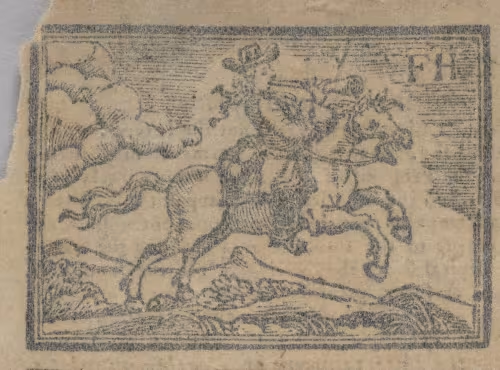
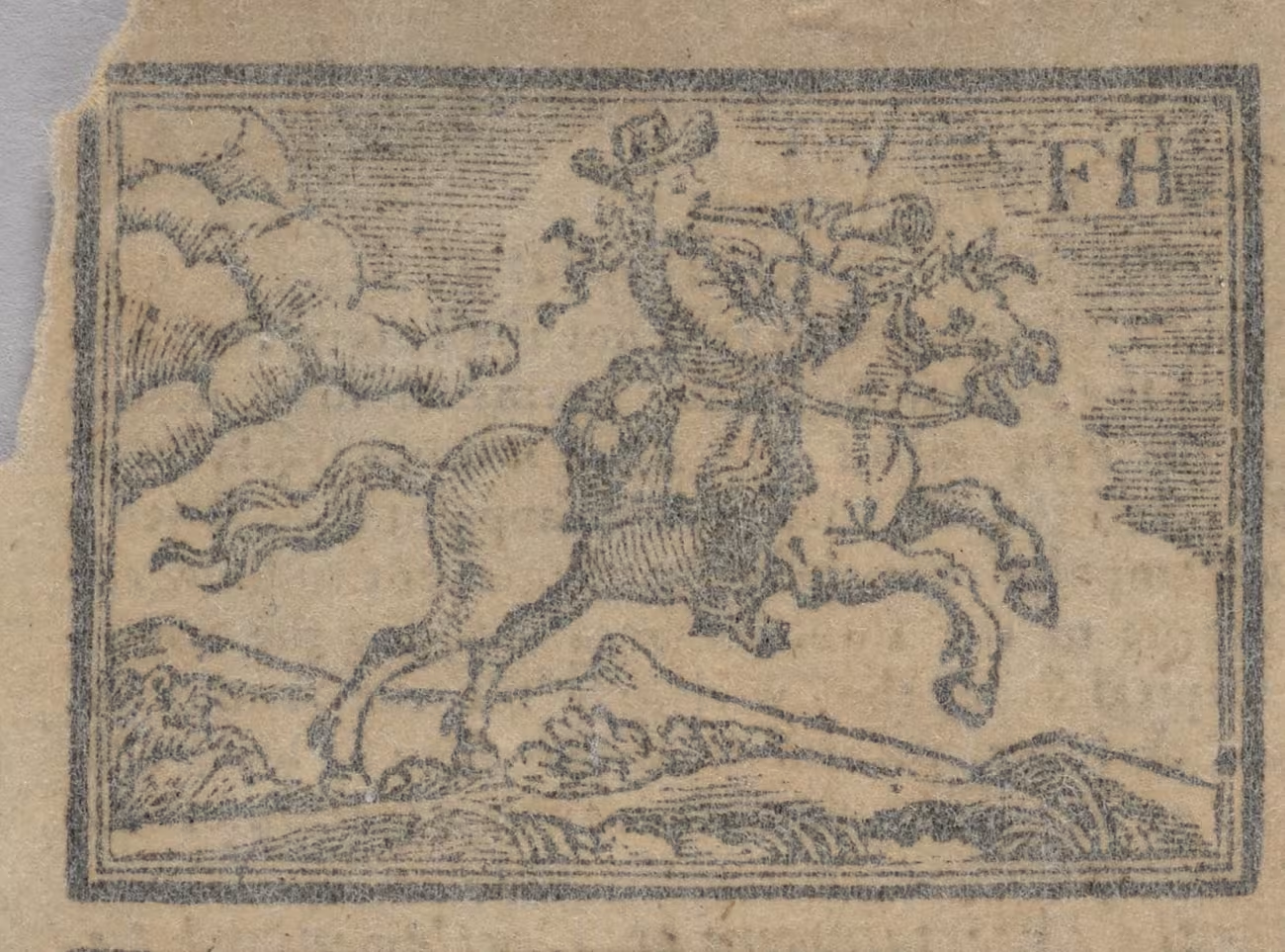
Detail from the masthead of newspaper The Post Boy (8–10 March 1719/20)
Detail from the masthead of newspaper The Post Boy (8–10 March 1719/20)
This image of a mail carrier on horseback blowing a bugle horn featured prominently at the top of the British newspaper The Post Boy.
Reading Independence
Print helped ideas travel quickly across 18th-century America. Newspapers circulated among many readers in homes, taverns, and coffeehouses, and were often read aloud. Broadsides carried news into public spaces, where they could be posted on walls, doors, and windows for communities to see.
Newspapers
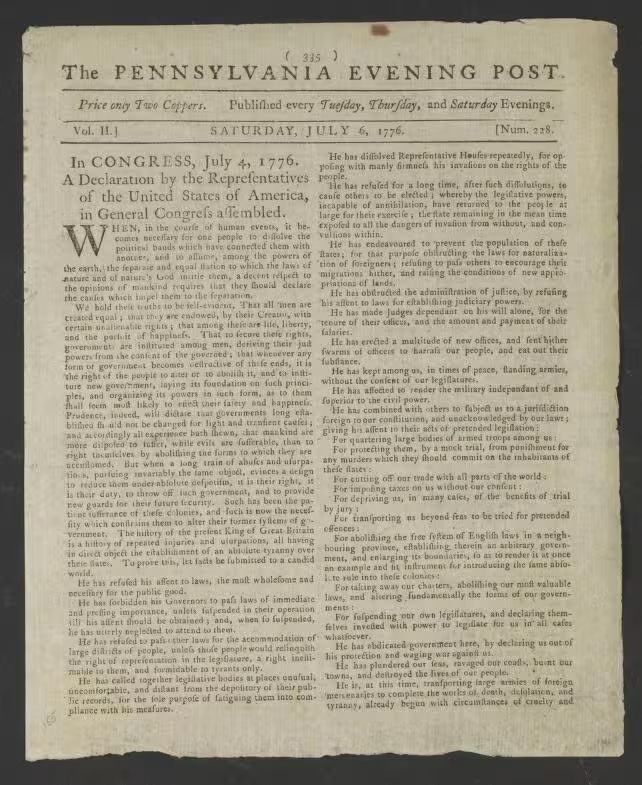
The Declaration was published in at least 31 colonial newspapers within two months of July 4, 1776. Most newspapers at the time were published weekly rather than daily. For many readers, seeing the words in print made the Declaration more real.
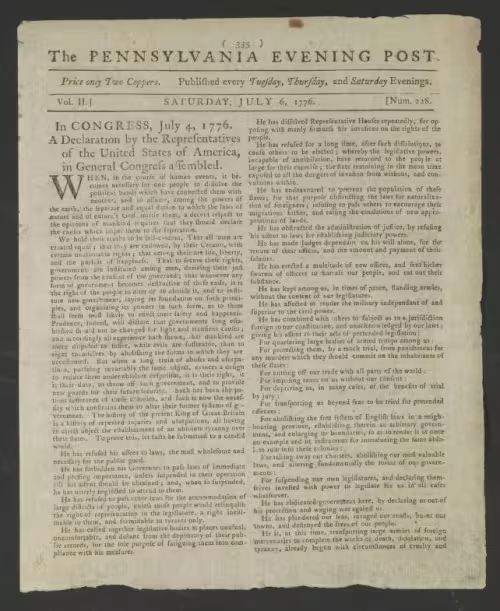
The Pennsylvania evening post (Philadelphia, Pa.), 6 July 1776
The Pennsylvania evening post (Philadelphia, Pa.), 6 July 1776
Broadsides
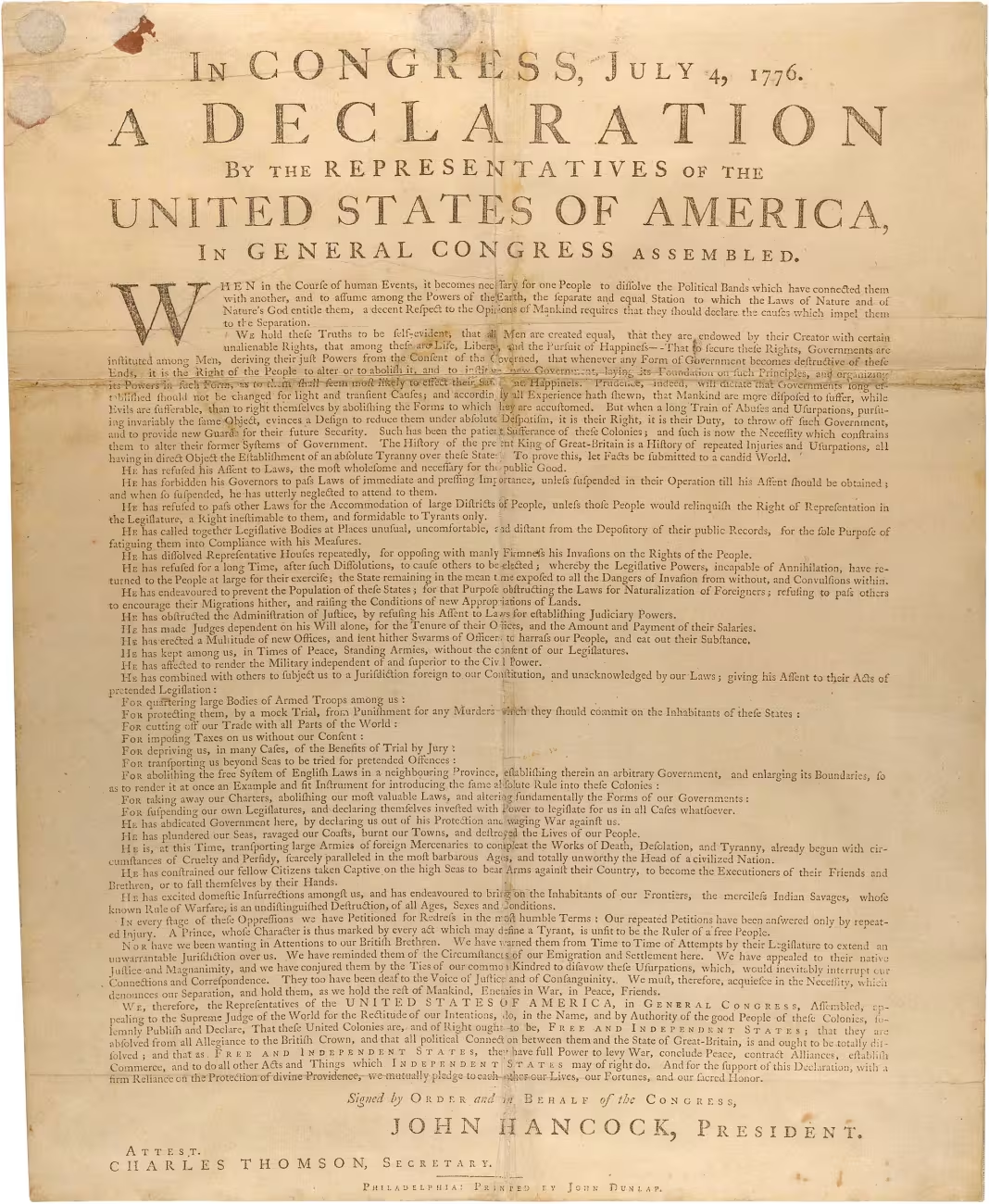
Broadsides were single-page sheets you could put up in public spaces. They were a common means of spreading important news. The Declaration was printed as a broadside and hung in taverns, town halls, and other gathering spaces so people could read or hear it read aloud.
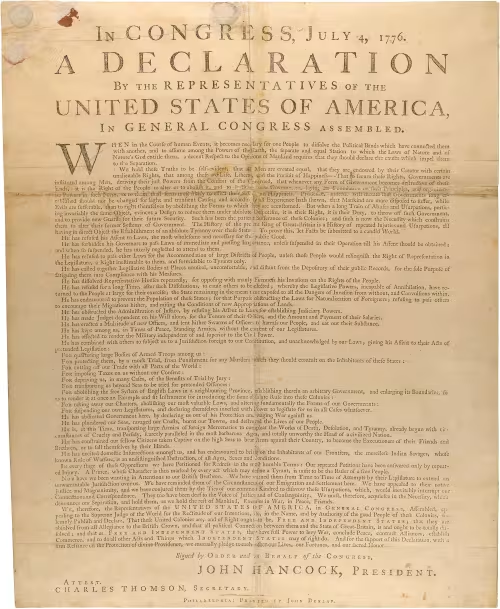
Dunlap Broadside (First Printing of the Declaration of Independence)
Dunlap Broadside (First Printing of the Declaration of Independence)
John Dunlap's 1776 broadside was the first printed version of the Declaration of Independence, produced for Congress and distributed July 4th.
Hearing Independence
Most Americans first heard the Declaration when it was read aloud in public places. These included city squares, at courthouse steps, and before local militias. In July 1776, printed copies spread quickly, but public readings reached more people.
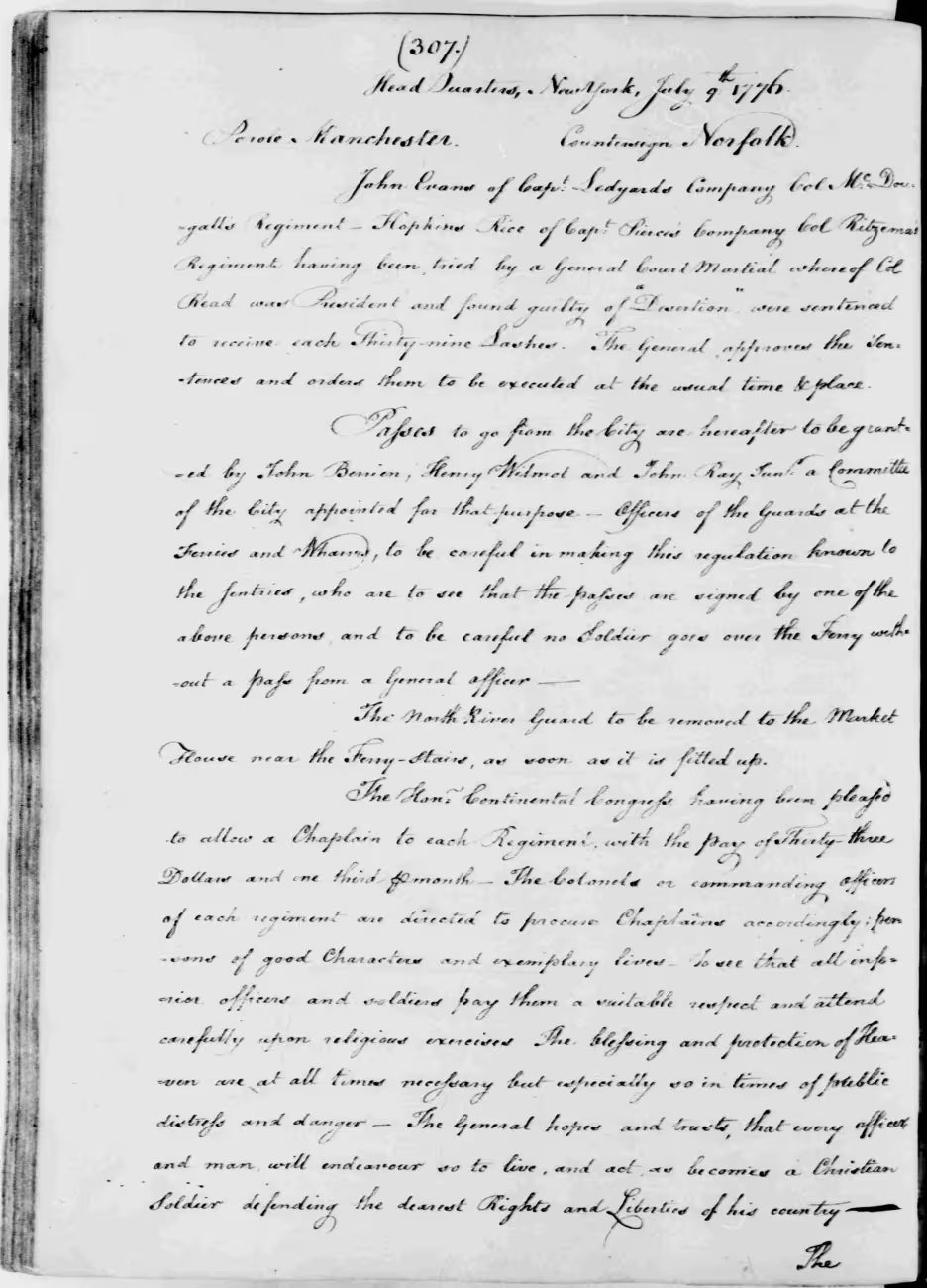
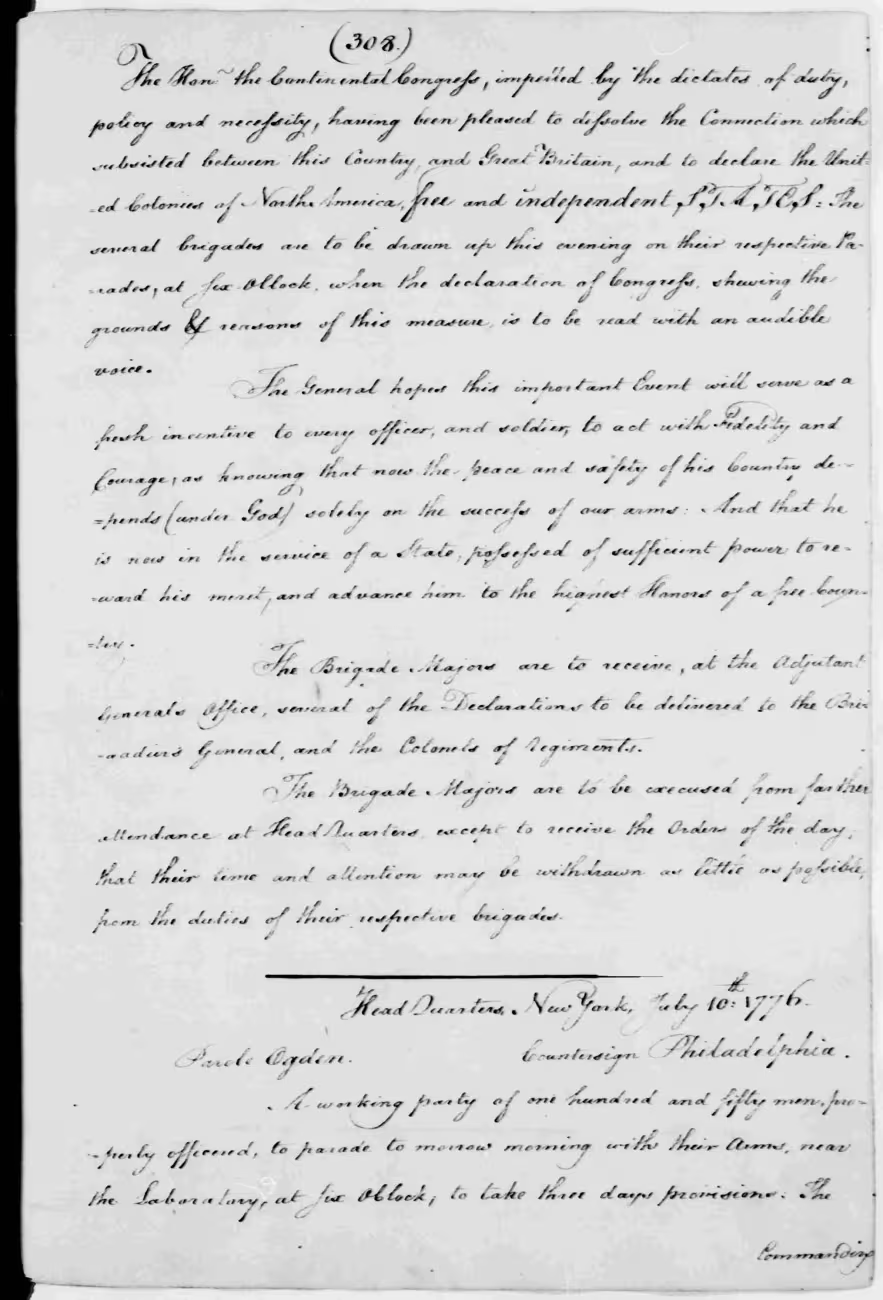
General George Washington ordered on 9 July that officials read the Declaration out loud. He believed this could get people to join the Continental Army.
“The General hopes this important Event will serve as a fresh incentive to every officer, and soldier, to act with Fidelity and Courage, as knowing that now the peace and safety of his Country depends (under God) solely on the success of our arms.”
General Orders, 9 July 1776.
National Portrait Gallery, Smithsonian Institution; acquired as a gift to the nation through the generosity of the Donald W. Reynolds Foundation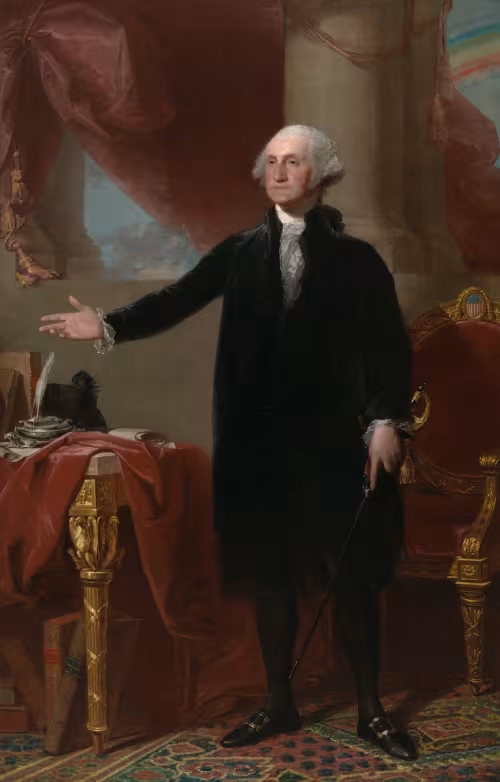
George Washington
George Washington
Commander-in-chief of the Continental Army during the Revolutionary War who became the first U.S. president, setting key precedents for federal government.
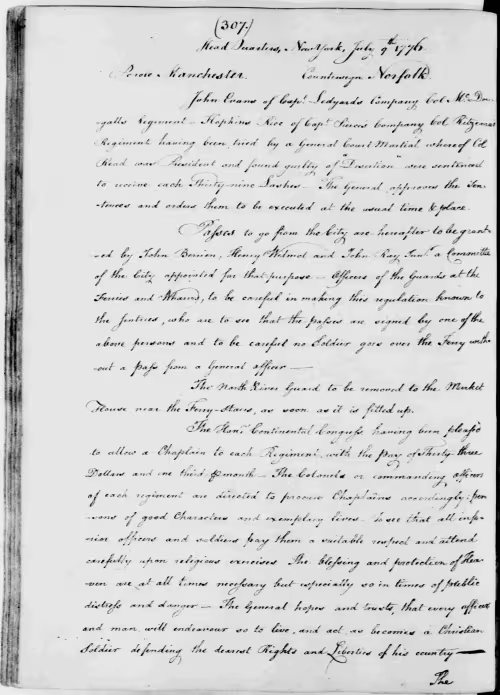
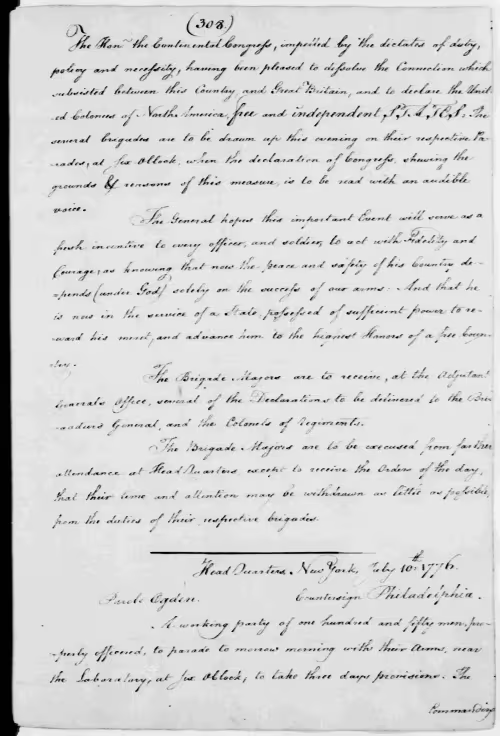
General Orders, 9 July 1776
General Orders, 9 July 1776
Orders instructing brigades to read the Declaration of Independence to troops, marking the first official military announcement of American independence.
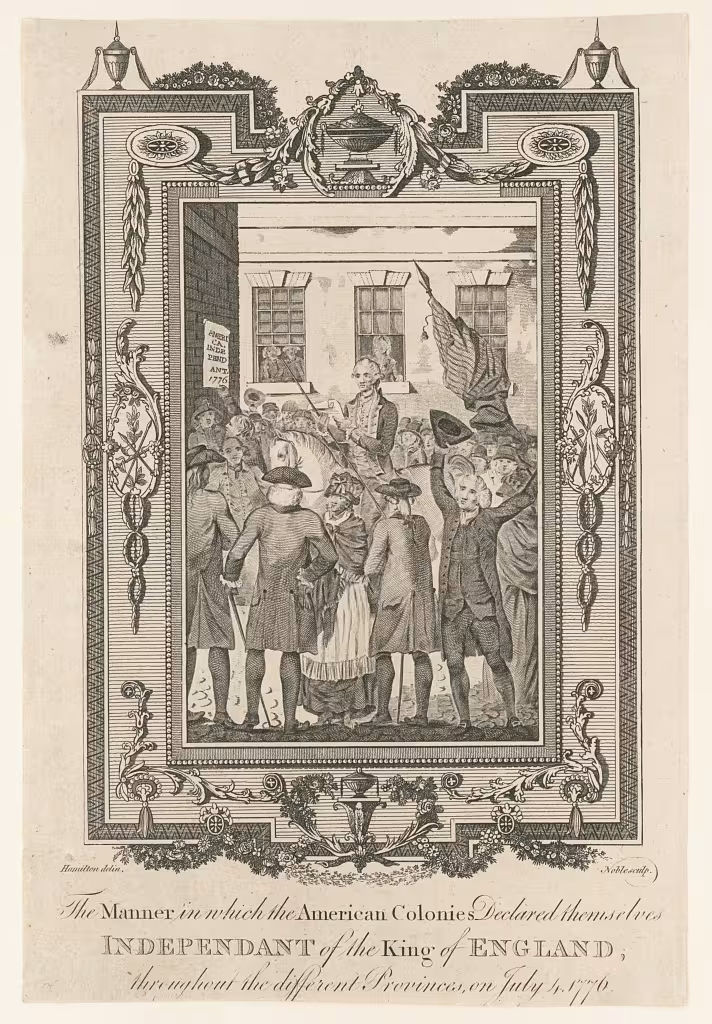
Crowds gathered to listen as officials and soldiers heard the charges against George III. They also heard Congress proclaim that the colonies were “free and independent States.” Some people cheered. Others listened in silence, worried. For many, this was the first moment they understood that the break with Britain could be final.
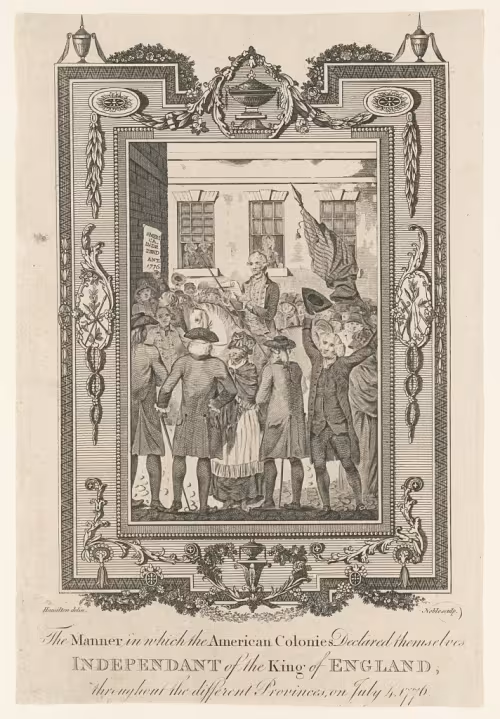
The manner in which the American colonies declared themselves independant [sic] of the King of England, throughout the different provinces, on July 4, 1776 / Hamilton delin. ; Noble sculp.
The manner in which the American colonies declared themselves independant [sic] of the King of England, throughout the different provinces, on July 4, 1776 / Hamilton delin. ; Noble sculp.
This print depicts a mounted messenger announcing the Declaration of Independence to a crowd.
The Cleveland Museum of Art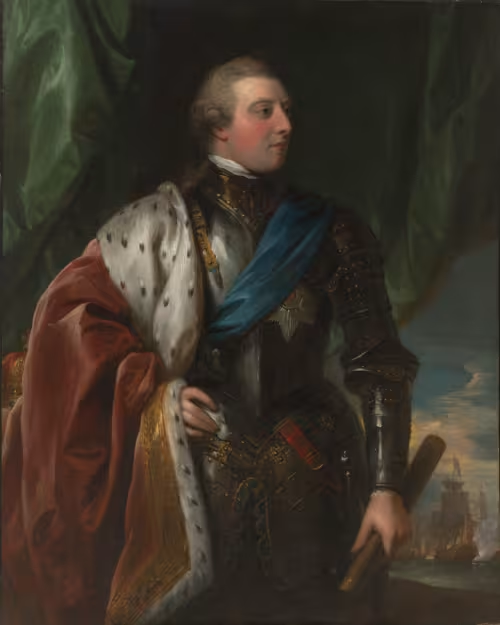
George III of Great Britain
George III of Great Britain
British monarch who reigned for six decades, overseeing Britain's loss of American colonies and the defeat of Napoleon, while battling mental illness.
Not everyone agreed with the Declaration. The next pages look at how individuals across the colonies responded.