
Sections in this exhibit
-
1
Section 1 Choosing Sides in Revolutionary AmericaSection 1
After Congress approved the Declaration on 4 July 1776, printed copies and public readings spread its message across the former colonies. Hearing and seeing its words made independence real for many Americans, even as reactions ranged from celebration to uncertainty and opposition.
-
2
Section 2 The Gamble for a New FutureYou are here
Choosing independence in 1776 was a risky and deeply personal decision. Different people supported the Revolution for different reasons, each taking a gamble on what a new nation might become.
-
3
Section 3 The Search for ProtectionSection 3
For many people in 1776, staying loyal to Britain was a search for protection, stability, or freedom. Loyalists made their own choices based on fear of disorder, defense of their communities, or hopes that the British Empire offered a safer future.
-
4
Section 4 The Middle GroundSection 4
Many people tried to remain neutral during the American Revolution, but neutrality was difficult and often dangerous, especially for Quakers. Their experiences show how survival, belief, and circumstance shaped choices in a divided society.
The Gamble for a New Future
Choosing independence in 1776 was a risky and deeply personal decision. Different people supported the Revolution for different reasons, each taking a gamble on what a new nation might become.
The “Yes” That Changed Everything
In July 1776, the Declaration of Independence was not a dusty, faded piece of parchment in the National Archives. It was the United States’s “Big Bang.” When its words were read aloud in town squares, they acted like a chemical reaction, turning neighbors into fellow citizens and friends into “alien enemies.”
But choosing to support independence—becoming a “Patriot”—wasn't just about a sudden burst of American pride. It was a high-stakes gamble. For many, it was a bet that they could build a better, fairer government. For others, it was a desperate hope that the language of “liberty” would finally apply to them. And for some, it was a calculated move to protect their families and their land.
If you chose this option, you were choosing a side in a civil war. You were also committing treason against the most powerful empire on Earth. For many, there was no going back.
Tearing Down the Old World
Many white colonists saw the Declaration as a release valve for years of frustration. They wanted to prove to the world that they could rule themselves and control their own futures.
The Soldier’s View: Isaac Bangs
On 9 July 1776, Isaac Bangs stood in New York City as the Declaration was read to George Washington’s troops. After the reading, a mob of soldiers and civilians rushed to Bowling Green. There stood a massive gilded lead statue of George III on horseback. The crowd didn't just want the king gone; they wanted him dismantled. They toppled the statue, hacked off the king’s head, and sent the lead to be melted down into bullets.
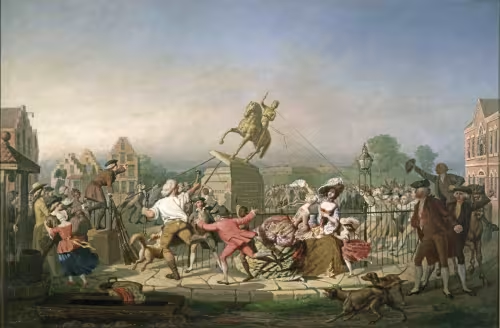
Pulling Down the Statue of George III at Bowling Green by William Walcutt (1857)
Pulling Down the Statue of George III at Bowling Green by William Walcutt (1857)
This painting depicts New Yorkers tearing down George III's statue in 1776 after hearing the Declaration of Independence.
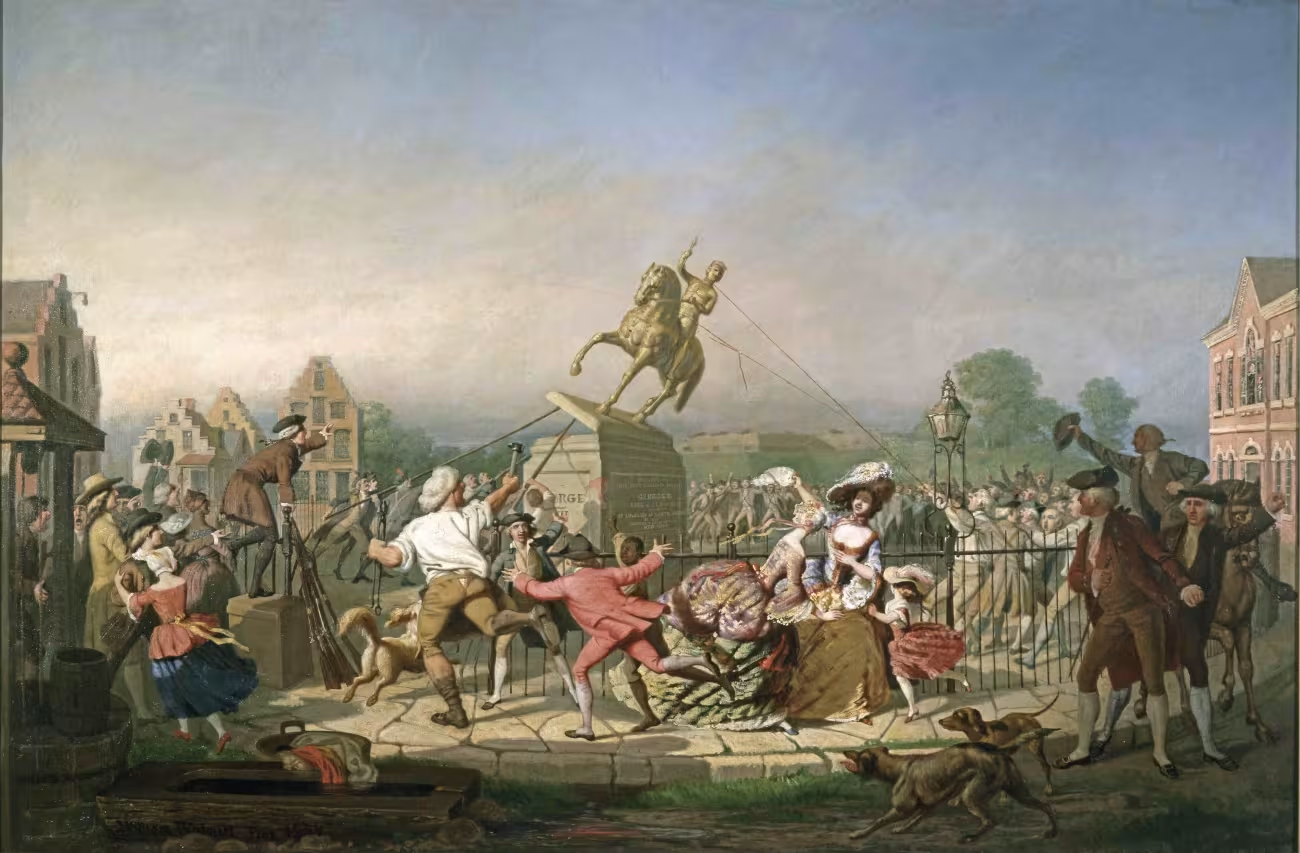
In 1857, William Walcutt painted the symbolic moment of American soldiers pulling down the statue of King George III in New York City.
Isaac Bangs’s Journal, 10 July 1776.
Isaac Bangs’s Journal, 10 July 1776.
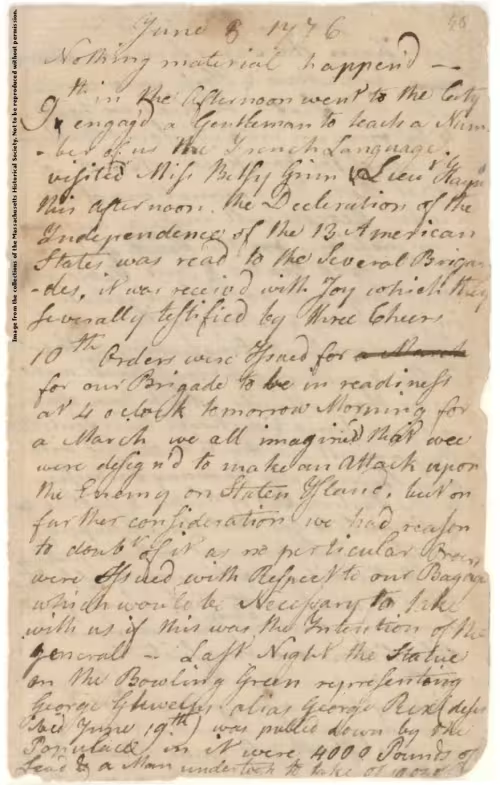
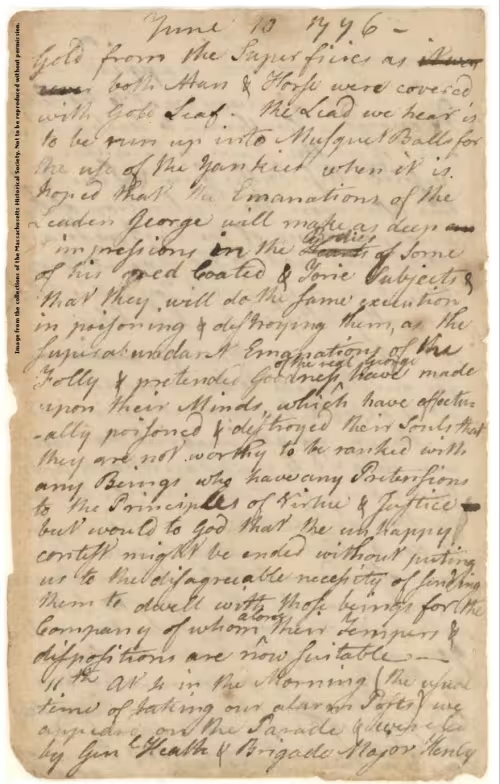
Extract from Isaac Bangs's Journal, 10 July 1776
Extract from Isaac Bangs's Journal, 10 July 1776
Bangs documents his military service and provides detailed personal accounts of his experiences during the Revolution.
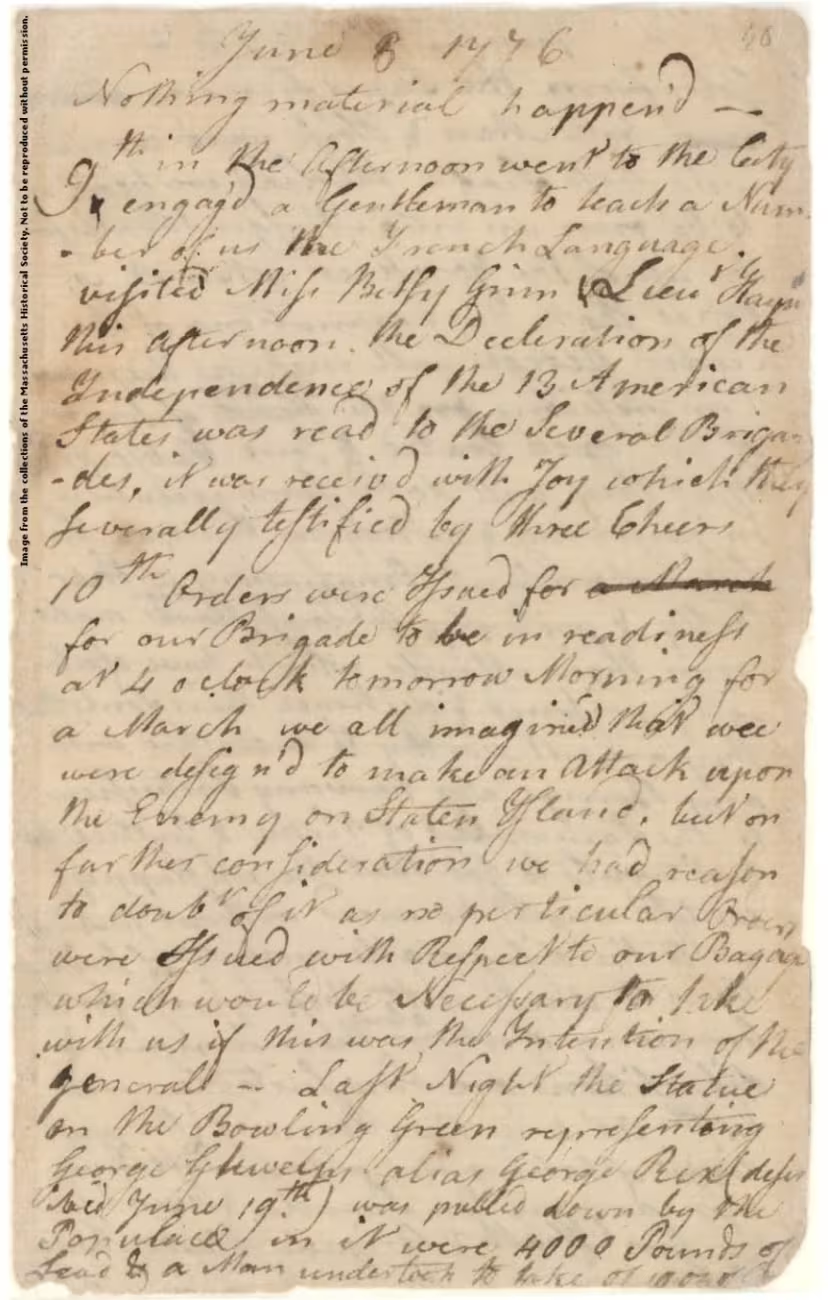
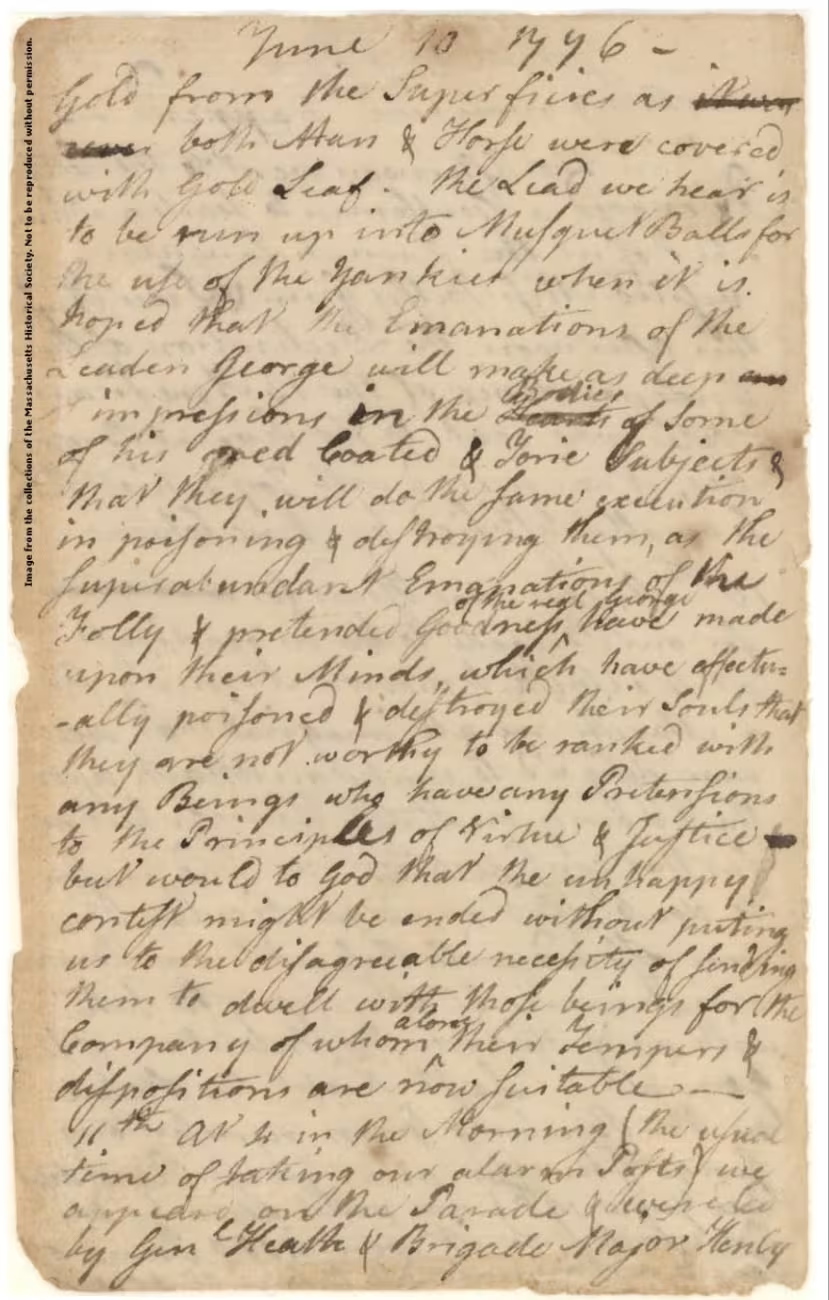
As Bangs noted, the lead was to be used “to give the King's troops a taste of their own master.” It was a symbolic execution of the old order.
The Printer’s Risk: Mary Katharine Goddard
While soldiers like Bangs were pulling down statues, Mary Katharine Goddard used a different weapon against George III: the printing press. In January 1777, the Continental Congress had relocated from Philadelphia and was on the run from the British. It had moved to Baltimore, where Goddard was the city’s postmaster and a master printer.
Mary Katharine Goddard
Mary Katharine Goddard
Printed the first official copy of the Declaration of Independence to include the signers' names and published the Maryland Journal.
She was commissioned to do something new: print the first version of the Declaration that included the signers’ names. Previously, the “Dunlap Broadside” had circulated but did not include any names—doing so was providing the British with a ready-made execution list. Everyone on that list, to the British, had committed treason.
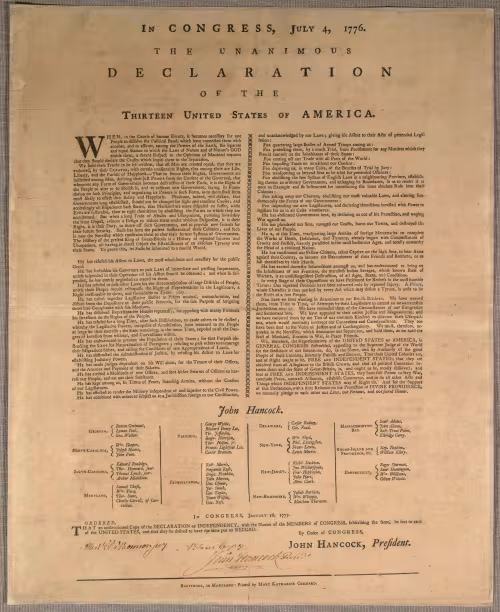
Goddard Broadside (First Printing of Declaration of Independence with Signers' Names)
Goddard Broadside (First Printing of Declaration of Independence with Signers' Names)
Mary Katharine Goddard printed the first version of the Declaration of Independence to include the signers' names, boldly adding her own name in 1777.
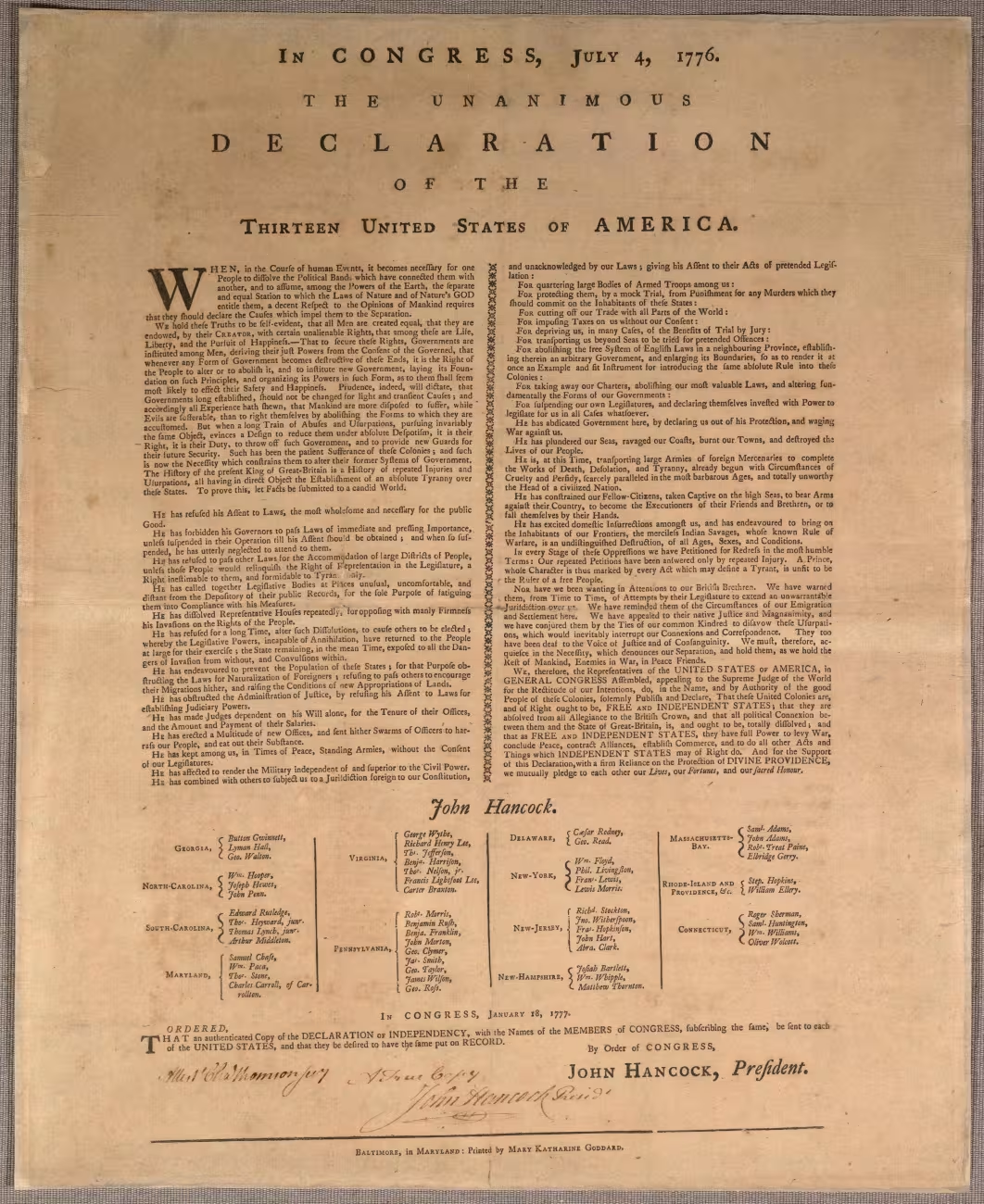
By putting her own name at the bottom of that document—“Baltimore, in Maryland: Printed by Mary Katharine Goddard”—she was also linking her fate to the signers. For Goddard, the gamble for independence was about the power of information. She believed that for a republic to work, the people had to know who was leading them and what they stood for, even if it meant risking her business and potentially her life.
The Freedom-Seekers: Weaponizing “All Men Are Created Equal”
Perhaps the most “advanced” thinkers of 1776 weren't the men in the room in Philadelphia, but the Black Americans who took the Declaration’s words and pushed them to their logical conclusion. They saw a path to freedom, even if the Founders hadn't intended there to be one.
The Philosopher
Lemuel Haynes, of Massachusetts, was indentured at five months of age until around the time the American Revolution started. In 1774 he joined militia troops at Roxbury after the Lexington alarm. Two years later, he joined the Continental Army. He was later mustered out when he contracted typhus.
Frontispiece from Sketches of the life and character of the Rev. Lemuel Haynes, A. M., for many years pastor of a church in Rutland, Vt., and late in Granville, New-York, by Timothy Mather Cooley (1837). From the collections of the Princeton Theological Seminary, digitized by and made available on the Internet Archive.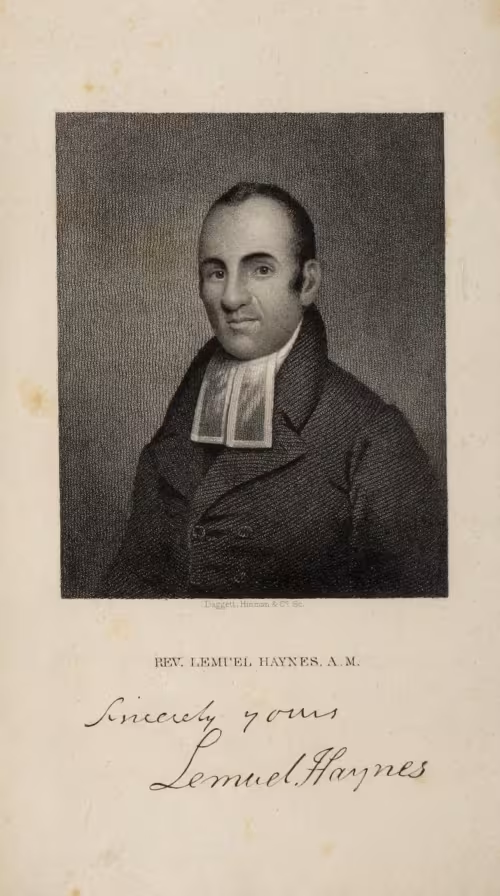
Lemuel Haynes
Lemuel Haynes
First African American ordained minister in U.S. history. Served in Revolutionary War, became Congregationalist minister in Vermont for 30 years.
Liberty Further Extended
In 1776, Haynes wrote “Liberty Further Extended”, and in that unpublished manuscript he did something revolutionary: he quoted from the Declaration’s line about “unalienable rights” and argued that these rights came from God, not from complexion or government. He argued that if it was “tyranny” for George III to tax the colonists, then it was a far greater tyranny for colonists to enslave people.
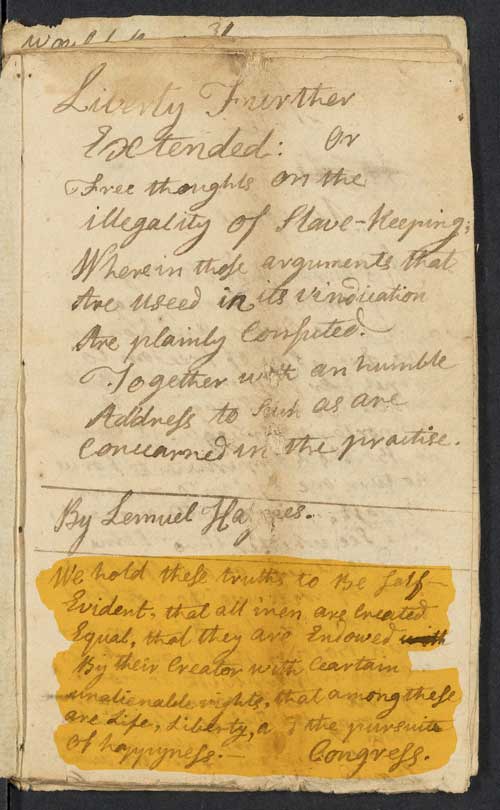
Lemuel Haynes, “Liberty Further Extended.”
Lemuel Haynes, “Liberty Further Extended.”
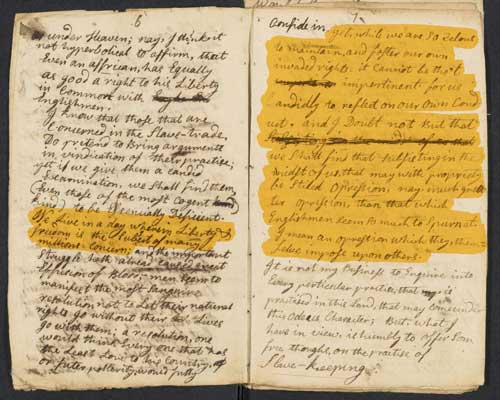
“Liberty Further Extended” was not published during Haynes’ lifetime. It actually was not discovered until 1983, when Ruth Bogin found it in the Harvard University archive.
In a way, Haynes became a conscience of the Revolution. He chose the side of independence because he believed that by supporting that cause, he could push the new nation to live up to its own rhetoric. The gamble was that a new Republic would eventually find its hypocrisy unbearable and end slavery.
The Bodyguard and Petition
In New Hampshire, an enslaved man named Prince Whipple lived a double life. Born in Amabou, Africa, to a family of means, Whipple was sold into slavery when he was around 10 years old. The irony of Prince’s life soon became sharp: He was purchased by Portsmouth merchant William Whipple, who later became a delegate to the Continental Congress and signed the Declaration of Independence. While William was putting his name to a document declaring that “all men are created equal,” Prince was his legal property. When the war started, William Whipple served in the field as a militia captain and general. Prince Whipple, like other enslaved people, fought alongside him as William’s personal “body guard.”
Collections of Maine Historical Society (A86-889). Visit the Maine Historical Society.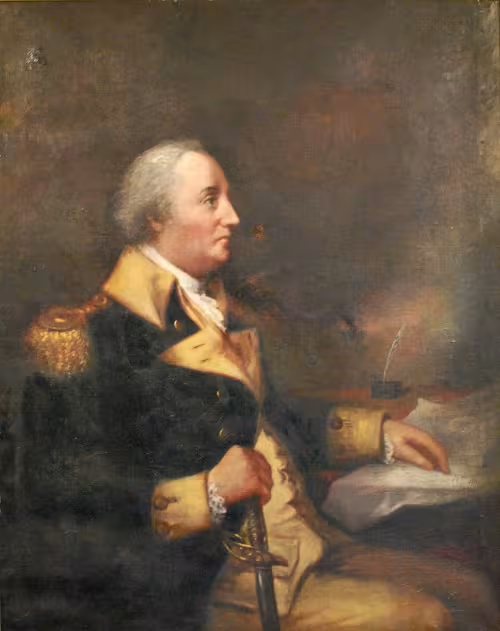
William Whipple
William Whipple
New Hampshire signer of the Declaration of Independence, merchant, major general at Saratoga, state legislator, and judge.
Prince Whipple
Prince Whipple
Enslaved bodyguard who signed a 1779 New Hampshire petition demanding freedom and the right to fight for liberty, embodying Revolutionary contradictions.
Did you know?
Many believed Whipple was depicted in George Washington Crossing the Delaware, it is not him; William Whipple, his enslaver, was elsewhere.
To later generations of Black abolitionists, Prince Whipple was a patriotic hero. He represented the thousands of Black men who fought for a country that had not yet granted them citizenship and instead saw them as property. For Prince, being a “Patriot” was a double-edged sword: he was defending his enslaver’s life while proving his own worth as a free man.
In November 1779, Prince Whipple joined 19 other enslaved men to pursue “that Blessing of Freedom, which they are justly intitled to from the Donation of the beneficient Creator” by petitioning the New Hampshire Legislature for their freedom. They used the Patriots’ own logic against them.
Prince was essentially holding a mirror up to the new American government. He was betting that the principles of the Revolution—the “God of Nature” and “inherent rights”—were more powerful than the laws of slavery.
Prince’s gamble paid off. William Whipple emancipated Prince during the war, likely in recognition of his bravery and service. Prince went on to marry a woman named Dinah, started a family, and became a prominent figure in the free Black community of Portsmouth, known by some as Caleb Quotem.
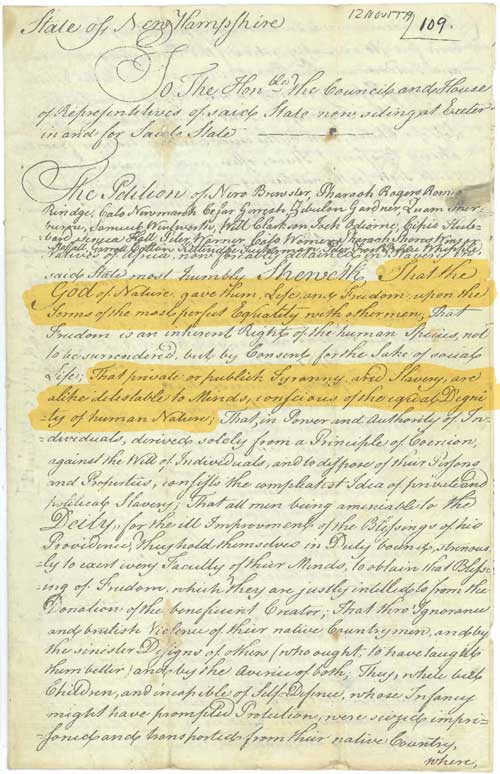
Prince Whipple and Others' Freedom Petition to the New Hampshire General Court, 12 November 1779.
“The God of Nature gave them Life and Freedom, upon the Terms of the most perfect Equality with other men ... that private or public Tyranny and Slavery, are alike detestable to Minds conscious of the equal Dignity of Human Nature.”
Strategic Allies: The Oneida Choice
For some Indigenous nations, the Declaration caused fear and disruption. It attacked George III for not doing enough to help colonists “subdue” the “merciless Indian Savages” on the frontier. Despite this, some Indigenous nations chose the Patriot side.
The Declaration of Independence marked the beginning of a new political order that challenged the Haudenosaunee Confederacy and its Great Law of Peace, or Gayanashagowa. As the Revolution unfolded, the Six Nations divided over whether to support Britain or the United States. The American Revolution did what no outside enemy had done before: it shattered the Confederacy's unity.
Iroquois Confederacy
Iroquois Confederacy
The Haudenosaunee united six nations into one of North America's most influential Indigenous alliance, shaping diplomacy, trade, and colonial politics.
While the Mohawks and Senecas largely supported the British, the Oneida and Tuscarora generally allied with the United States. They did so for a combination of strategic, diplomatic, and local reasons, hoping cooperation would help protect their lands and communities. Leaders like Akiatonharónkwen (Colonel Joseph Louis Cook, also known as Nia-man-rigounant) believed that working with the Americans offered the best chance of safeguarding Oneida interests. Living closest to expanding American settlements, many Oneida leaders viewed alliance as a necessity. Akiatonharónkwen and other Indigenous leaders became important allies, serving as diplomats, military officers, scouts, and guides throughout the Revolutionary War.
Supported British
Mohawk Nation
Mohawk Nation
Part of the Haudenosaunee Confederacy, controlled Mohawk River Valley trade routes. Allied with Britain in the Revolution under Joseph Brant.
Seneca Nation
Seneca Nation
A key Haudenosaunee Confederacy member in western New York, held military and diplomatic power and allied with Britain during the Revolution.
Supported Americans
Oneida Nation
Oneida Nation
The Oneida Nation, part of the Haudenosaunee Confederacy, allied with the United States during the American Revolution and maintains communities in New York and Wisconsin.
Tuscarora Nation
Tuscarora Nation
The Tuscarora Nation migrated from North Carolina to western New York in the early 1700s, becoming the sixth nation of the Haudenosaunee Confederacy.
Akiatonharónkwen, also known as Colonel Joseph Louis Cook, joined Americans in the fight against the British, believing that a strategic alliance with the rebels whose settlements were nearer by could protect Oneida lands.
The Americans treated the Oneida as foreign dignitaries. In September 1780, Lt. Enos Reeves described the arrival of an Oneida delegation with a mix of awe and the typical prejudices of the time:
Minneapolis Institute of Art, Gift of James F. and Louise H. Bell. View at the Minneapolis Institute of Art.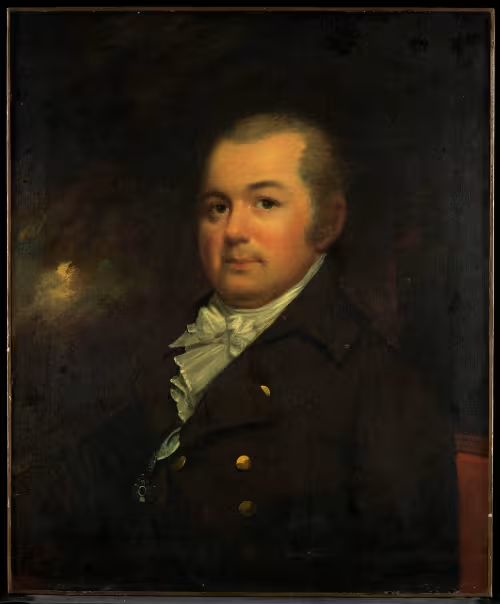
Enos Reeves
Enos Reeves
Pennsylvania regiment officer who rose from private to brevet captain during the Revolution, later becoming a Charleston silversmith and firemaster.
Yale University Art Gallery, Gift of Mrs. Robert F. Jefferys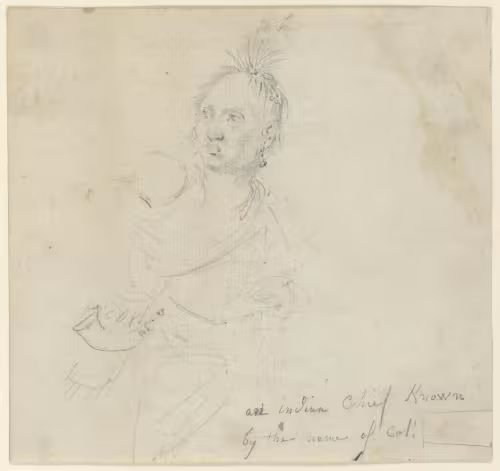
Joseph Louis Cook
Joseph Louis Cook
Likely the highest-ranking officer of African descent in the Continental Army, serving at Oriskany and Saratoga and representing Oneida interests.
John Trumbull drew this sketch of Akiatonharónkwen as part of a study for his painting on the The Death of General Montgomery in the Attack on Quebec, 31 December 1775.
Extract from the Letter-books of Lieutenant Enos Reeves, 13 September 1780.
Extract from the Letter-books of Lieutenant Enos Reeves, 13 September 1780.
The Oneida gamble extended beyond the Americans and included their French allies. In August 1780, French Lieutenant General Rochambeau wrote George Washington about a meeting with Indigenous leaders.
National Portrait Gallery, Smithsonian Institution; transfer from the National Gallery of Art; gift of the A.W. Mellon Educational and Charitable Trust, 1942.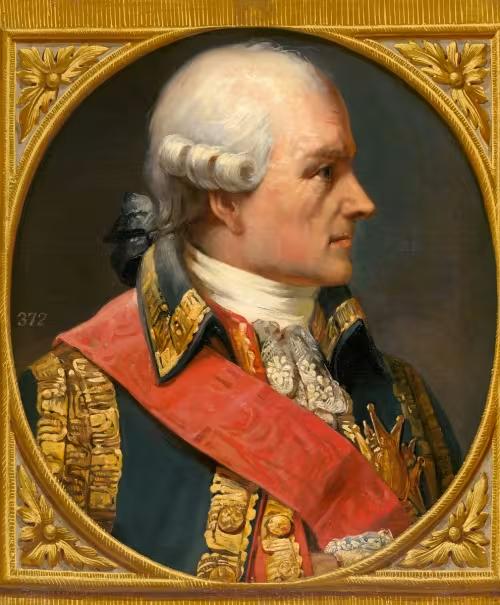
Jean-Baptiste Donatien de Vimeur, comte de Rochambeau
Jean-Baptiste Donatien de Vimeur, comte de Rochambeau
French Army officer who commanded the expeditionary force that aided the United States and helped plan the 1781 Yorktown campaign.
National Portrait Gallery, Smithsonian Institution; acquired as a gift to the nation through the generosity of the Donald W. Reynolds Foundation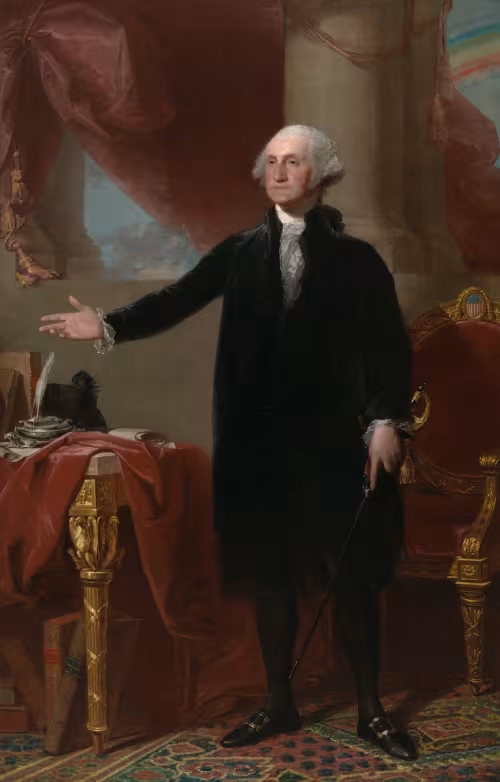
George Washington
George Washington
Commander-in-chief of the Continental Army during the Revolutionary War who became the first U.S. president, setting key precedents for federal government.
Rochambeau to George Washington, 31 August 1780.
Rochambeau to George Washington, 31 August 1780.
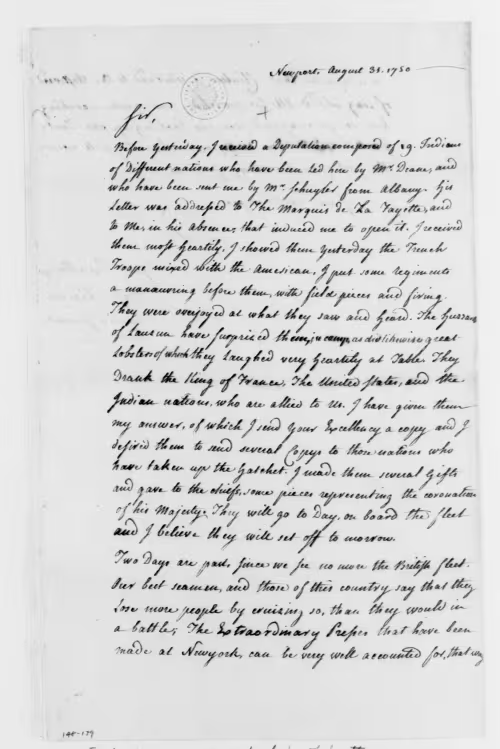
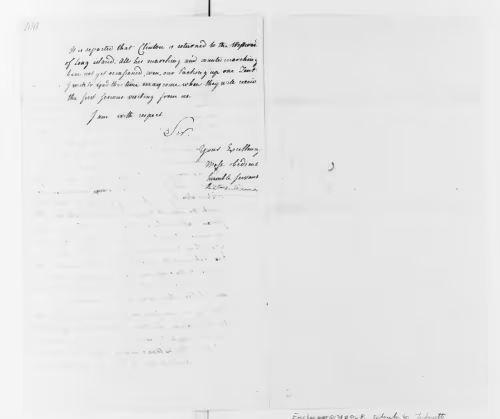
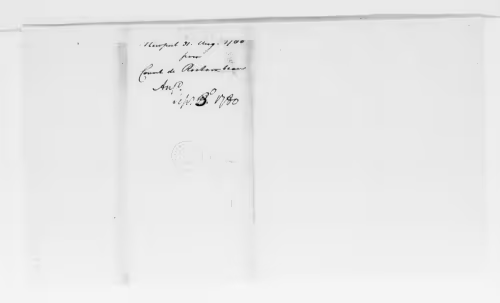
Rochambeau to George Washington, 31 August 1780
Rochambeau to George Washington, 31 August 1780
Rochambeau reports on receiving Native American delegations and monitoring British fleet movements.
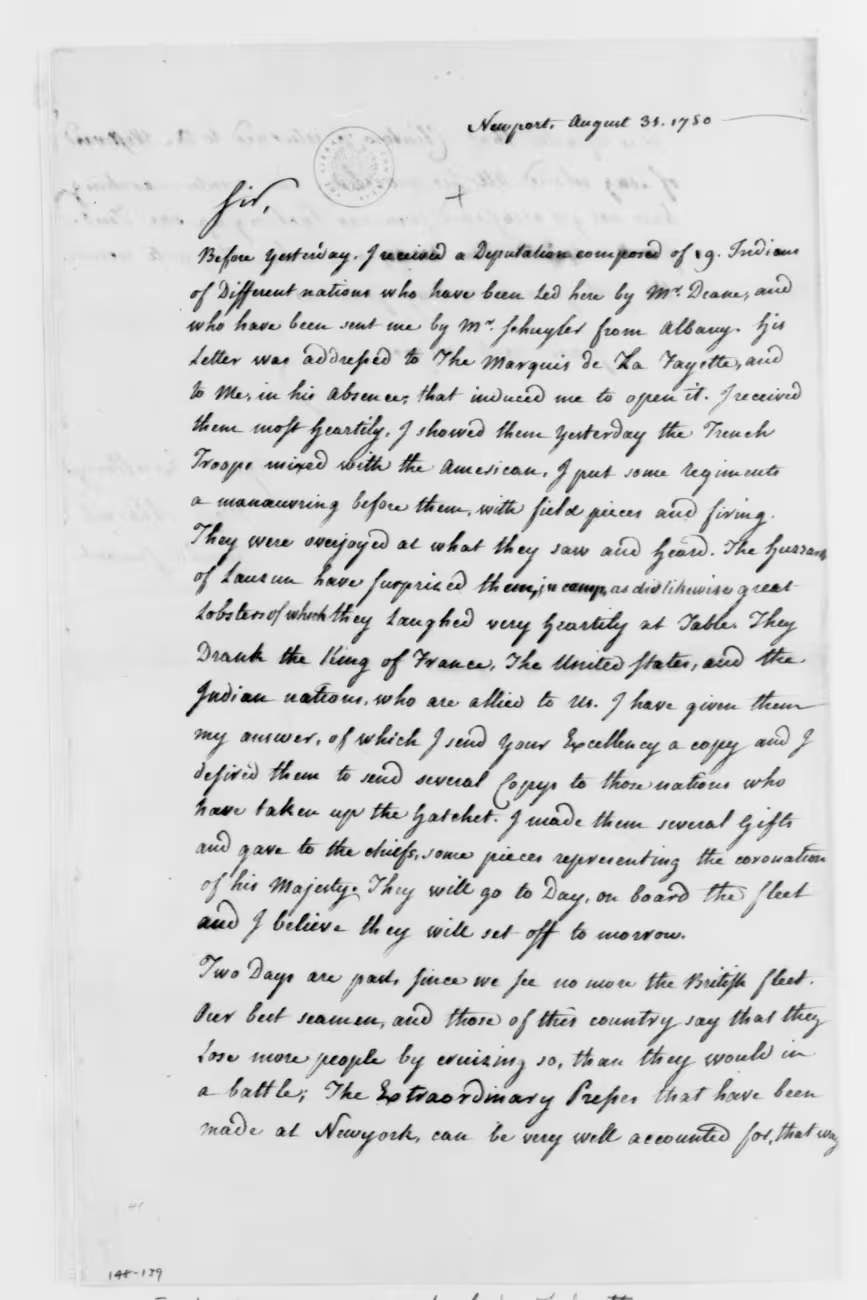
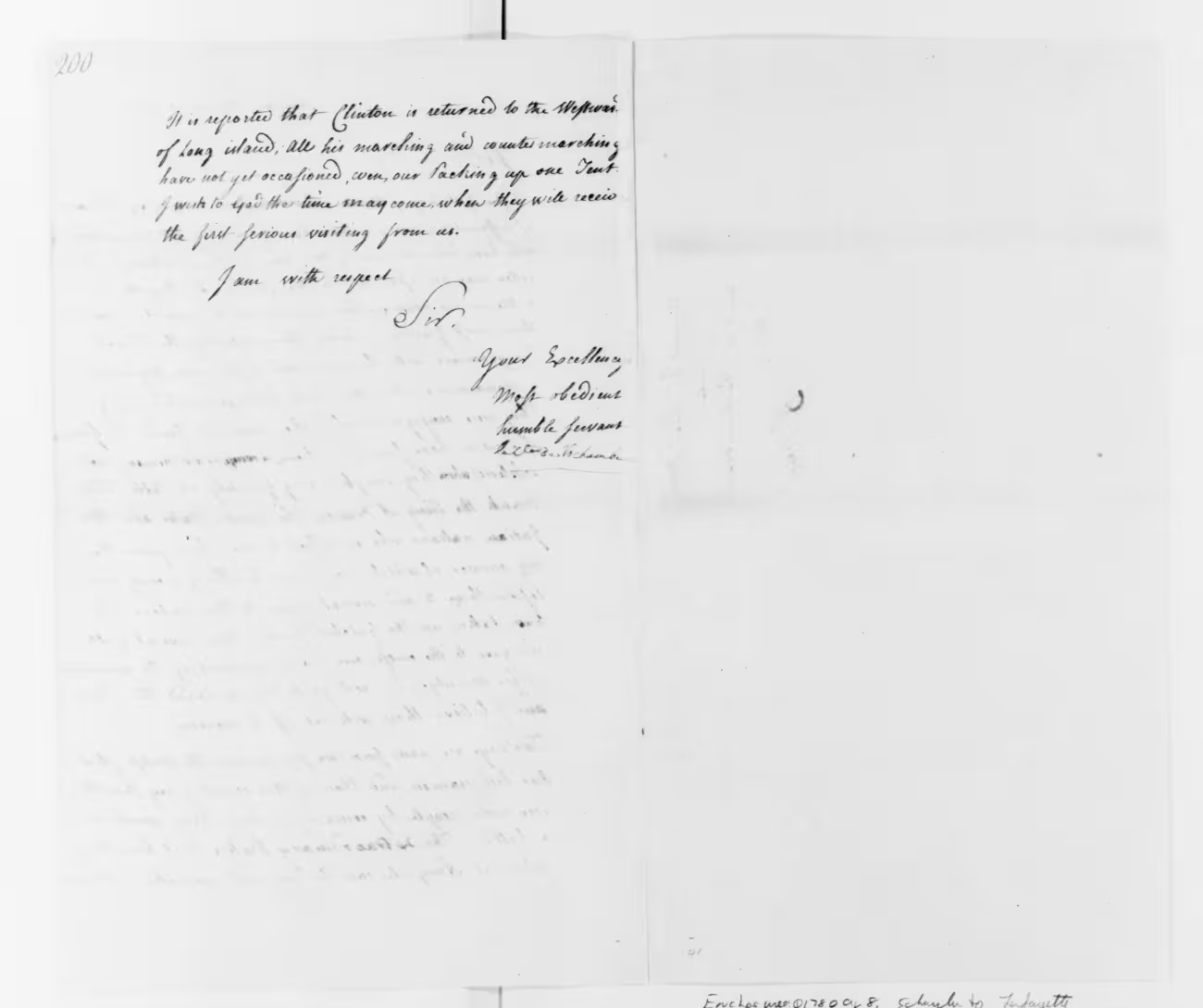
This scene—Indigenous leaders drinking toasts alongside French generals and American revolutionaries—shows how the Indigenous people had immersed themselves in the global war. They were building an international network of support to ensure that when the war ended, they wouldn't be forgotten.
The Oneida proved their loyalty at Valley Forge, Oriskany, and Saratoga. They bet everything on the promise of American gratitude. But for the Oneida, their choices led to a bittersweet conclusion. While their status as allies was recognized in early treaties like the 1784 Treaty of Fort Stanwix, the “rising power” they had helped create would eventually turn its eyes toward their land. Their story is a reminder that in 1776, every choice carried a heavy price.