Sections in this exhibit
-
1
Section 1 Choosing Sides in Revolutionary AmericaSection 1
After Congress approved the Declaration on 4 July 1776, printed copies and public readings spread its message across the former colonies. Hearing and seeing its words made independence real for many Americans, even as reactions ranged from celebration to uncertainty and opposition.
-
2
Section 2 The Gamble for a New FutureSection 2
Choosing independence in 1776 was a risky and deeply personal decision. Different people supported the Revolution for different reasons, each taking a gamble on what a new nation might become.
-
3
Section 3 The Search for ProtectionSection 3
For many people in 1776, staying loyal to Britain was a search for protection, stability, or freedom. Loyalists made their own choices based on fear of disorder, defense of their communities, or hopes that the British Empire offered a safer future.
-
4
Section 4 The Middle GroundYou are here
Many people tried to remain neutral during the American Revolution, but neutrality was difficult and often dangerous, especially for Quakers. Their experiences show how survival, belief, and circumstance shaped choices in a divided society.
The Middle Ground
Many people tried to remain neutral during the American Revolution, but neutrality was difficult and often dangerous, especially for Quakers. Their experiences show how survival, belief, and circumstance shaped choices in a divided society.
Between Two Sides
The choice for many in 1776 wasn’t “Patriot” or “Loyalist.” It was about survival. While history often focuses on the active participants in the Revolution, a massive portion of the population tried to remain quietly in the middle. This choice could have terrifying consequences.
For Patriots, this looked like treason. For Loyalists, the neutrals’ refusal to support George III looked like rebellion. Walking a middle ground made enemies on both sides.
The Quaker Dilemma: Principled Neutrals
During the American Revolution, a large number of Quakers (known colloquially as “Friends”) held to their religious belief against violence and avoided overtly supporting the war effort. While some Friends backed the Patriot and British causes, others sought neutrality. This stance invited suspicion from both sides. Many Quakers faced fines, imprisonment, and general state harassment.
Samuel Rowland Fisher was a Quaker merchant who was based in Philadelphia, living just streets away from where Thomas Jefferson wrote the Declaration of Independence. Fisher was involved in his father's shipping business, Joshua Fisher & Sons.
Samuel Rowland Fisher
Samuel Rowland Fisher
Quaker merchant whose arrest and exile for refusing Revolutionary War loyalty oaths produced detailed writings on maintaining religious neutrality.
Society of Friends
Society of Friends
The Society of Friends (Quakers) emerged in 1650s England under George Fox. Advocated equality, peace, abolition, and reform. Many were pacifists.
As a devoted Quaker, he was a pacifist who refused to participate in the Revolutionary War. Patriots exiled him to Winchester, Virginia, with other Quakers who refused to take a stance in the conflict. He was later allowed to return to Philadelphia.
After writing a letter to his brother Jabez Maud Fisher in New York City, however, he was arrested and accused of holding Loyalist sympathies. Fisher denied these allegations but he was examined by Pennsylvania chief justice Thomas McKean and held in a Philadelphia jail for three weeks. He refused to give bail, asserting his innocence and conscientious objections.
Swarthmore College Special Collections, Friends Historical Library Collection. View in the Swarthmore College Special Collections.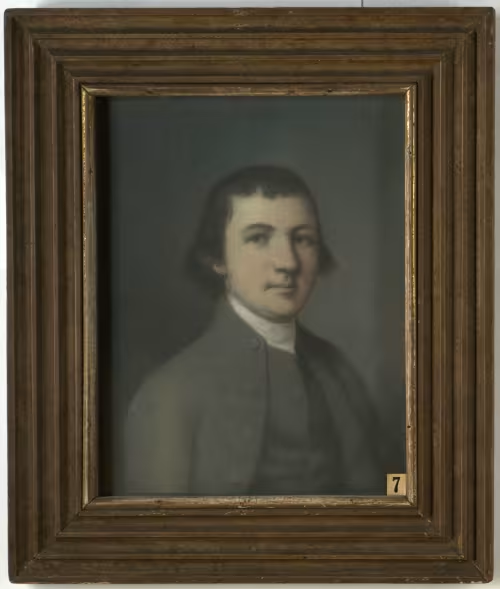
Jabez Maud Fisher
Jabez Maud Fisher
Quaker merchant who detailed a 2,000-mile journey through colonial America in a journal, providing a chronicle of everyday life in the Revolutionary Era.
National Portrait Gallery, Smithsonian Institution; transfer from the Smithsonian American Art Museum; gift of the collection of George Buchanan Coale, 1926. View in the National Portrait Gallery.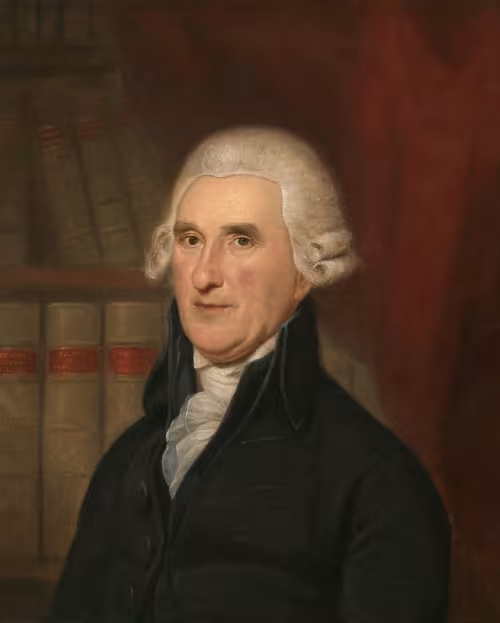
Thomas McKean
Thomas McKean
Delaware Patriot, pro-independence representative to Congress, Pennsylvania judge who pioneered judicial review, and Pennsylvania governor.
Fisher, “Journal,” Pennsylvania Magazine of History and Biography 41, no. 1 (1917): p. 156–57.
Fisher, “Journal,” Pennsylvania Magazine of History and Biography 41, no. 1 (1917): p. 156–57.
Fisher acknowledged writing the letter, but denied conveying any intelligence. He asserted that it was open and sent under the expectation it would be delivered to British officers.
Fisher thought the charges against him were ridiculous and unfounded.
“I must be judged to be a Blockhead indeed to undertake to convey intelligence in an open letter with my name signed to it, & send it subject to inspection before it could enter the Brittish Lines, & that I never had either inclination or intention to convey any intelligence to the Brittish Army.”
—Fisher, “Journal,” Pennsylvania Magazine of History and Biography 41, no. 1 (1917): p. 162.
Punished for Neutrality
Despite his protests, or perhaps because of them, Fisher was imprisoned for two years and forfeited half of his property. He believed he was imprisoned for his “private sentiments only,” alleging that it was because he did not acquiesce and make a stand or choice. By refusing to provide bail or take a loyalty oath, Fisher held steadfast to his Quaker principles, even in the face of significant personal and financial hardship.
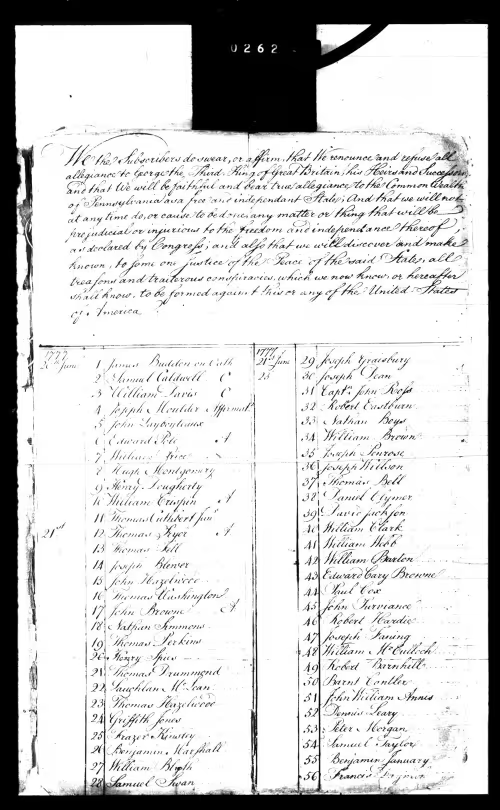
Pennsylvania Oaths of Allegiance, 20 June 1777–25 November 1778
Pennsylvania Oaths of Allegiance, 20 June 1777–25 November 1778
Pennsylvania's Revolutionary-era loyalty oath required white men to renounce King George III and pledge allegiance to the newly independent commonwealth.
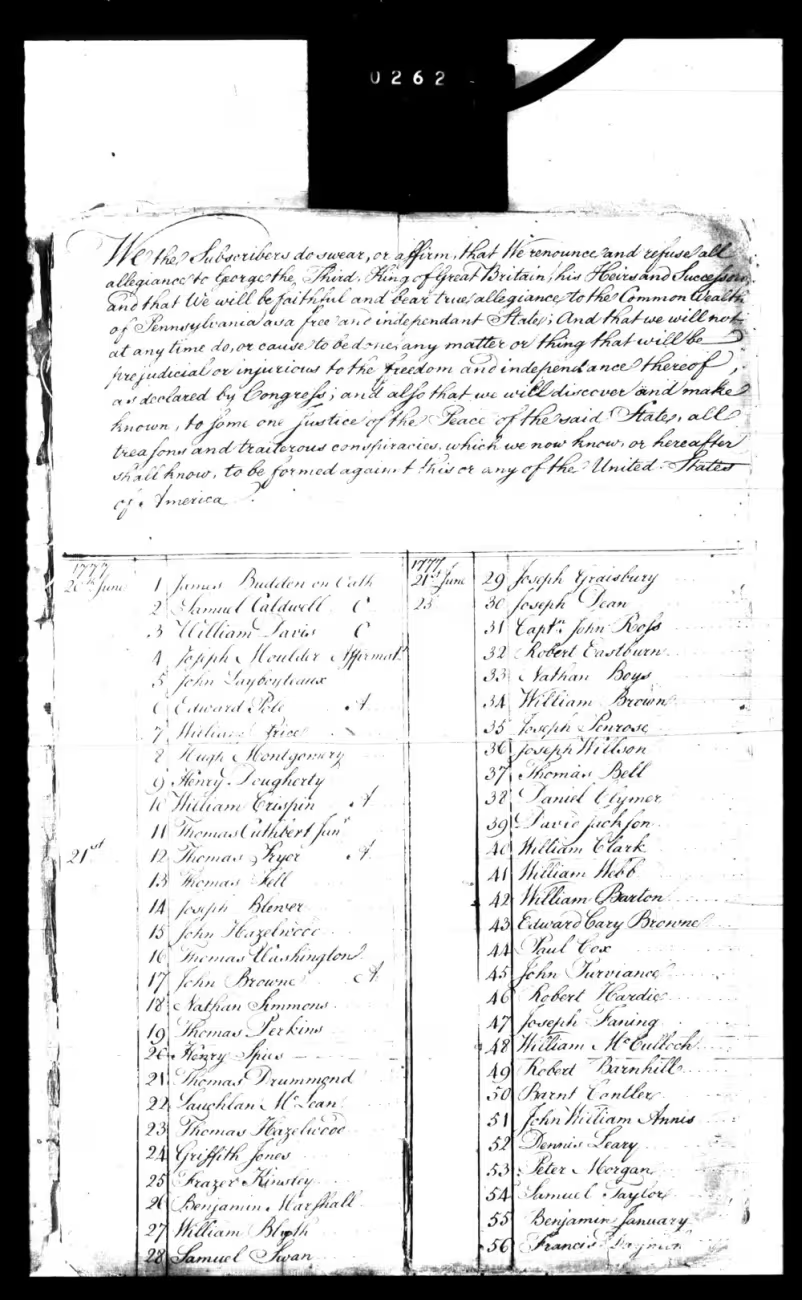
Soon after the war, Pennsylvania mandated that all white men over the age of 18 swear an oath of allegiance to the newly created state. This register records the names of men who took that oath.
Elizabeth Sandwith Drinker: A Witness at Home
While Fisher was in jail, women like Elizabeth Sandwith Drinker navigated the middle ground from their front porches.
Elizabeth was a highly educated, upper-class Quaker. She had been a student of the famous abolitionist Anthony Benezet, and her life in Philadelphia was one of comfort. The Declaration of Independence turned her world upside down.
Elizabeth Drinker Silhouette, Historical Society of Pennsylvania portrait collection (V88), Box 50, Historical Society of Pennsylvania. 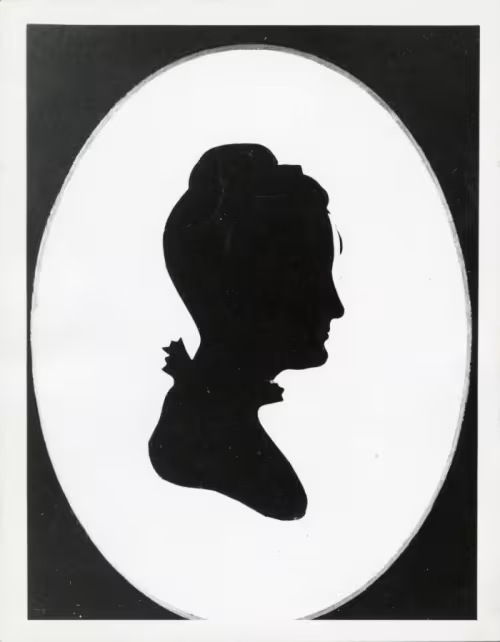
Elizabeth Sandwith Drinker
Elizabeth Sandwith Drinker
Kept a diary for nearly fifty years documenting daily life, war, and yellow fever epidemics in Philadelphia during the Revolution and early republic.
Quakers like the Drinkers experienced the war differently to other people. Shopkeepers refused to close their shops on days like 4 July or those appointed to celebrate American military victories. In retaliation, American Patriots often broke the windows of Quaker shops.
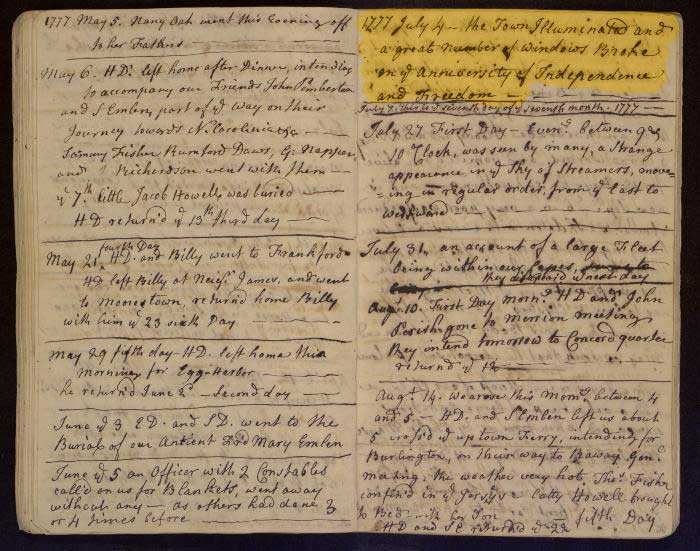
Writing on 4 July 1777, in her diary, Drinker described the day’s events:
“1777 July 4—the Town Illuminated and a great number of Windows Broke on the Anniversary of Independence and Freedom.”
—Diary of Elizabeth Drinker, p. 60.
The Revolution hit Elizabeth most forcibly, however, in September 1777. Her husband, Henry, and nineteen other Quaker men were arrested by Patriot authorities. They had refused to sign a loyalty oath to the new Pennsylvania government. Elizabeth wrote about the events in her diary.
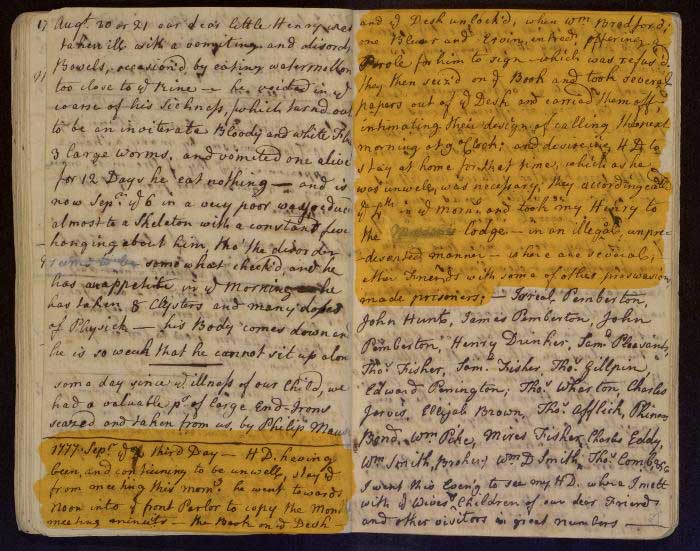
“1777 Sepr. the 2 third Day—H[enry]D[rinker]. having been, and continuing to be unwell, stay’d from meeting this morning. he went towards Noon in the front Parlor to copy the Monthly minuits—the Book on the Desk—and the Desk unlock’d, when Wm. Bradford; one [Bluser] and Ervin, entred, offering a Parole for him to sign—which was refus’d. they then seized on the Book and took several papers out of the Desk and carried them off; intimating their design of calling the next morning at 9 o’clock; and desireing HD to stay at home for that time, which as he was unwell, was necessary; they according called the 4th, in the morning and took my Henry to the [Massons] lodge—in an illegeal, unpredesented manner—where are several, other Friends with some of other proswasions, made prisoners.”
—Diary of Elizabeth Drinker, p. 60.
Caught Between Armies
Without a trial, Henry was banished to Winchester, Virginia, leaving Elizabeth alone to protect their children and Philadelphia home. Life did not improve much for Elizabeth. With her husband in exile, the British army took over Philadelphia in late September 1777 and despite successfully rejecting earlier demands, Elizabeth was soon compelled to quarter a British officer in her home. As a committed pacifist, this was a daily violation of her principles and her privacy. She was caught in a geographic trap: the Patriots had taken her husband, and the British had taken her spare bedroom.
Collection of the Historical Society of Pennsylvania. View in the HSP Digital Library.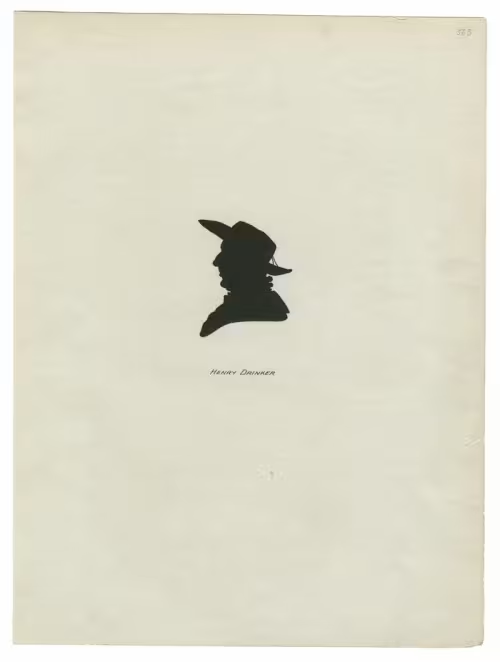
Henry Drinker
Henry Drinker
Quaker merchant imprisoned for refusing a Revolutionary loyalty oath, later served as president of the Pennsylvania Abolition Society.
She again confided her in diary:
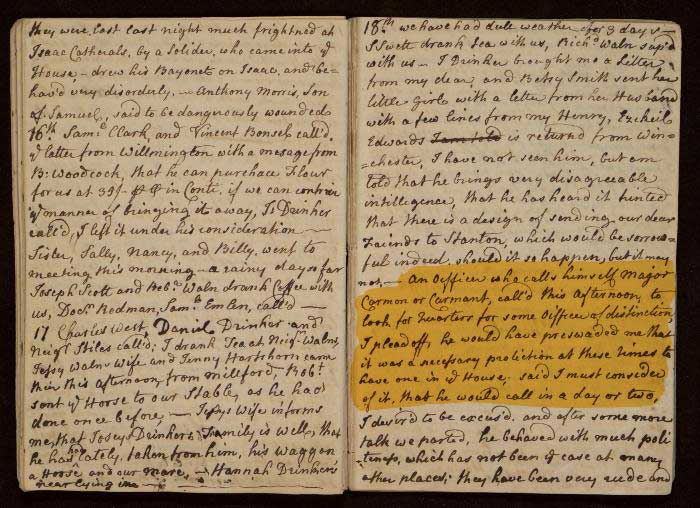
“18th [December 1777] An Officer who calls himself Major Carmon or Carmant, call’d this Afternoon, to look for Quarters for some Oiffecer of distinction, I plead off, he would have preswaded me that it was a necessary protiction at these times to have one in the House; said I must consider of it, that he would call in a day or two.”
—Diary of Elizabeth Drinker, p. 69.
A British officer began staying with Elizabeth toward the end of December 1777. She hoped it would “be no great inconvenience,” but remained concerned about the situation.
Endurance and Action
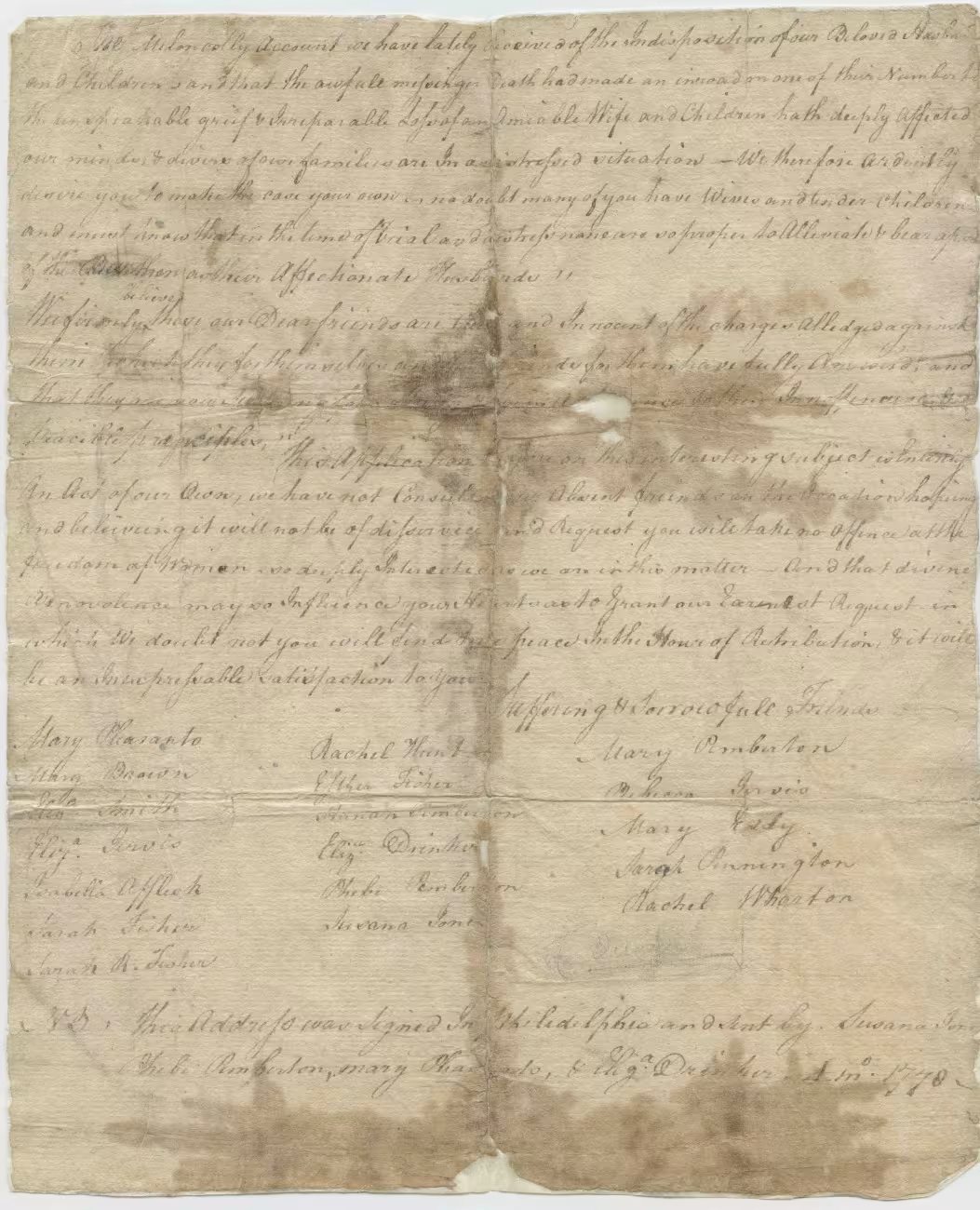
Elizabeth was not just a silent diarist, though. She also served as a negotiator. In March 1778, hearing reports of illness among the prisoners in Virginia, Elizabeth and three other Quaker women took a radical step. They drafted a petition signed by eighteen women pleading for their husbands' release.
Elizabeth traveled across dangerous military lines to Valley Forge to seek an audience with General George Washington. While Washington refused to interfere, the women didn't give up. They pressed on to Lancaster, the temporary seat of the revolutionary government, to demand justice. By the end of April, their persistence paid off: Elizabeth returned to Philadelphia with her newly freed husband.
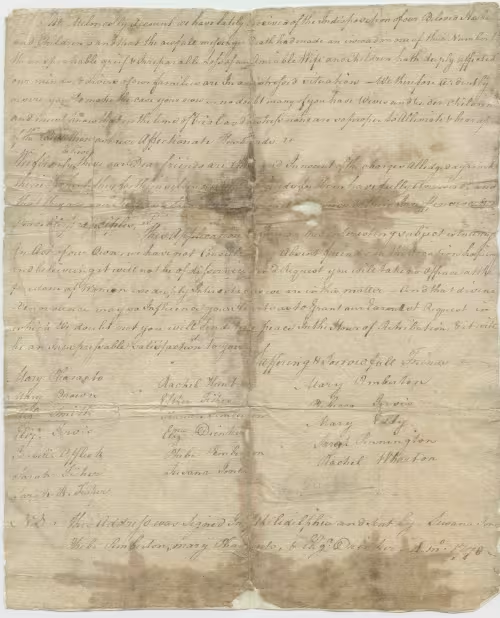
Pleasants, Mary et al., Representation of the wives of the prisoners in Virginia, to the Congress, Board of War, President and Council, and Assembly of Pennsylvania, read in Council April 10, 1778
Pleasants, Mary et al., Representation of the wives of the prisoners in Virginia, to the Congress, Board of War, President and Council, and Assembly of Pennsylvania, read in Council April 10, 1778
Elizabeth Drinker never held a political office or led a movement. But by refusing to choose a side and instead focusing on the survival of her family and the Society of Friends, she became a witness to the civil war that raged behind closed doors. Her diary proves that for many women in 1776, liberty was less important than the safety of the people they loved.