
Sections in this exhibit
-
1
Section 1 A Famous Document Takes ShapeSection 1
In 1776, independence moved from argument to action when the Continental Congress asked a committee of five to draft a declaration. Their work turned a bold idea into a document that announced the United States to the world.
-
2
Section 2 Thomas Jefferson: Drafting the DeclarationSection 2
Thomas Jefferson wrote the first draft of the Declaration in June 1776, drawing on ideas colonists had debated for years. His draft gave the Committee of Five and Congress a starting point.
-
3
Section 3 John Adams: Debating IndependenceSection 3
John Adams helped secure the agreement that made the Declaration possible. Through debate and persuasion in Congress, he worked to unite the colonies behind the decision to declare independence.
-
4
Section 4 Benjamin Franklin: Writing for the WorldSection 4
Benjamin Franklin made minor edits to the Declaration, and he hoped the document would be used to persuade readers beyond the colonies.
-
5
Section 5 Roger Sherman: Law, Balance, and AuthoritySection 5
Roger Sherman helped ensure the Declaration worked as a clear, practical document. His legal judgment and support moved the draft forward.
-
6
Section 6 Robert R. Livingston: Writing Without a VoteSection 6
Robert R. Livingston helped draft the Declaration even though New York’s delegates were not yet allowed to vote for independence. His experience shows how the colonies moved toward unity at different paces.
-
7
Section 7 From Debate to DeclarationSection 7
The Declaration of Independence emerged from debate, uncertainty, and compromise in 1776. The document moved over time from a risky decision to a lasting symbol of the American nation and people.
Introduction
Most know the Declaration of Independence; fewer know how it was made. This exhibit traces the 1776 collaboration that shaped the document.
Most people think of the Declaration of Independence as having been written by one person, all at once. This exhibit shows that the Declaration was messier, louder, and perhaps more human. It was a document built under extreme pressure by drafting, editing, debate, and political timing.
Five people contributed to writing the Declaration, each of whom played a different role. Jefferson wrote a powerful first draft. Adams pushed Congress toward unity. Franklin fine-tuned a worldwide message. Sherman kept it legally sound. And Livingston helped write the Declaration of Independence, even when his home state—New York—told him he couldn’t vote for it.
What emerged was a document forged in collaborative decision-making.
What shaped how the Declaration was written?
Americans often remember the Declaration as Thomas Jefferson’s masterpiece. But it was a group project. It came together through drafts, edits, and debate, as well as bargaining. Independence required Congress to agree before it could speak with a single voice.
The Declaration was a process and not a single act: It moved from draft to committee to Congress, shaped by arguments, delays, and compromise.
Independence required unity before it required a document: John Adams’s greatest contribution was not phrasing. It was helping Congress reach an agreement.
The words were built for multiple audiences, including other nations: Franklin helped sharpen the tone so the Declaration could persuade readers in France, Spain, and beyond.
What was removed matters as much as what remains: Jefferson’s draft included language, especially on slavery, that divided Americans. The final text reflects ideals as well as the limits of what Congress could say in 1776.
Want to know more?
Explore the people, places, and primary sources featured in this exhibit.
Primary Sources
29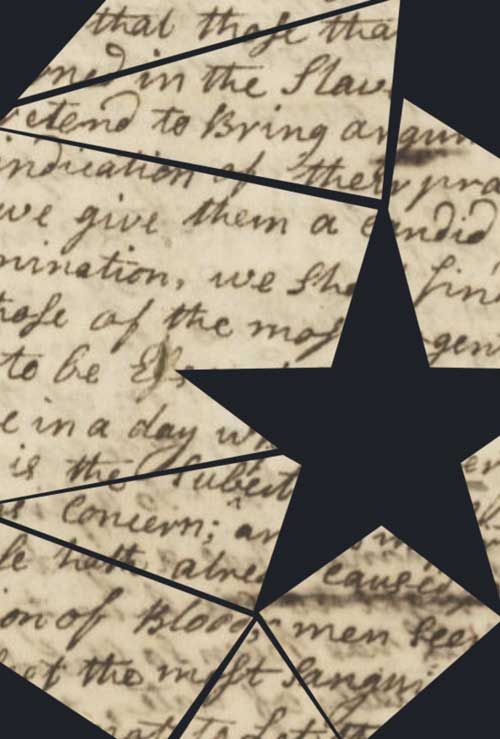
Patrick Henry's resolutions asserting colonial rights to self-taxation and British liberties, challenging parliamentary authority.
A declaration of colonial rights in response to British parliamentary overreach, condemning the Intolerable Acts.
A plan for colonial trade boycotts and economic resistance to British policies, signed by delegates including Washington and Adams.
This letter by Robert R. Livingston defends colonial resistance and seeks reconciliation while detailing grievances, including Boston's occupation.
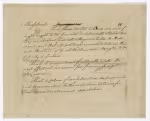
Richard Henry Lee's resolution declaring the colonies free and independent states, calling for dissolution of British ties and confederation planning.
A few weeks prior to the Declaration, New York delegates to the Second Continental Congress question whether they have authority to vote on independence.
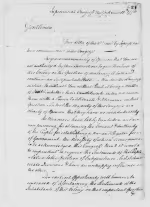
Nathaniel Woodhull forbids New York's delegates to the Continental Congress from voting on independence, revealing colonial hesitation prior to July 1776.
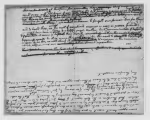
One of the earliest known drafts of the Declaration, this document includes some of Jefferson's earliest surviving language on independence.
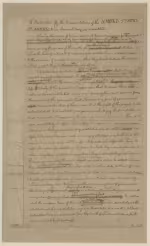
This rough draft of the Declaration of Independence features early revisions by Adams and Franklin and several sections ultimately removed by Congress.
New York's Continental Congress delegates give legislative updates and agree not to approve independence without orders from their provincial government.
People
18A prominent early-American politician who drafted the Declaration of Independence and served as the third U.S. president.
Lawyer who defended British soldiers after the Boston Massacre, championed independence in Congress, and served as the second U.S. president.
Co-drafted the Declaration of Independence, worked on the first New York State constitution, and negotiated the Louisiana Purchase as minister to France.
The only signer of all four founding documents and architect of the Connecticut Compromise that established the bicameral structure of Congress.
Helped draft the Declaration of Independence and worked to secure the crucial Franco-American alliance that changed the course of the Revolution.
British monarch who reigned for six decades, overseeing Britain's loss of American colonies and the defeat of Napoleon, while battling mental illness.
Writer and political observer whose correspondence with John Adams provides a rich record of the Revolutionary era and early American republic.
Royal Navy admiral during the Revolutionary War, balanced conciliation with aggressive warfare until the French undermined his blockade in 1778.
Organizations
5Drafted the Declaration of Independence. Its members were: Thomas Jefferson, John Adams, Benjamin Franklin, Roger Sherman, and Robert R. Livingston.
Led the U.S. government prior to the Articles of Confederation, created the Continental Army, and issued the Declaration of Independence.
A revolutionary government that coordinated military defense, drafted the state constitution, and led the colony's transition to independence.
Congress's central financial body overseeing public accounts, expenditures, and Revolutionary War finances until replaced by Treasury Department.
Continental Congress body that managed supplies, prisoners, and correspondence for the Continental Army until replaced by Secretary at War.
Places
8Explore Related Resources
-
A look at how the Declaration of Independence evolved from a draft into a unified national document through collaboration, revision, and compromise.
-
Film analyzing the Declaration of Independence as a strategic communication campaign to justify revolution and gain international support for America.
-
Explores how the Continental Congress drafted the Declaration of Independence through collaboration among Jefferson, Adams, Franklin, and others.
-
Explores the personal sacrifices of the 56 signers of the Declaration of Independence who risked death for treason under British law in 1776.
-
Explores Jefferson's 'fair copies' of the Declaration of Independence, revealing his original draft and passages Congress removed, including his condemnation of slavery.
-
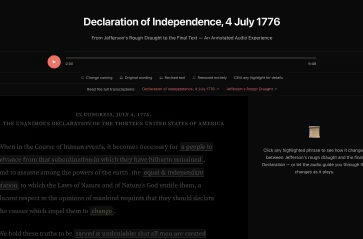
Interactive audio experience reveals how Jefferson's Rough Draught of the Declaration of Independence was collectively revised through political compromise.
Explore More Exhibits
-
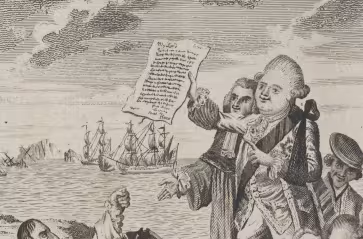
The Declaration of Independence forced Americans into a civil war, where printers, Mohawk leaders, and enslaved people chose between liberty and loyalty.
-
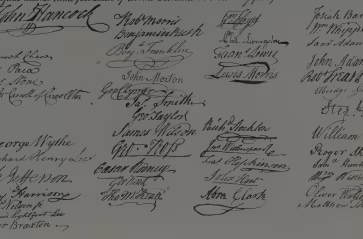
Editing Independence explores documentary editing through Declaration signers, featuring events, exhibits, and key historical figures and places.