
Sections in this exhibit
-
1
Section 1 A Famous Document Takes ShapeSection 1
In 1776, independence moved from argument to action when the Continental Congress asked a committee of five to draft a declaration. Their work turned a bold idea into a document that announced the United States to the world.
-
2
Section 2 Thomas Jefferson: Drafting the DeclarationSection 2
Thomas Jefferson wrote the first draft of the Declaration in June 1776, drawing on ideas colonists had debated for years. His draft gave the Committee of Five and Congress a starting point.
-
3
Section 3 John Adams: Debating IndependenceSection 3
John Adams helped secure the agreement that made the Declaration possible. Through debate and persuasion in Congress, he worked to unite the colonies behind the decision to declare independence.
-
4
Section 4 Benjamin Franklin: Writing for the WorldYou are here
Benjamin Franklin made minor edits to the Declaration, and he hoped the document would be used to persuade readers beyond the colonies.
-
5
Section 5 Roger Sherman: Law, Balance, and AuthoritySection 5
Roger Sherman helped ensure the Declaration worked as a clear, practical document. His legal judgment and support moved the draft forward.
-
6
Section 6 Robert R. Livingston: Writing Without a VoteSection 6
Robert R. Livingston helped draft the Declaration even though New York’s delegates were not yet allowed to vote for independence. His experience shows how the colonies moved toward unity at different paces.
-
7
Section 7 From Debate to DeclarationSection 7
The Declaration of Independence emerged from debate, uncertainty, and compromise in 1776. The document moved over time from a risky decision to a lasting symbol of the American nation and people.
Benjamin Franklin: Writing for the World
Benjamin Franklin made minor edits to the Declaration, and he hoped the document would be used to persuade readers beyond the colonies.
A Document for a Wider Audience
Benjamin Franklin played only a background role in drafting the Declaration, but he had a big impact. By 1776, Franklin was among the most famous Americans in Europe. He was known as a scientist, writer, and thinker. He understood that the Declaration was not just for the people in the American colonies. It was also meant for foreign governments that the colonists hoped would become allies.
From the New York Public Library. View in the NYPL Digital Collections.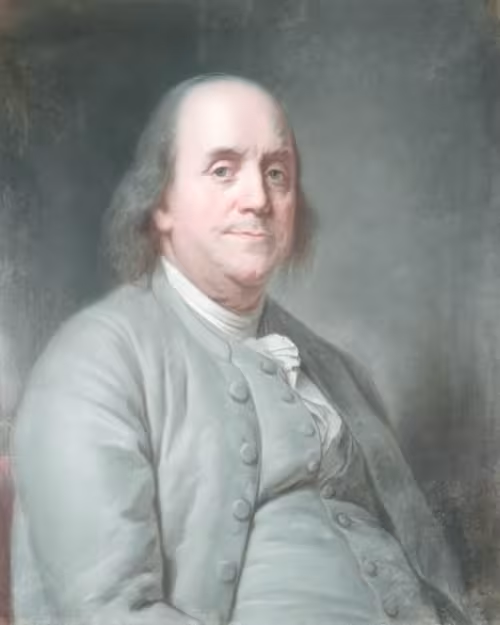
Benjamin Franklin
Benjamin Franklin
Helped draft the Declaration of Independence and worked to secure the crucial Franco-American alliance that changed the course of the Revolution.
Countries like France and Spain, Britain’s traditional and long-term enemies, would read the Declaration carefully before offering any type of support. Franklin, who was absent during the drafting process because he was suffering from gout but reviewed a copy at least once, helped shape the tone of the Declaration in other ways. He believed that the document should explain independence as a careful decision and not an emotional, short-term outburst. Some of his edits softened harsh or dramatic language.
These changes helped present the colonies as mature and trustworthy. They were in it for the long haul. Franklin’s careful approach helped make the Declaration a diplomatic message meant to speak to Americans and the wider world.
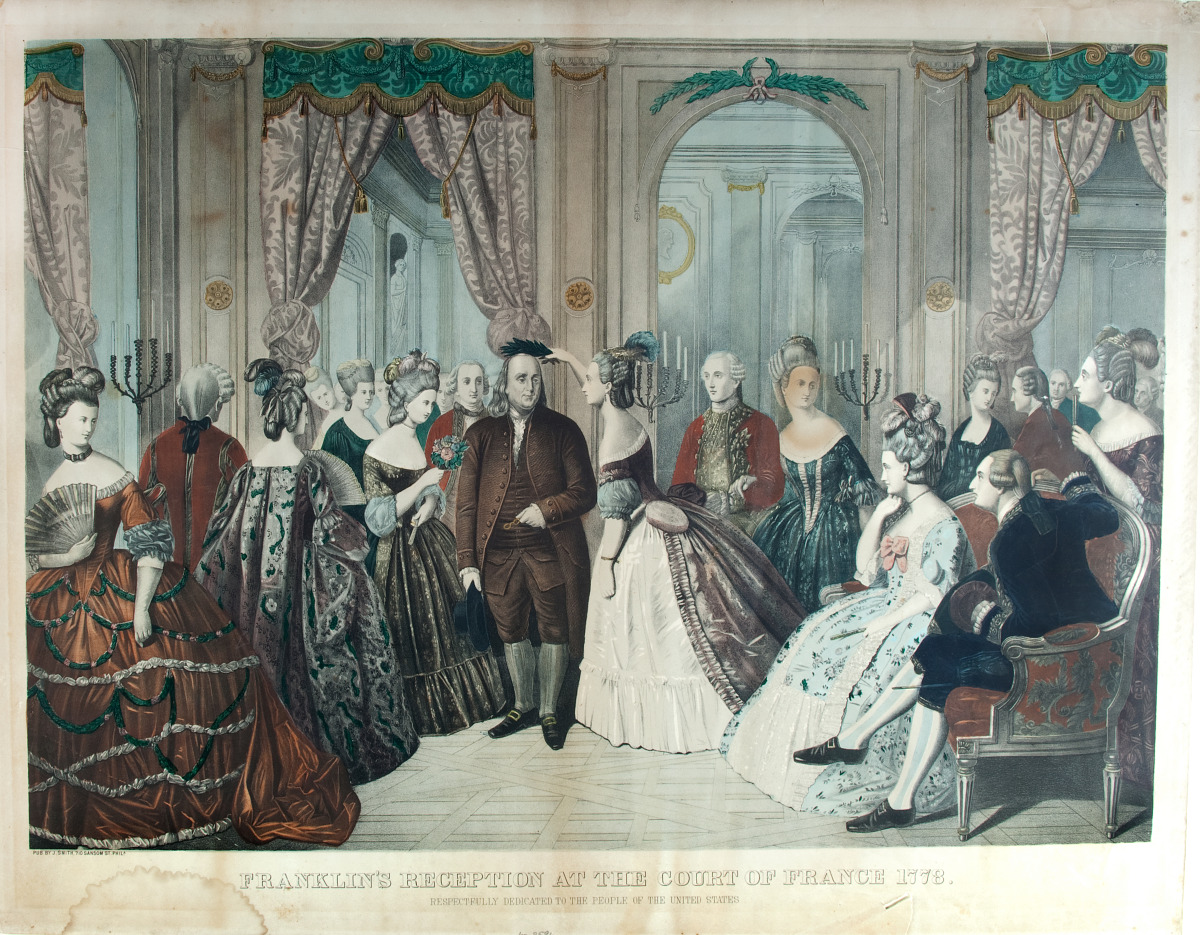
Franklin's America
America as an independent nation worthy of recognition.
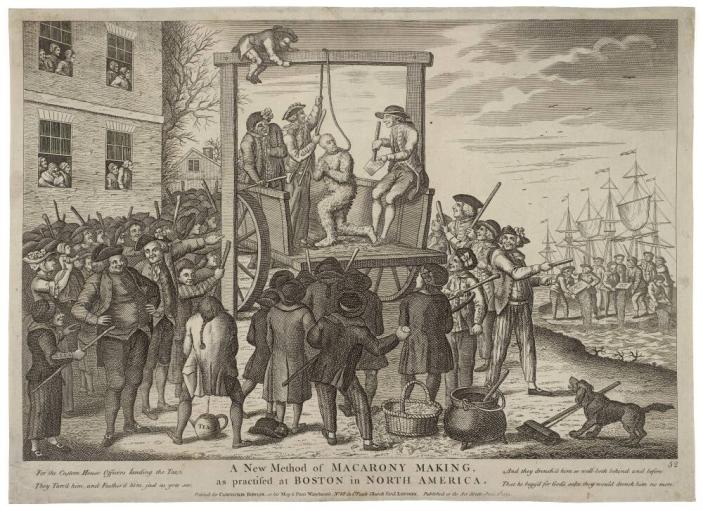
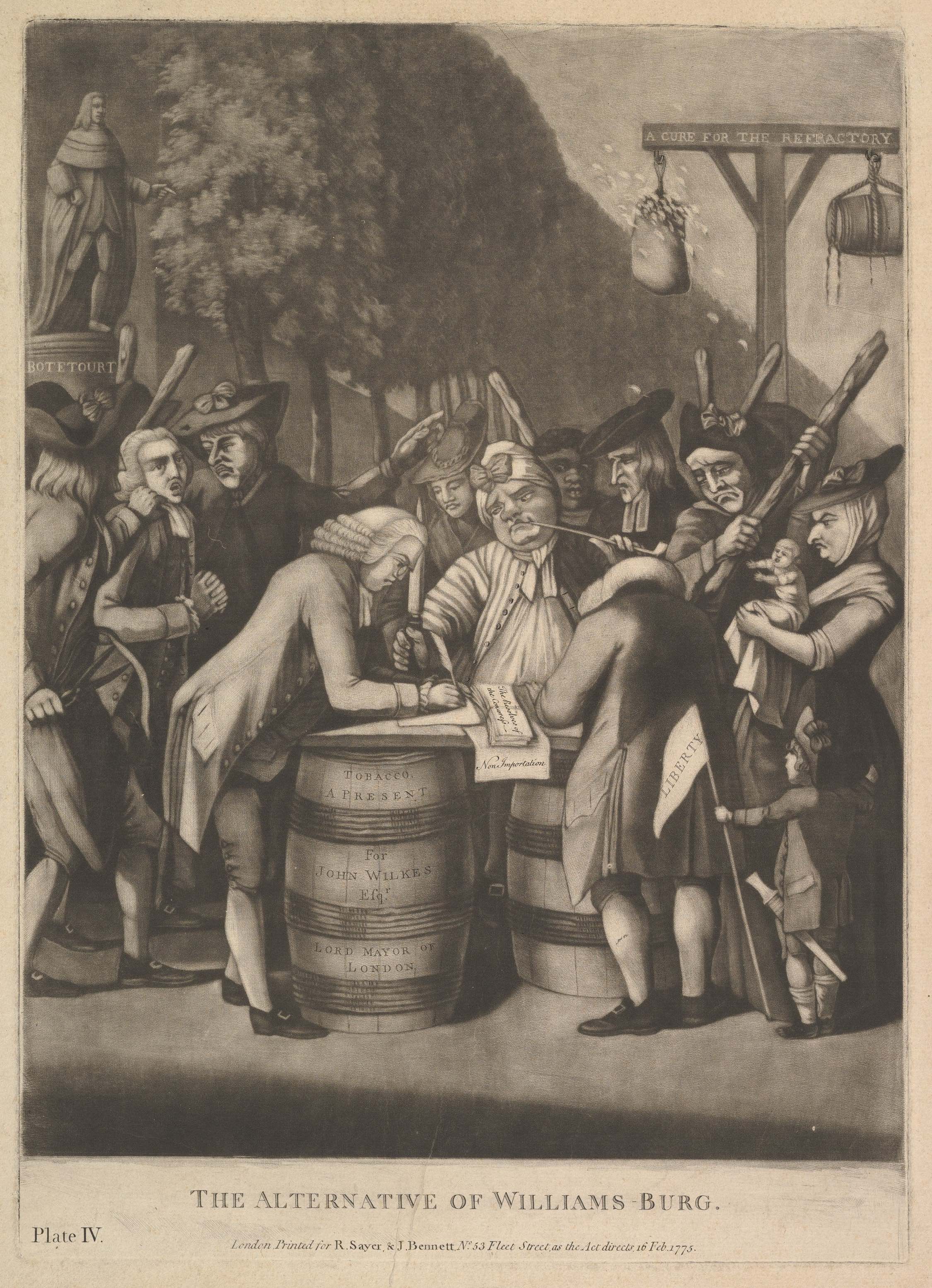
Britain's America
America as a rebellious empire descending into disorder.
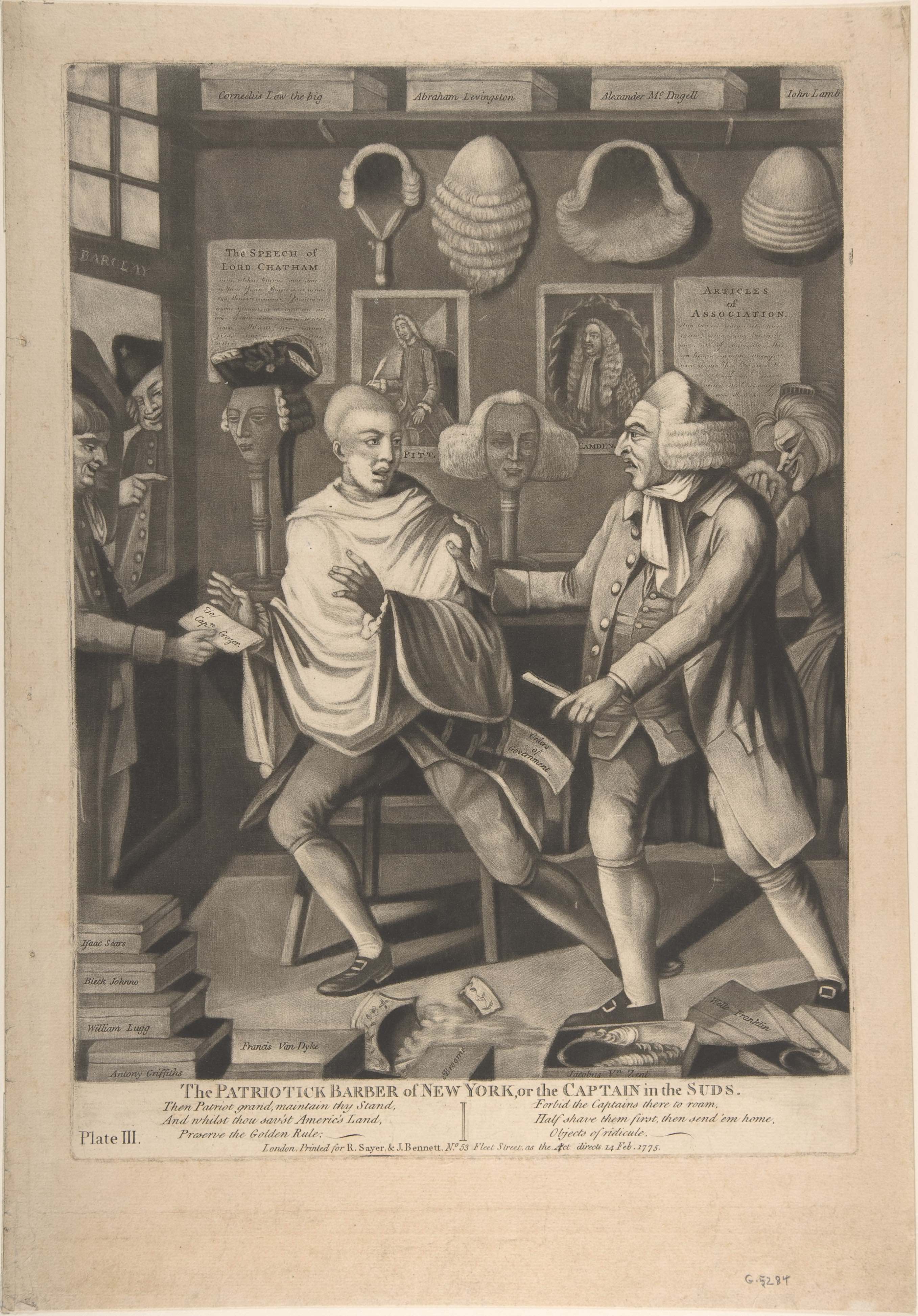
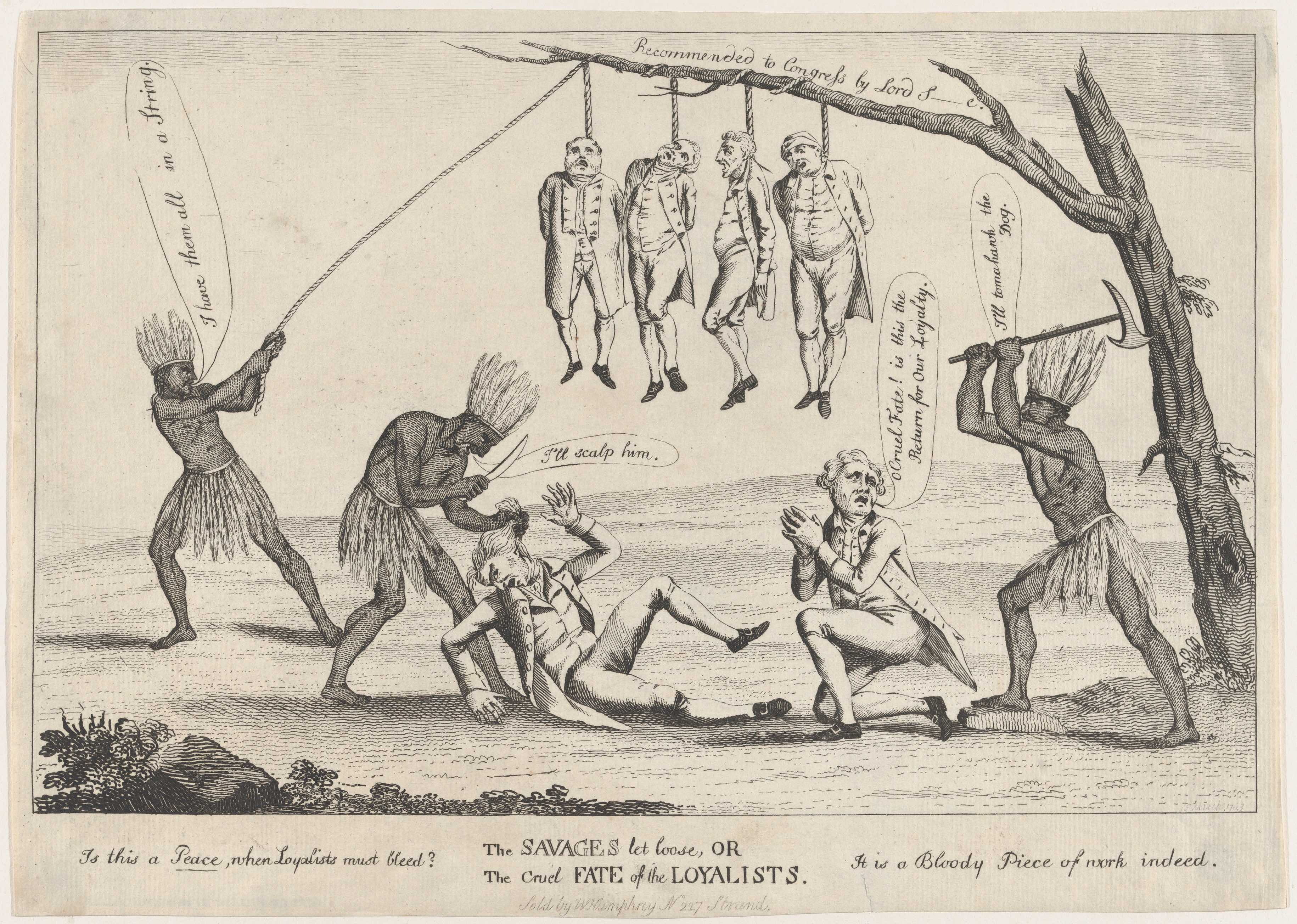
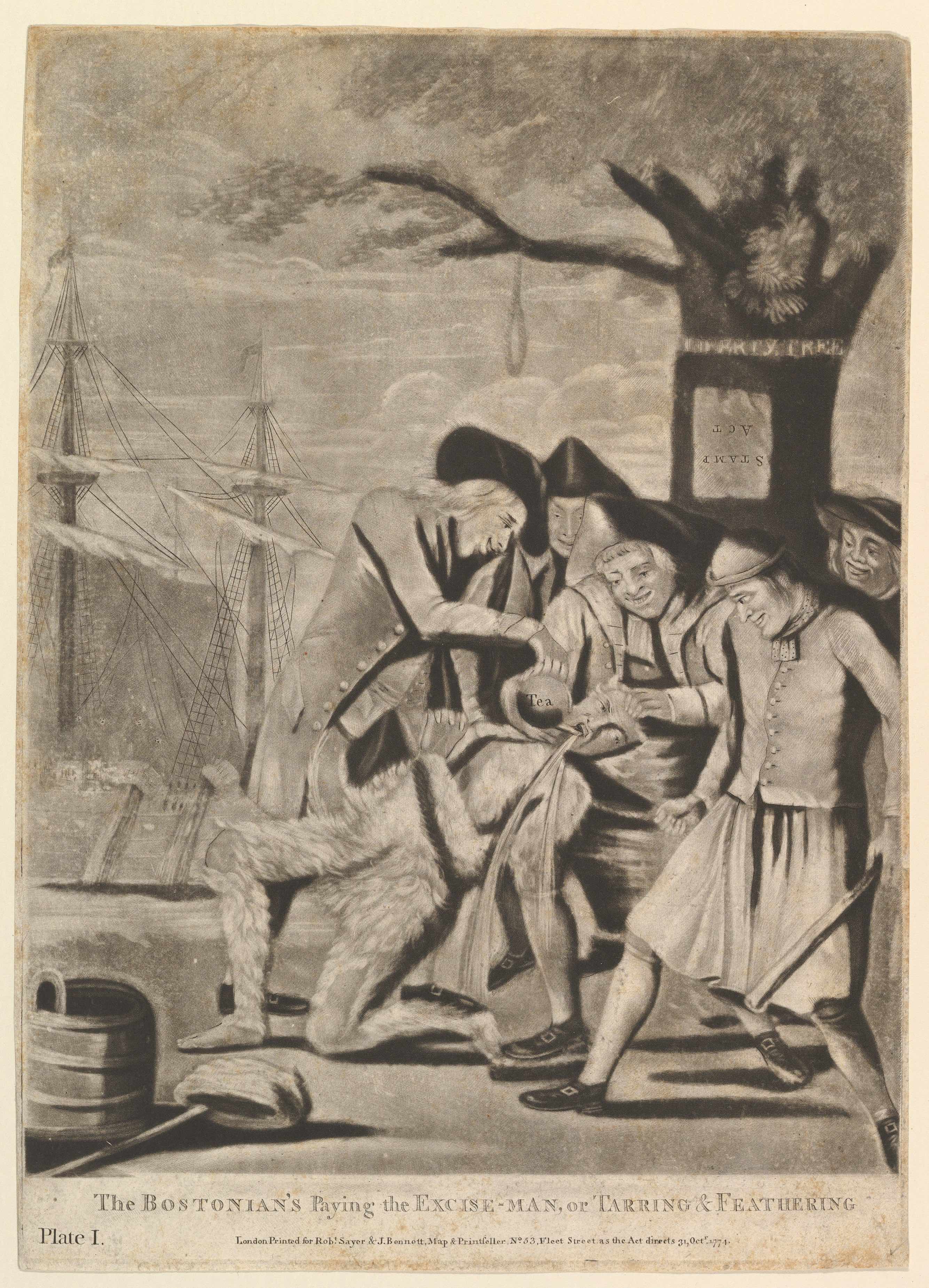
Franklin's Pen at Work
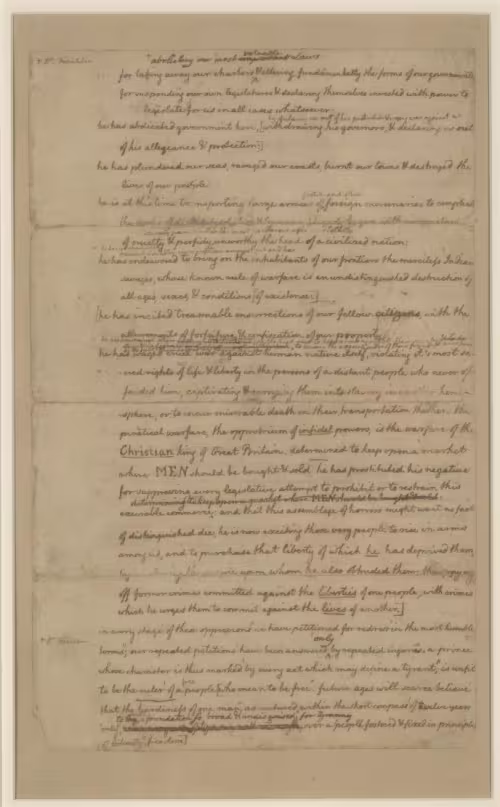
Franklin’s influence on the Declaration can be seen in small but important changes. He believed that wording mattered. One clear example comes from a line about British violence. Jefferson first wrote that British forces meant to “deluge us in blood.” Franklin suggested changing this to the simpler phrase “destroy us.”
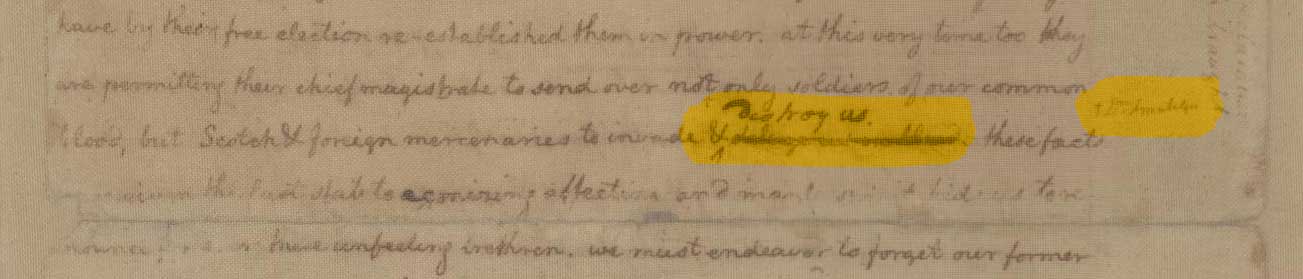
The new wording was less dramatic but more direct. Franklin thought clear language would make the argument stronger and more believable.
These edits show Franklin’s diplomatic thinking. He wanted the Declaration to persuade foreign readers, especially French leaders. Emotional or exaggerated language might excite people at home, but it could worry potential allies. A calm and reasonable tone made the colonies appear ready to act as an independent nation.
Franklin’s style focused on persuasion rather than attack. He did not rewrite large sections of the Declaration, but his careful edits shaped how the message was heard. Franklin played a key role in making the Declaration a document meant not just to protest British rule, but to explain American independence to the world.
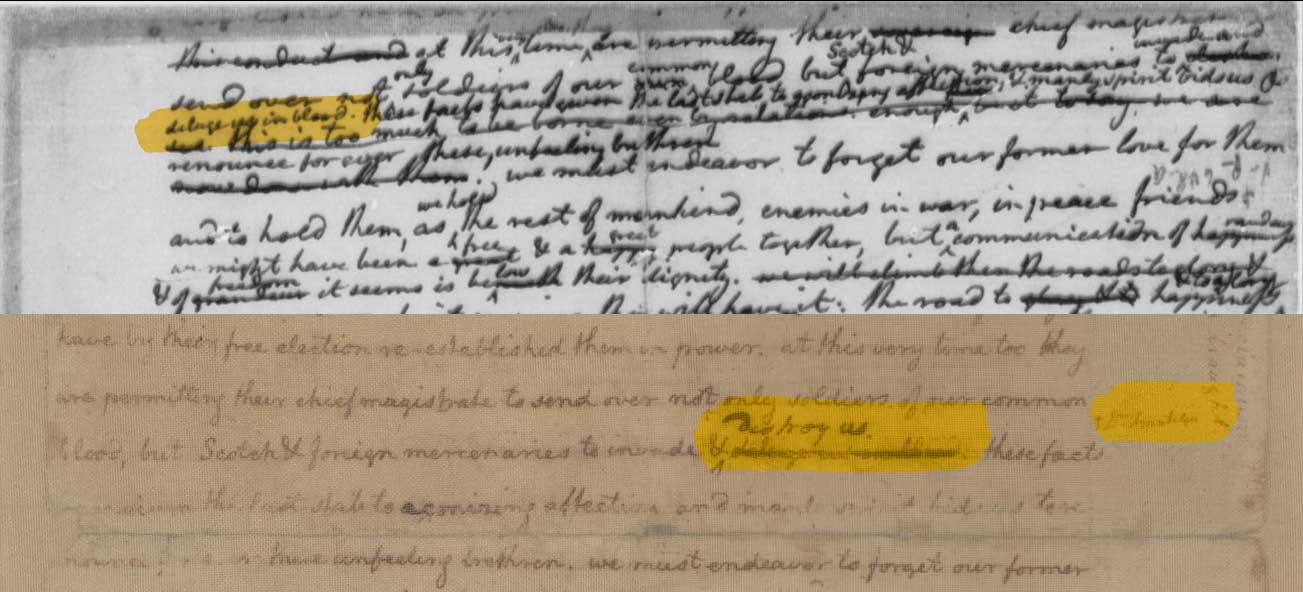
Franklin replaced “deluge us in blood” with the more direct, and perhaps less dramatic, “destroy us.” Congress would remove this line entirely.
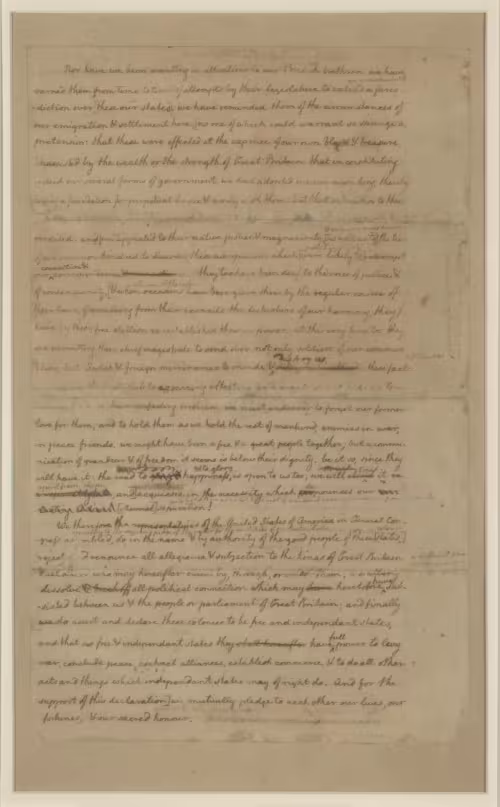
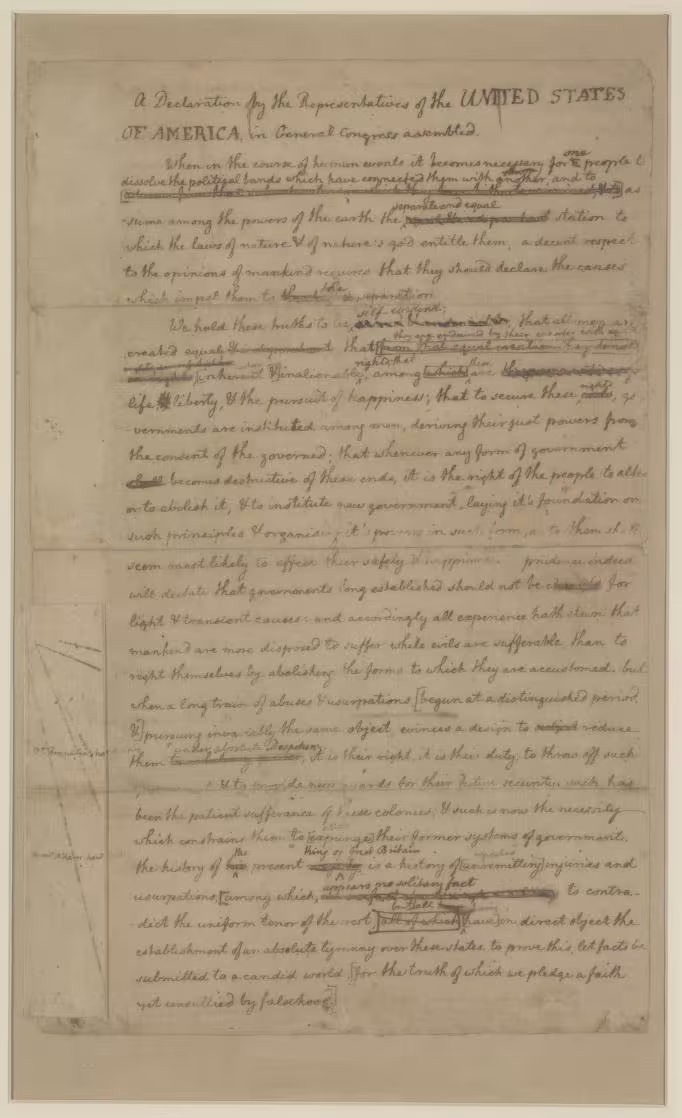
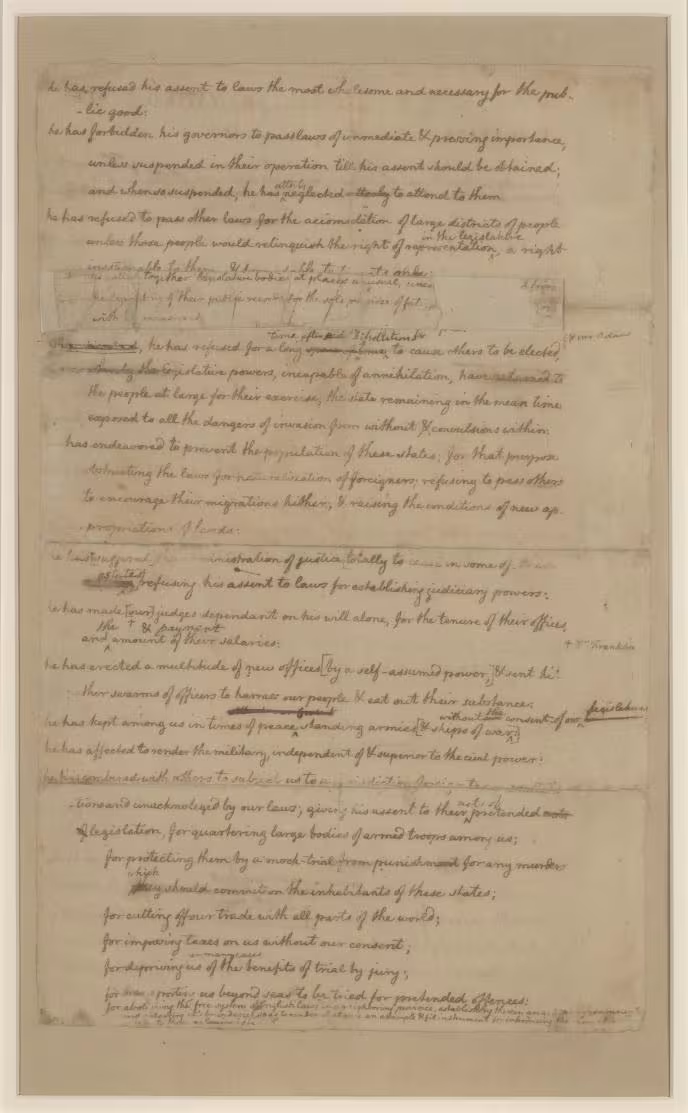
Thomas Jefferson, “original Rough draught” of the Declaration of Independence, 11 June–4 July 1776.
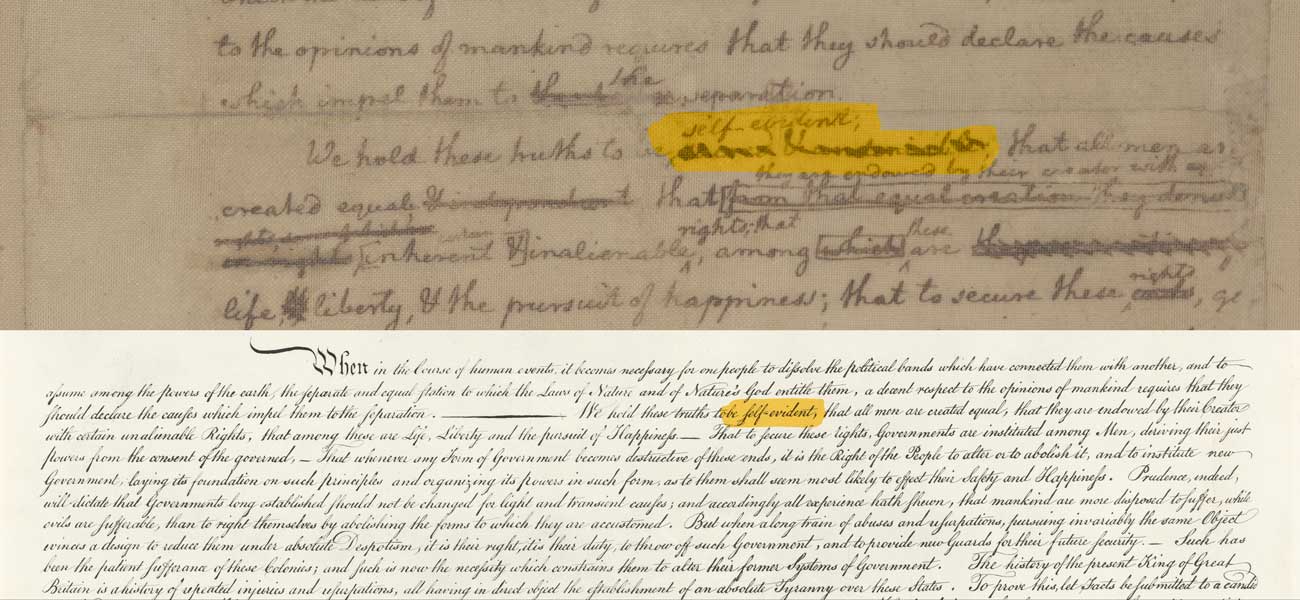
John Adams draft
Thomas Jefferson, “original Rough draught” of the Declaration of Independence, 11 June–4 July 1776.
Thomas Jefferson’s “original Rough draught” of the Declaration of Independence, 11 June–4 July 1776.
Thomas Jefferson’s “original Rough draught” of the Declaration of Independence, 11 June–4 July 1776.
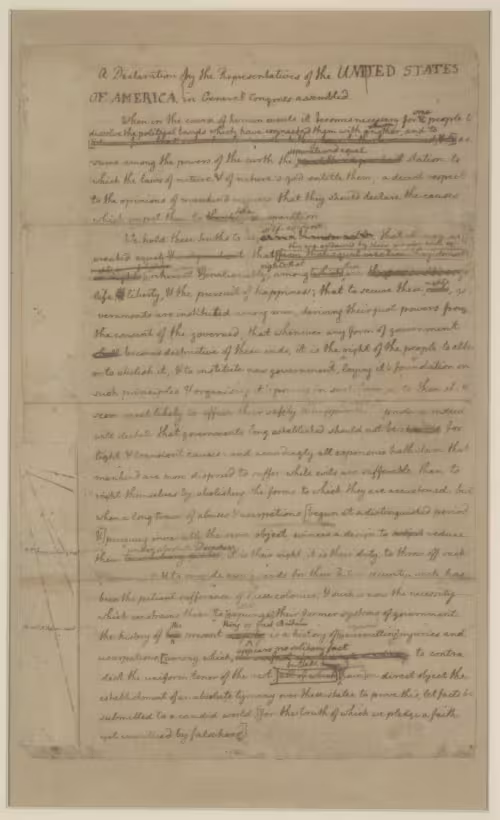
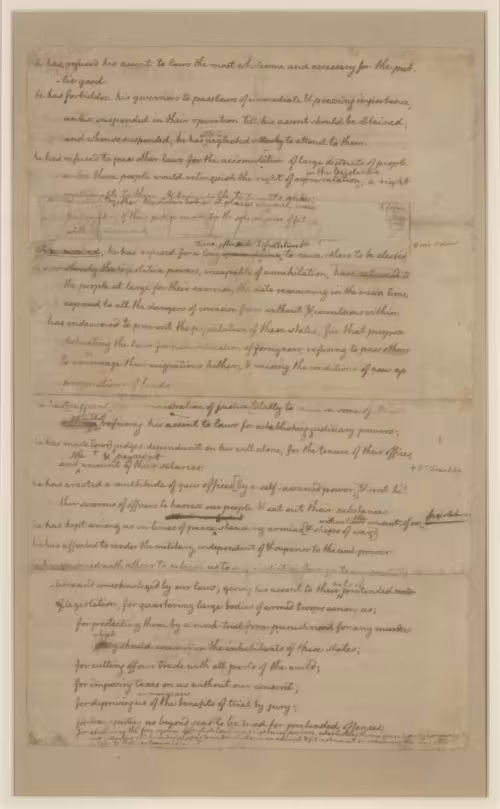
Thomas Jefferson, “original Rough draught” of the Declaration of Independence, 11 June–4 July 1776
Thomas Jefferson, “original Rough draught” of the Declaration of Independence, 11 June–4 July 1776
This rough draft of the Declaration of Independence features early revisions by Adams and Franklin and several sections ultimately removed by Congress.
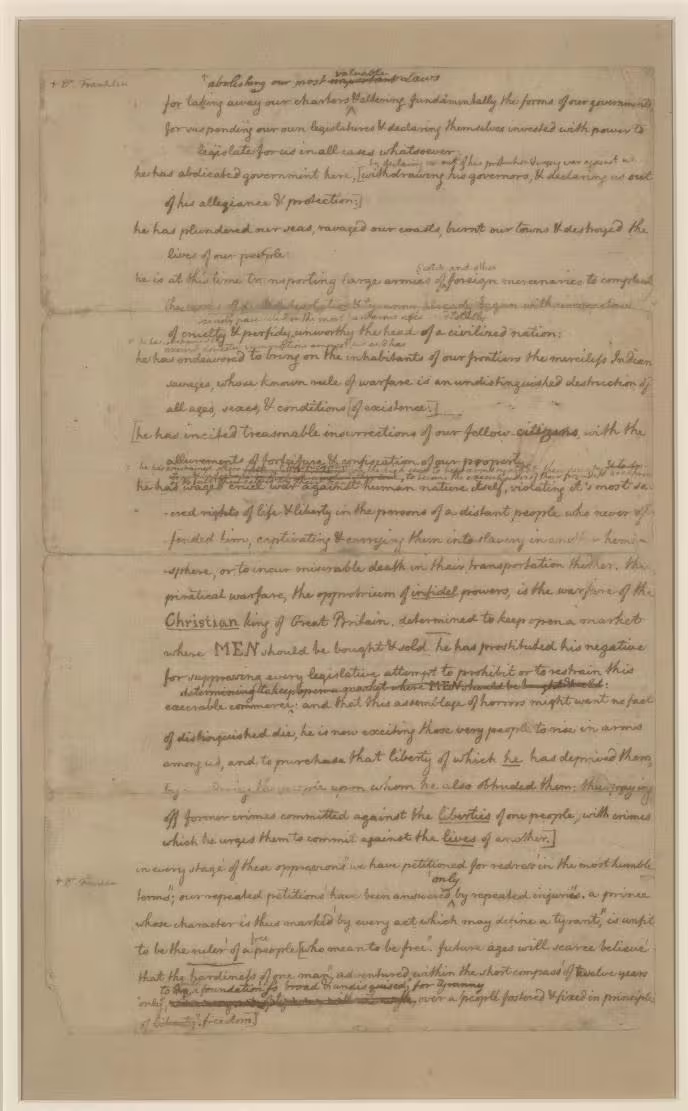
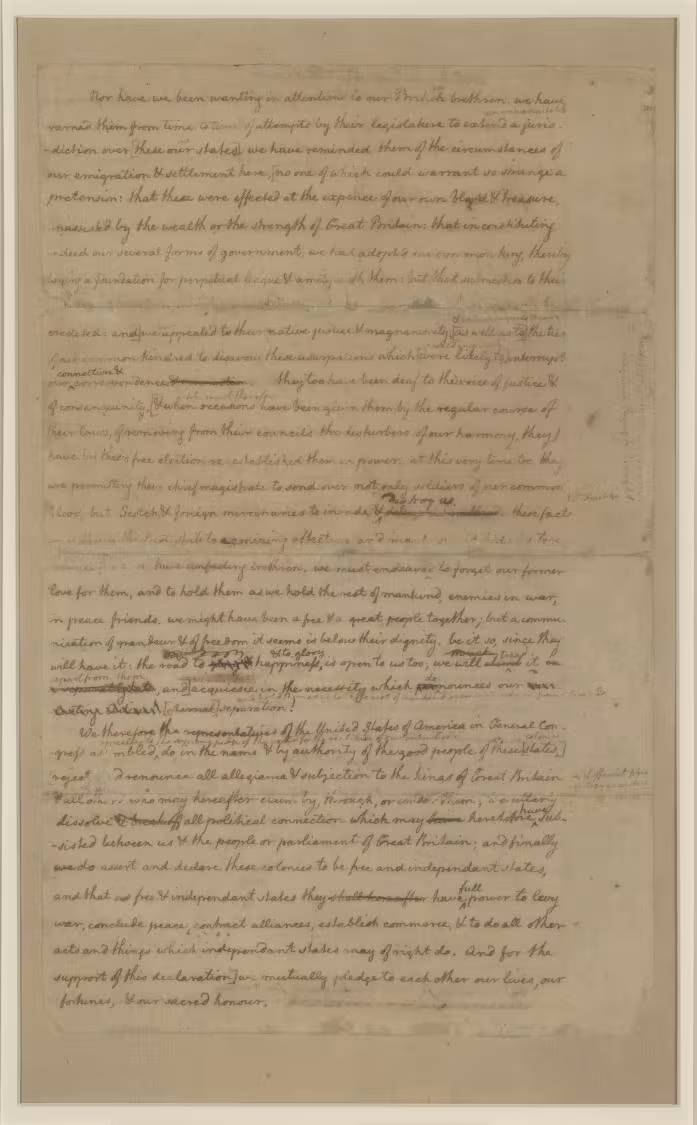
Franklin had long experience with words. As a printer, writer, and diplomat, he understood that strong emotions could weaken an argument. His suggested edits often softened dramatic language while keeping the meaning clear. These changes helped the Declaration read more like a legal case than a personal attack.
Explaining Independence to the World
By shaping how the story of independence was told, Franklin helped the Declaration speak beyond Congress. His work shows that editing was not just about style. It was part of preparing the colonies to be seen as a responsible new nation. Writing shortly after independence had been declared, Franklin explained to British admiral Richard Howe multiple times why the colonies believed reconciliation was not possible.
Royal Greenwich Museums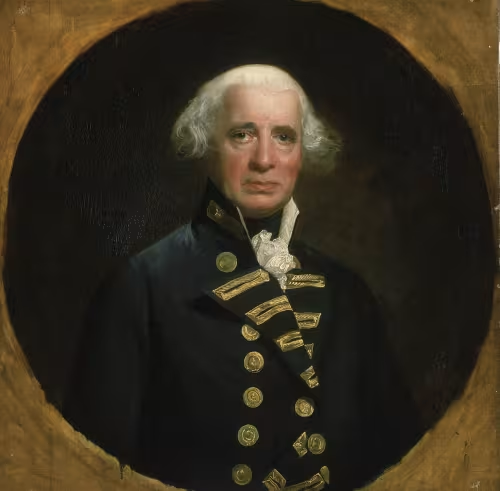
Richard Howe, 1st Earl Howe
Richard Howe, 1st Earl Howe
Royal Navy admiral during the Revolutionary War, balanced conciliation with aggressive warfare until the French undermined his blockade in 1778.
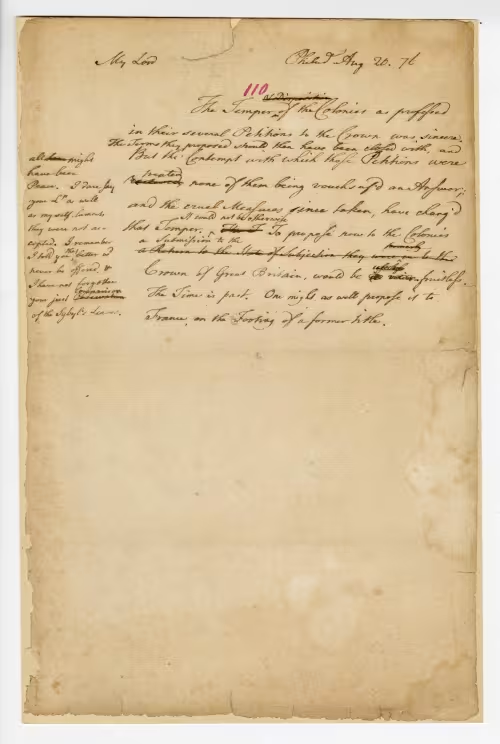
Benjamin Franklin to Richard Howe, 20 August 1776.
Benjamin Franklin to Richard Howe, 20 August 1776.
Franklin's reference to the "Sibyl's Leaves" came from an ancient Roman story. A prophetess known as the Sibyl offered a king nine valuable books. Each time he refused to buy them, she burned some and offered the remainder at the same price. By the time he accepted, most of the books had been lost. As Franklin saw it, Britain had repeatedly rejected colonial appeals for reconciliation, including petitions sent to the king and Parliament. Each refusal made compromise more difficult. By late 1776, Franklin argued, the opportunity to preserve the empire had disappeared entirely. Britain, like the king in the legend, had waited too long.
Benjamin Franklin to Richard Howe, 20 August 1776
Benjamin Franklin to Richard Howe, 20 August 1776
Benjamin Franklin accuses Britain of treating past colonial petitions with contempt and reaffirms American independence.
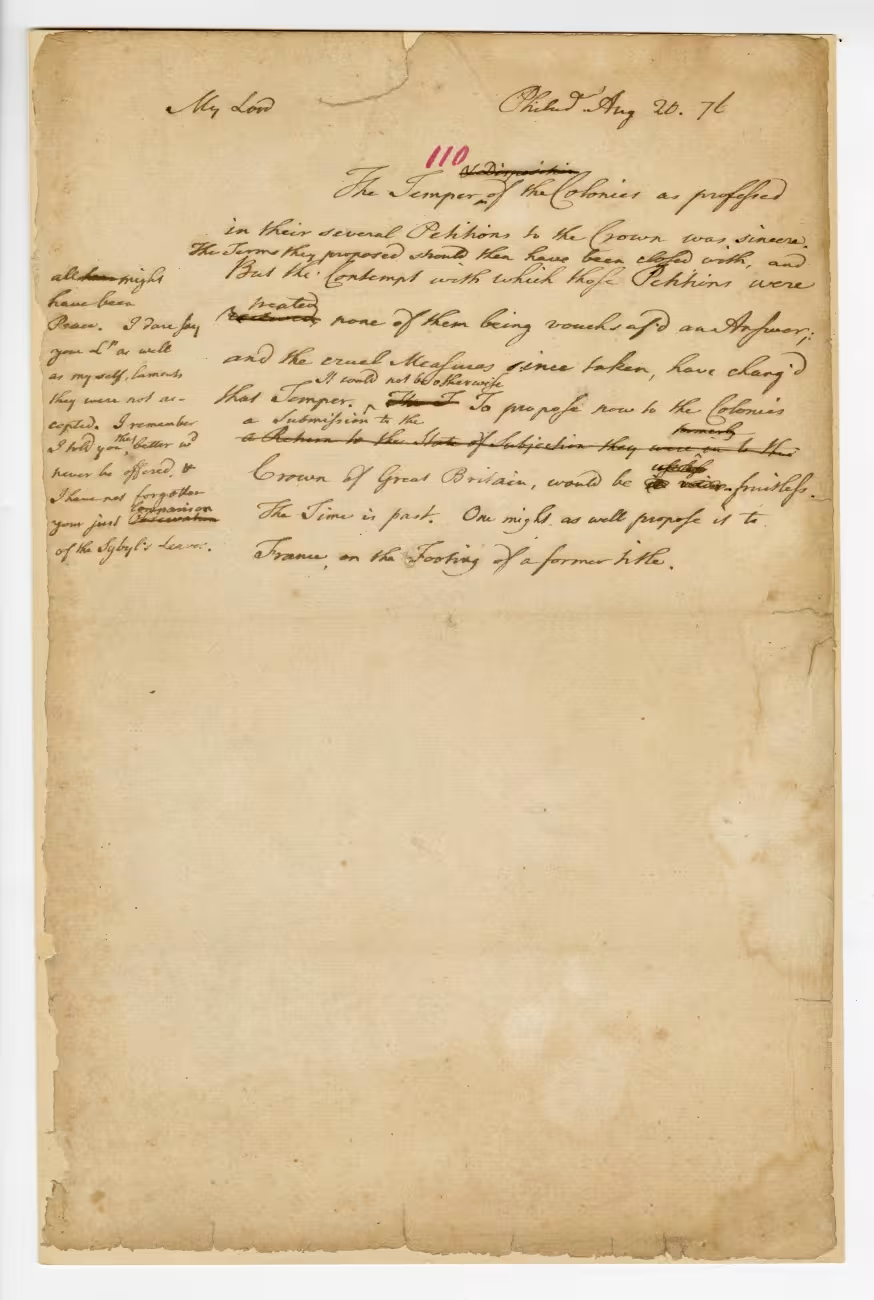
Because Congress was in the middle of sending a committee to meet with Howe, Franklin never sent this letter.
Franklin’s intervention was crafting a message strong enough to inspire the colonies, but not scare potential allies. His careful approach helped strike this balance. His edits reflect a belief that careful language could build trust, and that trust was necessary for independence to succeed.
Benjamin Franklin to Richard Howe, 20 July 1776.
Benjamin Franklin to Richard Howe, 20 July 1776.
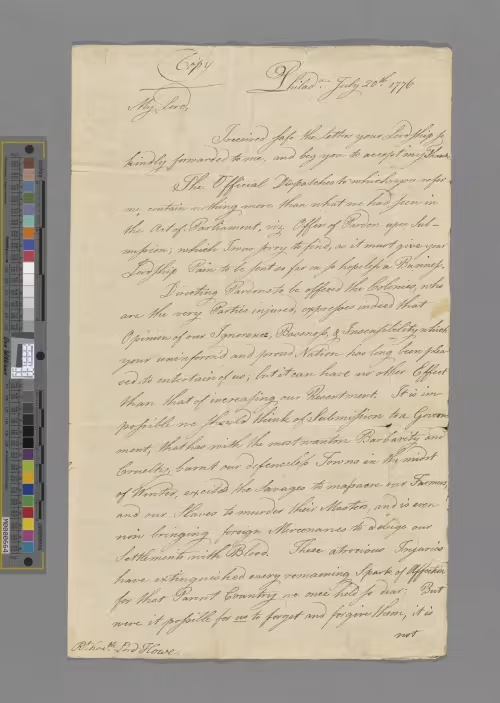
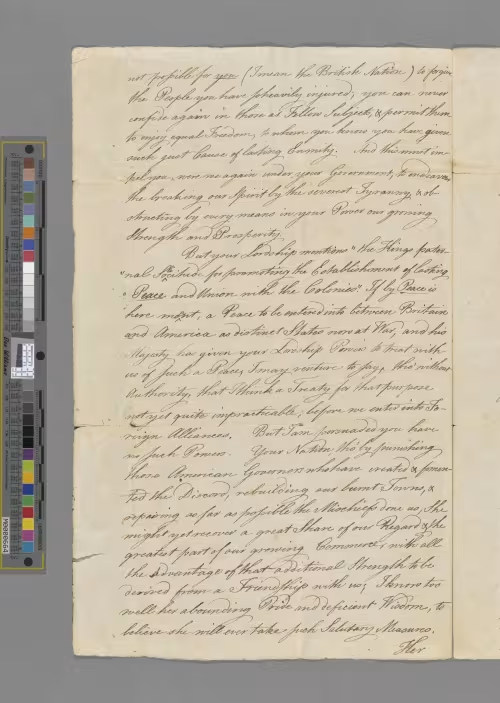
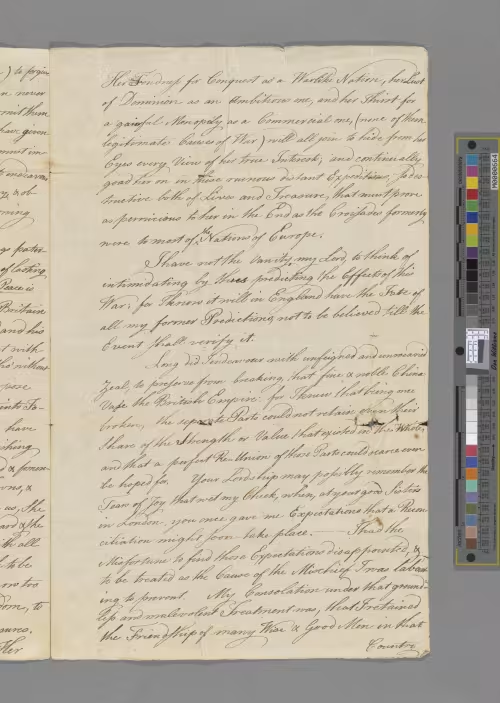
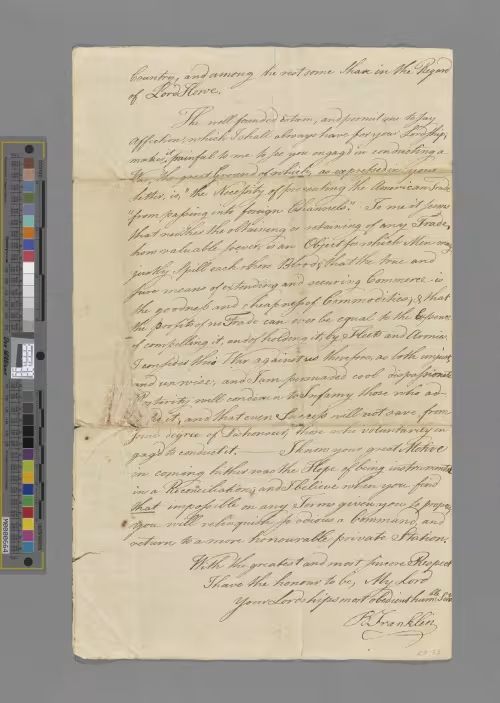
Benjamin Franklin to Richard Howe, 20 July 1776
Benjamin Franklin to Richard Howe, 20 July 1776
Benjamin Franklin denounces British attacks on Americans and rejects the possibility of reconciliation.
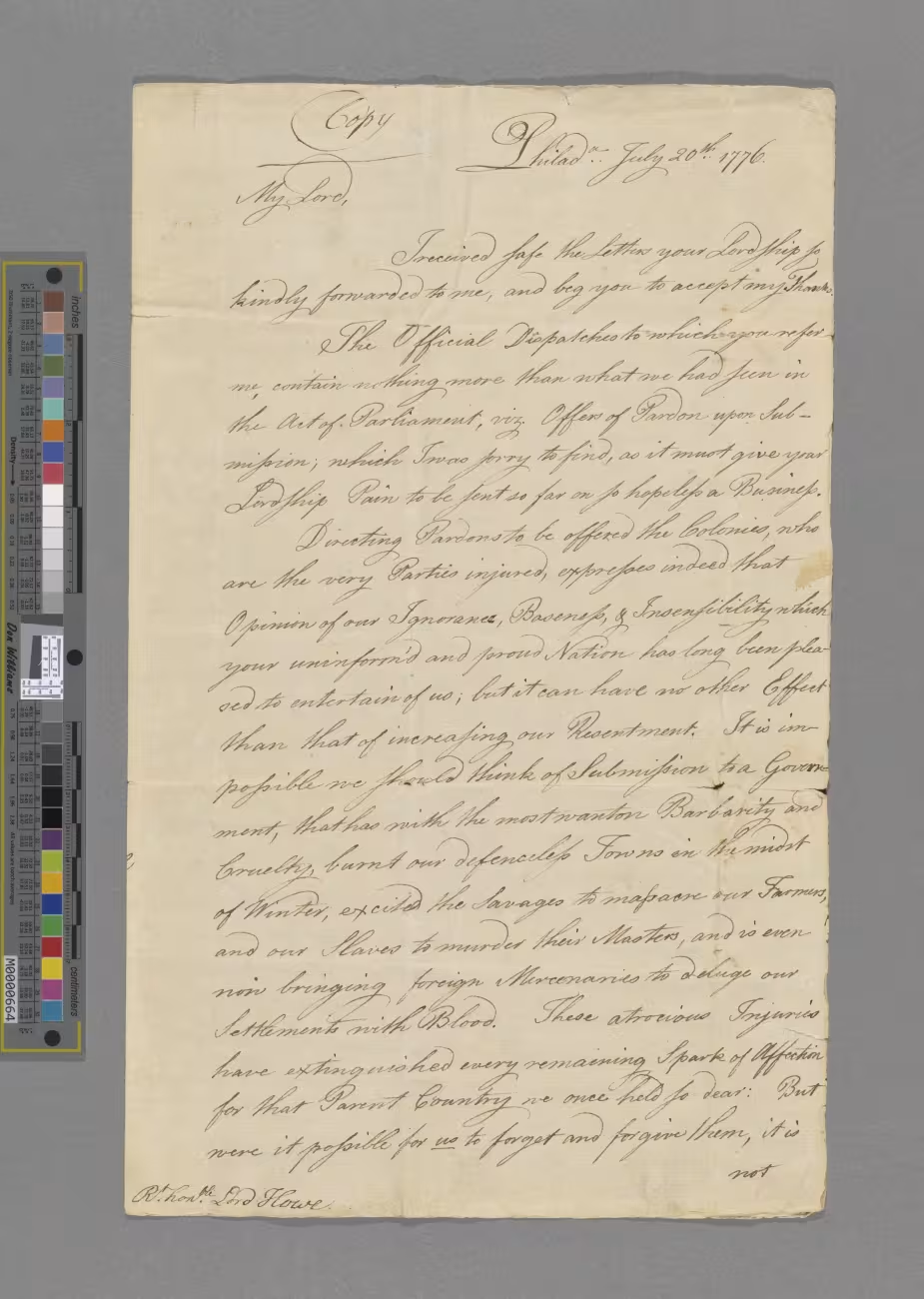
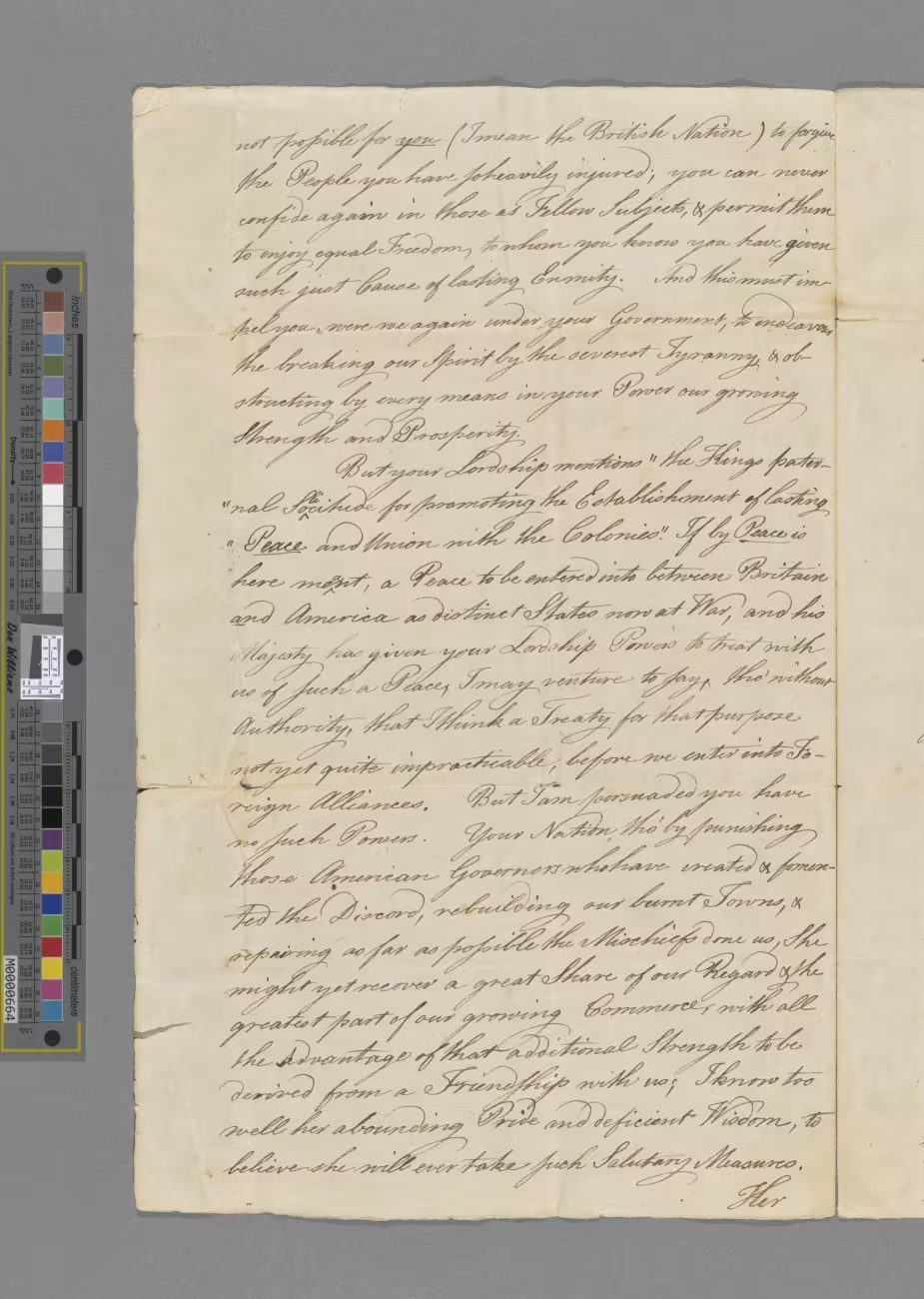
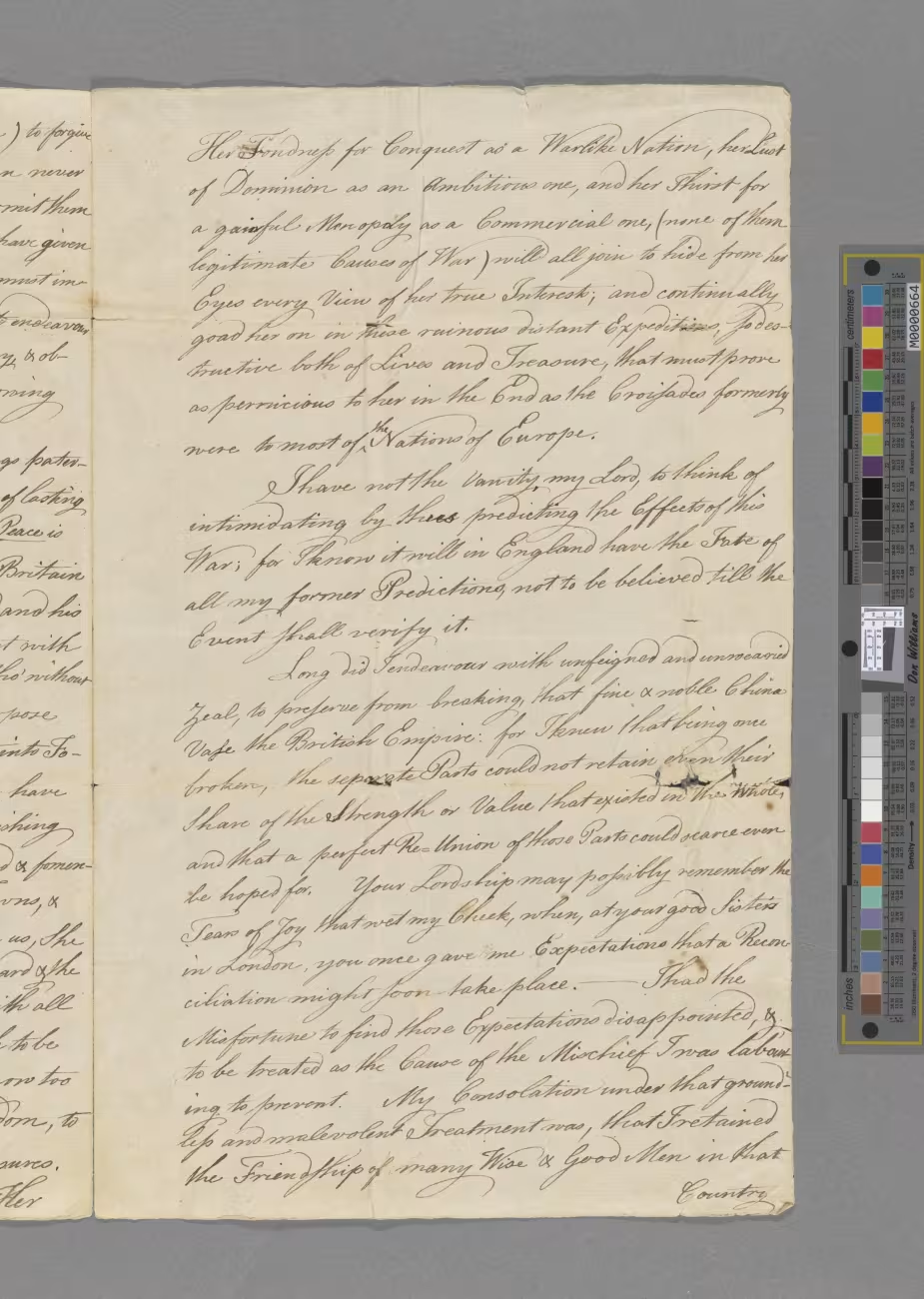
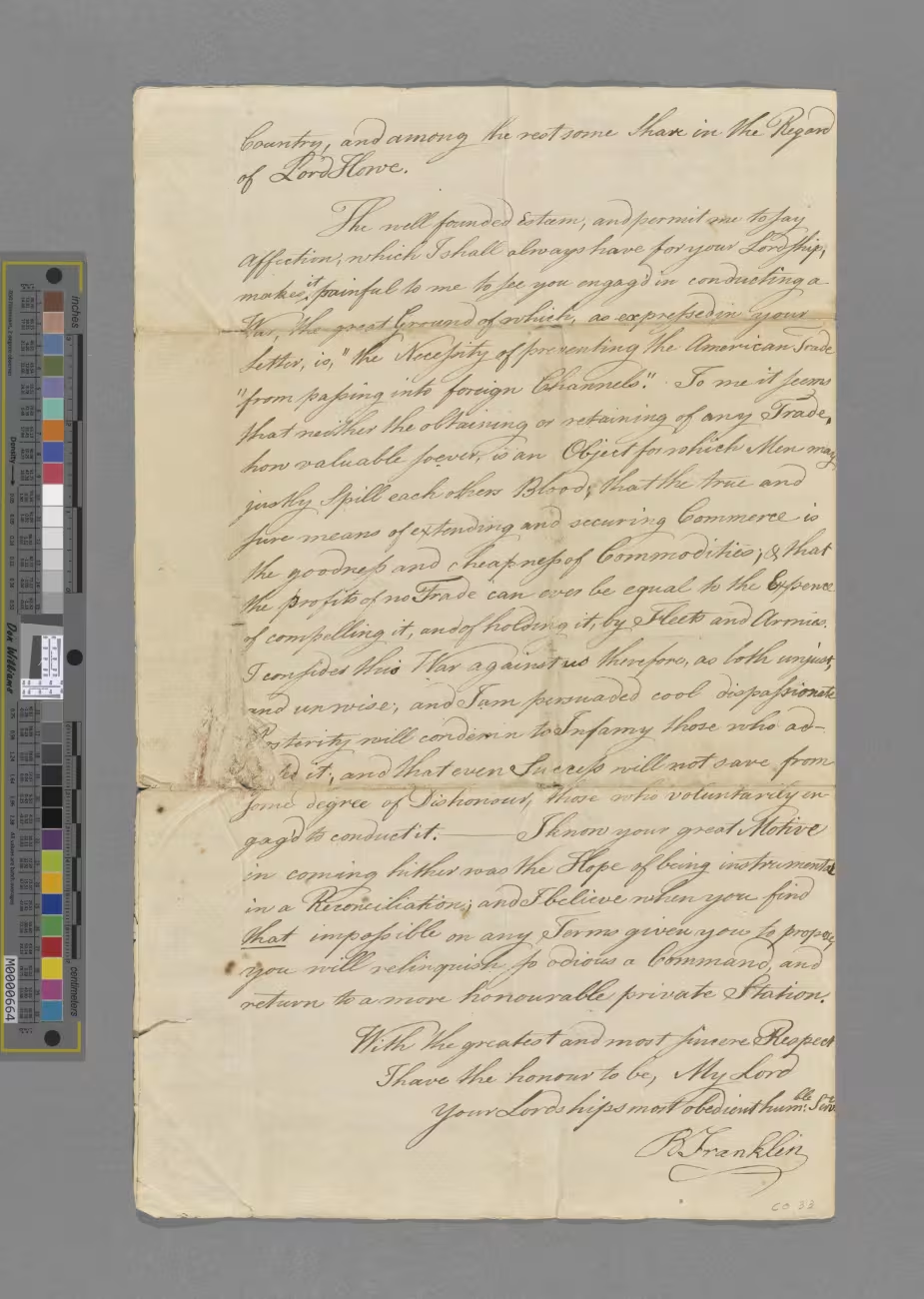
Franklin’s letters to Howe show how American leaders packaged independence as a reluctant but then necessary step after repeated attempts at reconciliation had failed.
Why the Declaration's Language Mattered
The American colonies were fighting the most powerful empire in the world and lacked the money, military resources, and international recognition needed to win a long war.
Convince foreign governments—especially France—that the United States was a serious political nation worthy of support and could defeat Britain.
The Declaration presented independence as a careful and principled decision rather than a rebellion driven by anger or temporary grievances.
The Declaration announced that the colonies were assuming “the separate and equal station to which the Laws of Nature and of Nature's God entitle them.”
By describing Americans as a people claiming the rights of an independent nation, the Declaration helped persuade foreign governments that the United States could become a reliable diplomatic and military partner.
Franklin’s role in the Declaration was subtle. He did not write long passages or famous lines. His influence was important, though. By shaping tone and clarity, Franklin helped turn the Declaration into a document that could speak to the world. His work reminds us that independence was not declared through bold ideas alone, but through careful choices about words: choices made with diplomacy and consequences in mind.