Sections in this exhibit
-
1
Section 1 A Famous Document Takes ShapeSection 1
In 1776, independence moved from argument to action when the Continental Congress asked a committee of five to draft a declaration. Their work turned a bold idea into a document that announced the United States to the world.
-
2
Section 2 Thomas Jefferson: Drafting the DeclarationSection 2
Thomas Jefferson wrote the first draft of the Declaration in June 1776, drawing on ideas colonists had debated for years. His draft gave the Committee of Five and Congress a starting point.
-
3
Section 3 John Adams: Debating IndependenceSection 3
John Adams helped secure the agreement that made the Declaration possible. Through debate and persuasion in Congress, he worked to unite the colonies behind the decision to declare independence.
-
4
Section 4 Benjamin Franklin: Writing for the WorldSection 4
Benjamin Franklin made minor edits to the Declaration, and he hoped the document would be used to persuade readers beyond the colonies.
-
5
Section 5 Roger Sherman: Law, Balance, and AuthoritySection 5
Roger Sherman helped ensure the Declaration worked as a clear, practical document. His legal judgment and support moved the draft forward.
-
6
Section 6 Robert R. Livingston: Writing Without a VoteSection 6
Robert R. Livingston helped draft the Declaration even though New York’s delegates were not yet allowed to vote for independence. His experience shows how the colonies moved toward unity at different paces.
-
7
Section 7 From Debate to DeclarationYou are here
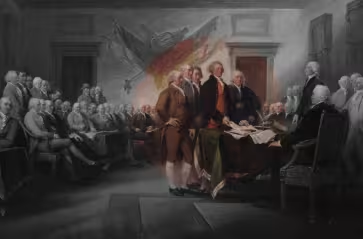
The Declaration of Independence emerged from debate, uncertainty, and compromise in 1776. The document moved over time from a risky decision to a lasting symbol of the American nation and people.
From Debate to Declaration
The Declaration of Independence emerged from debate, uncertainty, and compromise in 1776. The document moved over time from a risky decision to a lasting symbol of the American nation and people.
From Uncertainty to Decision
The Declaration of Independence did not appear suddenly in July 1776. It grew out of years of debate, conflict, and uncertainty. Before independence, Congress struggled to manage war, trade, and relations with Britain. Many colonies still hoped for reconciliation. After independence, Congress became the body responsible for turning words into action—fighting the war, forming alliances, and building a new nation.
| Before 1776 | After 1783 |
|---|---|
| Colonies debated loyalty to Britain | Independence accepted as settled fact |
| Congress sought reconciliation | Congress governed a new nation |
| Authority rested with colonies | National authority slowly expanded |
| Independence was uncertain | Independence became national memory |
| Words carried great risk | Words became symbolic and lasting |
A Gamble
Before independence, the Continental Congress was a place of hesitation. Delegates disagreed over how far to push against Britain. Many still hoped the conflict could end without full separation. Congress issued petitions, organized boycotts, and managed military defense, but it avoided declaring independence outright.
The Declaration emerged from this uncertainty. It was written before unity was complete and before victory was assured. Congress debated its language carefully. Every word mattered because it committed the colonies to a path they could not easily reverse.
The Declaration was not a final statement. It was a gamble. Congress used it to explain why independence had become necessary. Understanding this helps us see the Declaration as part of an ongoing political struggle rather than a sudden moment of agreement. And it set the course for the remainder of the war.
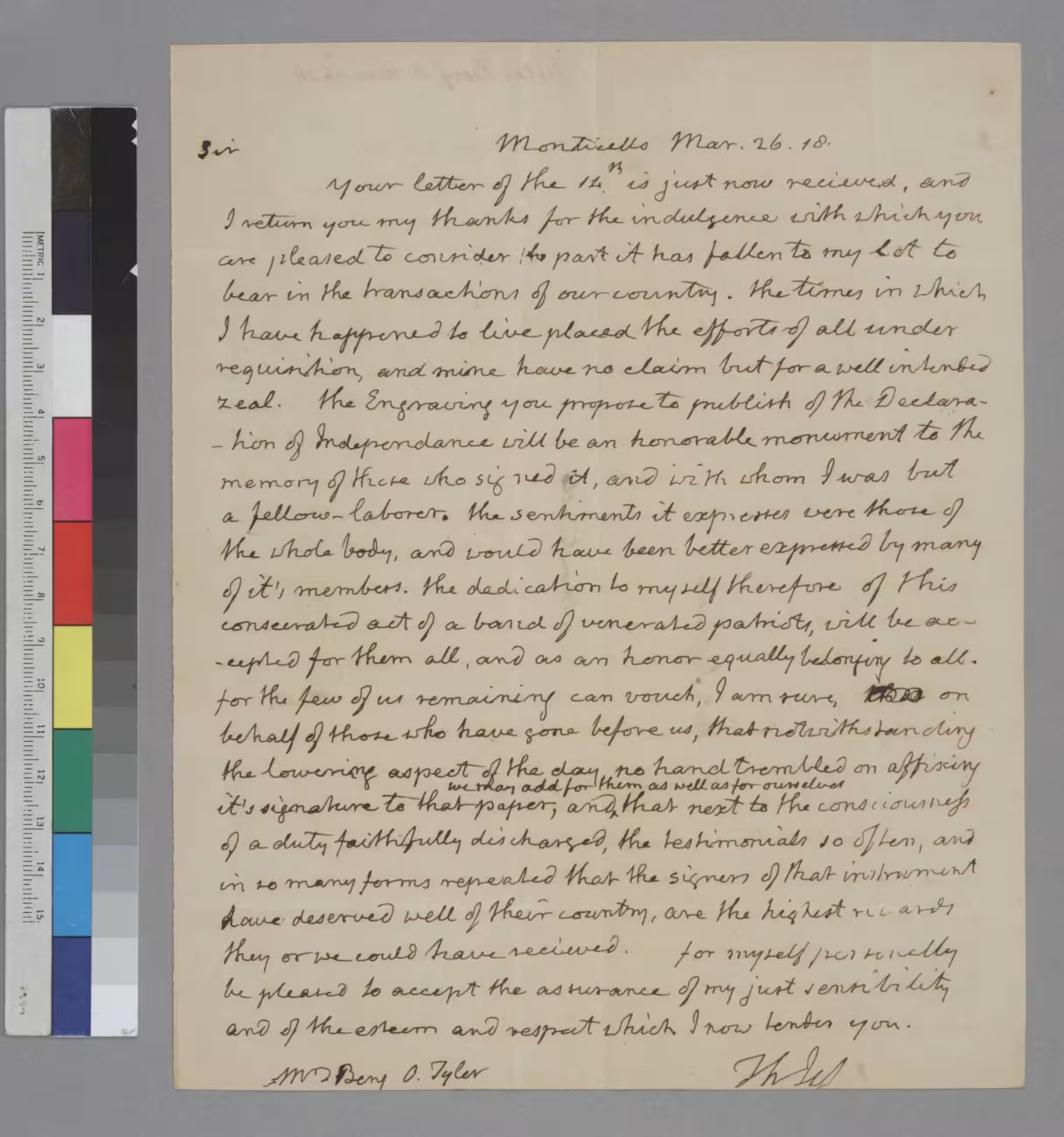
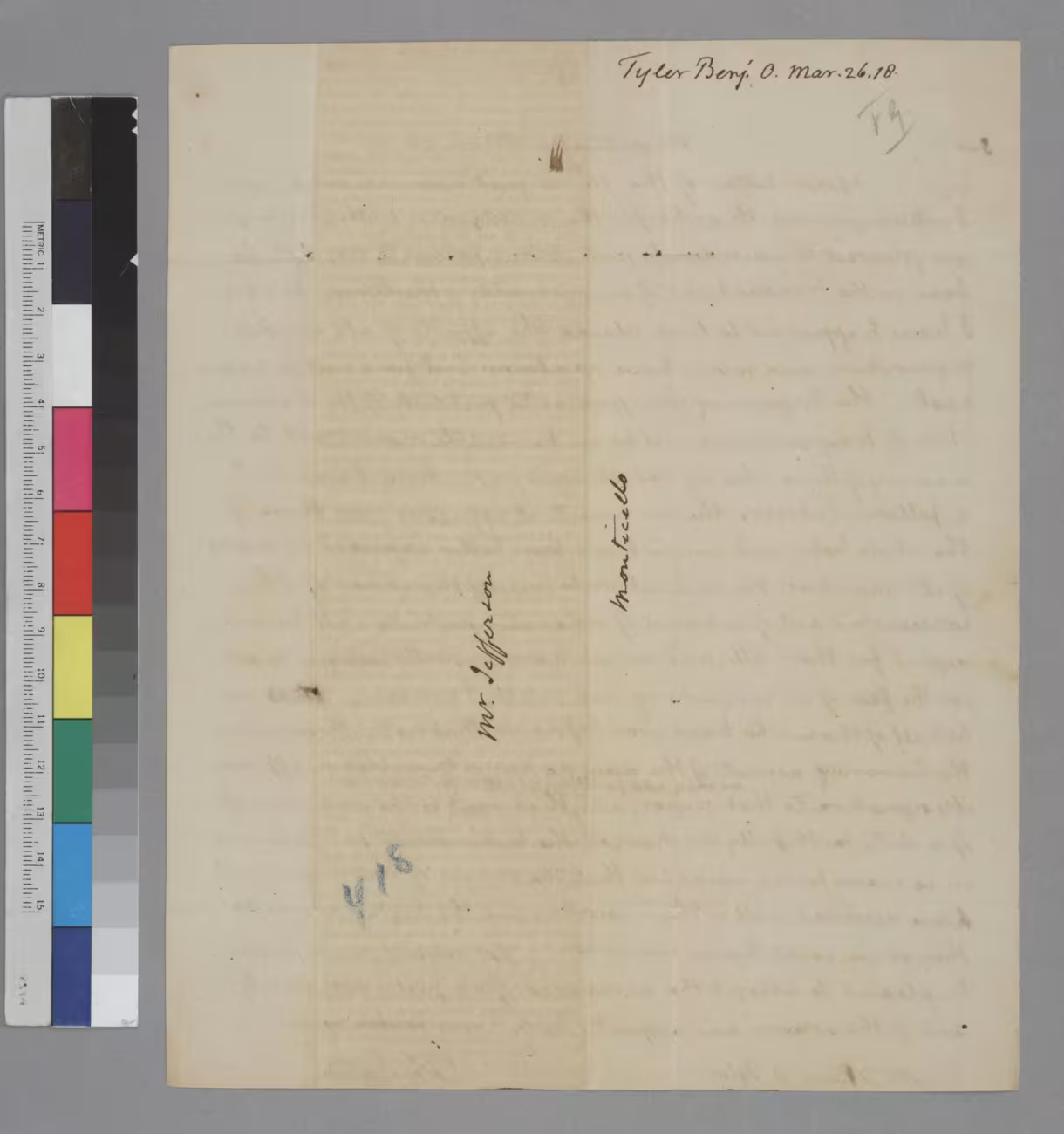
Thomas Jefferson to Benjamin O. Tyler, 26 March 1818
Thomas Jefferson to Benjamin O. Tyler, 26 March 26 1818.
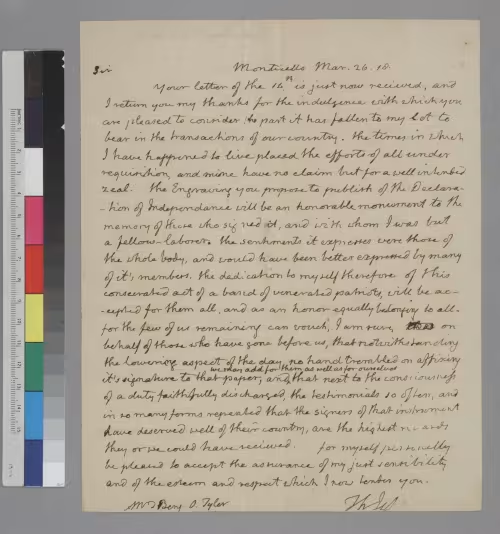
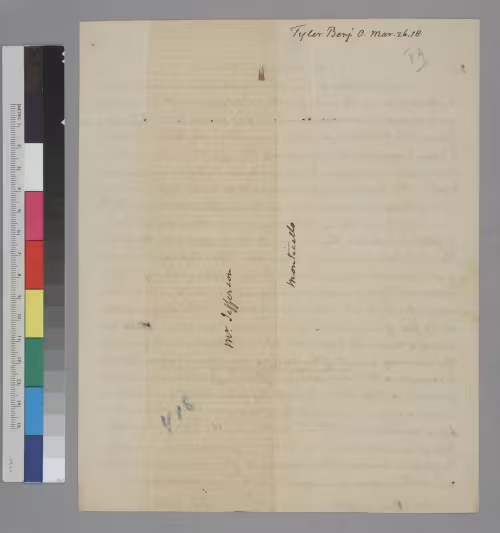
Thomas Jefferson to Benjamin O. Tyler, 26 March 1818
Thomas Jefferson to Benjamin O. Tyler, 26 March 1818
Thomas Jefferson reflects on the Declaration of Independence, affirming that no signer's hand trembled, and accepts a proposed engraving of the document.
The Declaration of Independence was not just written by a few famous individuals. It was shaped by the Continental Congress and by time itself. Before independence, it was a risky political argument. After independence, it became a national symbol. Understanding this change helps us see the Declaration more clearly. It reminds us that independence was built through debate, delay, and cooperation.
A Living Document
Today, the Declaration of Independence still matters. Its words about equality, rights, and government continue to shape debates about freedom and justice. People return to the Declaration in times of crisis and change, asking what its promises mean and who they include. Although it was written in a specific moment in 1776, it has taken on new meaning in every generation since. The Declaration endures because Americans continue to discuss, question, and interpret its ideas in their own time.
John Adams, Memorial to the States General, 19 April 1781.
John Adams, Memorial to the States General, 19 April 1781.