
Sections in this exhibit
-
1
Section 1 A Famous Document Takes ShapeYou are here
In 1776, independence moved from argument to action when the Continental Congress asked a committee of five to draft a declaration. Their work turned a bold idea into a document that announced the United States to the world.
-
2
Section 2 Thomas Jefferson: Drafting the DeclarationSection 2
Thomas Jefferson wrote the first draft of the Declaration in June 1776, drawing on ideas colonists had debated for years. His draft gave the Committee of Five and Congress a starting point.
-
3
Section 3 John Adams: Debating IndependenceSection 3
John Adams helped secure the agreement that made the Declaration possible. Through debate and persuasion in Congress, he worked to unite the colonies behind the decision to declare independence.
-
4
Section 4 Benjamin Franklin: Writing for the WorldSection 4
Benjamin Franklin made minor edits to the Declaration, and he hoped the document would be used to persuade readers beyond the colonies.
-
5
Section 5 Roger Sherman: Law, Balance, and AuthoritySection 5
Roger Sherman helped ensure the Declaration worked as a clear, practical document. His legal judgment and support moved the draft forward.
-
6
Section 6 Robert R. Livingston: Writing Without a VoteSection 6
Robert R. Livingston helped draft the Declaration even though New York’s delegates were not yet allowed to vote for independence. His experience shows how the colonies moved toward unity at different paces.
-
7
Section 7 From Debate to DeclarationSection 7
The Declaration of Independence emerged from debate, uncertainty, and compromise in 1776. The document moved over time from a risky decision to a lasting symbol of the American nation and people.
A Famous Document Takes Shape
In 1776, independence moved from argument to action when the Continental Congress asked a committee of five to draft a declaration. Their work turned a bold idea into a document that announced the United States to the world.
Before 1776, independence was an idea. People argued about it in pamphlets. They debated it in assemblies. They pushed it forward through petitions and resolutions. The Declaration of Independence gave that idea a public voice.
A Document of Many Hands
That document was not written in a single moment or by one person. It took shape through drafting, editing, debate, and revision. A committee of five people prepared a draft, and the Continental Congress then reviewed and revised it. Words were added and adjusted. And sometimes words were removed. These choices reflected political concerns and diplomatic goals, as well as the need to keep the colonies united.
-
7 June 1776: Congress Took the First Step Toward IndependenceVirginia delegate Richard Henry Lee introduced a resolution that the colonies “are, and of right ought to be, free and independent States.” Although Congress delayed a vote, it had started formally considering separation from Britain.
-
11 June 1776: A Committee was Chosen to Explain IndependenceAs debates continued, Congress appointed a five-person committee to draft a declaration explaining why the colonies sought independence. Thomas Jefferson, John Adams, Benjamin Franklin, Robert R. Livingston, and Roger Sherman were its members, and Jefferson soon took the lead in writing the text and the other members made edits.
-
2 July 1776: Congress Voted to Become IndependentThe Continental Congress approved Richard Henry Lee's resolution and formally declared the colonies independent states. This vote—not 4 July—was the moment when American independence became official.
-
2–4 July 1776: Congress Revised Jefferson's DraftAlthough Jefferson prepared the first draft, Congress edited the document between 2 and 4 July. Delegates altered language, removed passages, and reshaped portions of the text, transforming it from Jefferson's draft into a declaration that was acceptable to Congress.
-
4 July 1776: Congress Adopted the Declaration of IndependenceCongress approved the final text of the Declaration and ordered it printed and distributed. The document announced American independence to Britain and the world, explaining the principles and grievances that justified the separation.
Why a Committee?
Thomas Jefferson explained years later how Congress created the drafting committee during the independence debates of mid-1776.
Thomas Jefferson to Samuel Adams Wells, 6 August 1822.
Thomas Jefferson to Samuel Adams Wells, 6 August 1822.
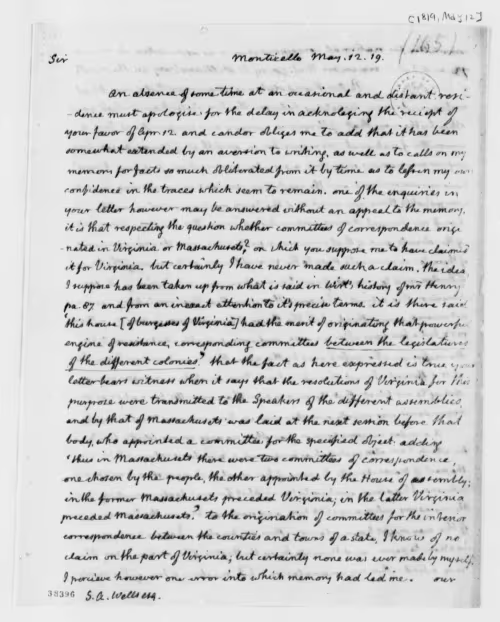
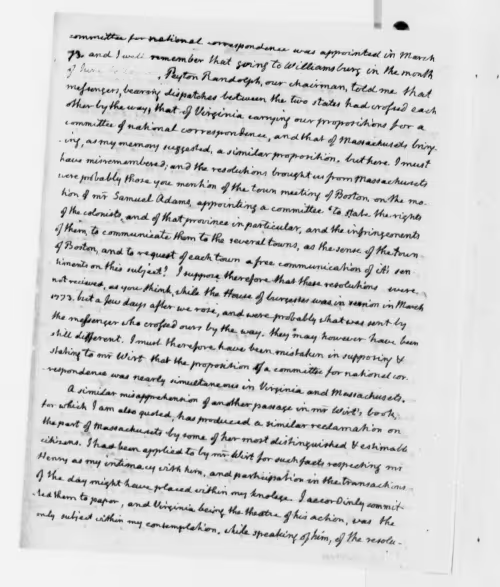
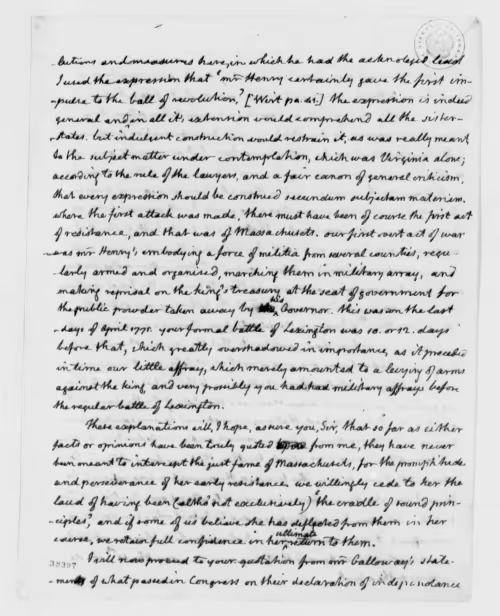
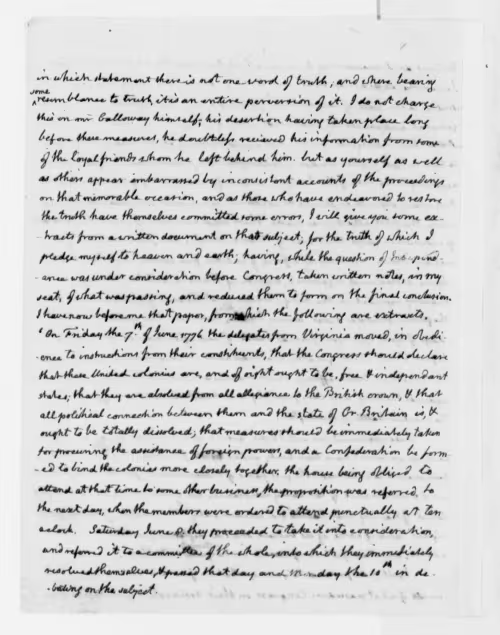
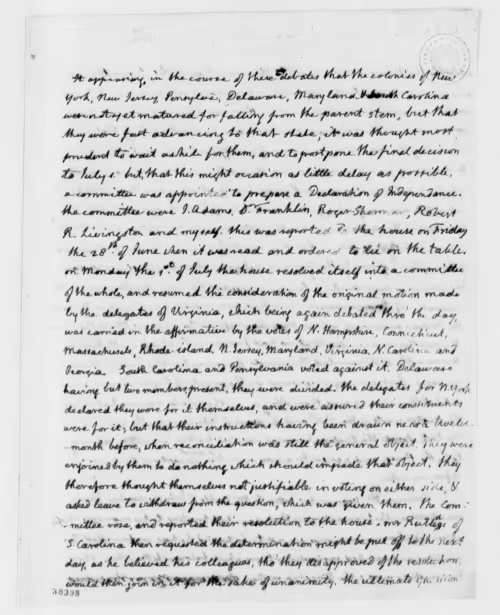
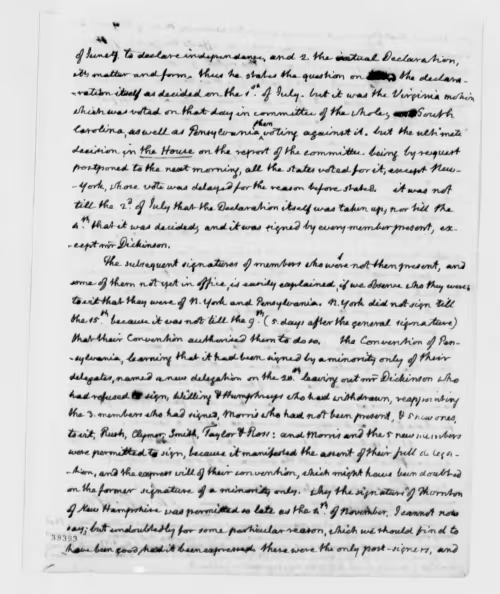
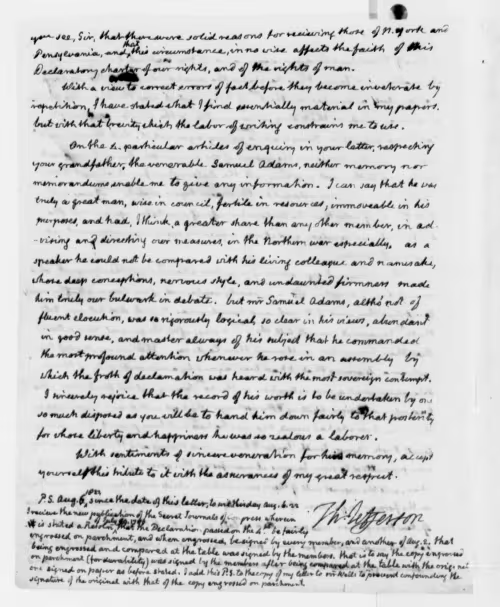
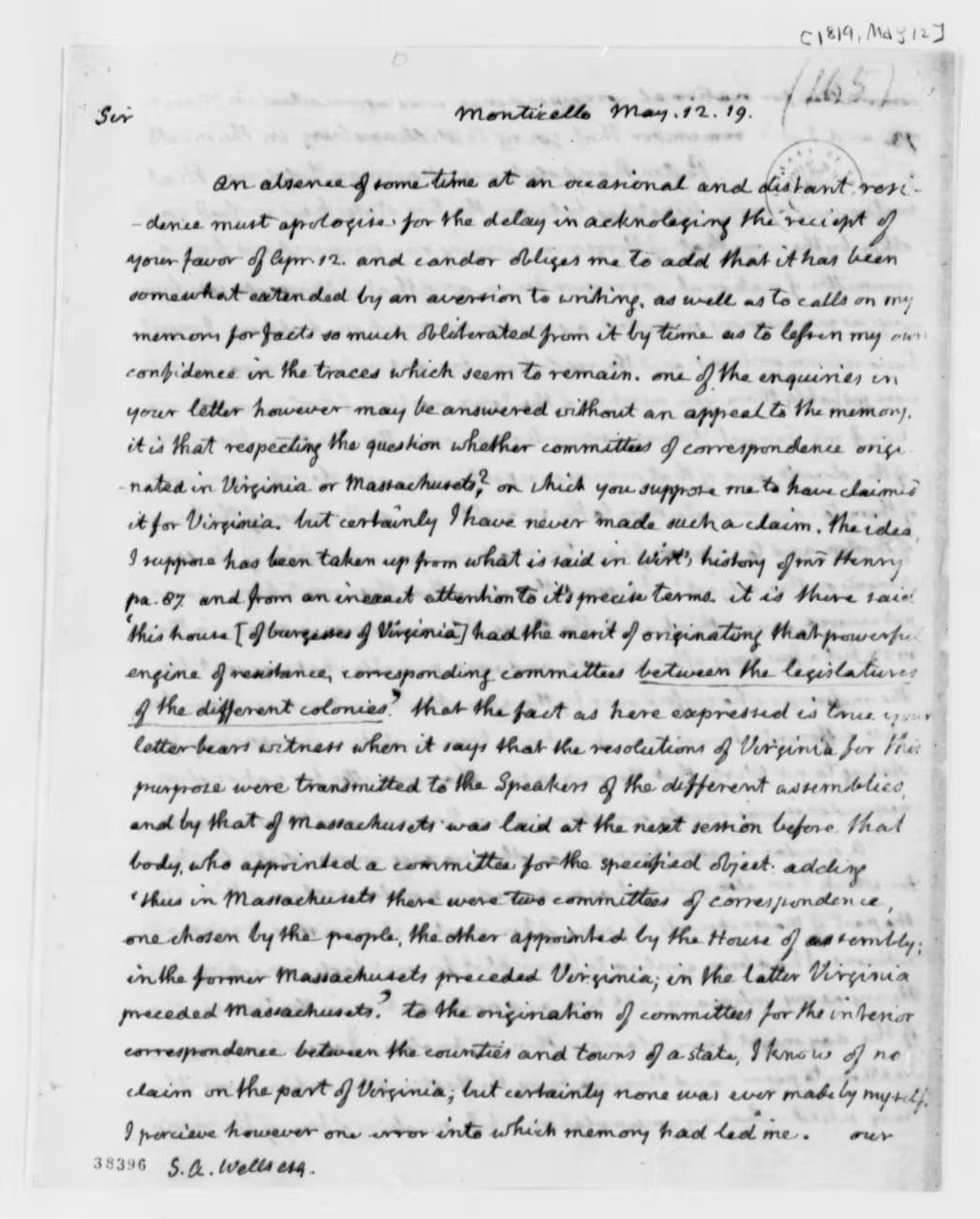
Thomas Jefferson to Samuel Adams Wells, 12 May 1819–6 August 1822
Thomas Jefferson to Samuel Adams Wells, 12 May 1819–6 August 1822
Jefferson provides a detailed firsthand account of the Declaration of Independence's drafting and passage.
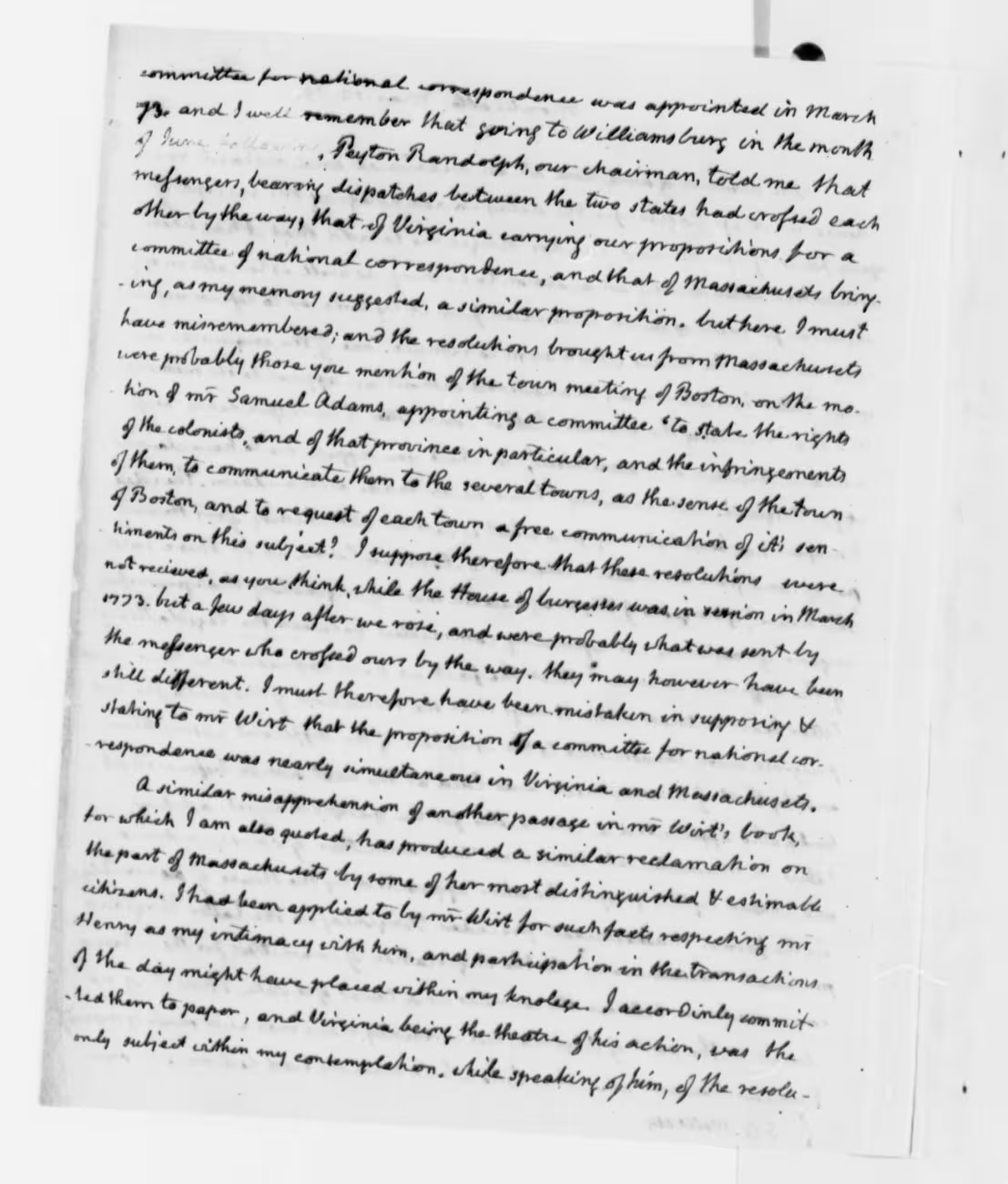
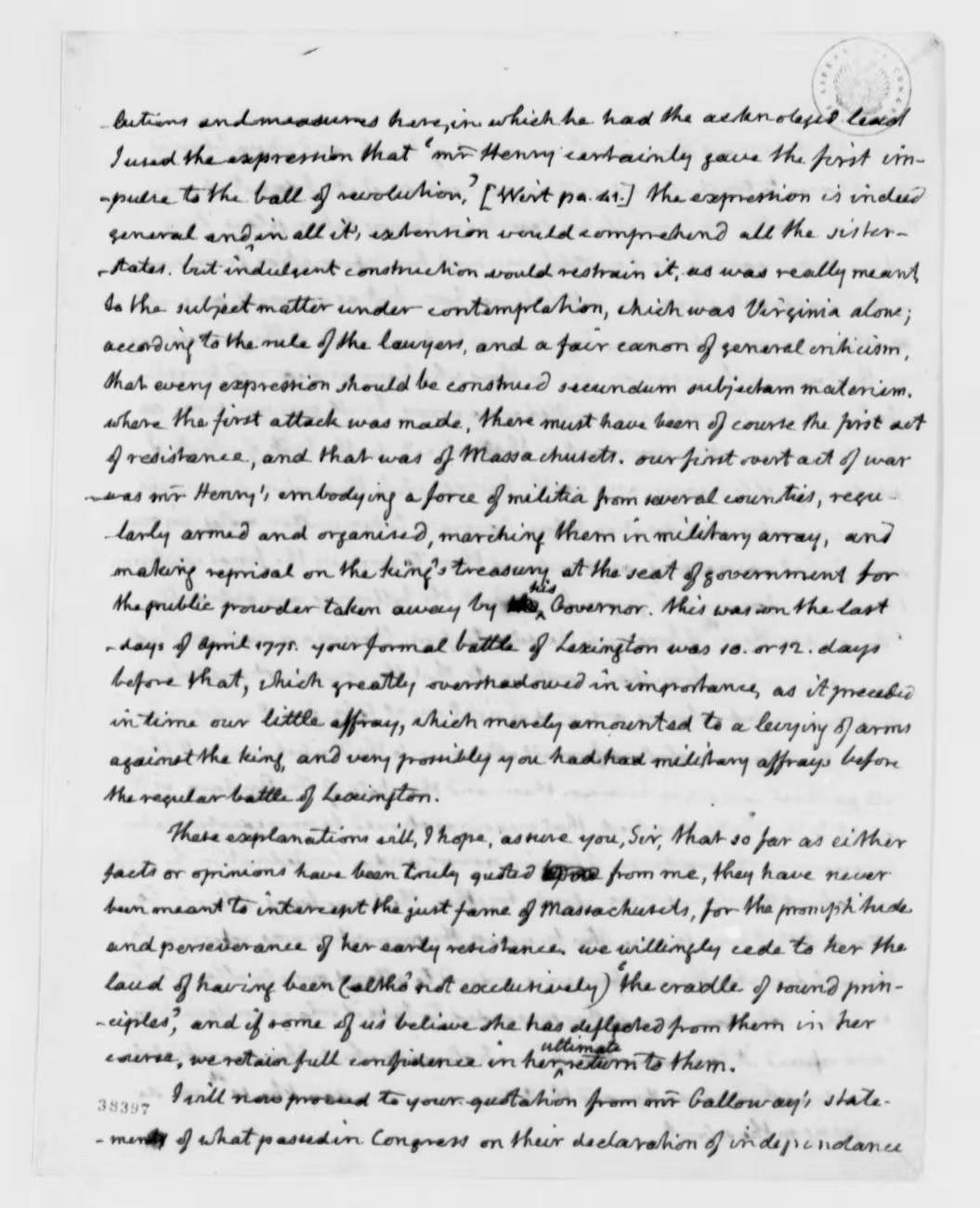
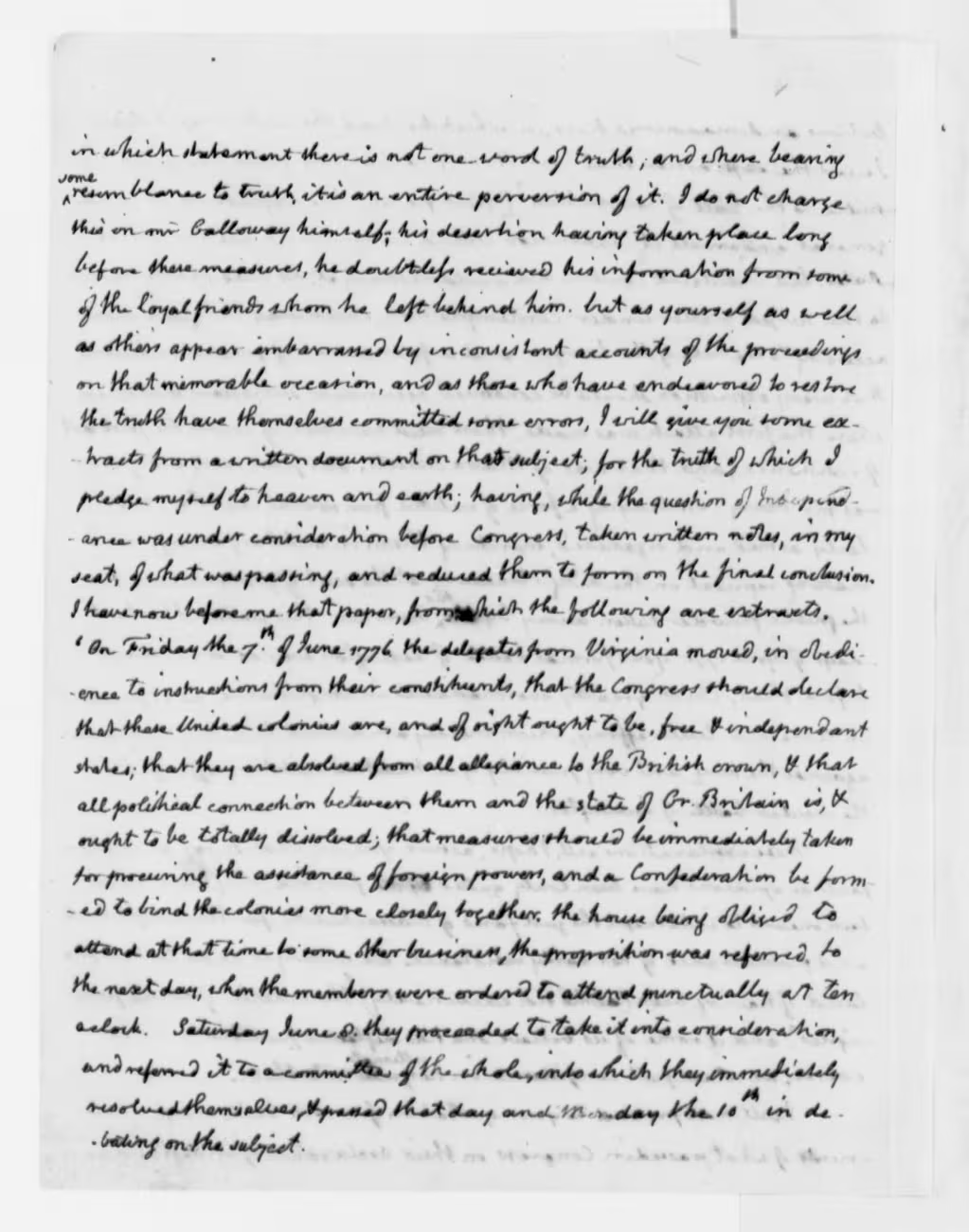
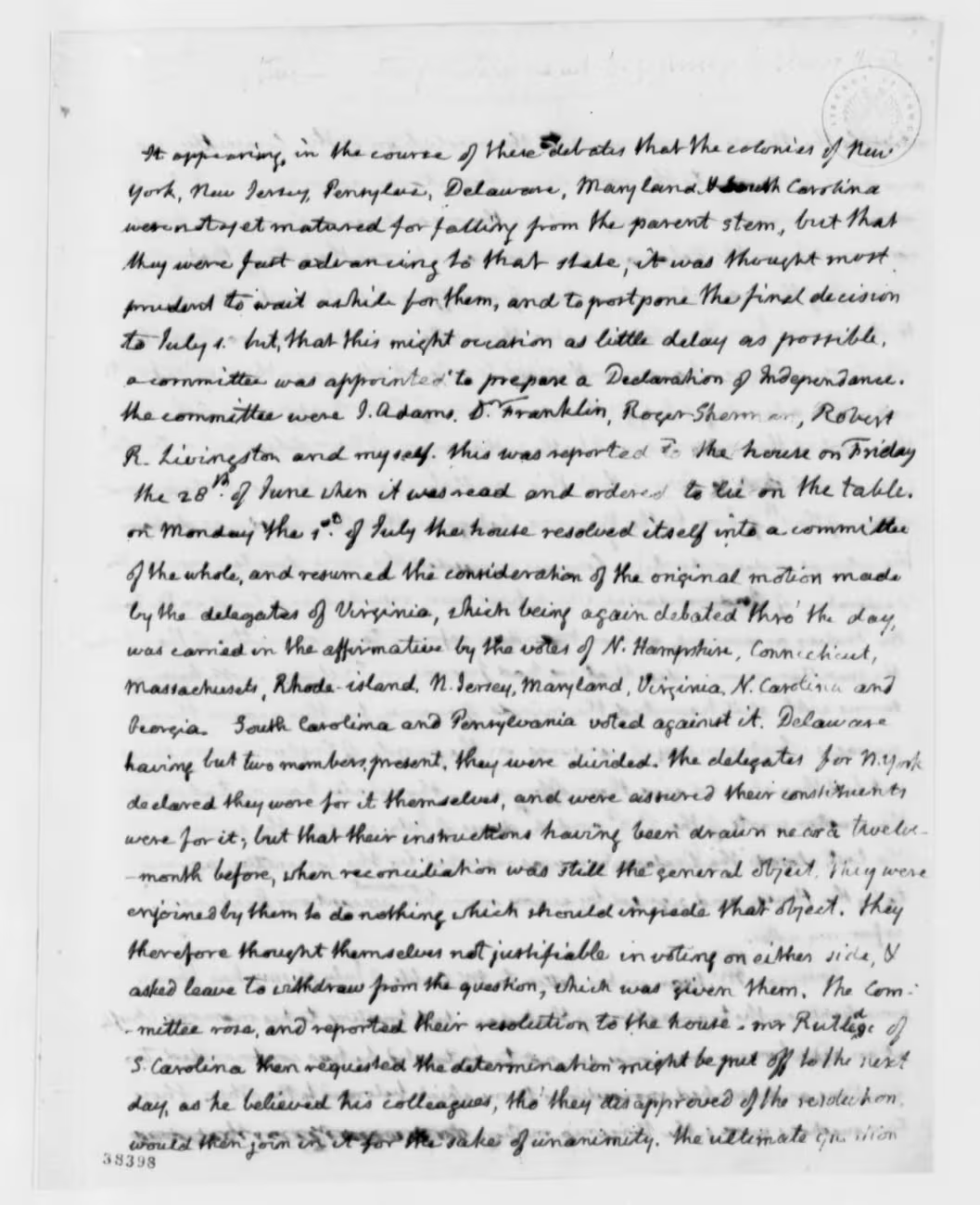
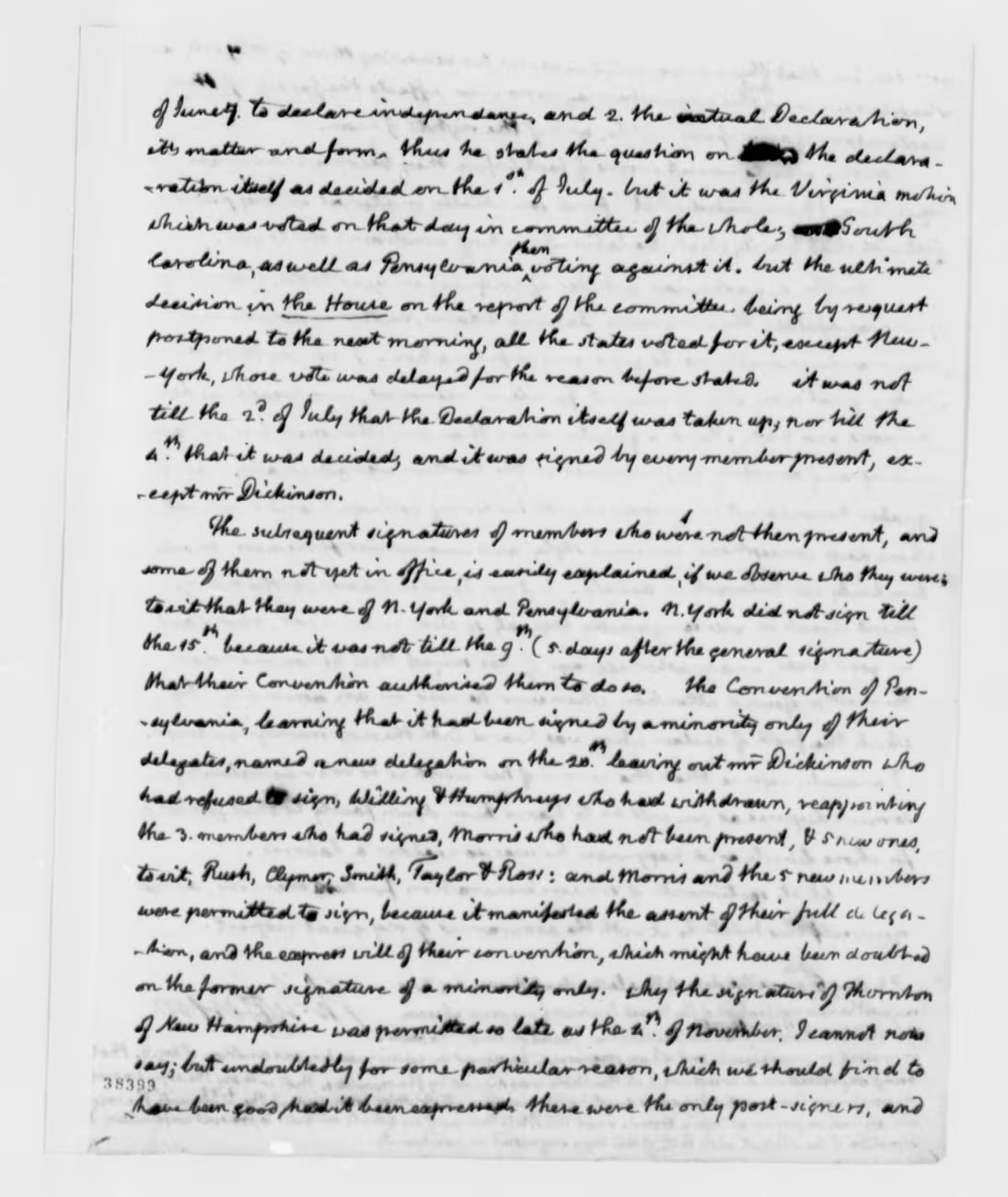
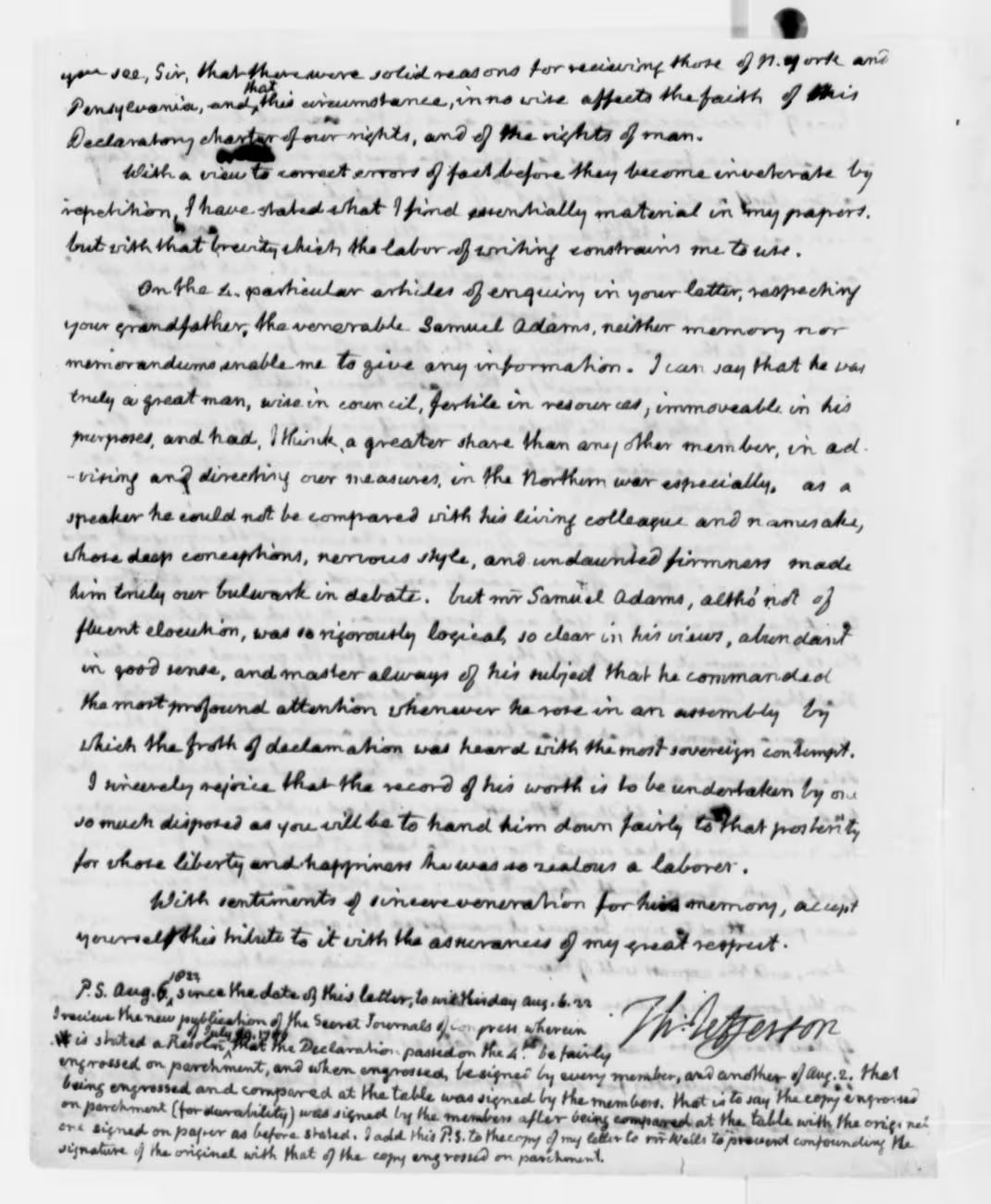
Jefferson’s recollection shows that the committee was created to prepare a declaration of independence while Congress worked toward unity on it.
The Committee of Five
Collections of the Massachusetts Historical Society. View in the MHS Online Collections.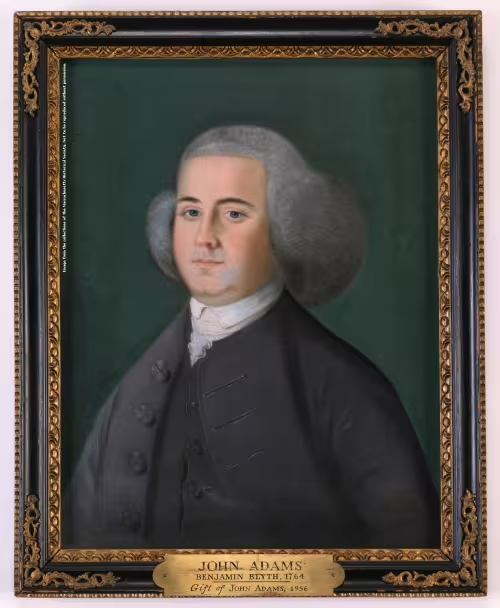
John Adams
John Adams
Lawyer who defended British soldiers after the Boston Massacre, championed independence in Congress, and served as the second U.S. president.
From the New York Public Library. View in the NYPL Digital Collections.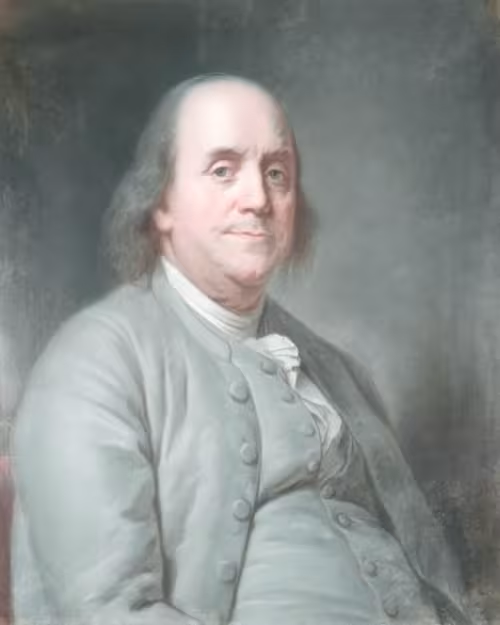
Benjamin Franklin
Benjamin Franklin
Helped draft the Declaration of Independence and worked to secure the crucial Franco-American alliance that changed the course of the Revolution.
Collection of the New York Historical Society, Gift of Goodhue Livingston Jr. View in the NYHS Collections.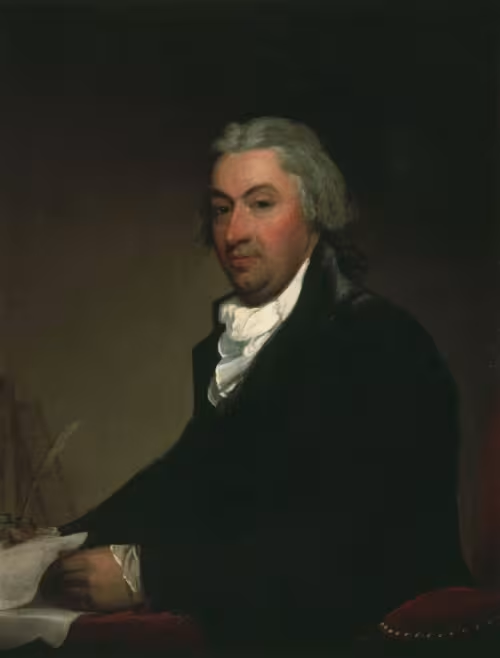
Robert R. Livingston
Robert R. Livingston
Co-drafted the Declaration of Independence, worked on the first New York State constitution, and negotiated the Louisiana Purchase as minister to France.
Thomas Jefferson, from life, c. 1791-1792, by Charles Willson Peale. U.S. National Park Service, Independence National Historical Park. View the NPS Multimedia Record.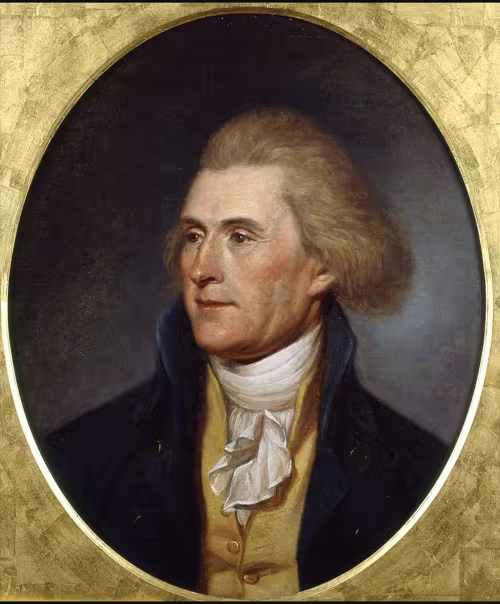
Thomas Jefferson
Thomas Jefferson
A prominent early-American politician who drafted the Declaration of Independence and served as the third U.S. president.
Yale University Art Gallery.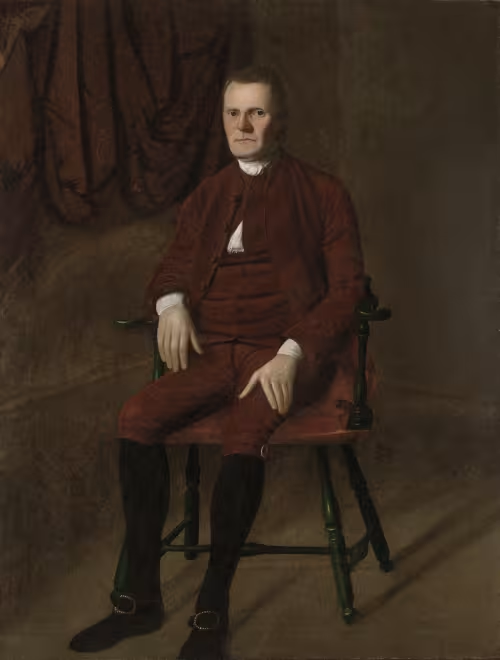
Roger Sherman
Roger Sherman
The only signer of all four founding documents and architect of the Connecticut Compromise that established the bicameral structure of Congress.
What this Exhibit Shows
This exhibit explores how and why the Declaration was written. It identifies who shaped it and describes their roles in shaping the document’s language. This exhibit tells how this shared effort later became a simpler story about fewer people.
Writing the Declaration took time and weathered strenuous moments of negotiation. Visitors will see drafts, edits, and official versions that show the Declaration as a working document. They’ll also see the limitations some of the committee members worked under.