
Sections in this exhibit
-
1
Section 1 A Famous Document Takes ShapeSection 1
In 1776, independence moved from argument to action when the Continental Congress asked a committee of five to draft a declaration. Their work turned a bold idea into a document that announced the United States to the world.
-
2
Section 2 Thomas Jefferson: Drafting the DeclarationSection 2
Thomas Jefferson wrote the first draft of the Declaration in June 1776, drawing on ideas colonists had debated for years. His draft gave the Committee of Five and Congress a starting point.
-
3
Section 3 John Adams: Debating IndependenceYou are here
John Adams helped secure the agreement that made the Declaration possible. Through debate and persuasion in Congress, he worked to unite the colonies behind the decision to declare independence.
-
4
Section 4 Benjamin Franklin: Writing for the WorldSection 4
Benjamin Franklin made minor edits to the Declaration, and he hoped the document would be used to persuade readers beyond the colonies.
-
5
Section 5 Roger Sherman: Law, Balance, and AuthoritySection 5
Roger Sherman helped ensure the Declaration worked as a clear, practical document. His legal judgment and support moved the draft forward.
-
6
Section 6 Robert R. Livingston: Writing Without a VoteSection 6
Robert R. Livingston helped draft the Declaration even though New York’s delegates were not yet allowed to vote for independence. His experience shows how the colonies moved toward unity at different paces.
-
7
Section 7 From Debate to DeclarationSection 7
The Declaration of Independence emerged from debate, uncertainty, and compromise in 1776. The document moved over time from a risky decision to a lasting symbol of the American nation and people.
John Adams: Debating Independence
John Adams helped secure the agreement that made the Declaration possible. Through debate and persuasion in Congress, he worked to unite the colonies behind the decision to declare independence.
Making the Case for Independence
While Thomas Jefferson worked on the draft, John Adams worked in Congress. Adams, who reviewed the Declaration draft multiple times, was one of the strongest and loudest voices pushing for independence in 1776.
He argued that the colonies could no longer delay their decision. Adams believed that declaring independence mattered more than perfect wording. He determined that parts of Jefferson’s draft were too strong for such an important document. For Adams, the goal was agreement, and his recommended changes to the Declaration reflected that. His role shows that the Declaration was shaped not only by words on the page but also by political debate and persuasion inside Congress.
Collections of the Massachusetts Historical Society. View in the MHS Online Collections.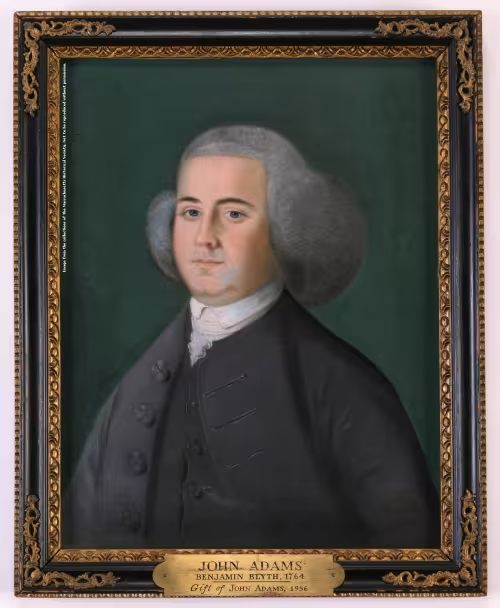
John Adams
John Adams
Lawyer who defended British soldiers after the Boston Massacre, championed independence in Congress, and served as the second U.S. president.
John Adams to Benjamin Kent, 22 June 1776.
John Adams to Benjamin Kent, 22 June 1776.
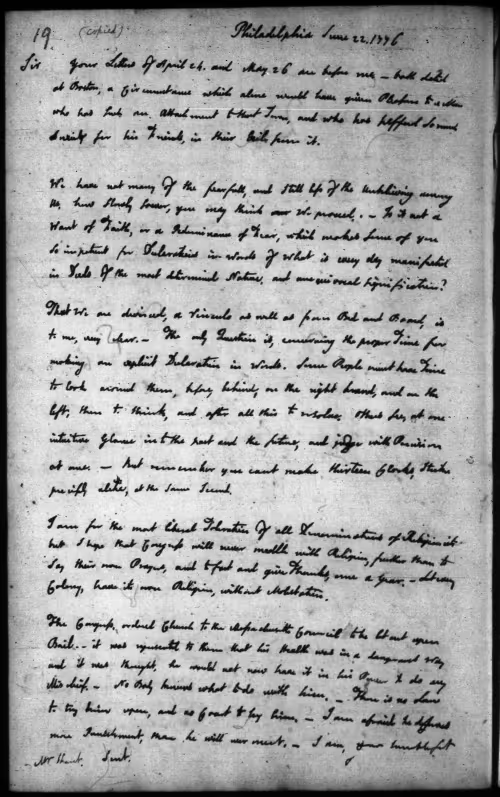
John Adams to Benjamin Kent, 22 June 1776
John Adams to Benjamin Kent, 22 June 1776
John Adams defends Congress's cautious approach toward proclaiming independence and declares America already divorced from Britain.
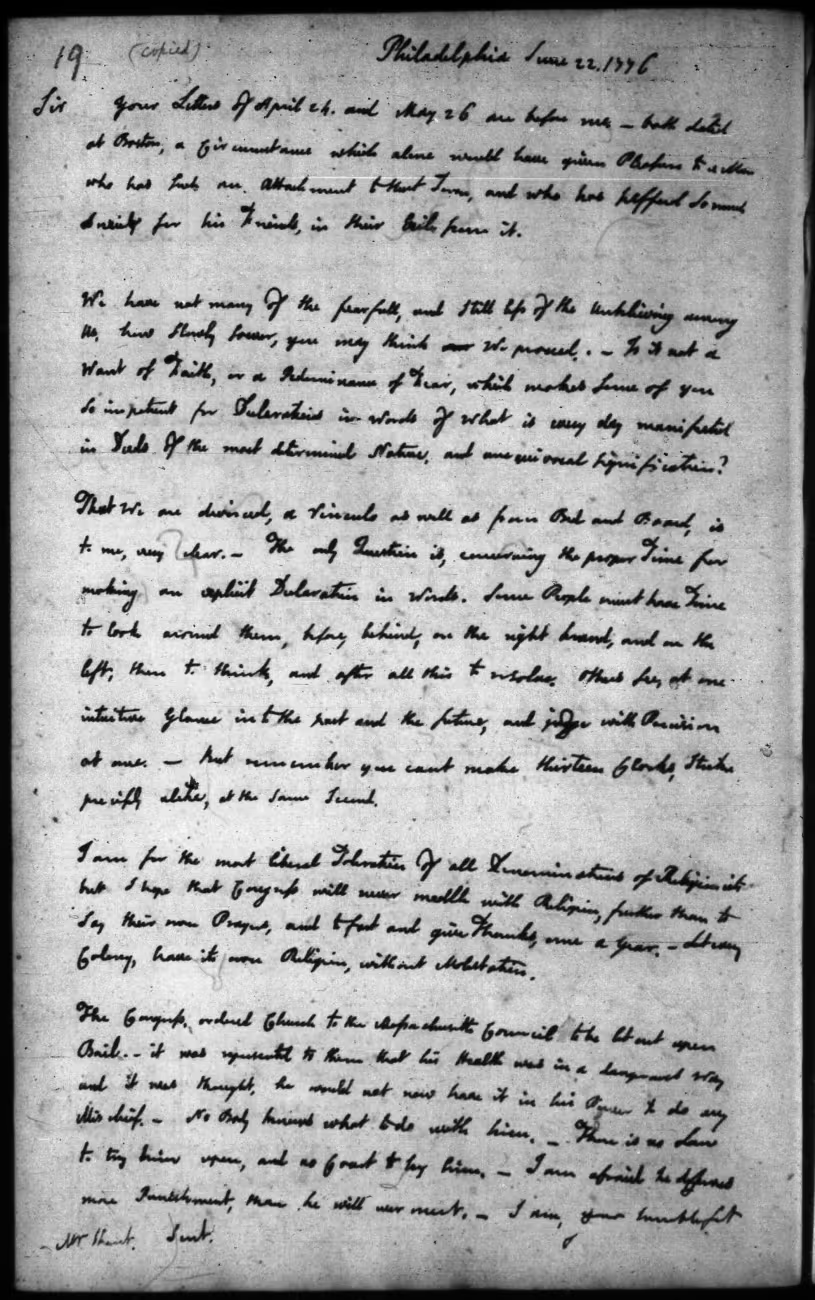
Passion and Persuasion
John Adams knew that independence would not happen unless Congress could be convinced to act together. Many delegates worried that declaring independence too soon would divide the colonies. It could also hurt their chances of gaining foreign support. Others believed the break with Britain had already happened in practice. Adams argued that Congress needed to face that reality. The king had made war on the colonies, and Congress needed to respond.
Adams spoke often during the debates of late June and early July. He answered objections, repeated arguments, and pressed Congress to move forward. He later described these debates as long and difficult, but necessary. His work did not involve rewriting the Declaration. Instead, he helped create the conditions that made the document possible. Without agreement on independence, no draft—no matter how strong—could have taken effect.
Why Declare Independence?
Congress did not declare independence lightly. Delegates balanced military realities, public opinion, colonial politics, and foreign diplomacy before deciding the time had come. Explore the arguments that pushed Congress toward independence, and those that counseled delay.
Act Now: Declare Independence
Wait and Proceed with Caution
Act Now: Declare Independence
Wait and Proceed with Caution
Act Now: Declare Independence
Wait and Proceed with Caution
Act Now: Declare Independence
Wait and Proceed with Caution
Adams believed the largest problem was unity. Independence required a vote that could represent all the colonies, even those that hesitated. Congress first reviewed the draft on 28 June, but did not vote, sending the Declaration back to the Committee of Five. On 1 July, Congress again debated independence but did not reach full agreement. Some colonies were not ready to move forward, others were divided, and New York’s delegates did not have the power to vote. Adams supported delaying the final debates so opinions could change.
The Vote that Made Independence
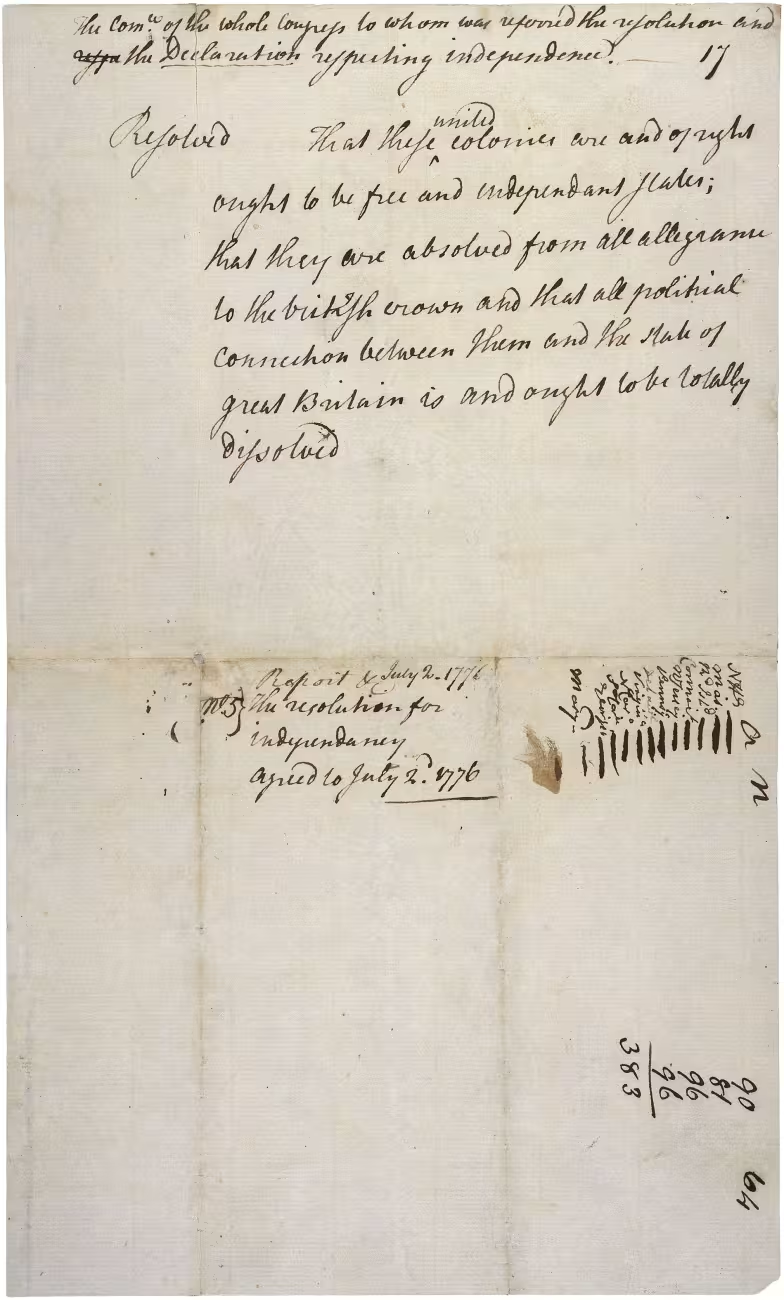
When Congress convened again on 2 July, delegates from twelve colonies agreed to Richard Henry Lee’s resolution for independence: “That these United Colonies are, and, of right, ought to be, Free and Independent States.” New York, following the rules from home, abstained. Adams later wrote that this vote was the true moment of independence. From his point of view, the decision mattered more than the final wording of the Declaration. His focus on consensus helps explain why the Declaration’s language became more careful and controlled as Congress revised it.
Writing to his wife Abigail the next day, Adams predicted that the vote on 2 July would become the great national holiday.
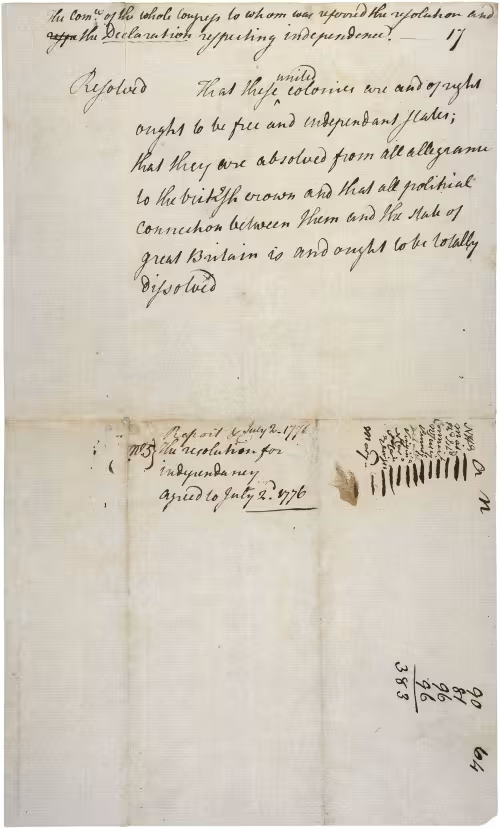
Adoption of the Lee Resolution, 2 July 1776
Adoption of the Lee Resolution, 2 July 1776
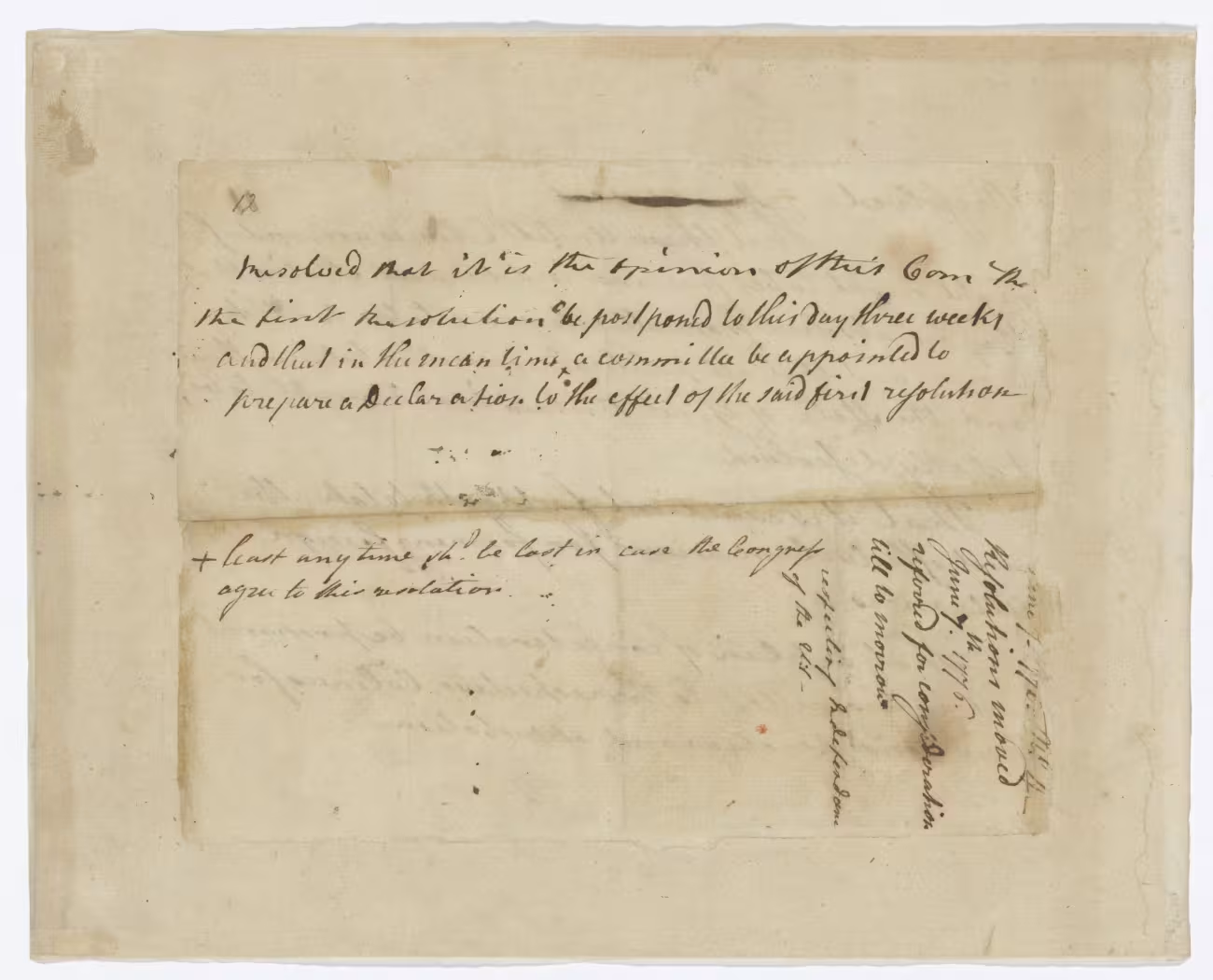
Charles Thomson's notes document the Second Continental Congress's historic vote on Richard Henry Lee's resolution declaring independence from Britain.
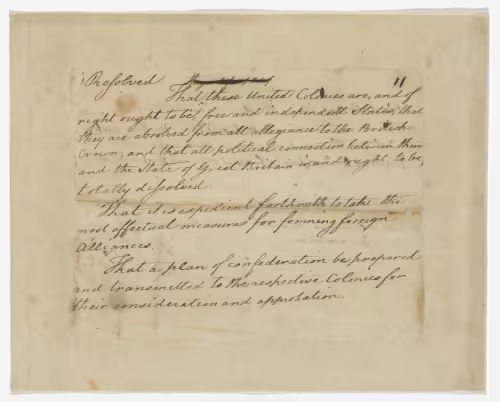
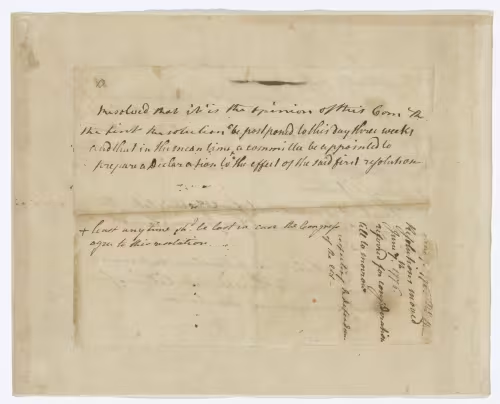
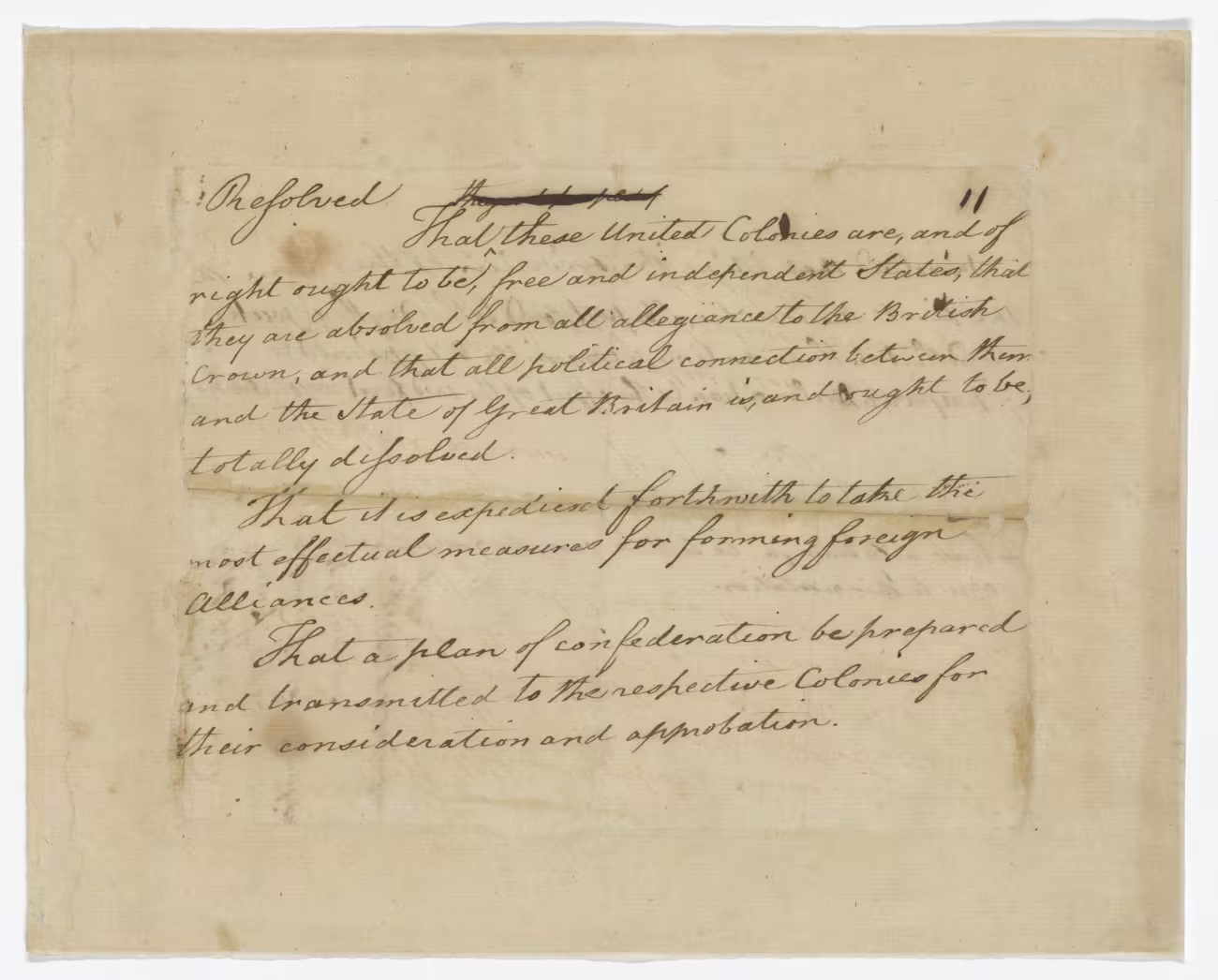
Lee Resolution, 7 June 1776
Lee Resolution, 7 June 1776
Richard Henry Lee's resolution declaring the colonies free and independent states, calling for dissolution of British ties and confederation planning.
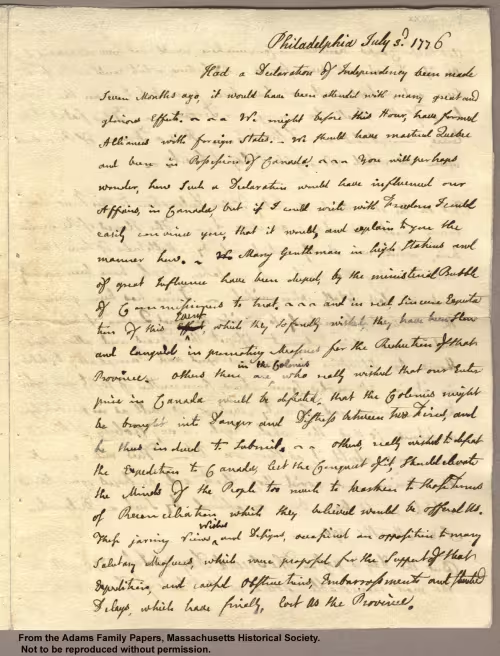
John Adams to Abigail Adams, 3 July 1776.
John Adams to Abigail Adams, 3 July 1776.
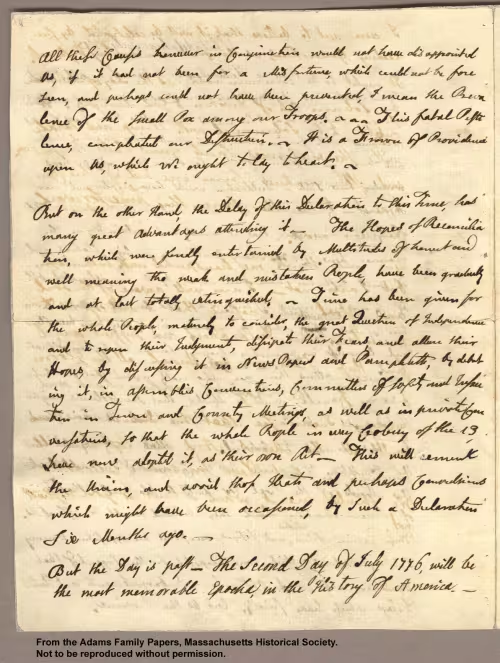
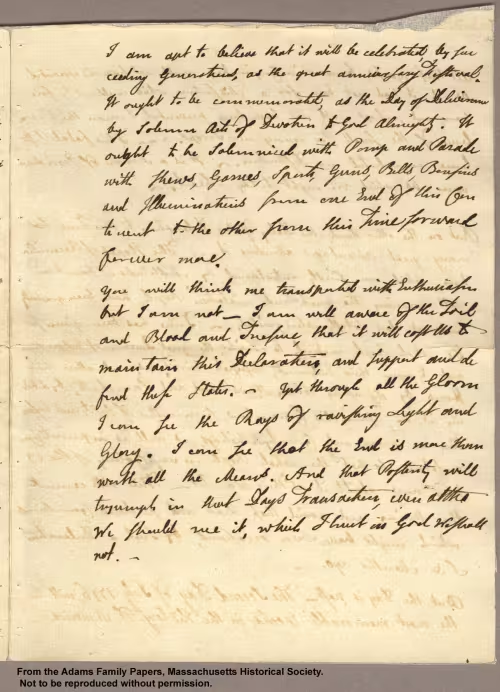
John Adams to Abigail Adams, 3 July 1776
John Adams to Abigail Adams, 3 July 1776
John Adams predicts that July 2 will be celebrated as America's independence day and reflects on the Declaration's timing.
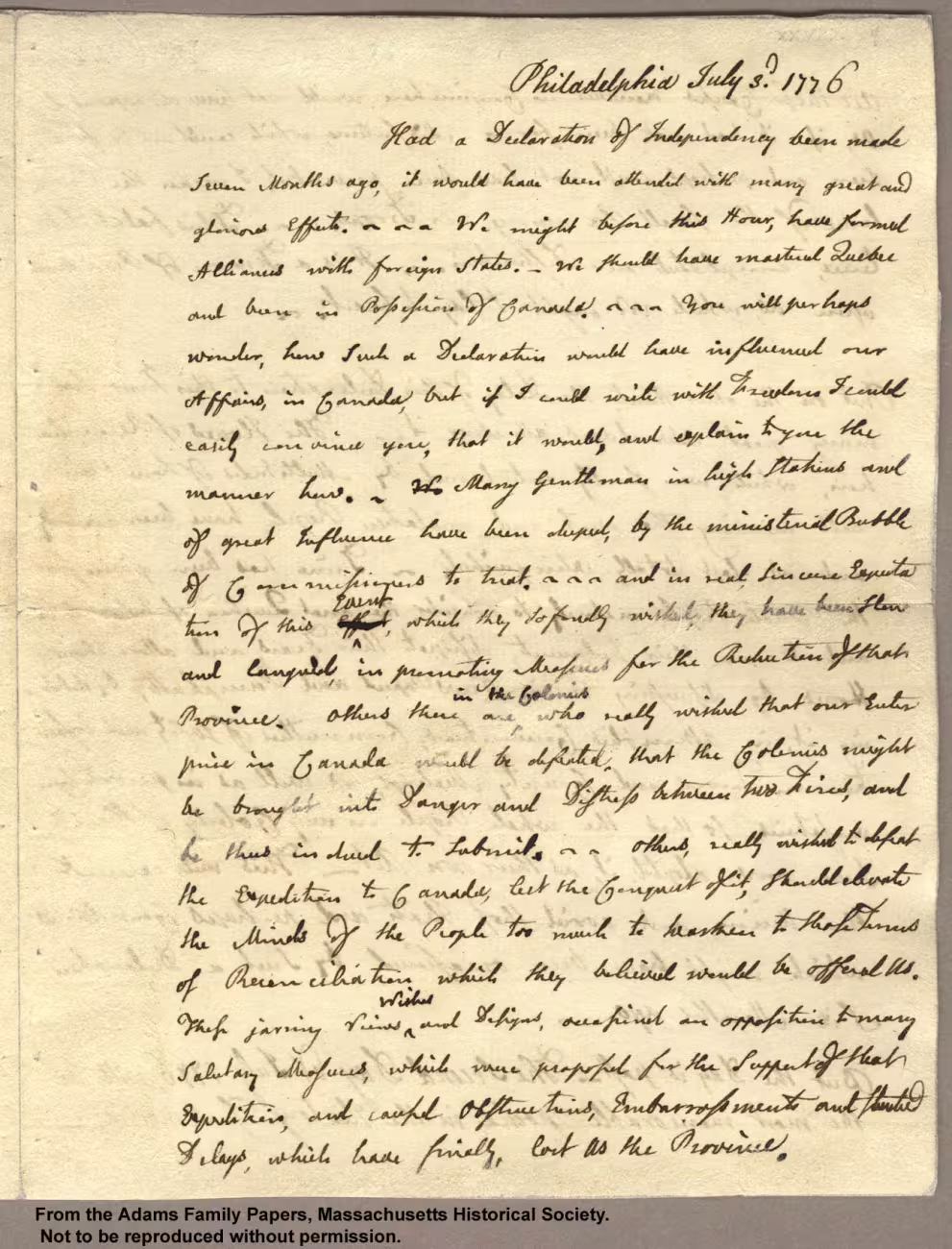
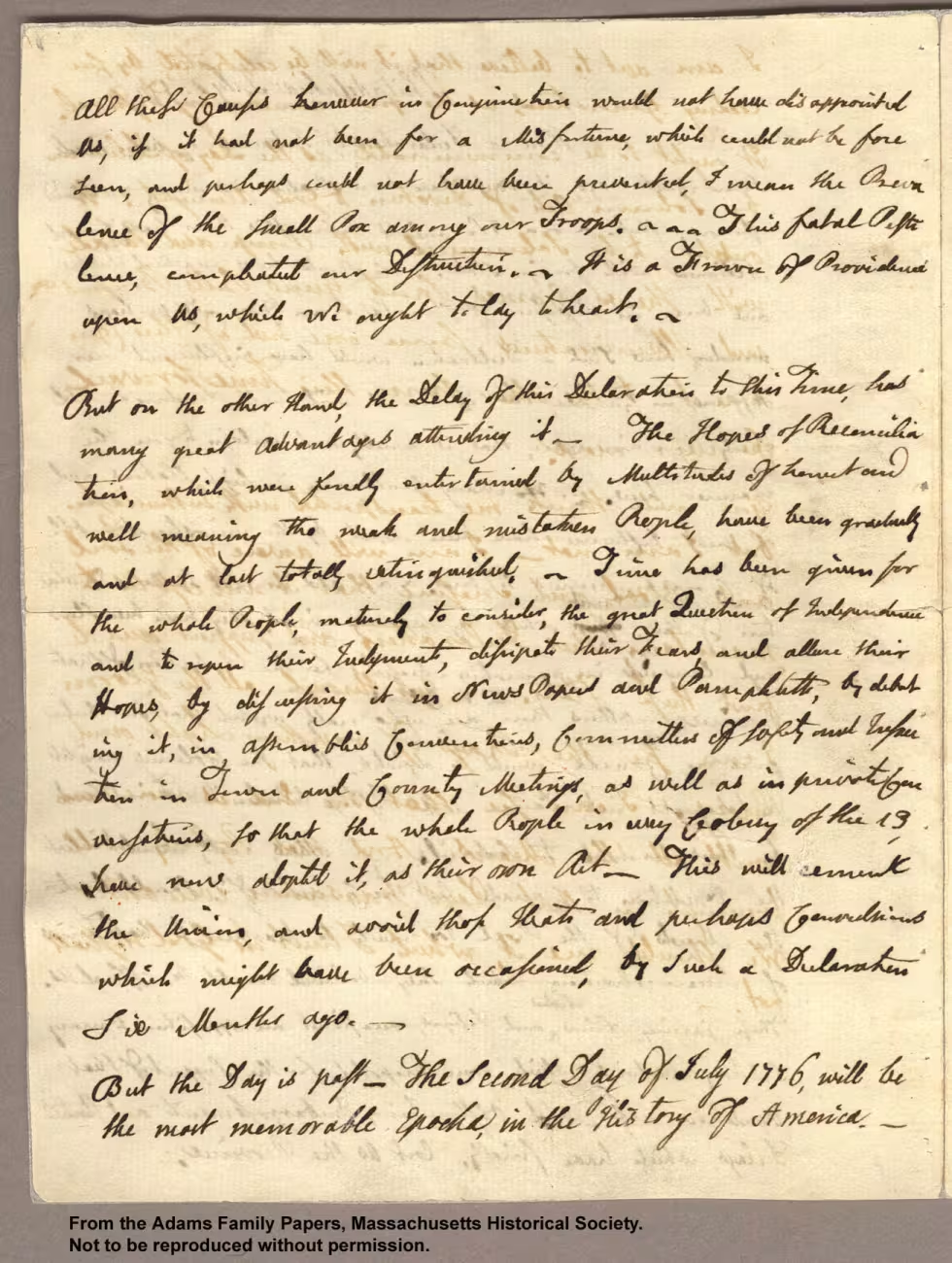
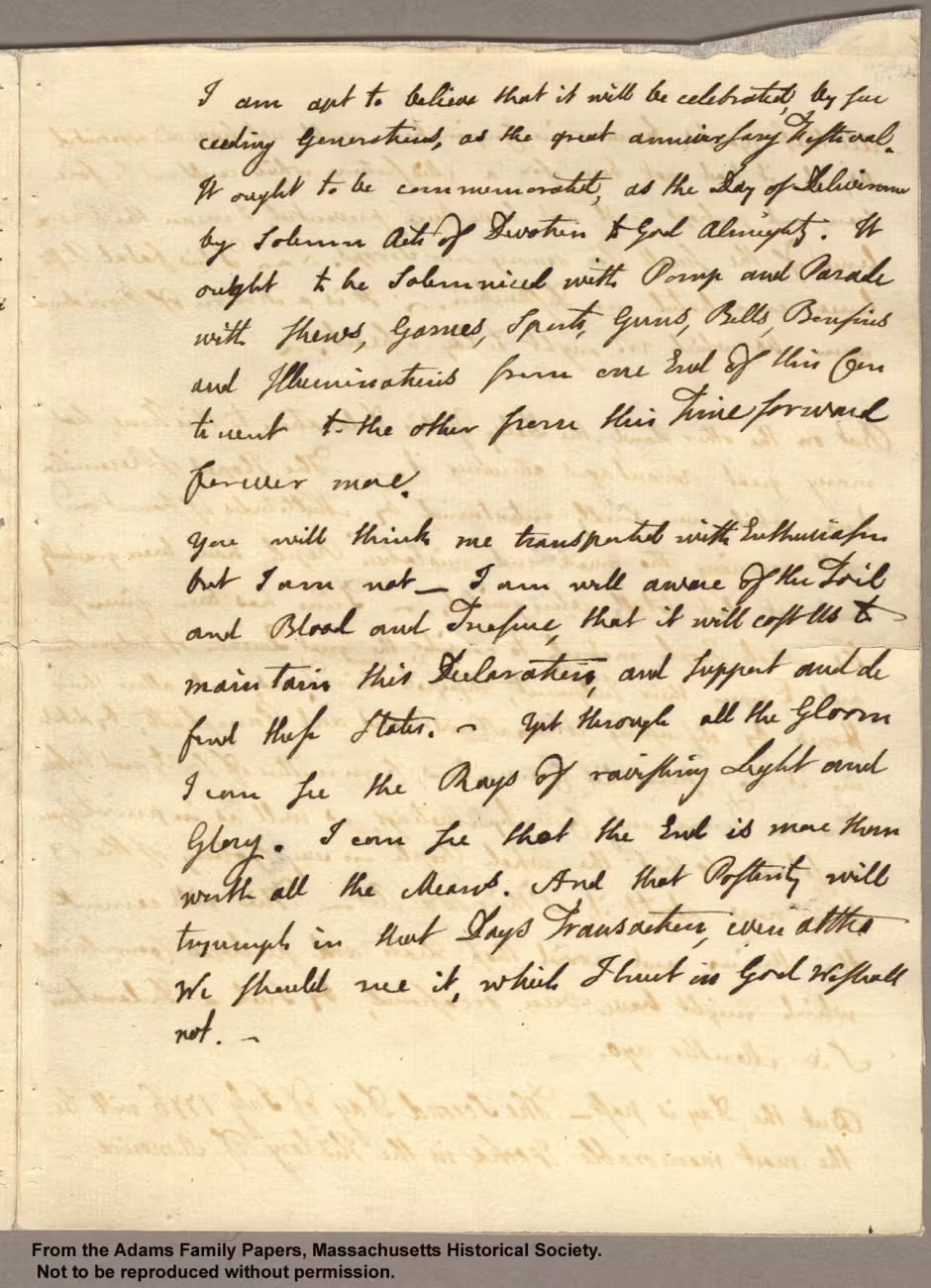
John Adams believed that 2 July 1776—the day Congress voted to approve independence—would become the nation's great anniversary. In this letter, he predicted future generations would celebrate that date with festivals, parades, and fireworks.
Instead, Americans came to commemorate 4 July, the day Congress approved the final text of the Declaration of Independence. Because printed copies of the Declaration were dated 4 July and widely distributed throughout the United States and Europe, that date became associated with the nation's founding. Over time, public memory attached itself to the Declaration itself rather than the earlier vote for independence, making 4 July the holiday Americans celebrate today.
From Decision to Document
Although he was wrong about 2 July being the main day for celebration—the Declaration was approved on the fourth, when Congress approved the Declaration, became the national holiday—Adams’s letter shows how important the vote for independence felt to those who participated. It also shows that the Declaration was shaped by debate as much as by drafting. Independence did not come from a single author or a single moment. It had to be argued for and accepted by Congress. Adams helped turn a written draft into a shared political decision. His work prepared the ground for the next stage of the process: refining the Declaration’s tone so it could speak clearly and carefully to readers at home and abroad.