
Sections in this exhibit
-
1
Section 1 A Famous Document Takes ShapeSection 1
In 1776, independence moved from argument to action when the Continental Congress asked a committee of five to draft a declaration. Their work turned a bold idea into a document that announced the United States to the world.
-
2
Section 2 Thomas Jefferson: Drafting the DeclarationSection 2
Thomas Jefferson wrote the first draft of the Declaration in June 1776, drawing on ideas colonists had debated for years. His draft gave the Committee of Five and Congress a starting point.
-
3
Section 3 John Adams: Debating IndependenceSection 3
John Adams helped secure the agreement that made the Declaration possible. Through debate and persuasion in Congress, he worked to unite the colonies behind the decision to declare independence.
-
4
Section 4 Benjamin Franklin: Writing for the WorldSection 4
Benjamin Franklin made minor edits to the Declaration, and he hoped the document would be used to persuade readers beyond the colonies.
-
5
Section 5 Roger Sherman: Law, Balance, and AuthorityYou are here
Roger Sherman helped ensure the Declaration worked as a clear, practical document. His legal judgment and support moved the draft forward.
-
6
Section 6 Robert R. Livingston: Writing Without a VoteSection 6
Robert R. Livingston helped draft the Declaration even though New York’s delegates were not yet allowed to vote for independence. His experience shows how the colonies moved toward unity at different paces.
-
7
Section 7 From Debate to DeclarationSection 7
The Declaration of Independence emerged from debate, uncertainty, and compromise in 1776. The document moved over time from a risky decision to a lasting symbol of the American nation and people.
Roger Sherman: Law, Balance, and Authority
Roger Sherman helped ensure the Declaration worked as a clear, practical document. His legal judgment and support moved the draft forward.
A Legal Mind at Work
Roger Sherman is one of the least remembered members of the Committee of Five, but his role was important. Unlike Jefferson or Franklin, Sherman was not known for grand writing or diplomacy. He was a lawyer and legislator who focused on structure, clarity, and law.
Sherman, from Connecticut, had been a critic of British governance since the 1760s. He helped ensure that the Declaration worked as a legal document, not just a political statement. He believed independence had to rest on careful reasoning and agreement. His presence on the committee reflected the need for balance. He reviewed the document at least twice.
Yale University Art Gallery.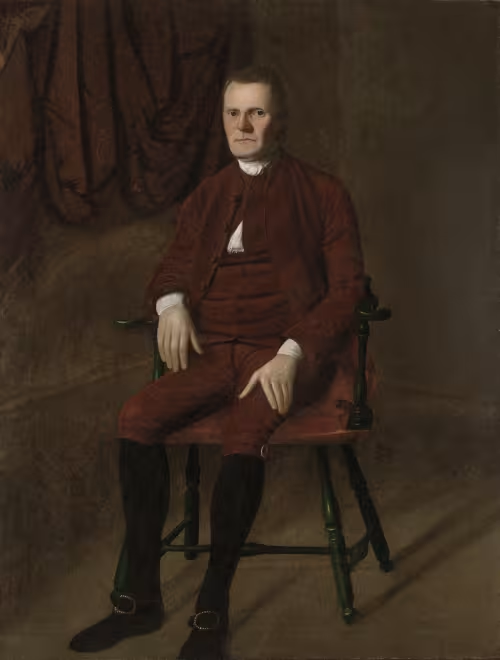
Roger Sherman
Roger Sherman
The only signer of all four founding documents and architect of the Connecticut Compromise that established the bicameral structure of Congress.
Reviewing and Moving Forward
Sherman brought a practical legal mindset to the drafting of the Declaration. He had long experience in colonial government and understood how laws were debated, revised, and accepted. While Jefferson drafted the text and Franklin refined its tone, Sherman reviewed and approved the work.
John Adams to Timothy Pickering, 6 August 1822.
John Adams to Timothy Pickering, 6 August 1822.
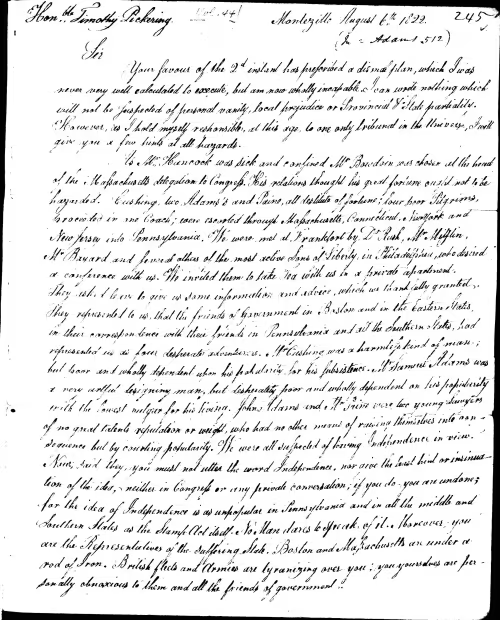
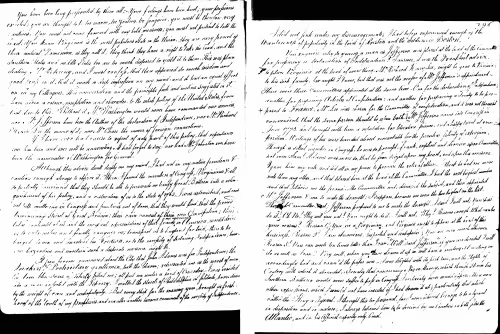
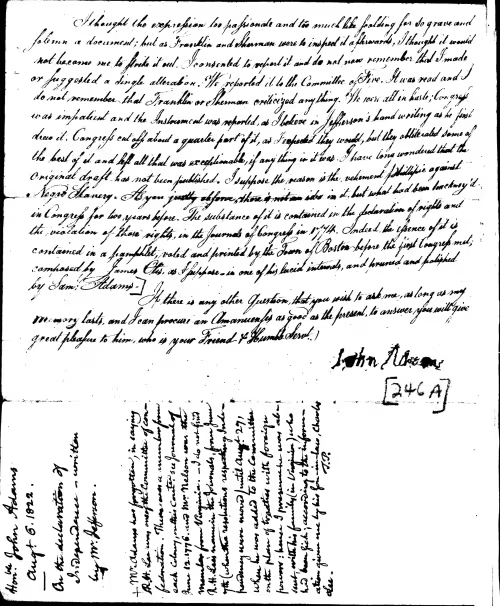
John Adams to Timothy Pickering, 6 August 1822
John Adams to Timothy Pickering, 6 August 1822
Adams recounts a behind-the-scenes strategy that led Jefferson to draft the Declaration of Independence and explains the rivalries shaping early Congress.
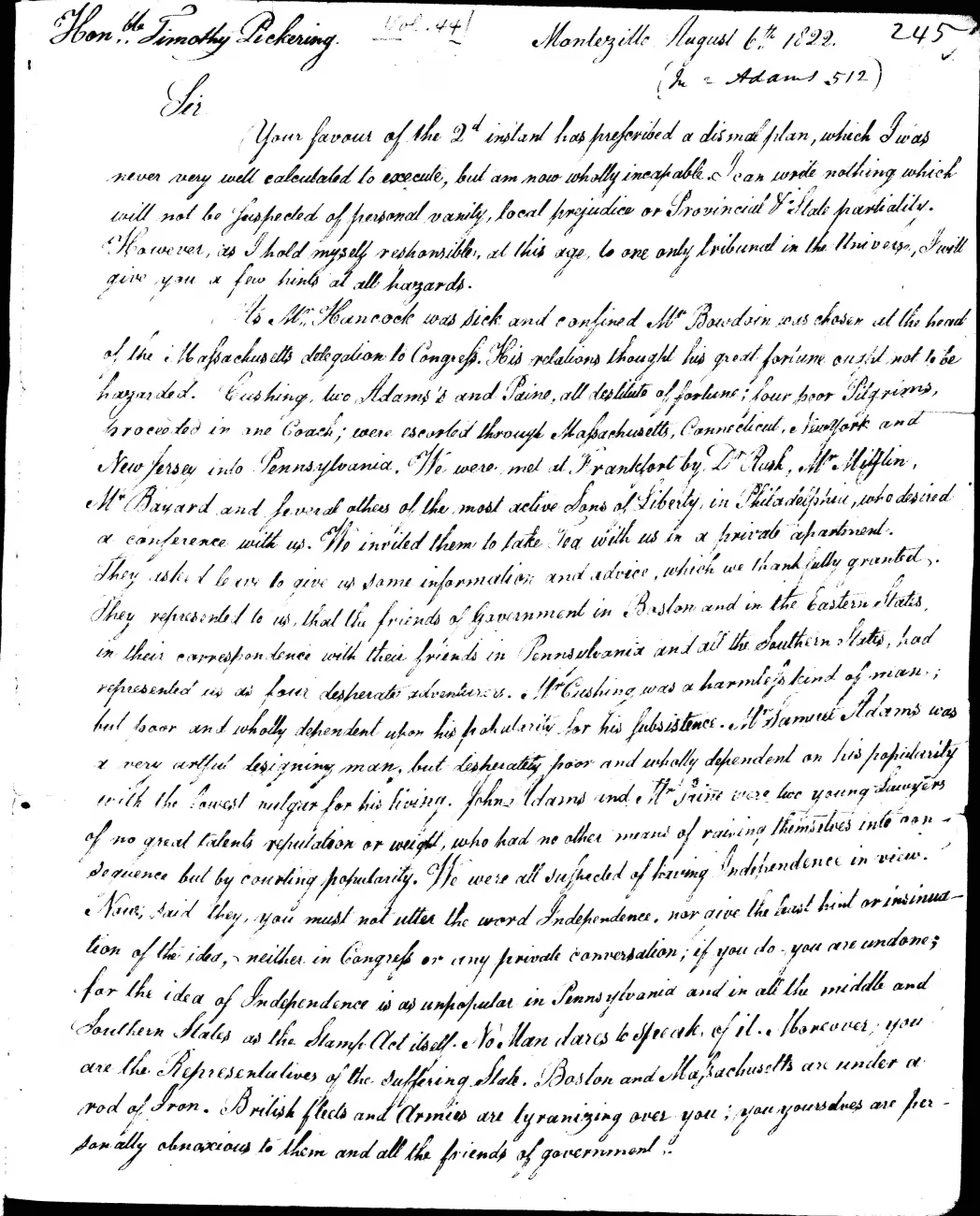
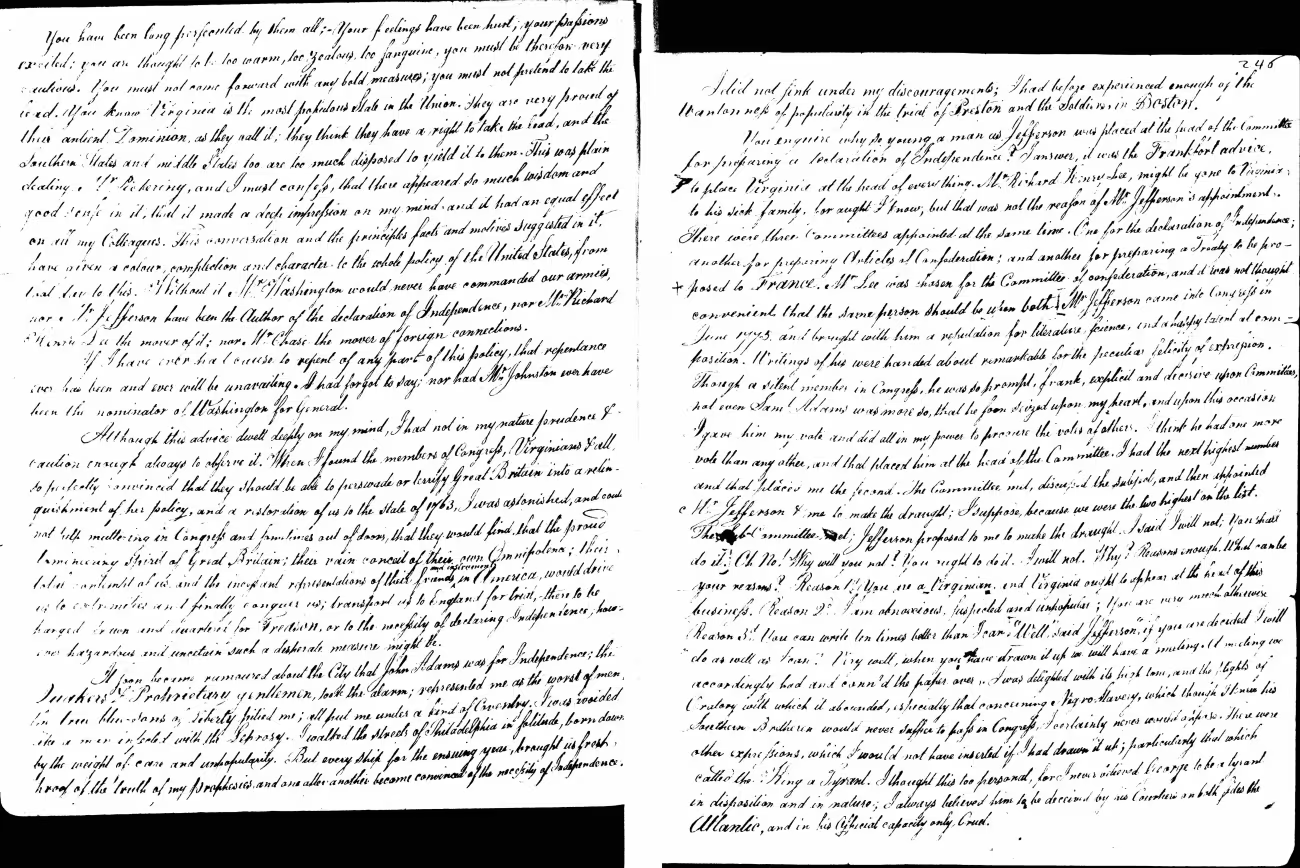
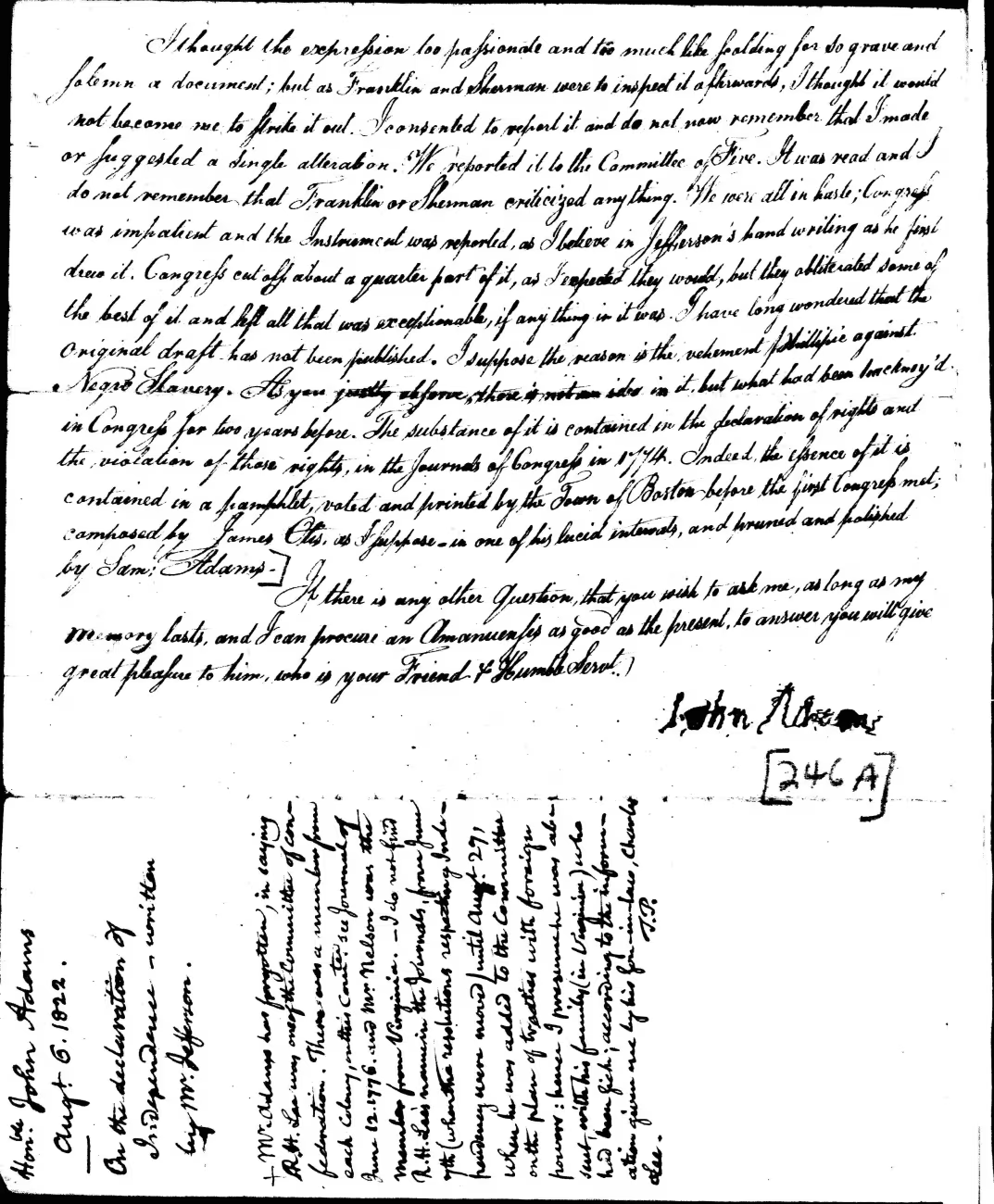
According to John Adams, Sherman did not raise objections when the draft came before the committee. Congress and the committee were in a hurry, and the document moved forward quickly.
Although Sherman left fewer visible marks on the page, Adams’s account helps us understand his role. Sherman’s silence was not indifference. It reflected confidence in the draft and a desire to move the work ahead. His example reminds us that history is shaped not only by dramatic edits, but also by steady judgment and trust within a team.
Thomas Jefferson to Roger Sherman Baldwin, 9 March 1822.
Thomas Jefferson to Roger Sherman Baldwin, 9 March 1822.
A Trusted Voice
Sherman’s role also shows that the men on the Committee of Five had many other duties. Sherman was the only member of Congress to serve on the committees that drafted the Declaration of Independence, the Articles of Confederation, and later the Constitution. During the Revolutionary Era, he earned a reputation for having sound judgment. He woke up early, began work in the morning, and labored until late at night.
Sherman worked on issues that ranged far beyond the Declaration. He helped manage supply purchasing for the army, handled Native American affairs, and took part in running the post office. He served on the Board of War in 1776 and later on the Board of Treasury. Though he was not known for graceful speeches, he was respected for his sound judgment. Even friends who joked about his stiff manner agreed that he was one of the most sensible and reliable men in Congress.
Annotated Timeline of Committee Appointments
Working Beyond the Declaration
The Declaration of Independence was only one of many urgent responsibilities before Congress in the summer of 1776. This infographic follows the Committee of Five's committee appointments alongside the drafting of the Declaration, revealing how its members managed war, diplomacy, finance, communications, and the creation of a new government.
John Adams to Robert Waln Jr., 19 November 1822.
John Adams to Robert Waln Jr., 19 November 1822.
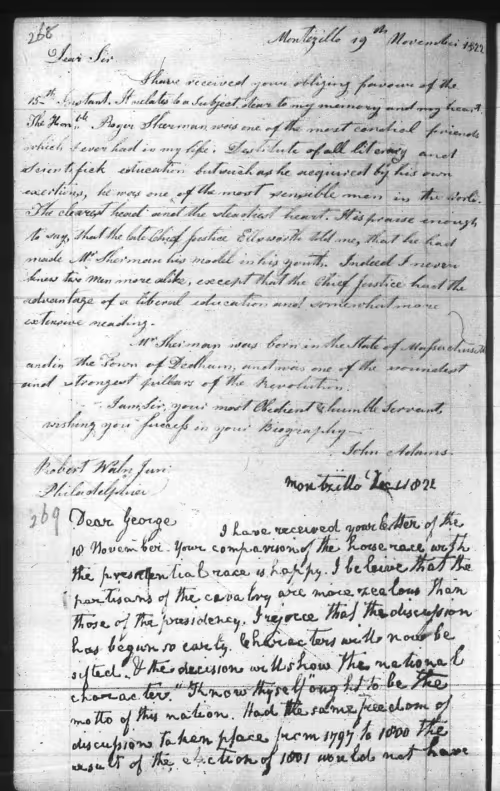
John Adams to Robert Waln Jr., 19 November 1822
John Adams to Robert Waln Jr., 19 November 1822
John Adams praises Roger Sherman as a self-educated revolutionary pillar with unmatched clarity and steadiness.
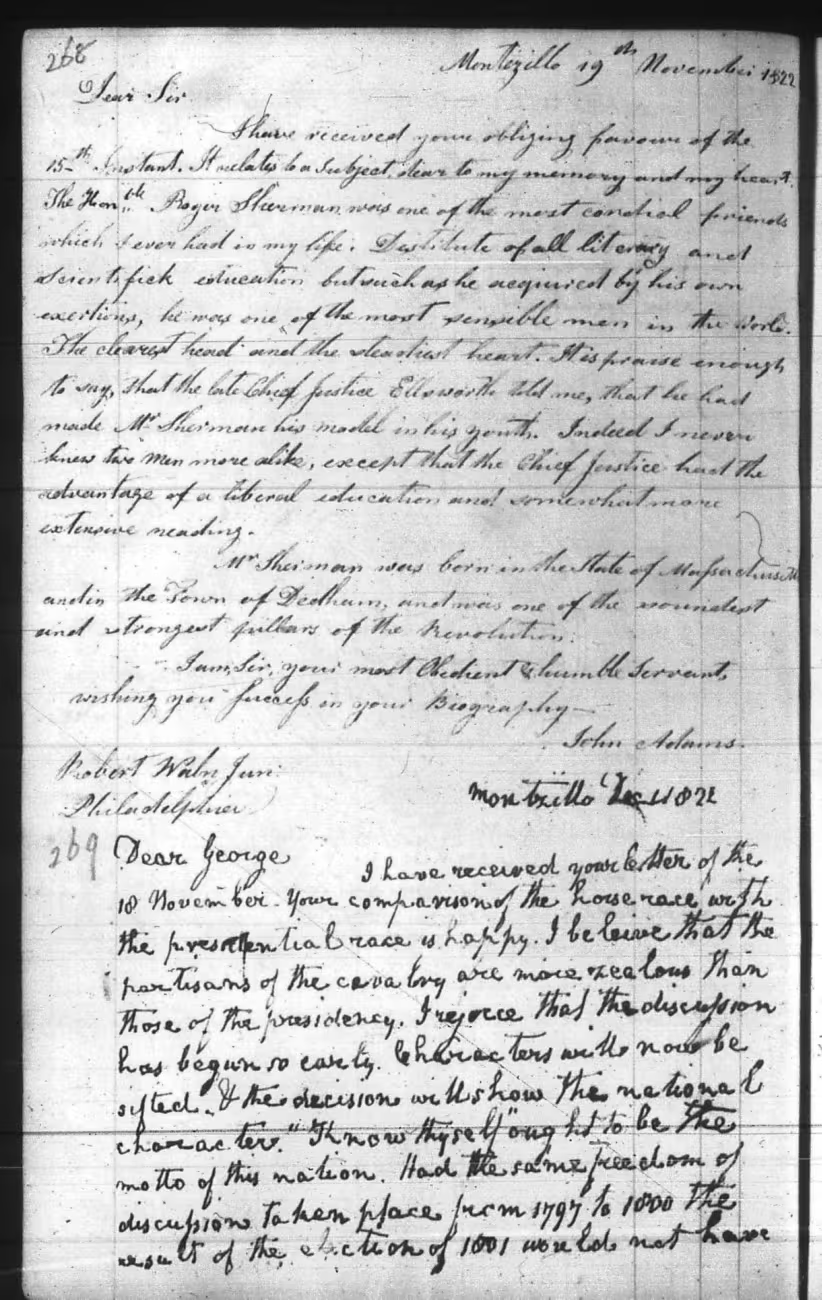
John Adams remembered Sherman years later as one of the most reliable and thoughtful leaders of the Revolutionary era.
This reputation, which helps explain why people trusted Sherman so fully, shaped how the Connecticut delegate approached the Declaration. He favored language that could bring the colonies together. He supported revisions that stressed shared action and common purpose. His choices made the document less dramatic but more durable. Sherman’s work helped turn bold ideas into a statement strong enough to last. His example reminds us that revolution required powerful words and a clear understanding of the potential consequences.
Roger Sherman and America's Founding Documents
Roger Sherman is the only person to sign all four of America's principal founding documents. His signature appears at every major constitutional milestone, from resistance to British rule to the creation of the United States.


John Adams to Robert Waln Jr., 19 November 1822.
John Adams to Robert Waln Jr., 19 November 1822.
John Adams to Robert Waln Jr., 19 November 1822
John Adams to Robert Waln Jr., 19 November 1822
John Adams praises Roger Sherman as a self-educated revolutionary pillar with unmatched clarity and steadiness.