
Sections in this exhibit
-
1
Section 1 A Famous Document Takes ShapeSection 1
In 1776, independence moved from argument to action when the Continental Congress asked a committee of five to draft a declaration. Their work turned a bold idea into a document that announced the United States to the world.
-
2
Section 2 Thomas Jefferson: Drafting the DeclarationYou are here
Thomas Jefferson wrote the first draft of the Declaration in June 1776, drawing on ideas colonists had debated for years. His draft gave the Committee of Five and Congress a starting point.
-
3
Section 3 John Adams: Debating IndependenceSection 3
John Adams helped secure the agreement that made the Declaration possible. Through debate and persuasion in Congress, he worked to unite the colonies behind the decision to declare independence.
-
4
Section 4 Benjamin Franklin: Writing for the WorldSection 4
Benjamin Franklin made minor edits to the Declaration, and he hoped the document would be used to persuade readers beyond the colonies.
-
5
Section 5 Roger Sherman: Law, Balance, and AuthoritySection 5
Roger Sherman helped ensure the Declaration worked as a clear, practical document. His legal judgment and support moved the draft forward.
-
6
Section 6 Robert R. Livingston: Writing Without a VoteSection 6
Robert R. Livingston helped draft the Declaration even though New York’s delegates were not yet allowed to vote for independence. His experience shows how the colonies moved toward unity at different paces.
-
7
Section 7 From Debate to DeclarationSection 7
The Declaration of Independence emerged from debate, uncertainty, and compromise in 1776. The document moved over time from a risky decision to a lasting symbol of the American nation and people.
Thomas Jefferson: Drafting the Declaration
Thomas Jefferson wrote the first draft of the Declaration in June 1776, drawing on ideas colonists had debated for years. His draft gave the Committee of Five and Congress a starting point.
Turning Ideas into Words
In June 1776, Thomas Jefferson started writing the Declaration of Independence. He did not start from nothing. He drew on earlier resolutions, petitions, statements, and ideas that colonists had been writing and saying for years. Working quickly, he wrote a draft that explained why the colonies believed they had to break from British rule.
Thomas Jefferson, from life, c. 1791-1792, by Charles Willson Peale. U.S. National Park Service, Independence National Historical Park. View the NPS Multimedia Record.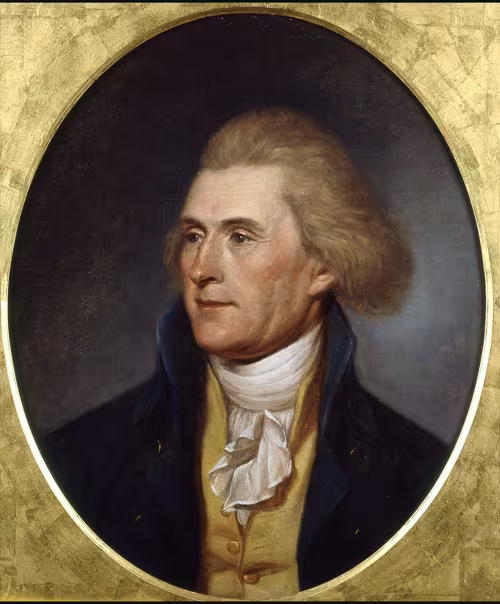
Thomas Jefferson
Thomas Jefferson
A prominent early-American politician who drafted the Declaration of Independence and served as the third U.S. president.
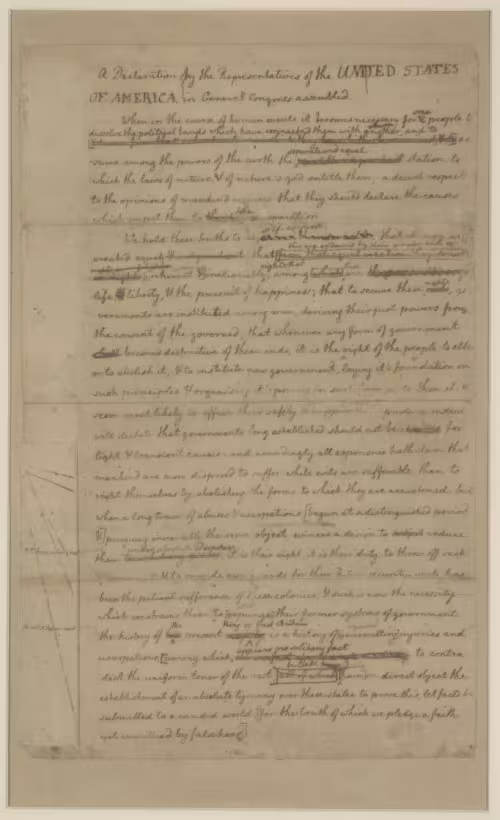
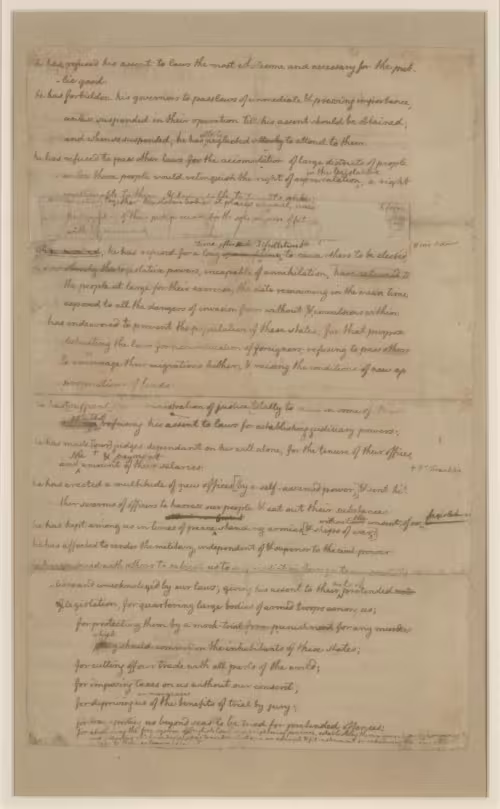
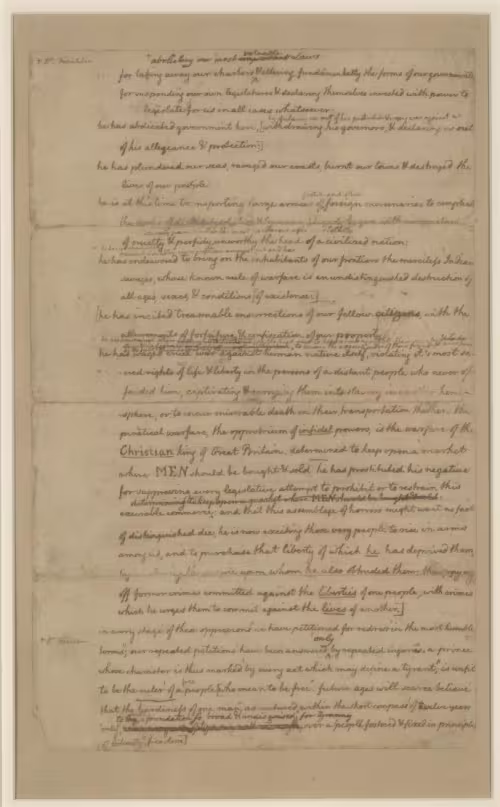
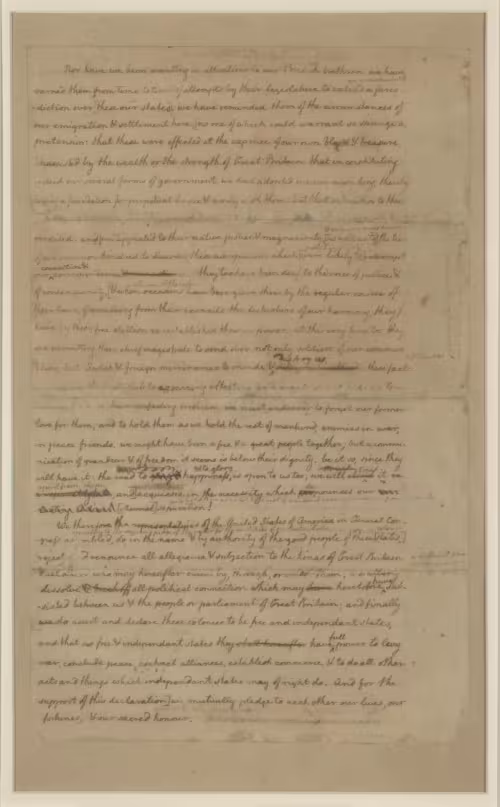
Thomas Jefferson, “original Rough draught” of the Declaration of Independence, 11 June–4 July 1776
Thomas Jefferson, “original Rough draught” of the Declaration of Independence, 11 June–4 July 1776
This rough draft of the Declaration of Independence features early revisions by Adams and Franklin and several sections ultimately removed by Congress.
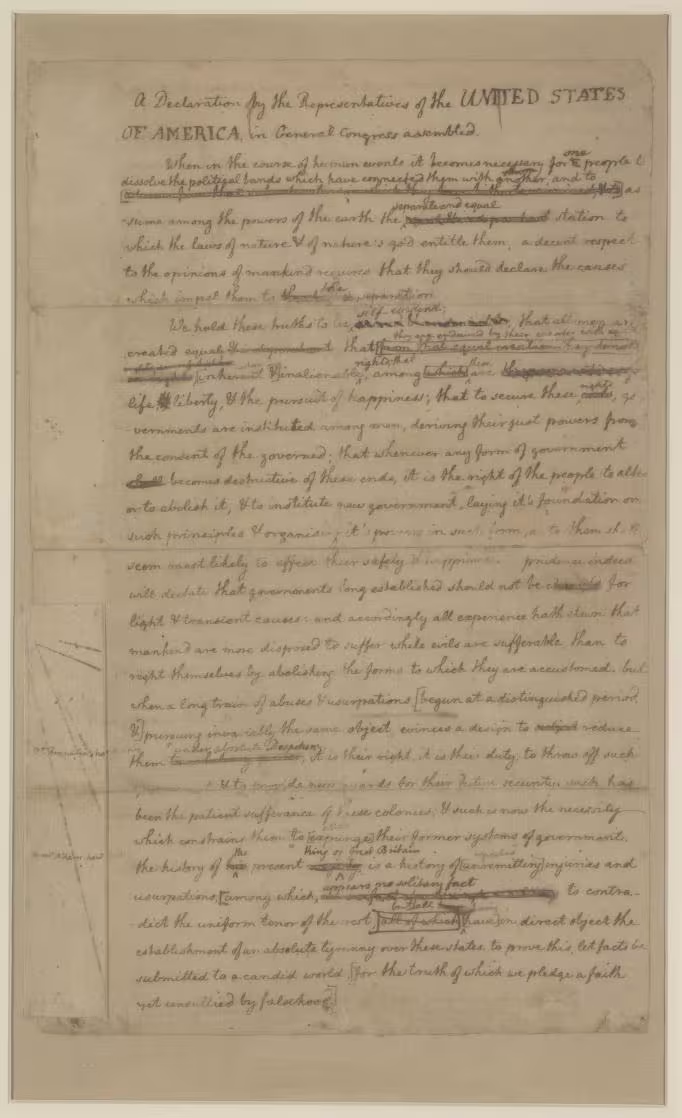
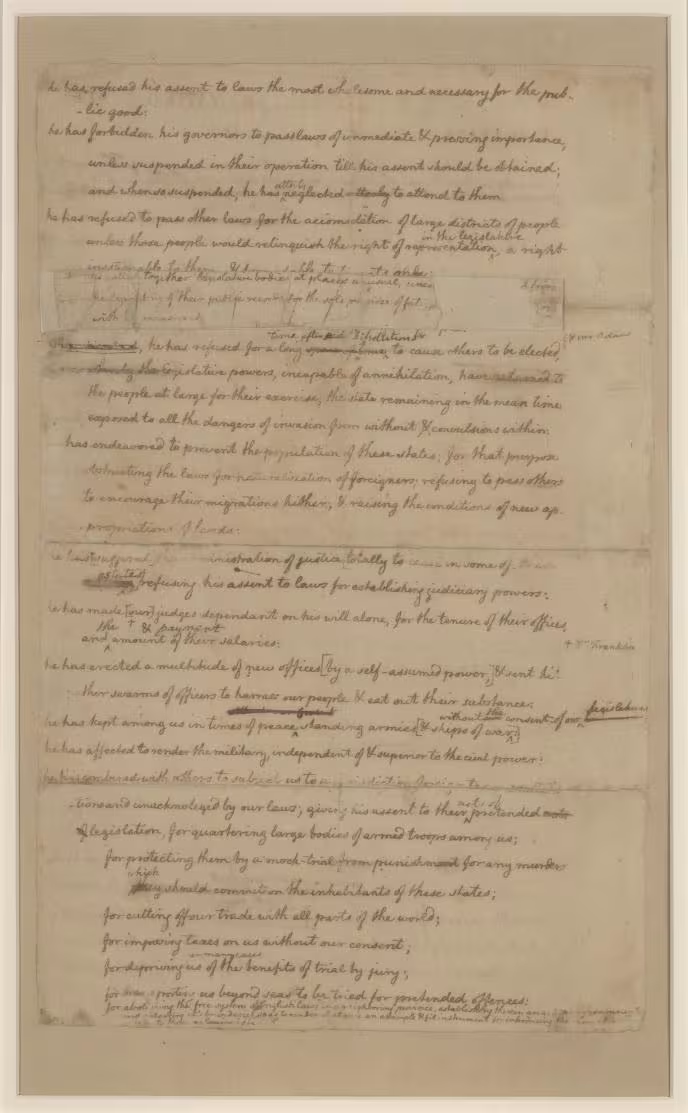
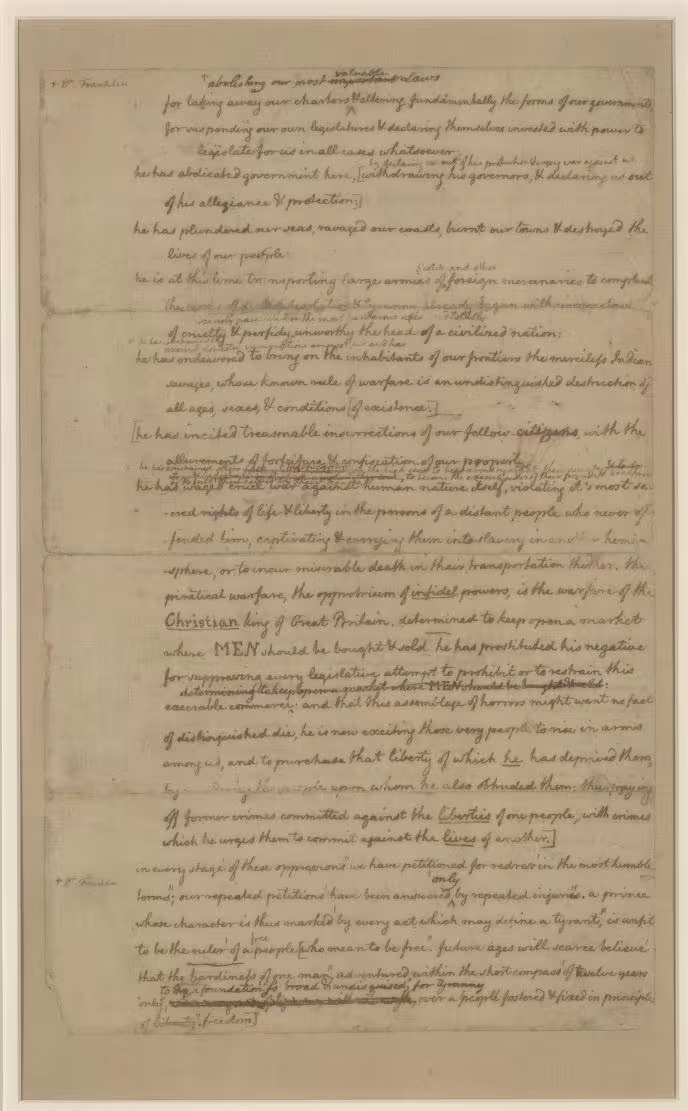
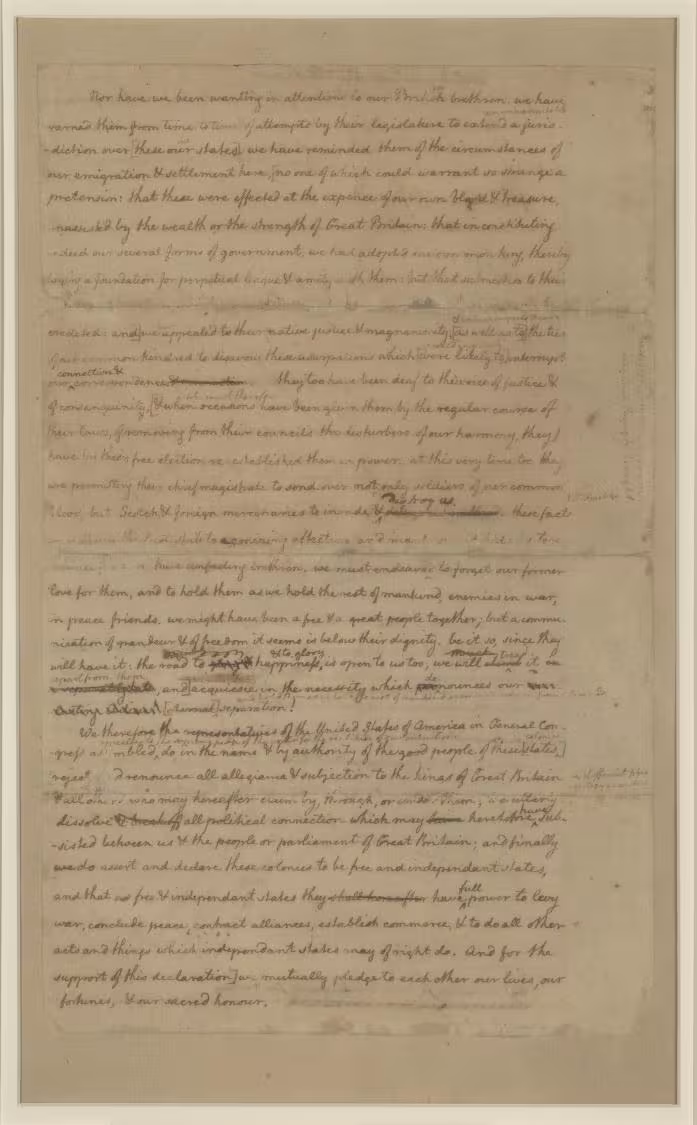
This document had a clear purpose. It needed to explain the decision for independence to many audiences, including other colonists and foreign governments. Jefferson’s draft shows how ideas about independence were put into clear language. It also shows that the Declaration was a working document from the start. His words were reviewed, debated, and changed by others. Reading Jefferson’s draft helps us see the Declaration not as a finished text, but as the beginning of a larger process.
A Draft Meant to Persuade
Jefferson worked quickly. His draft first listed grievances against King George III and explained why the colonies needed to separate. He finished by announcing this independence to the world.
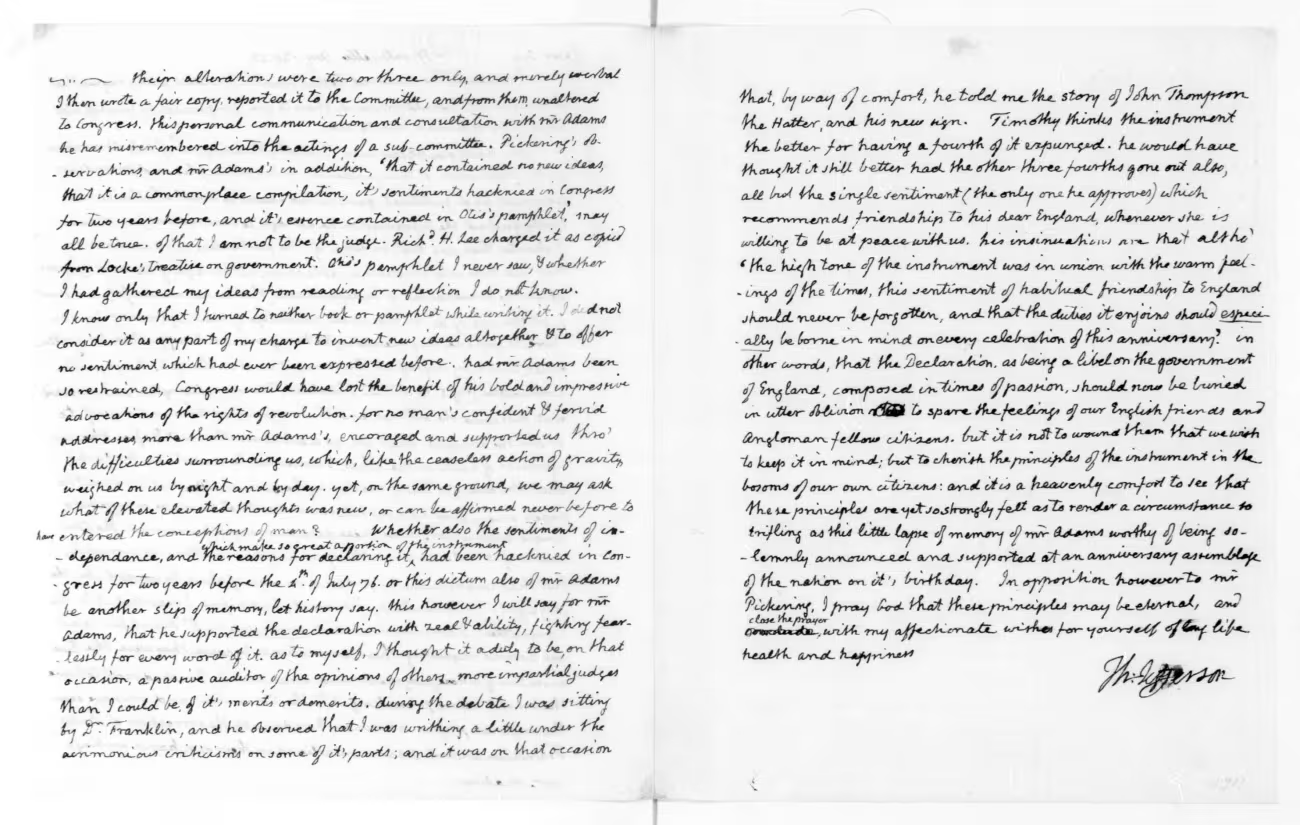
It was meant to persuade, not simply express his personal opinions. He later reported that he did not use any new ideas or beliefs.
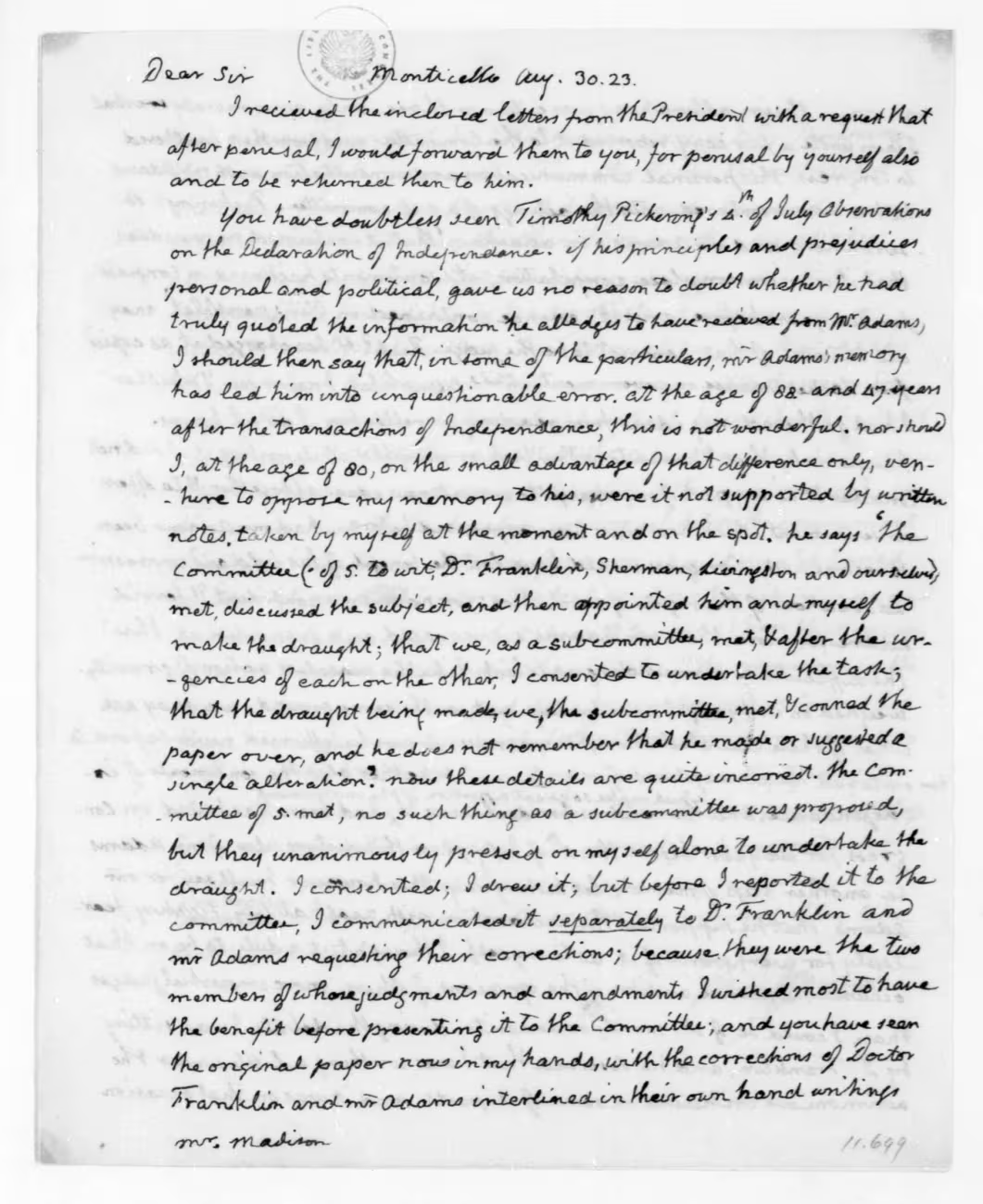
Thomas Jefferson to James Madison, 30 August 1823.
Thomas Jefferson to James Madison, 30 August 1823.
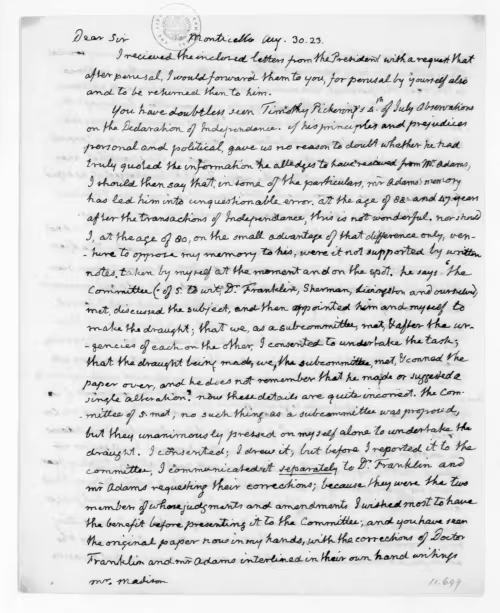
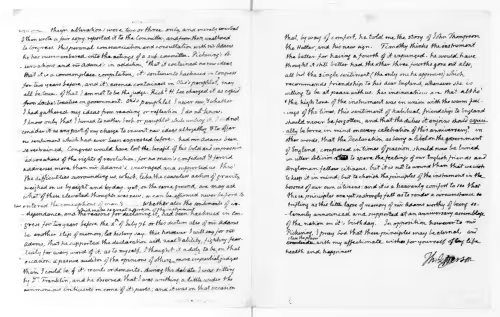
Thomas Jefferson to James Madison, 30 August 1823
Thomas Jefferson to James Madison, 30 August 1823
Jefferson defends his authorship of the Declaration of Independence, refuting Timothy Pickering's criticisms and questioning John Adams's memory.
What ideas and beliefs did he use?
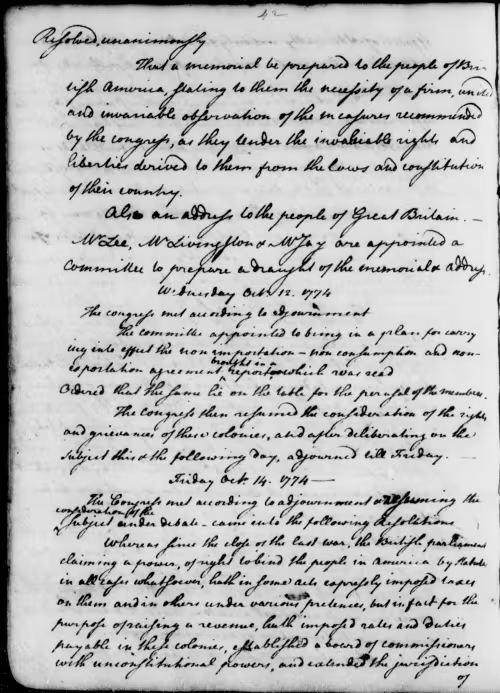
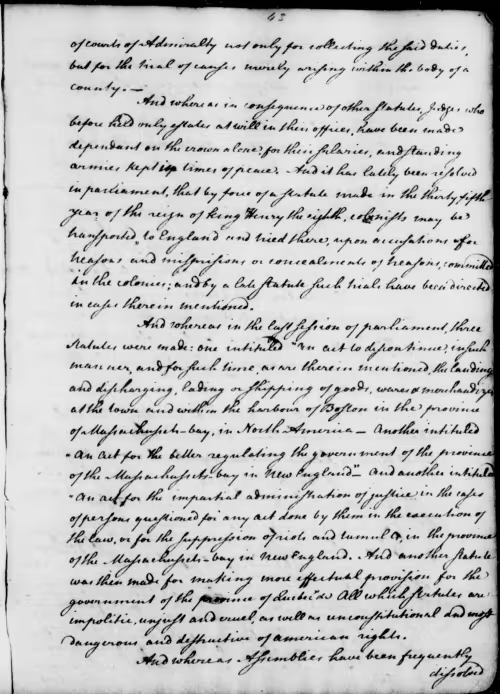
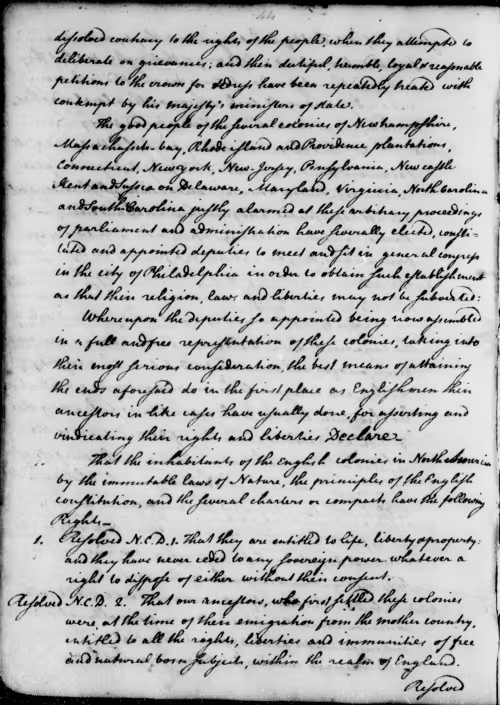
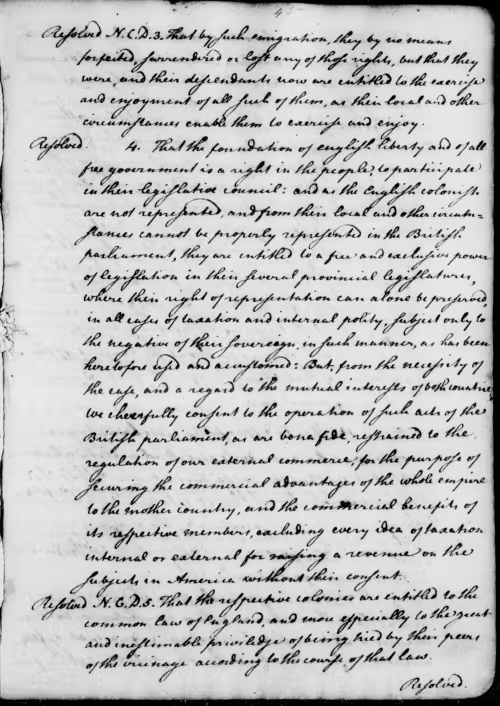
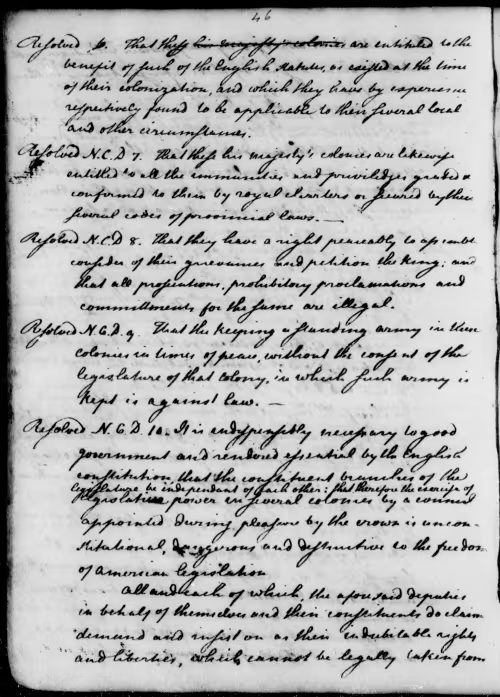
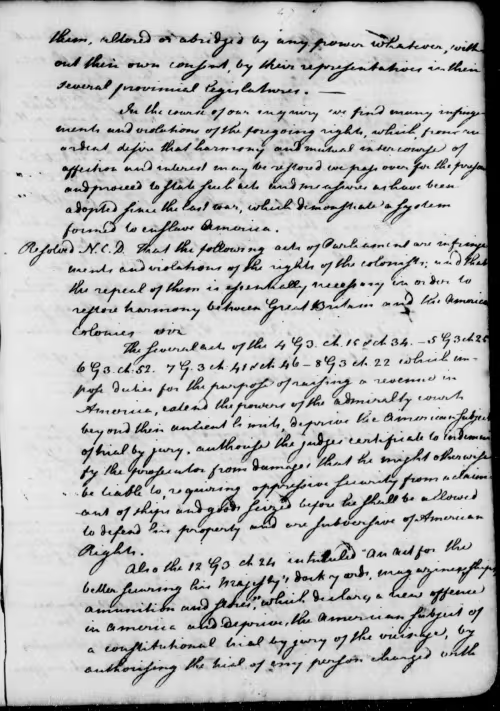
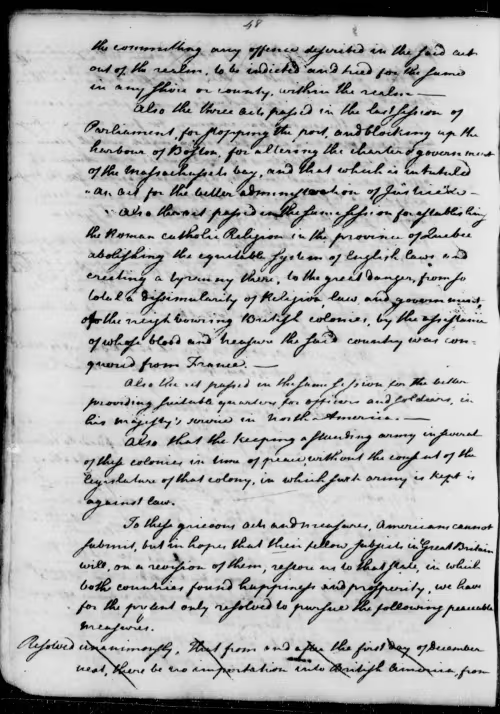
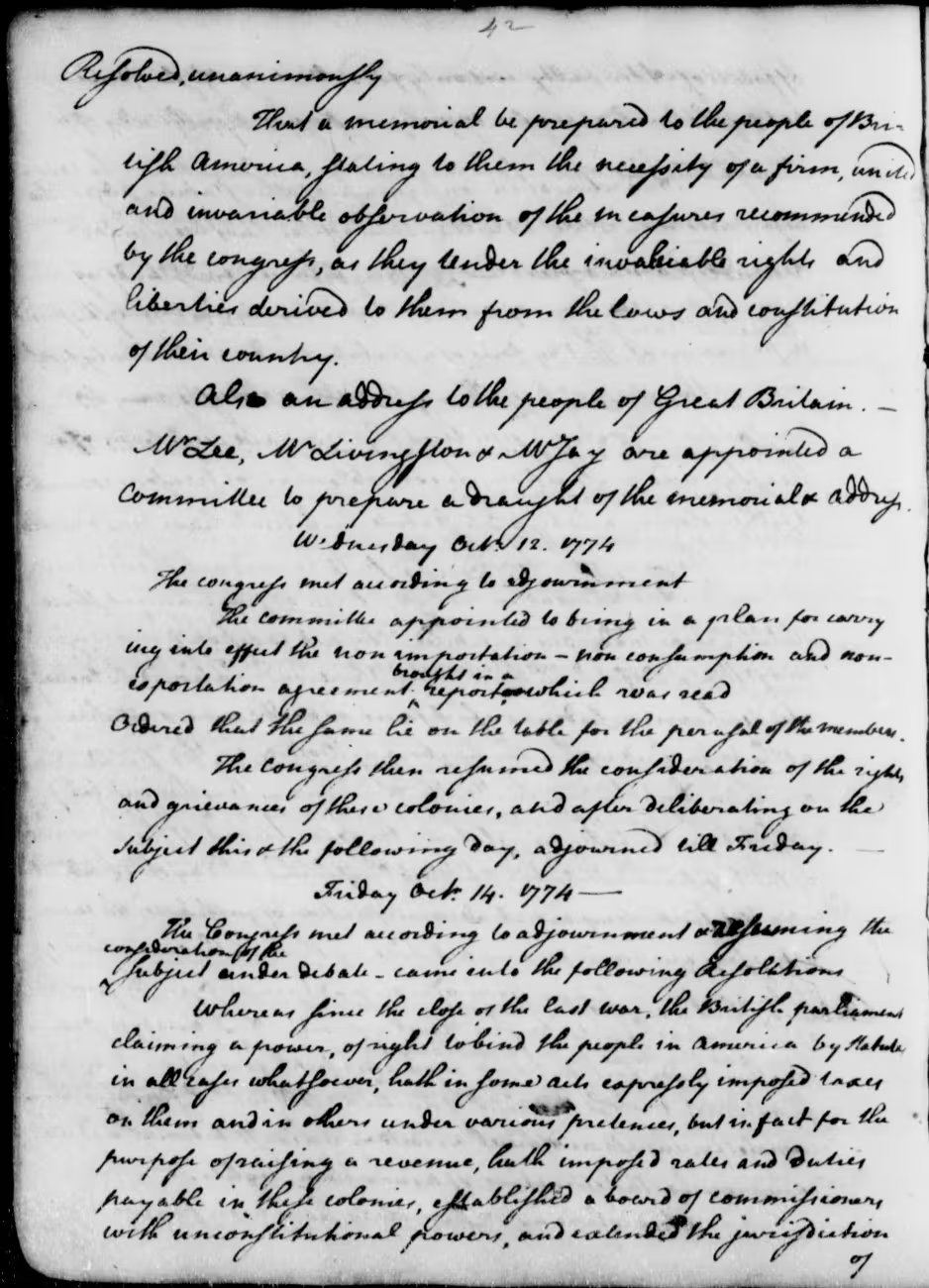
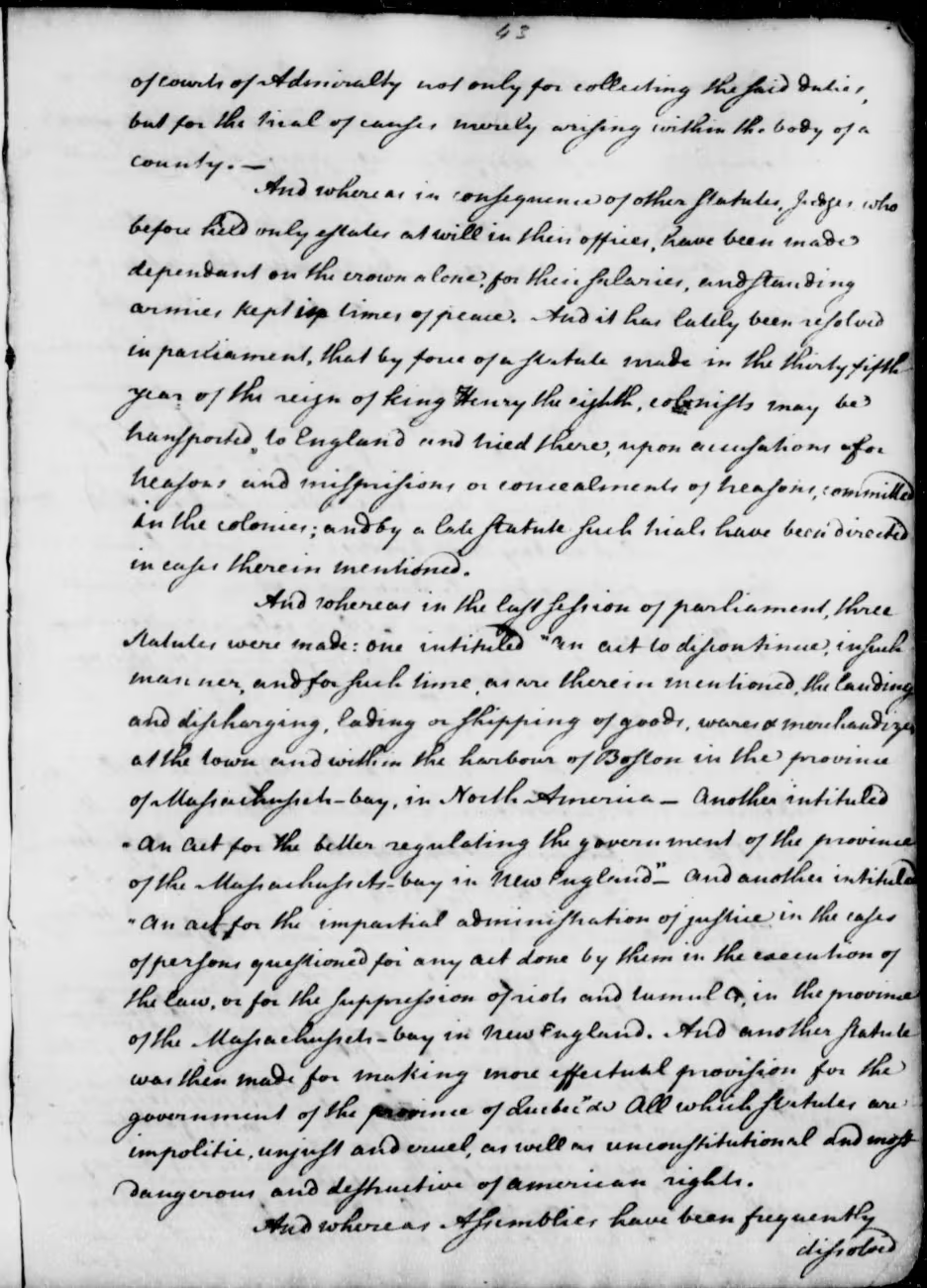
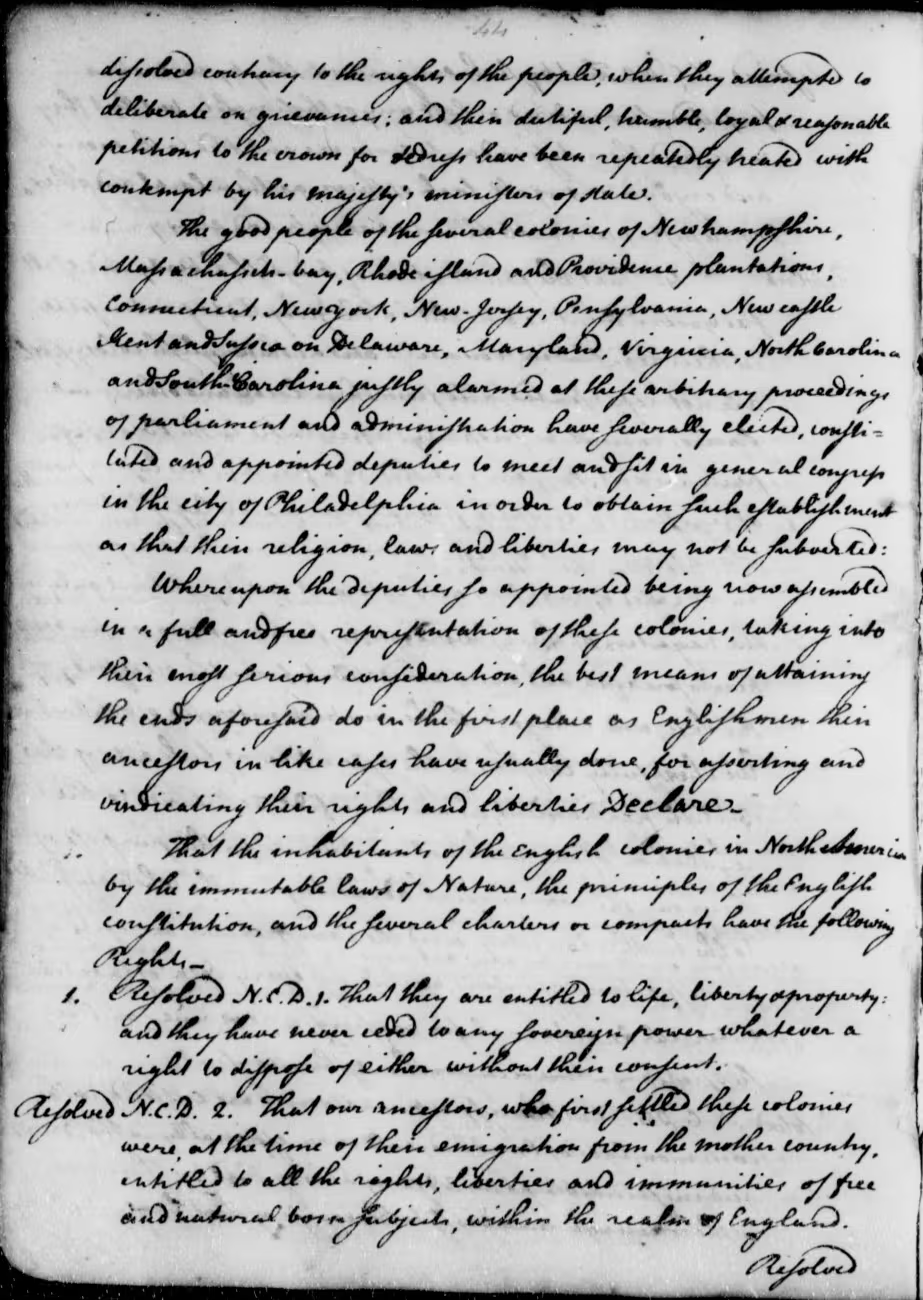
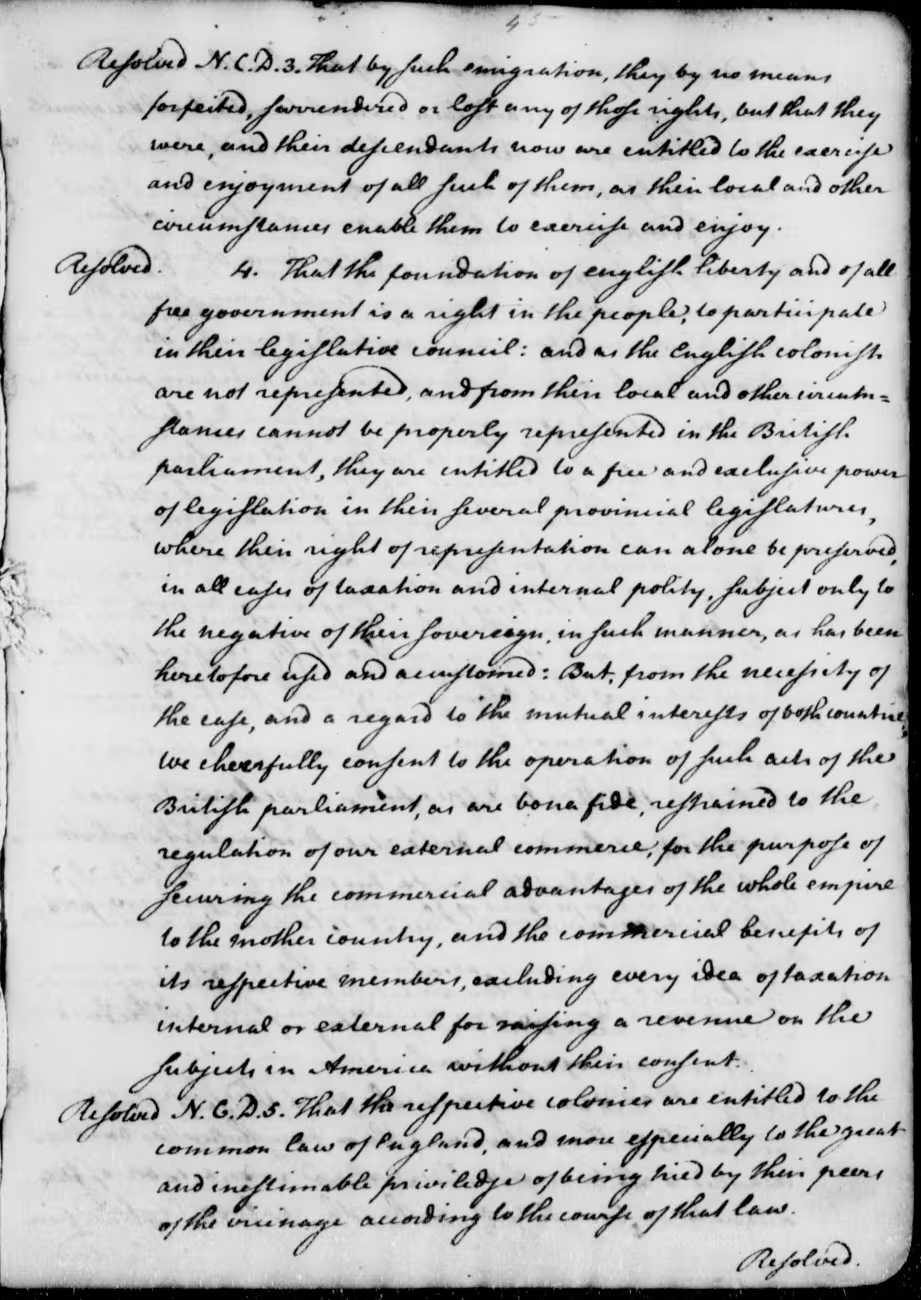
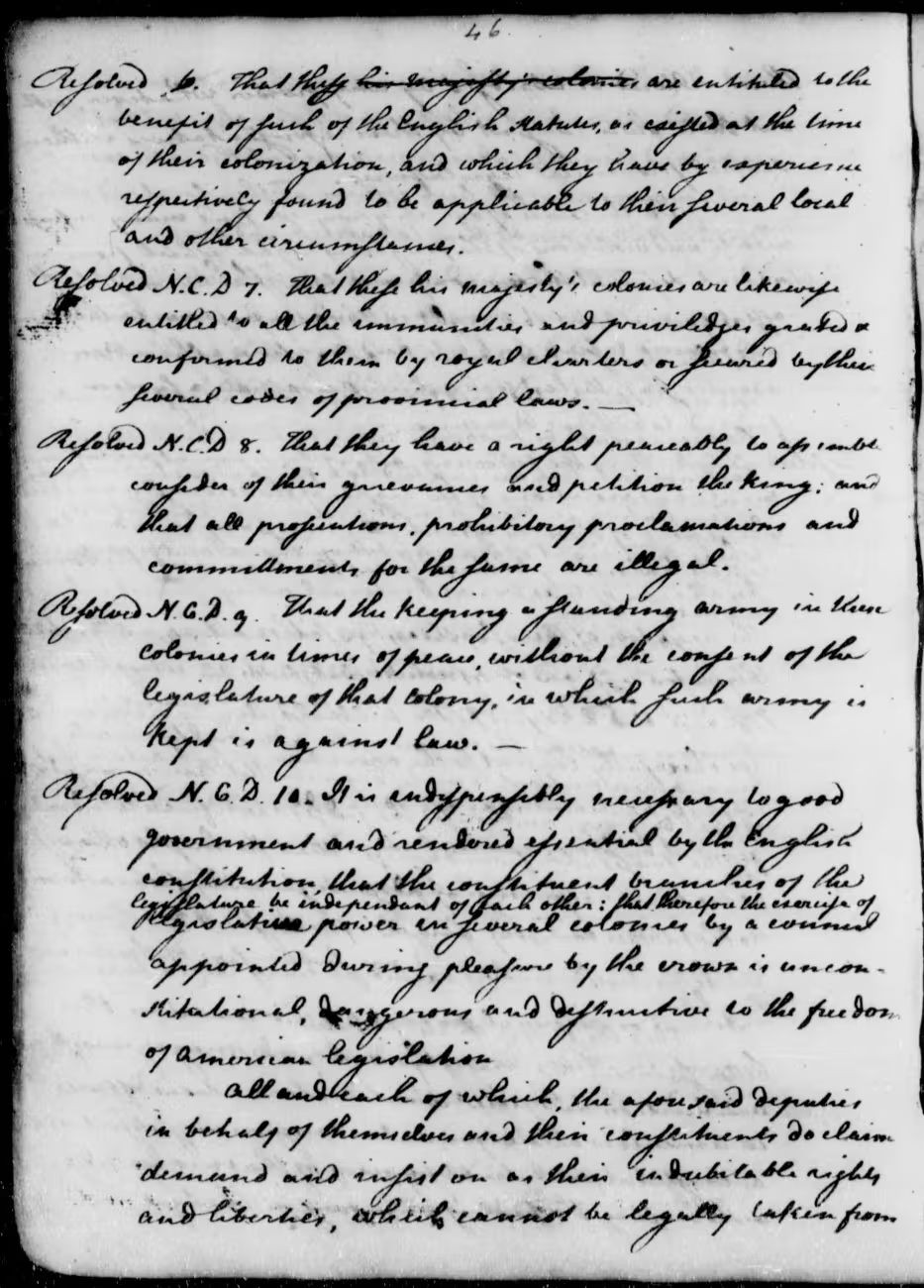
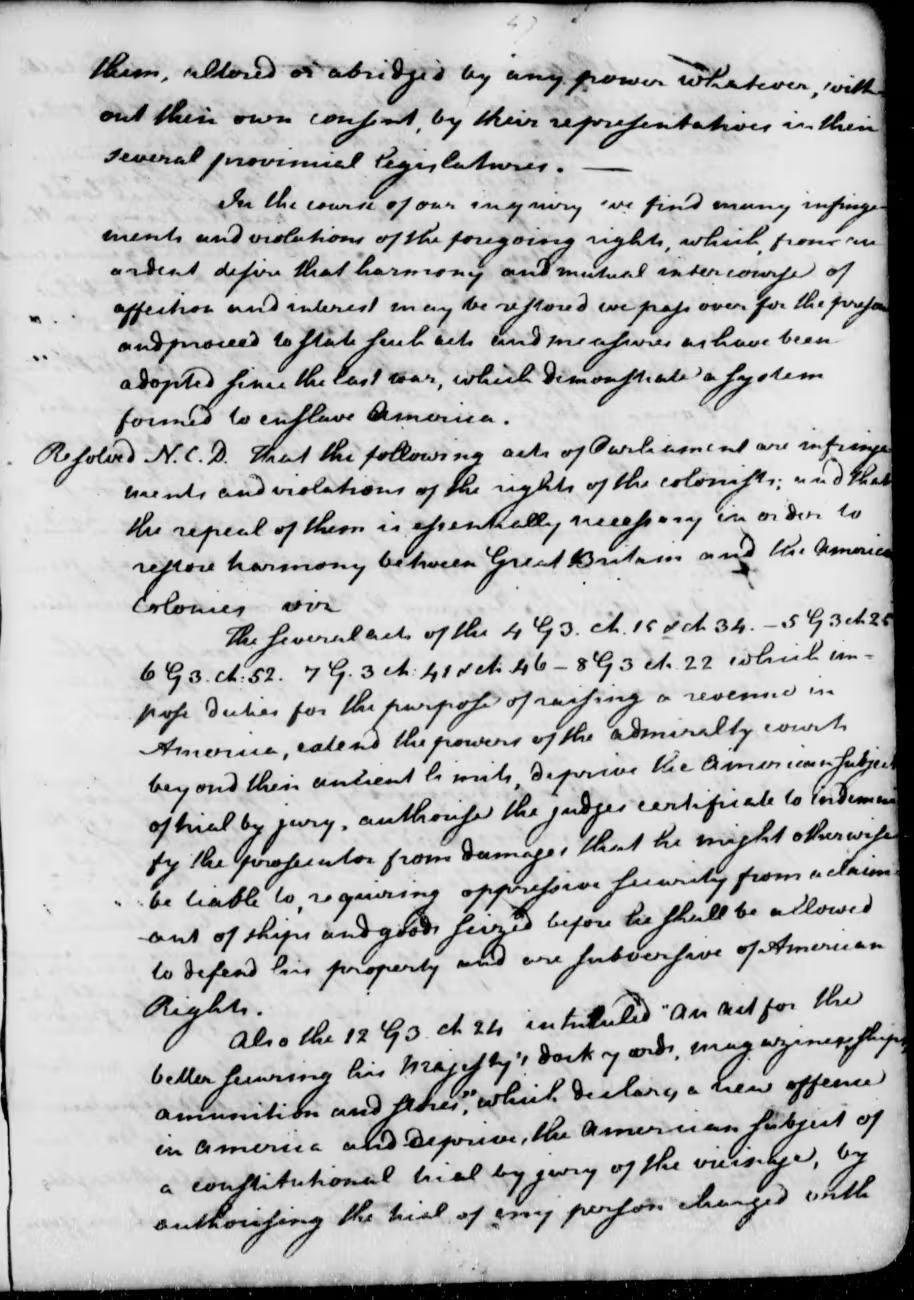
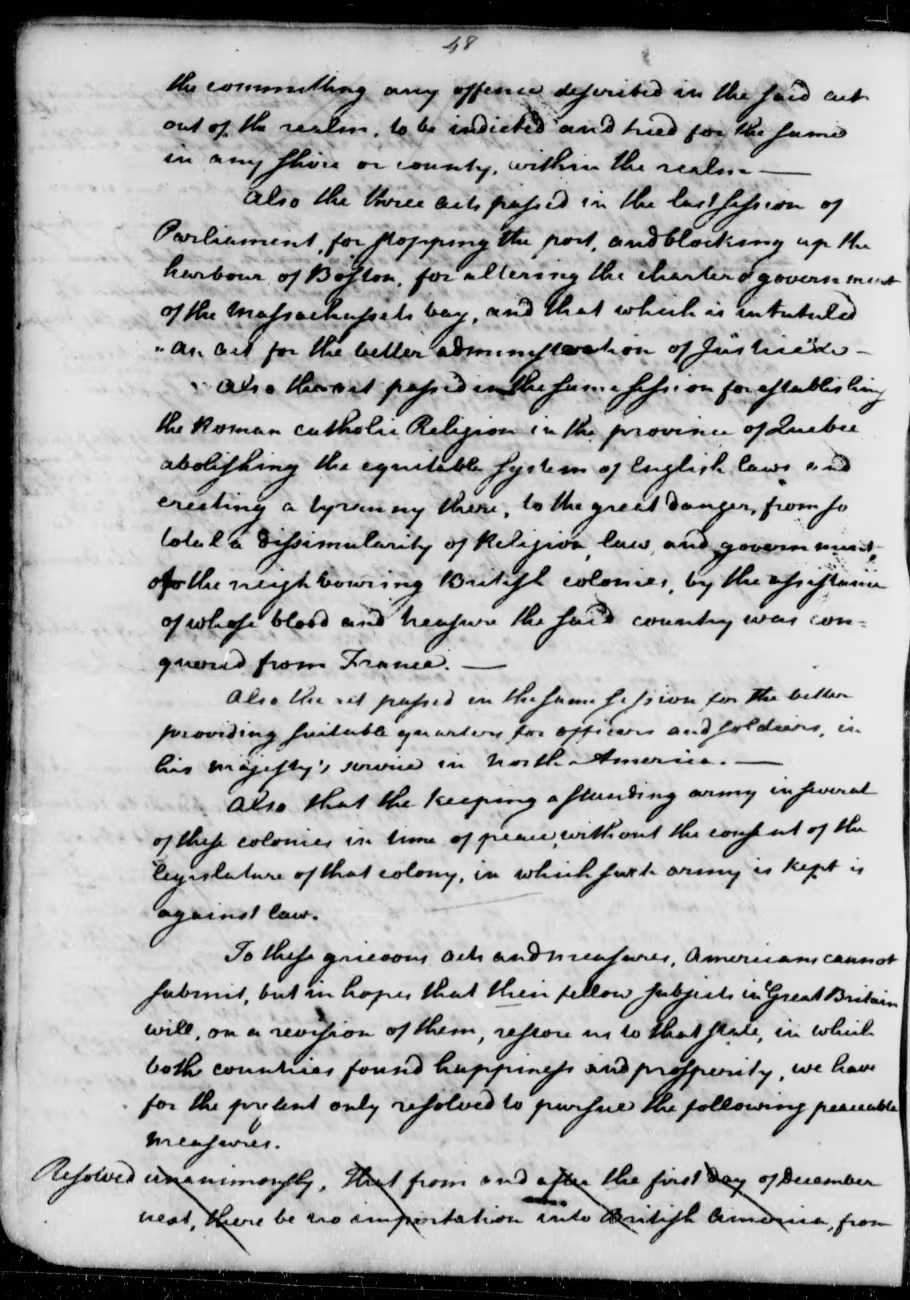
Declaration and Resolves of the First Continental Congress, 14 October 1774
Declaration and Resolves of the First Continental Congress, 14 October 1774
A declaration of colonial rights in response to British parliamentary overreach, condemning the Intolerable Acts.
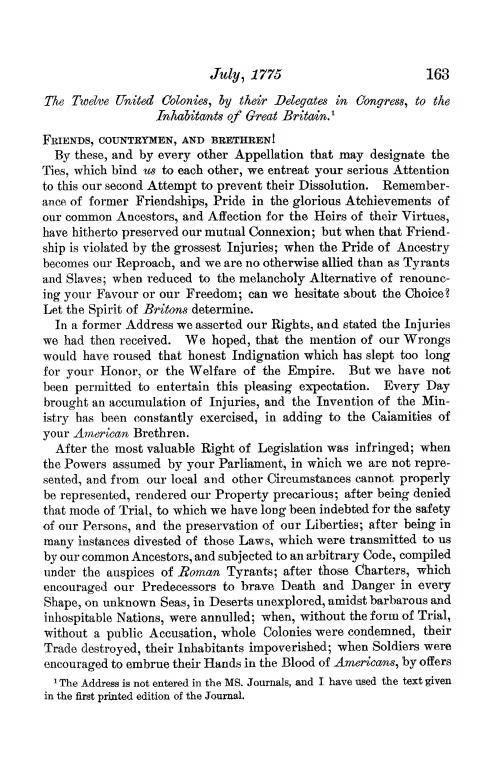
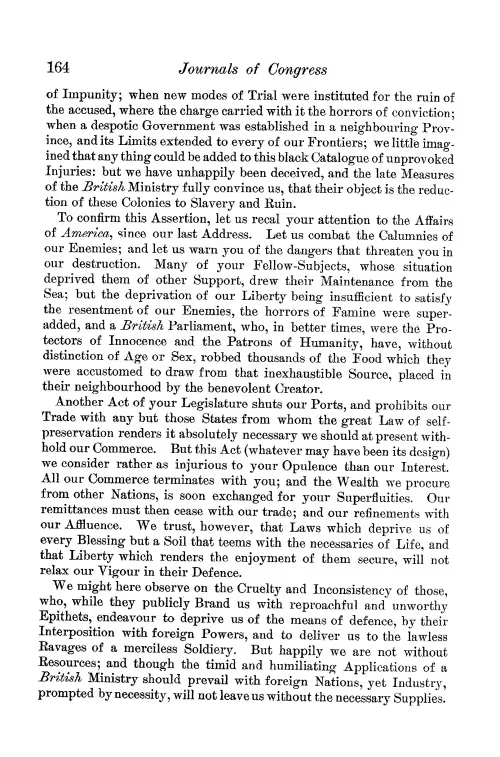
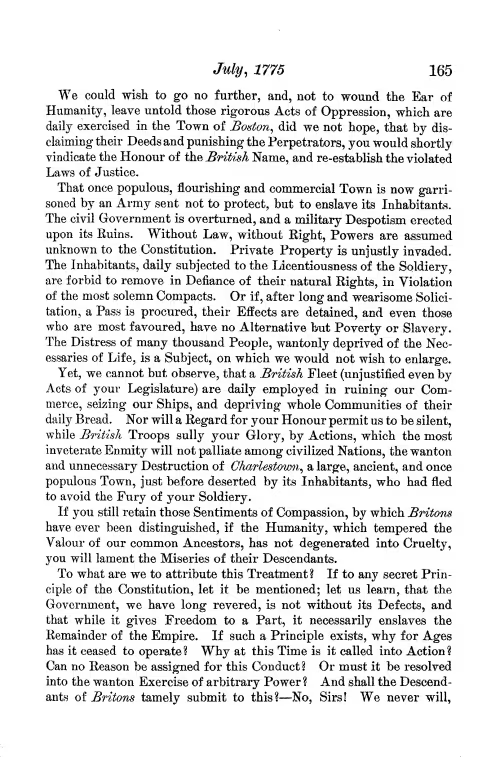
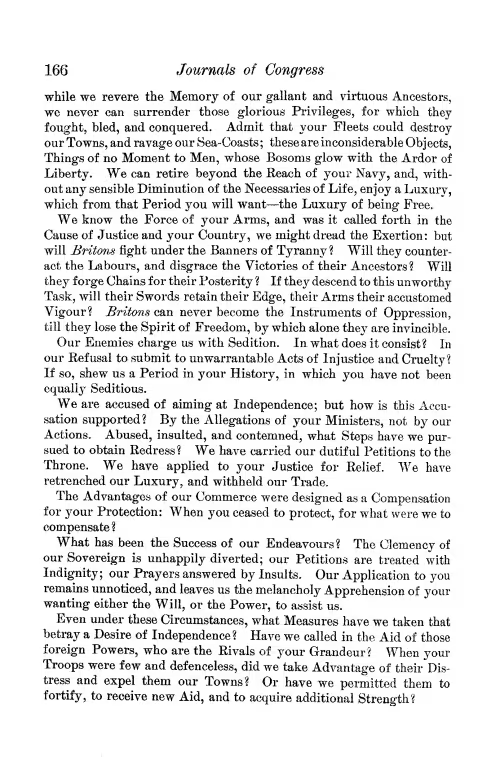
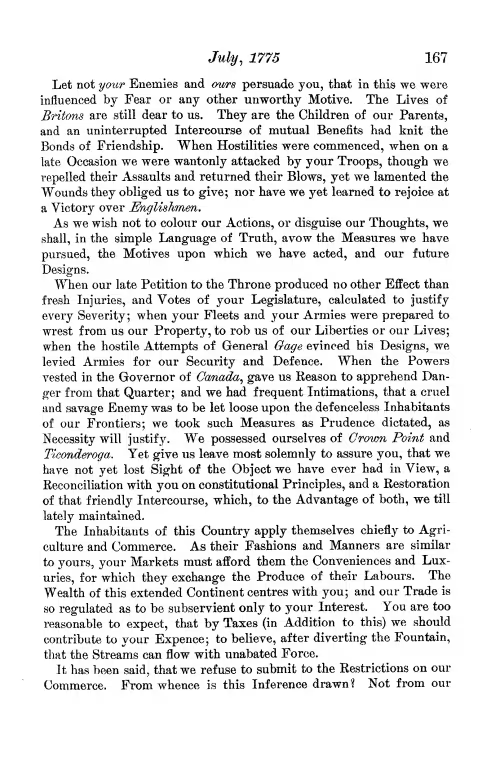
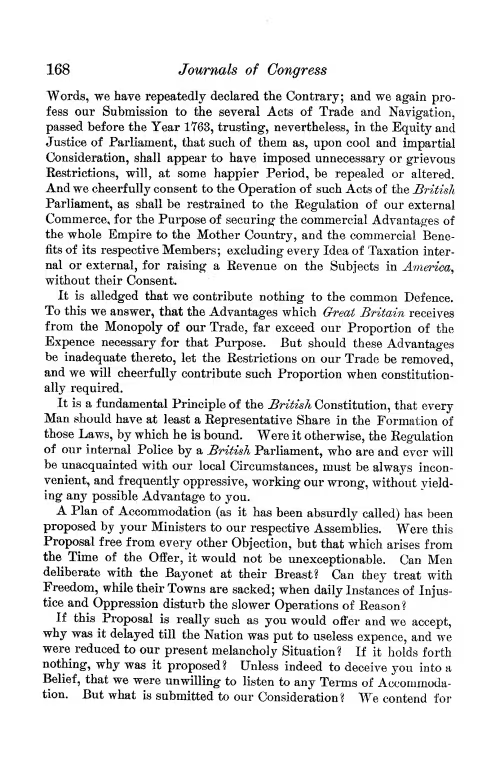
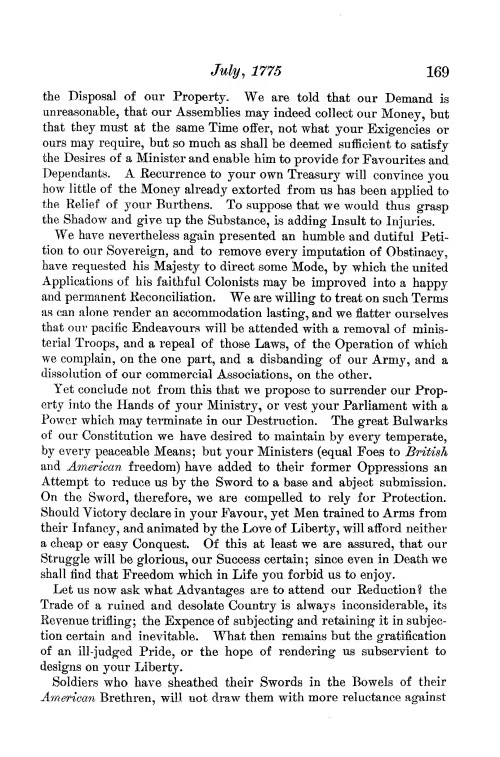
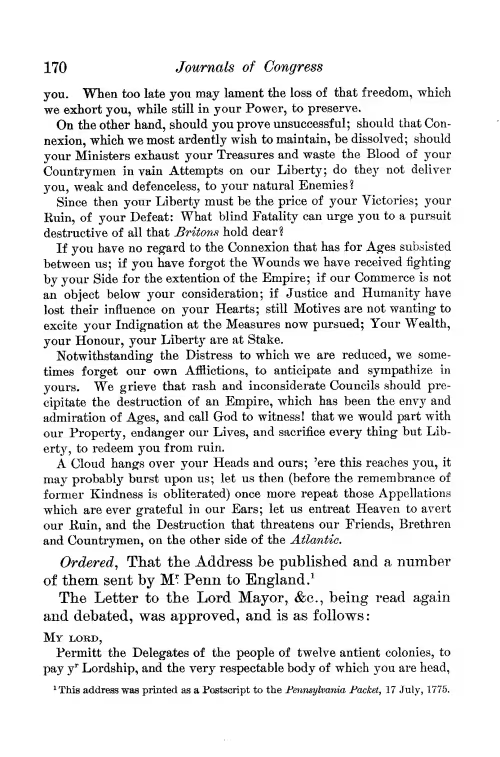
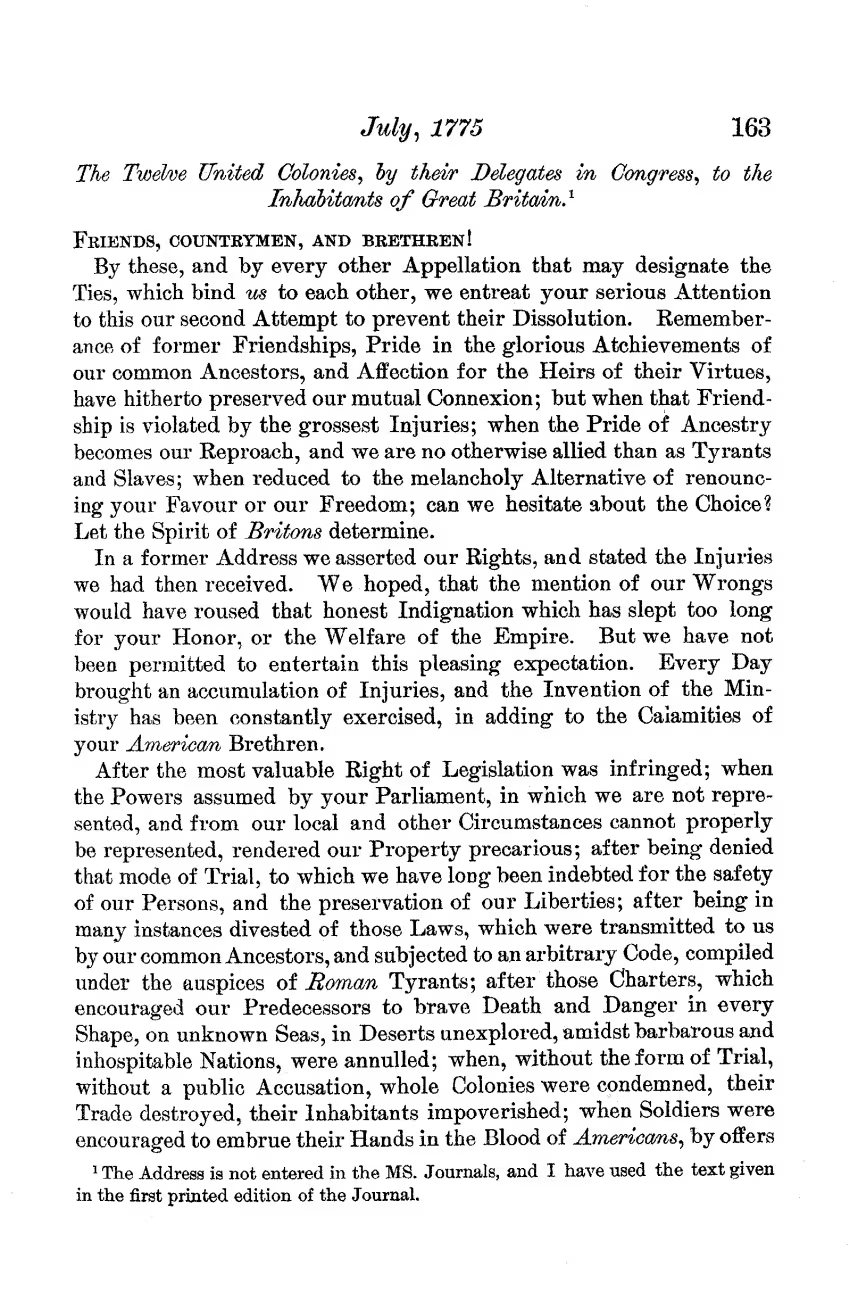
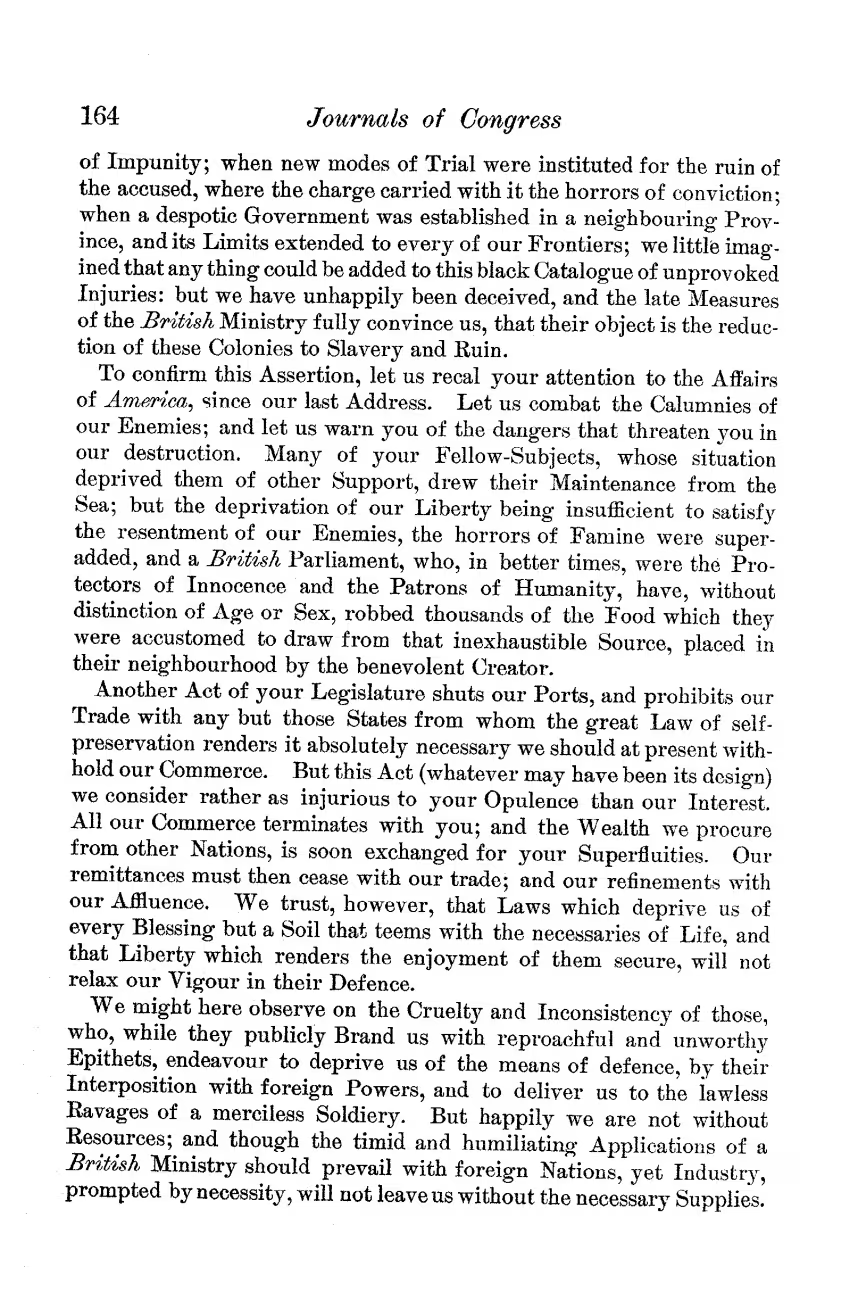
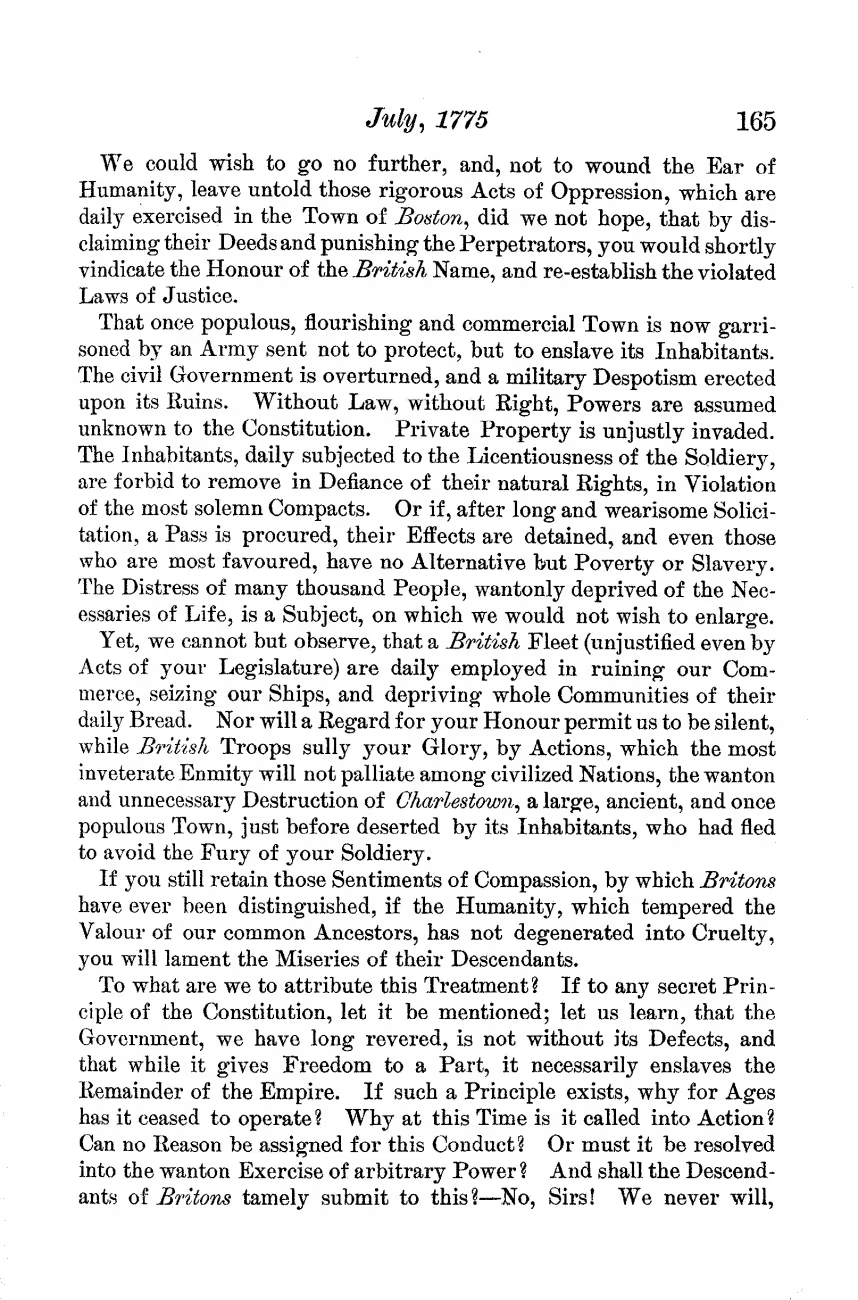
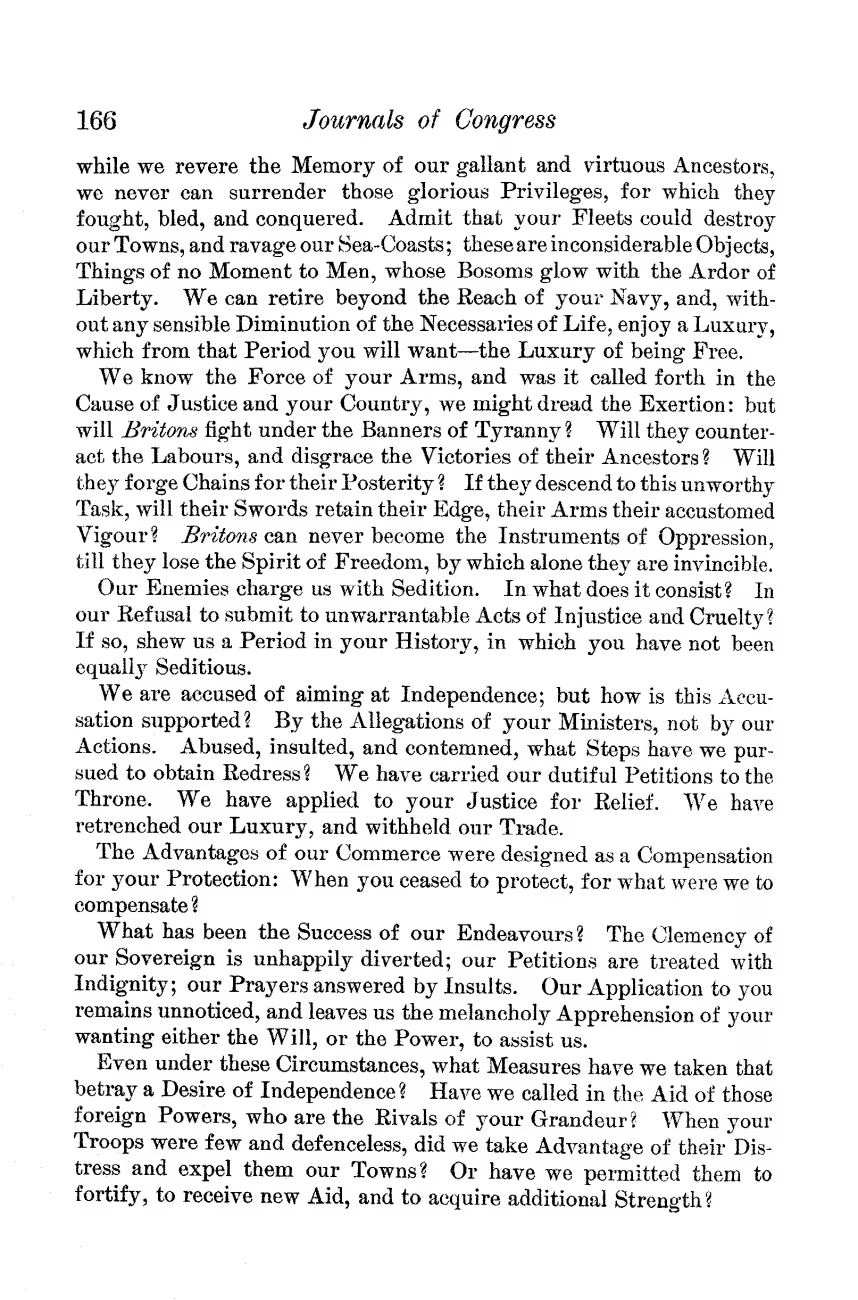
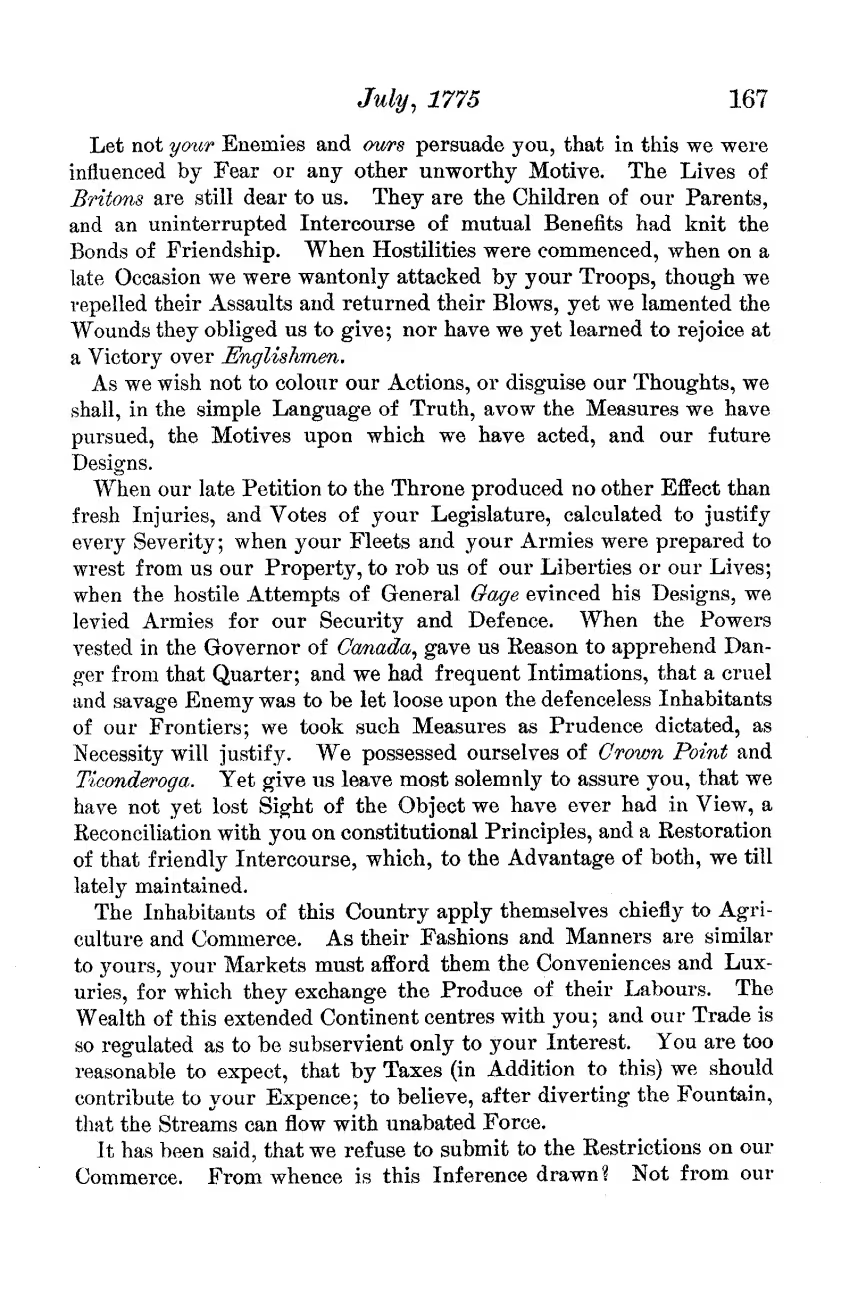
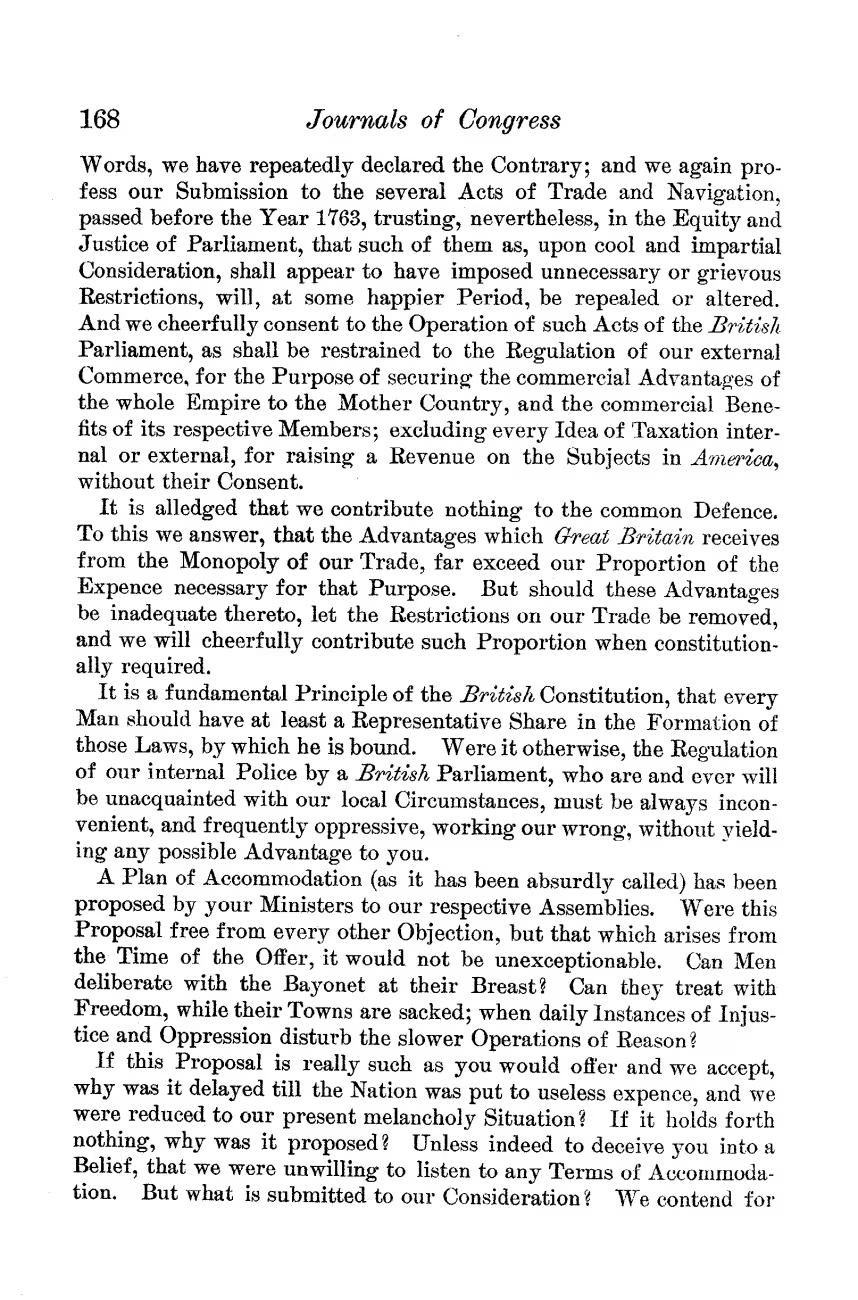
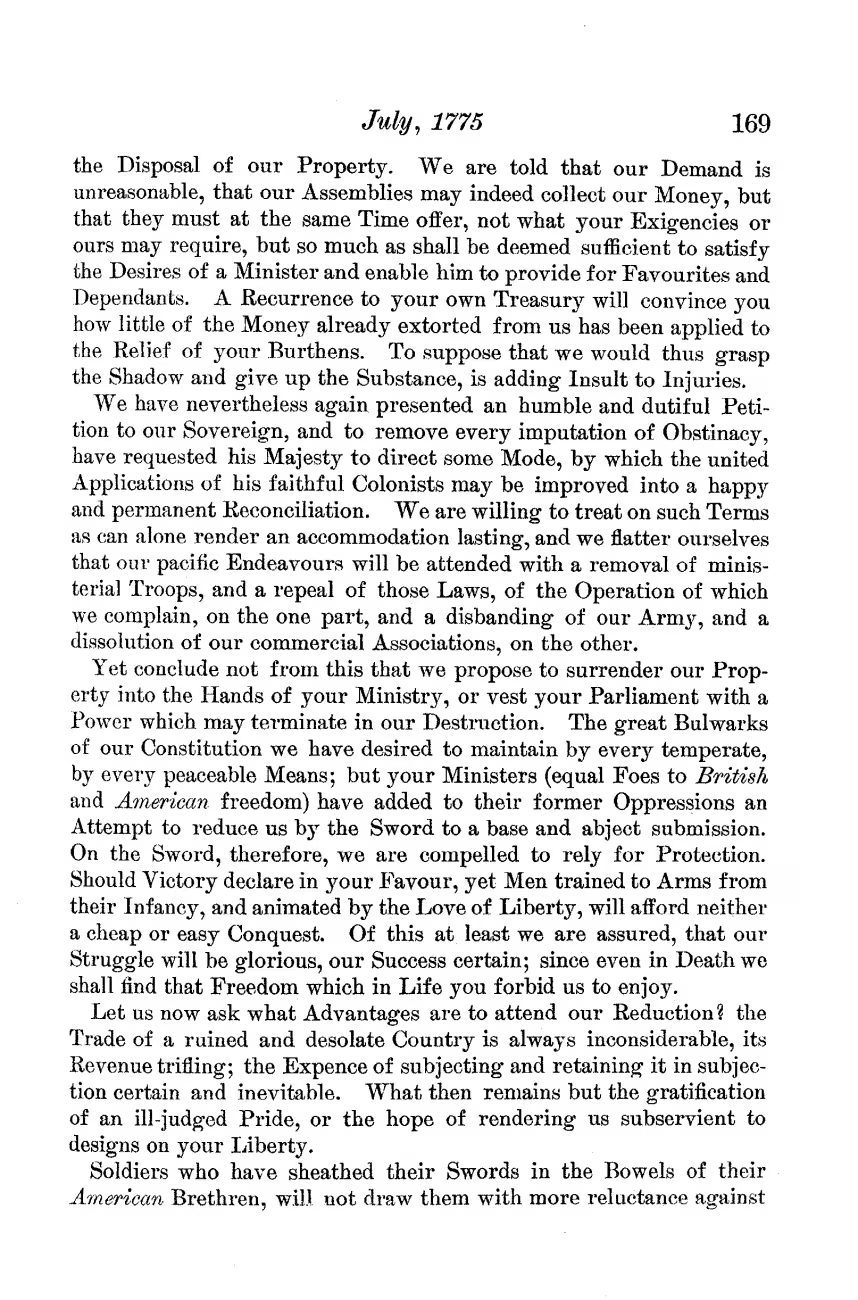
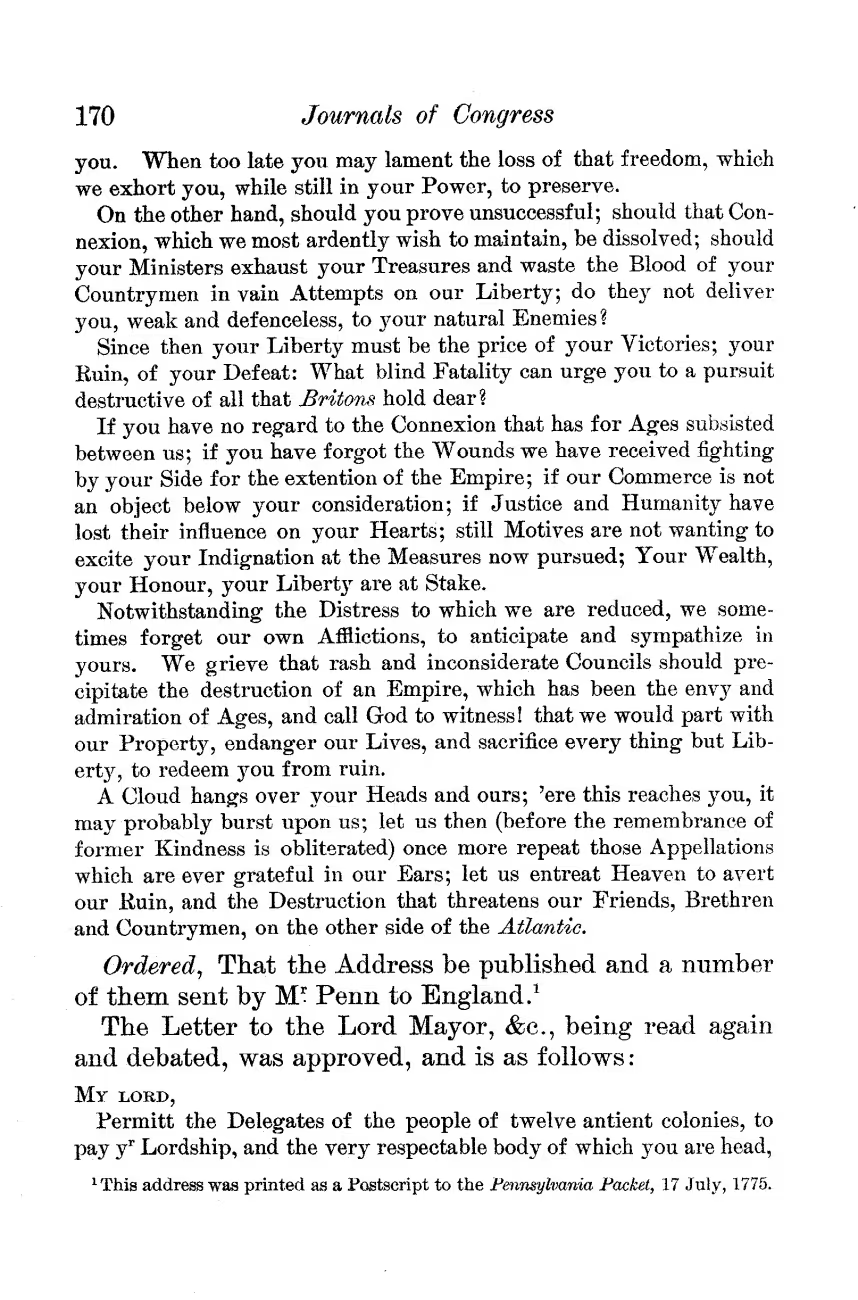
The Twelve United Colonies, by their Delegates in Congress, to the Inhabitants of Great Britain, 8 July 1775
The Twelve United Colonies, by their Delegates in Congress, to the Inhabitants of Great Britain, 8 July 1775
This letter by Robert R. Livingston defends colonial resistance and seeks reconciliation while detailing grievances, including Boston's occupation.
Debate and Compromise
One of the most striking parts of Jefferson’s draft was a long passage blaming George III for continuing the Atlantic slave trade. Jefferson accused the king of encouraging slavery while also stirring violence and rebellion in the colonies. This passage linked independence to freedom in powerful terms, but it also raised serious political problems. Delegates from colonies tied to slavery objected. The passage was removed before the Declaration was adopted.
Jefferson later reflected on this decision. Writing years afterward, he complained that the slavery passage had been cut to avoid offending Southern planters and Northern merchants.
Thomas Jefferson’s Anecdotes of Benjamin Franklin, [4 December 1818].
Thomas Jefferson’s Anecdotes of Benjamin Franklin, [4 December 1818].
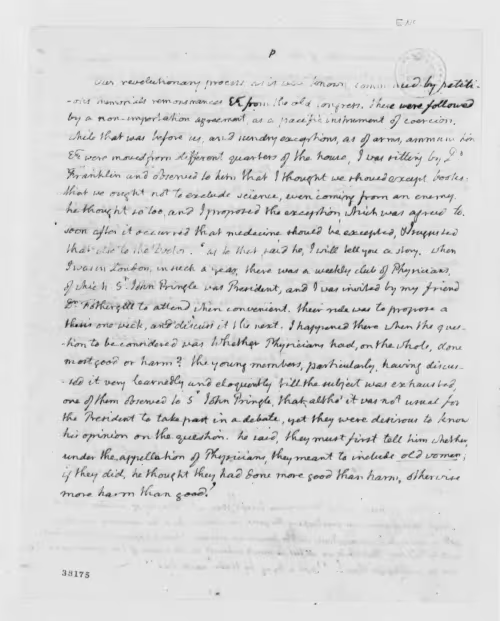
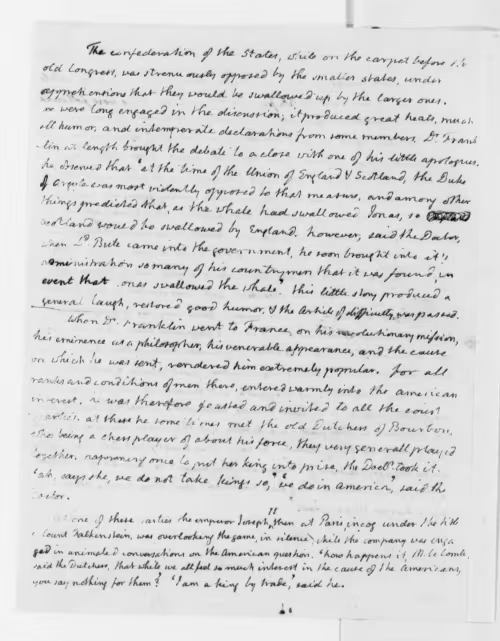
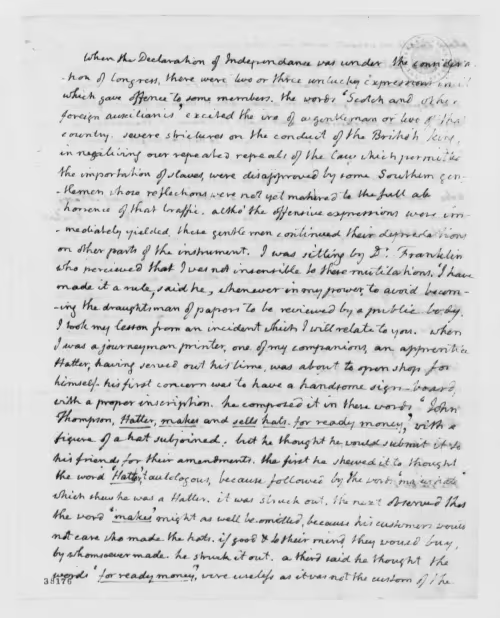
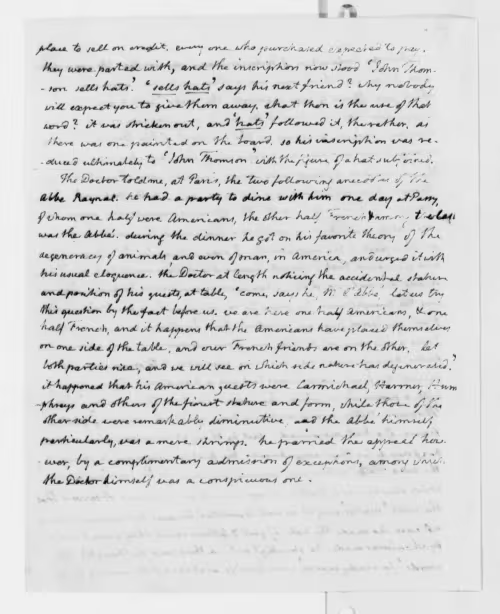
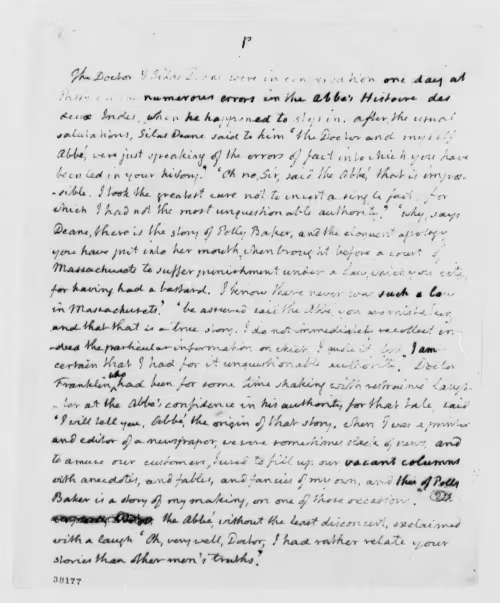
Thomas Jefferson’s Anecdotes of Benjamin Franklin, circa 4 December 1818
Thomas Jefferson’s Anecdotes of Benjamin Franklin, circa 4 December 1818
Jefferson recounts Franklin's wit during the Revolution, including anecdotes about the Declaration's drafting and diplomatic encounters in Paris.
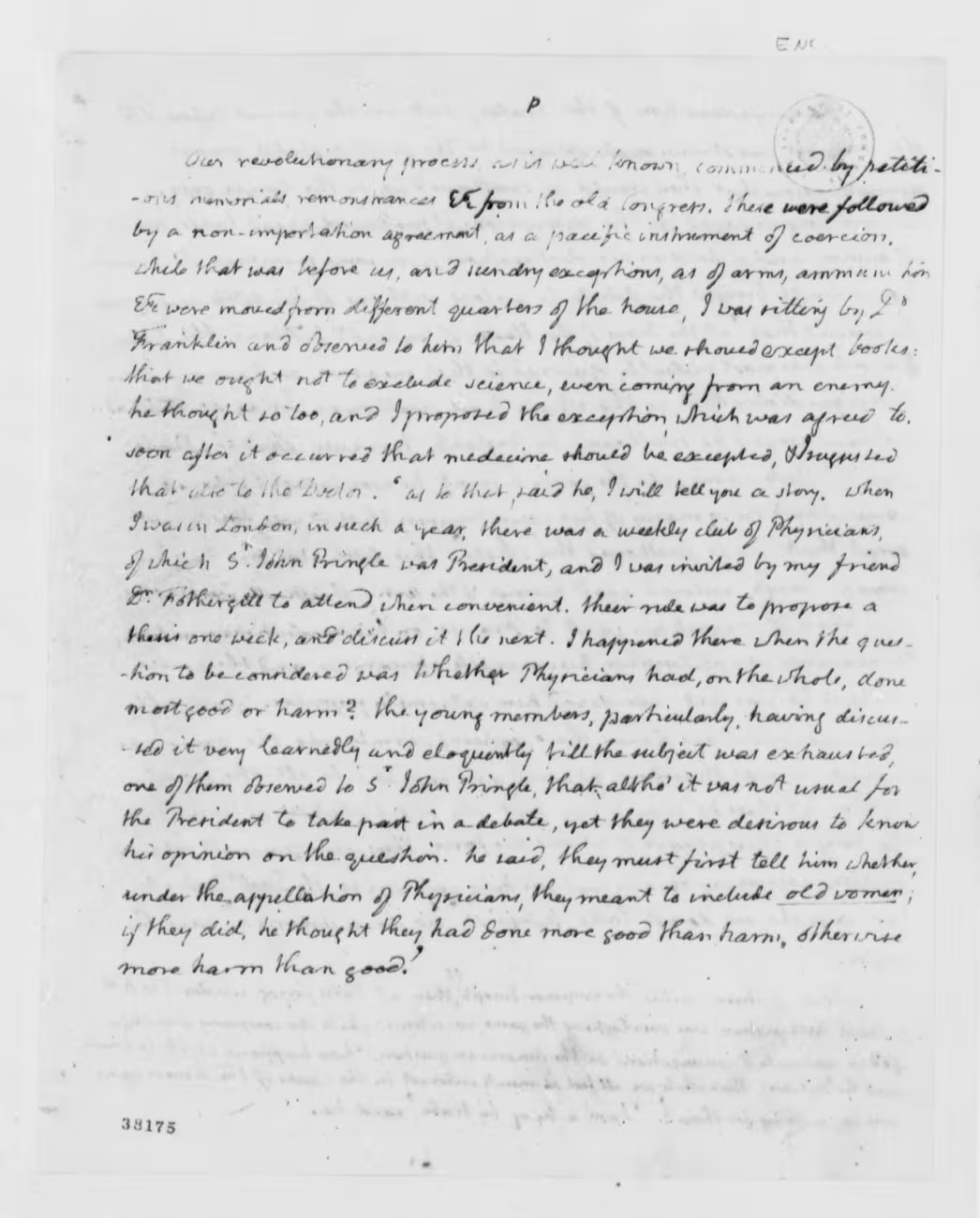
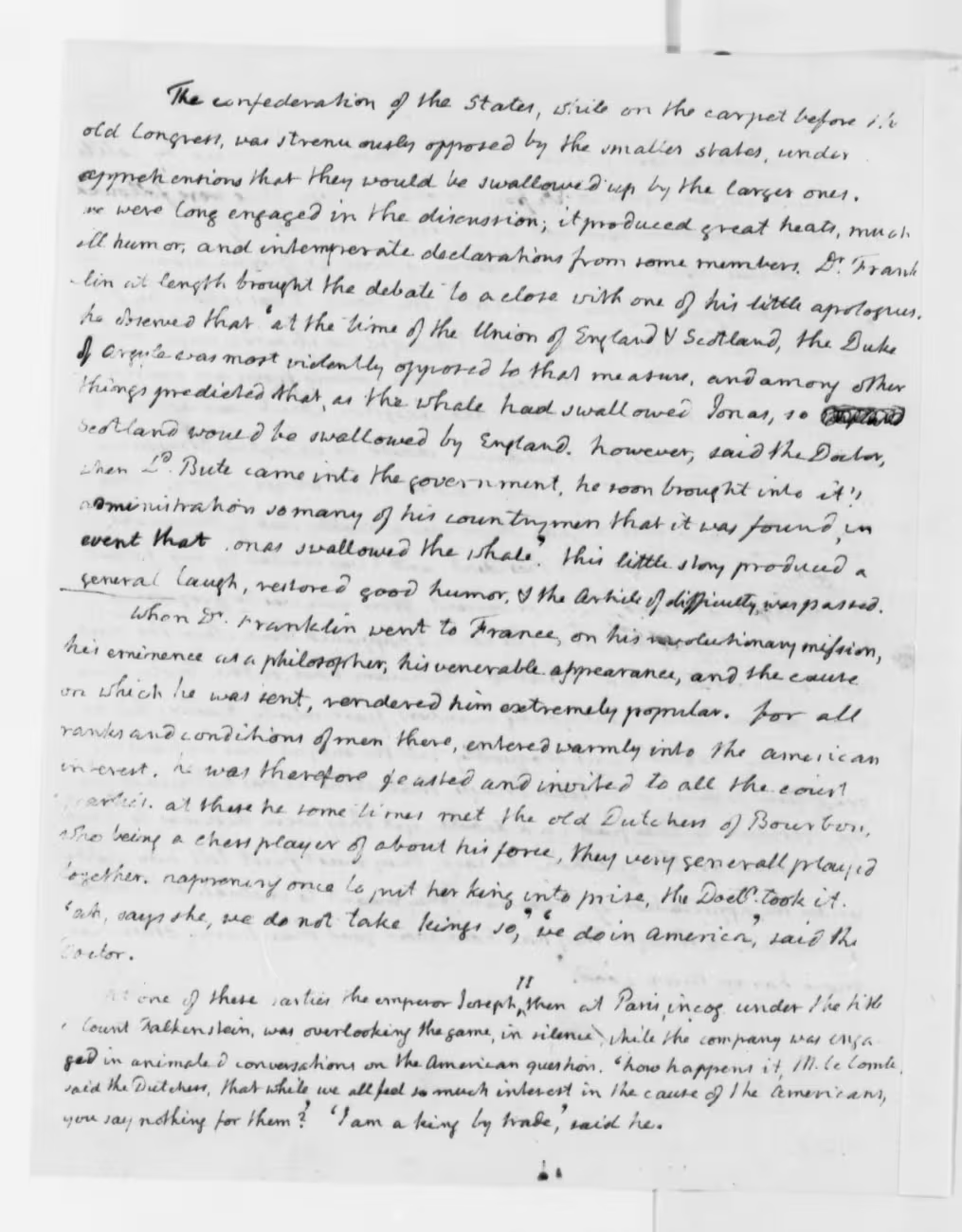
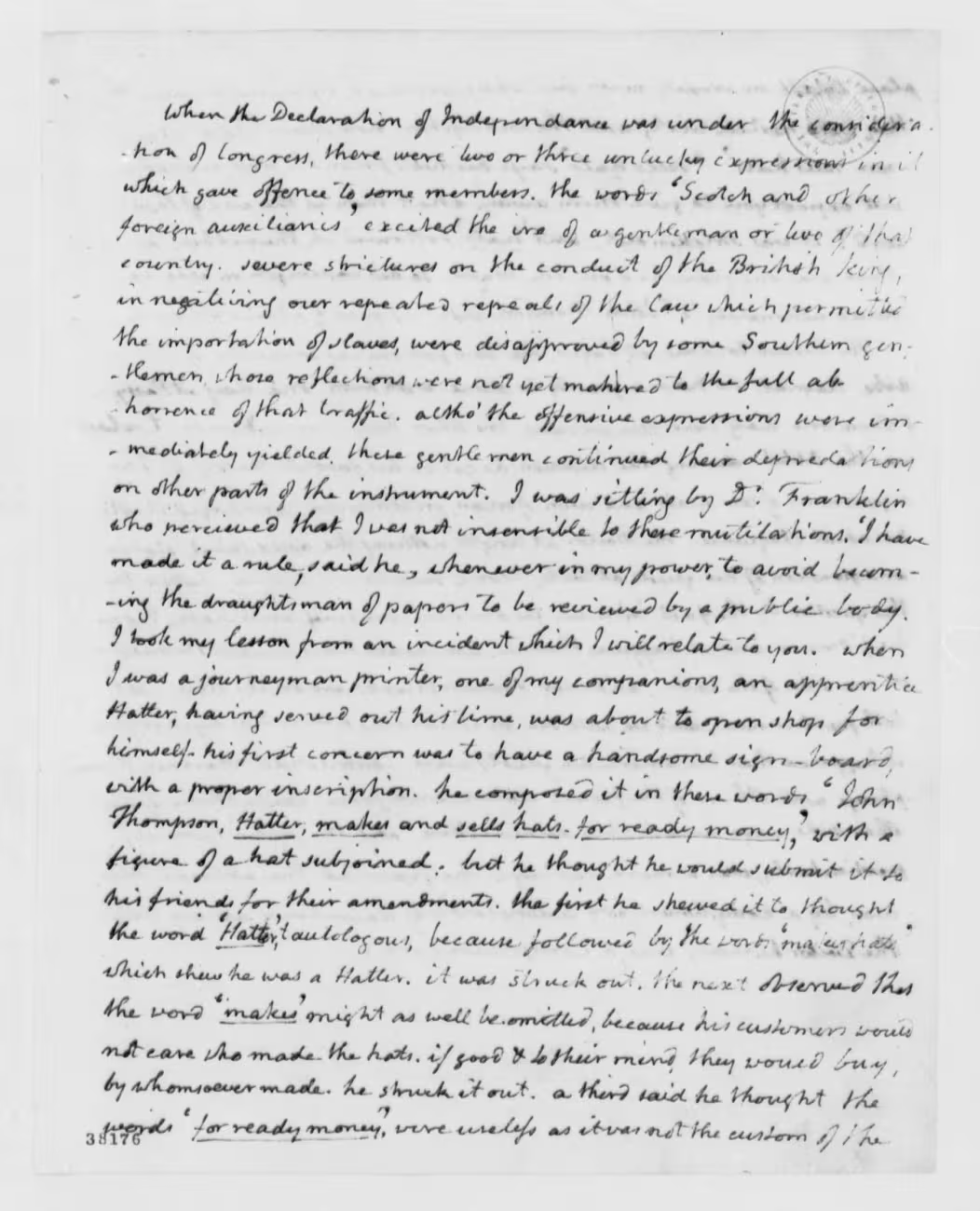
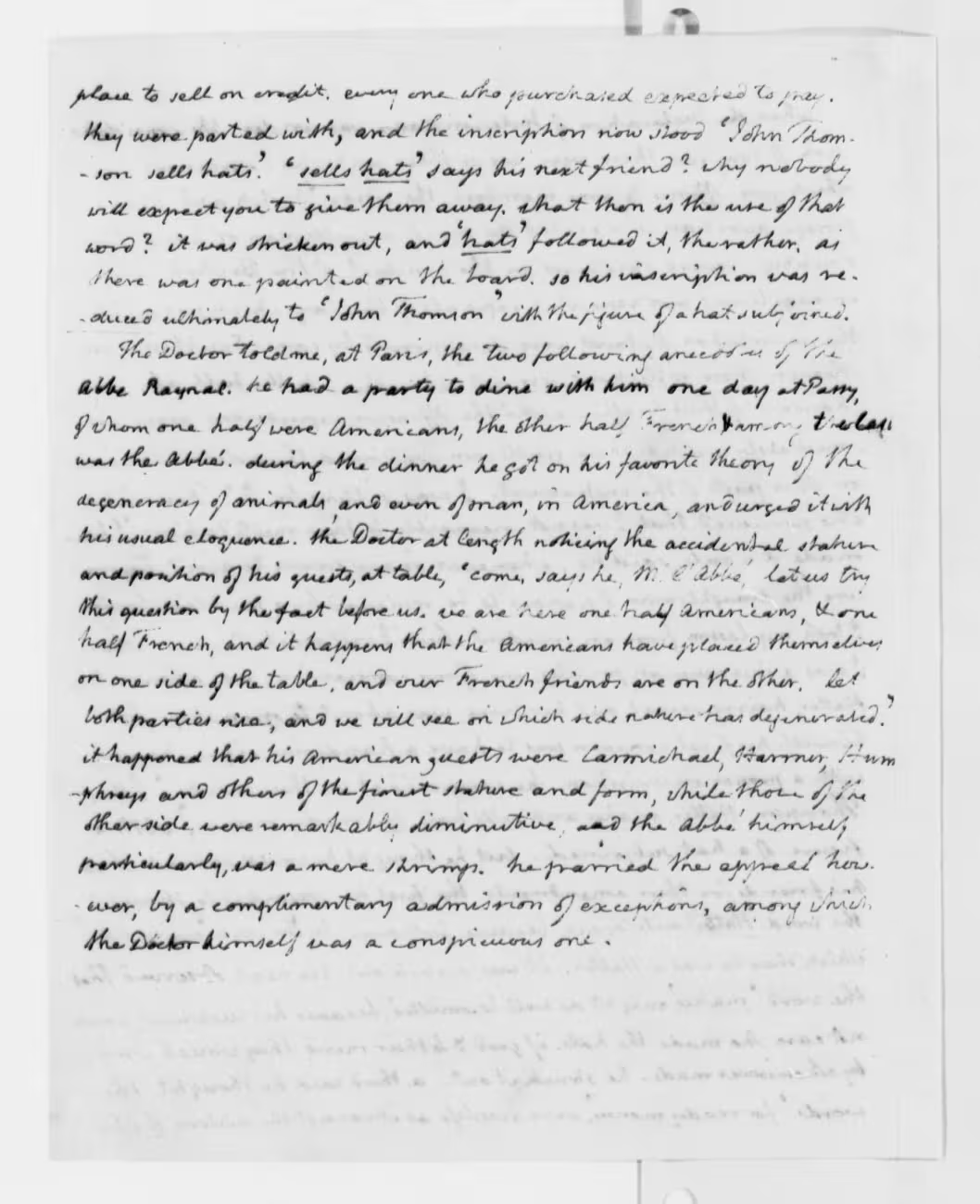
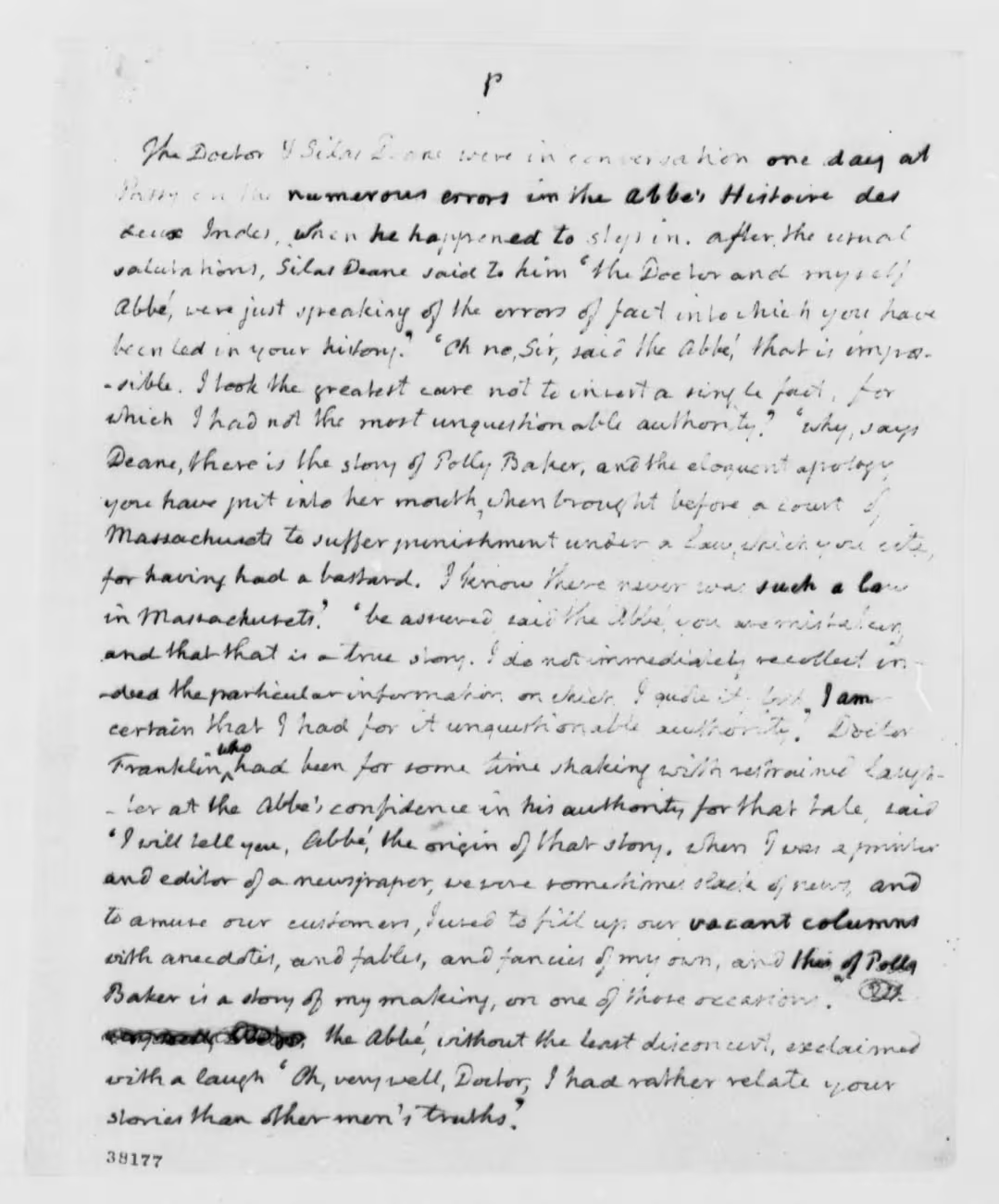
His comments remind us that the draft was never meant to stand alone. From the start, Jefferson’s text was shaped by compromise.
Writing for Many Audiences
Jefferson’s draft also shows how carefully he tried to balance different audiences. The Declaration needed to speak to colonists who were unsure about independence, to foreign governments whose support was crucial, and to British readers who might still be persuaded to support the American cause.
This helps explain the structure of the draft. It begins with broad principles, moves into a detailed list of grievances, and ends with a clear statement of separation. Each part served a purpose.
At the same time, Jefferson understood that his words would be scrutinized. The draft presents independence as a reluctant but necessary choice. Americans were not suddenly angry, the British had been doing wrong for years. This framing made the argument easier to defend. Jefferson’s role was not to settle every issue, but to give the Committee of Five and Congress something workable. In that sense, drafting was less about authorship and more about creating a starting point for collective action.
How the Declaration Made Its Case
The Declaration was designed to persuade and mobilize. It begins by explaining why people might overthrow a government, then presents the colonists' grievances against Britain and George III. It ends by formally declaring independence. Select a section below to explore each part.
Section 1: The Principles

What was The Principles section doing?

What was The Principles section doing?
Jefferson began by explaining the principles behind independence. Rather than focusing on specific events, he argued that governments exist to protect rights and derive their authority from the consent of the governed. If a government repeatedly violated those principles, people could alter or abolish it.
Speaking to Colonists
Many Americans were not yet convinced that independence was necessary. By grounding the argument in universal principles rather than local disputes, Jefferson presented independence as a defense of rights rather than a reckless revolution.
Speaking to Foreign Governments
European rulers were unlikely to support a movement that appeared lawless or chaotic. Jefferson's language presented the colonies as acting according to political principle and reason, helping foreign governments see independence as a legitimate political act.
Speaking to British Readers
Jefferson's argument was also directed at people in Britain. Rather than attacking the British people, he challenged the conduct of government. Readers in Britain could recognize ideas about rights, representation, and constitutional government that already existed within their own political tradition.
Section 2: The Grievances

What was The Grievances section doing?

What was The Grievances section doing?
After laying out general principles, Jefferson listed specific complaints against King George III. These grievances formed the evidence for his case, showing why Americans believed the imperial relationship could no longer be repaired.
Speaking to Colonists
Many readers would have recognized these complaints from years of political conflict. The grievances transformed familiar frustrations into a shared narrative, helping Americans see separate disputes as part of a larger pattern.
Speaking to Foreign Governments
Foreign observers needed evidence, not just rhetoric. The long list of grievances showed that the colonies had attempted reconciliation and had not declared independence lightly. It showed that Americans claimed to be responding to repeated abuses rather than seeking revolution for its own sake.
Speaking to British Readers
The grievances invited British readers to evaluate the imperial crisis for themselves. Even if they disagreed with independence, they could judge whether Parliament and the Crown had respected traditional rights and constitutional principles.
Section 3: The Declaration of Independence

What was The Declaration section doing?

What was The Declaration section doing?
The final section moved from argument to action. Having explained the principles behind independence and provided supporting evidence, Congress announced that the colonies were now "Free and Independent States."
Speaking to Colonists
This language transformed resistance into nationhood. Americans were no longer protesting imperial policies; they were claiming the powers and responsibilities of independent states.
Speaking to Foreign Governments
Foreign governments needed clarity. Ambiguous protests could not form the basis of diplomacy, trade agreements, or military alliances. A direct declaration made clear that Congress was acting on behalf of independent political communities.
Speaking to British Readers
The declaration signaled that the conflict had entered a new phase. Americans were no longer seeking reform within the empire. They were asserting that the political connection between Britain and the colonies had been dissolved.
From Draft to Debate
By the time Jefferson finished his draft, the Declaration was already moving beyond him. He shared the text with other members of the drafting committee, who reviewed it before it went to Congress. Once there, the document became part of a larger political process.
John Adams reflected years later on the powerful language it used.
John Adams to Timothy Pickering, 6 August 1822.
John Adams to Timothy Pickering, 6 August 1822.
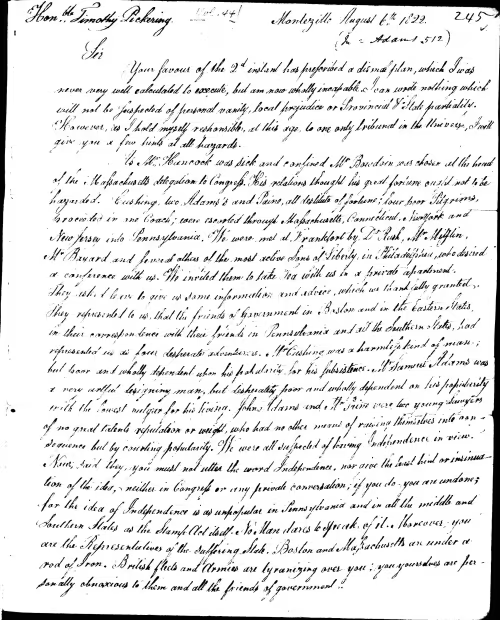
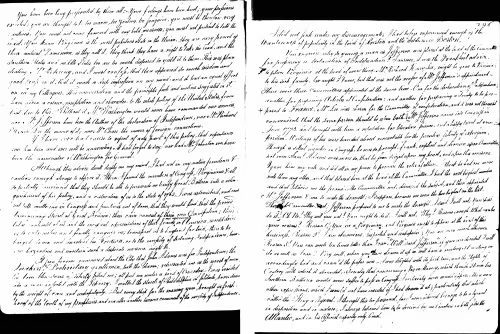
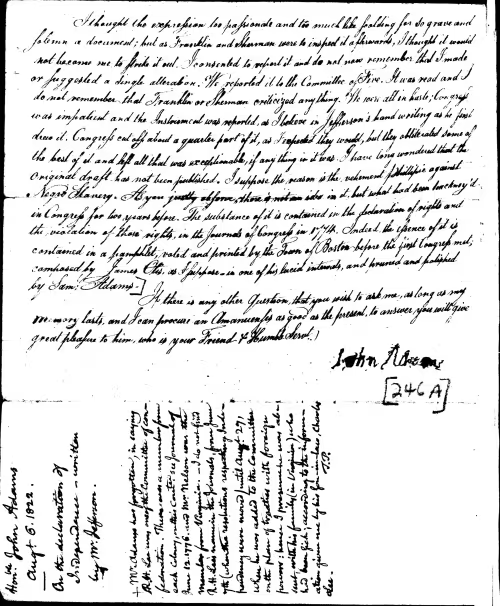
John Adams to Timothy Pickering, 6 August 1822
John Adams to Timothy Pickering, 6 August 1822
Adams recounts a behind-the-scenes strategy that led Jefferson to draft the Declaration of Independence and explains the rivalries shaping early Congress.
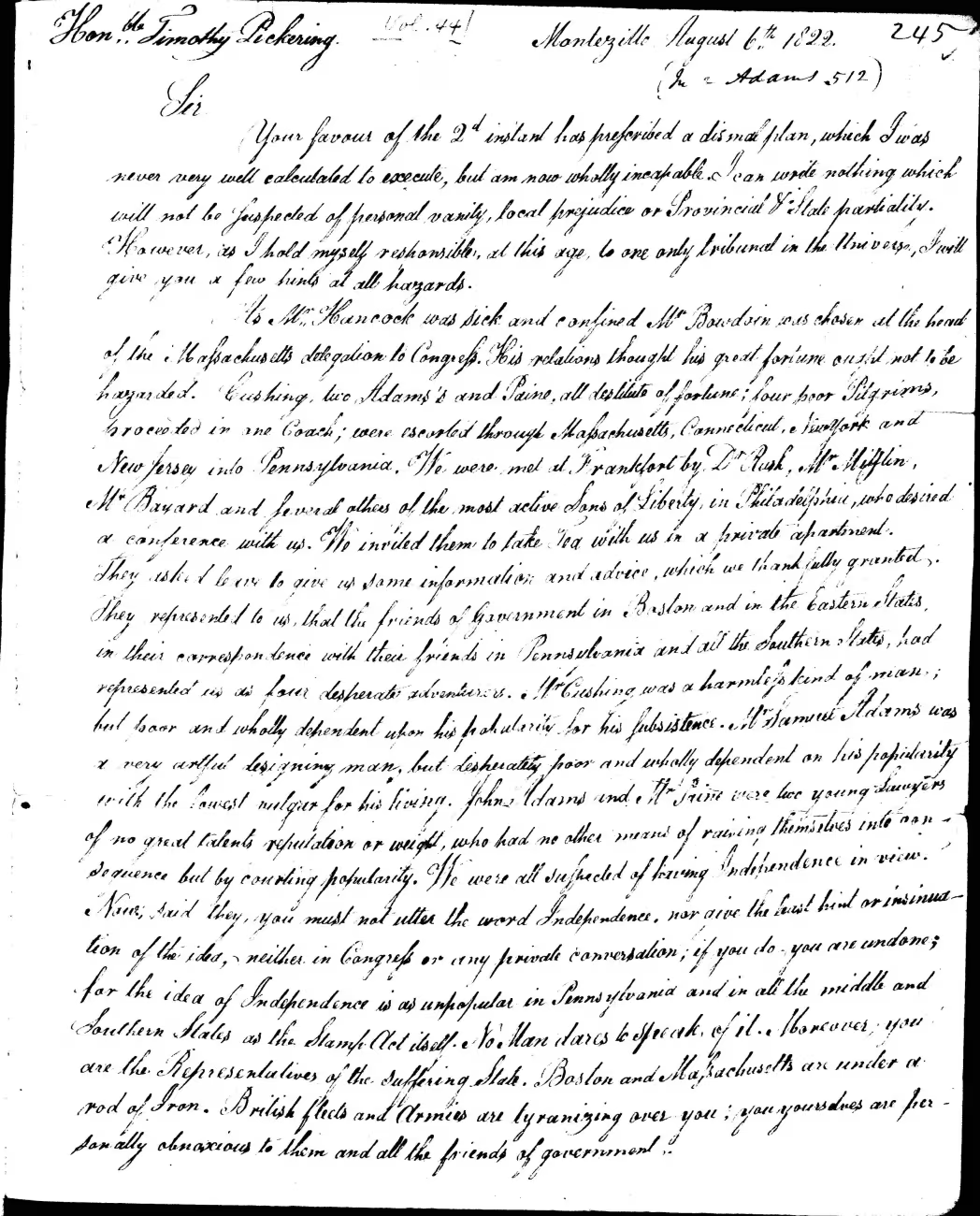
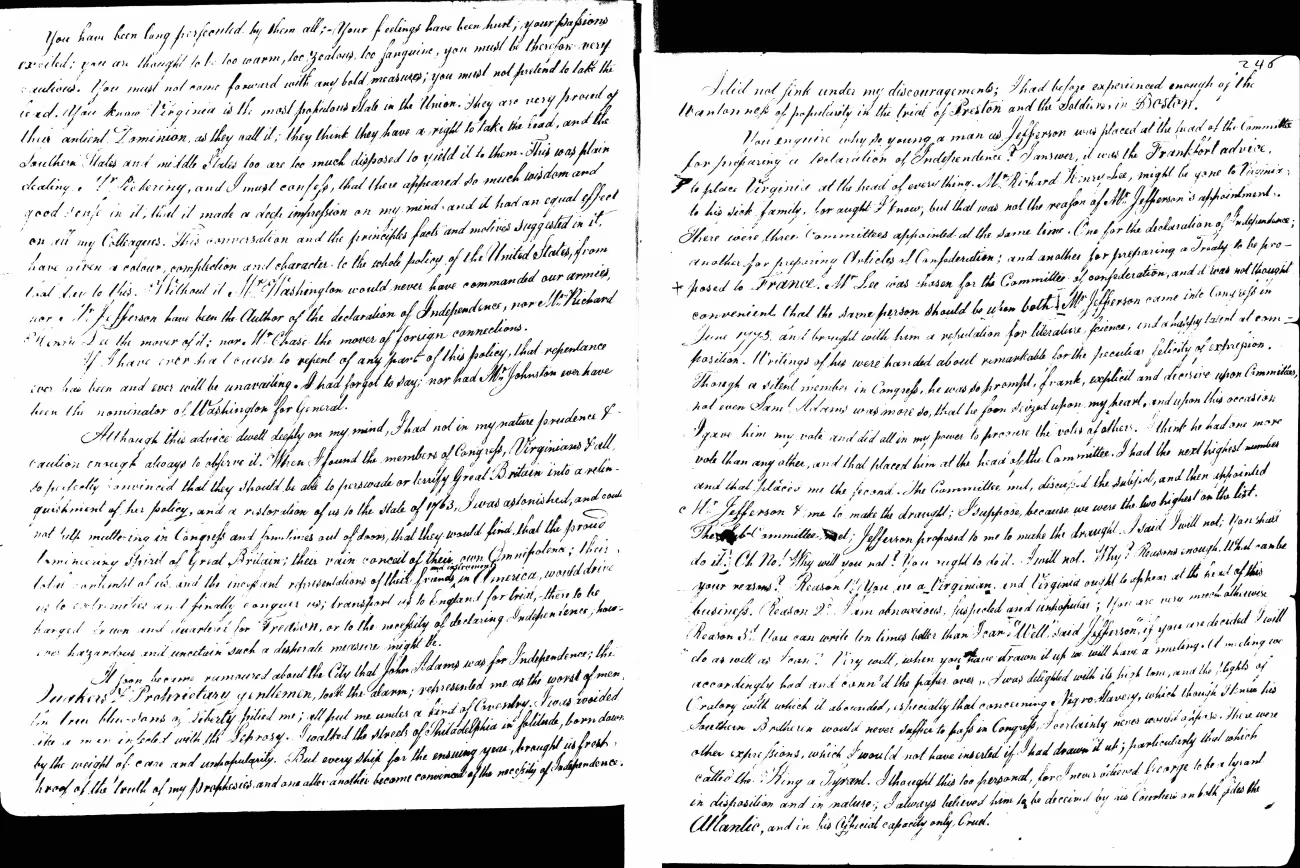
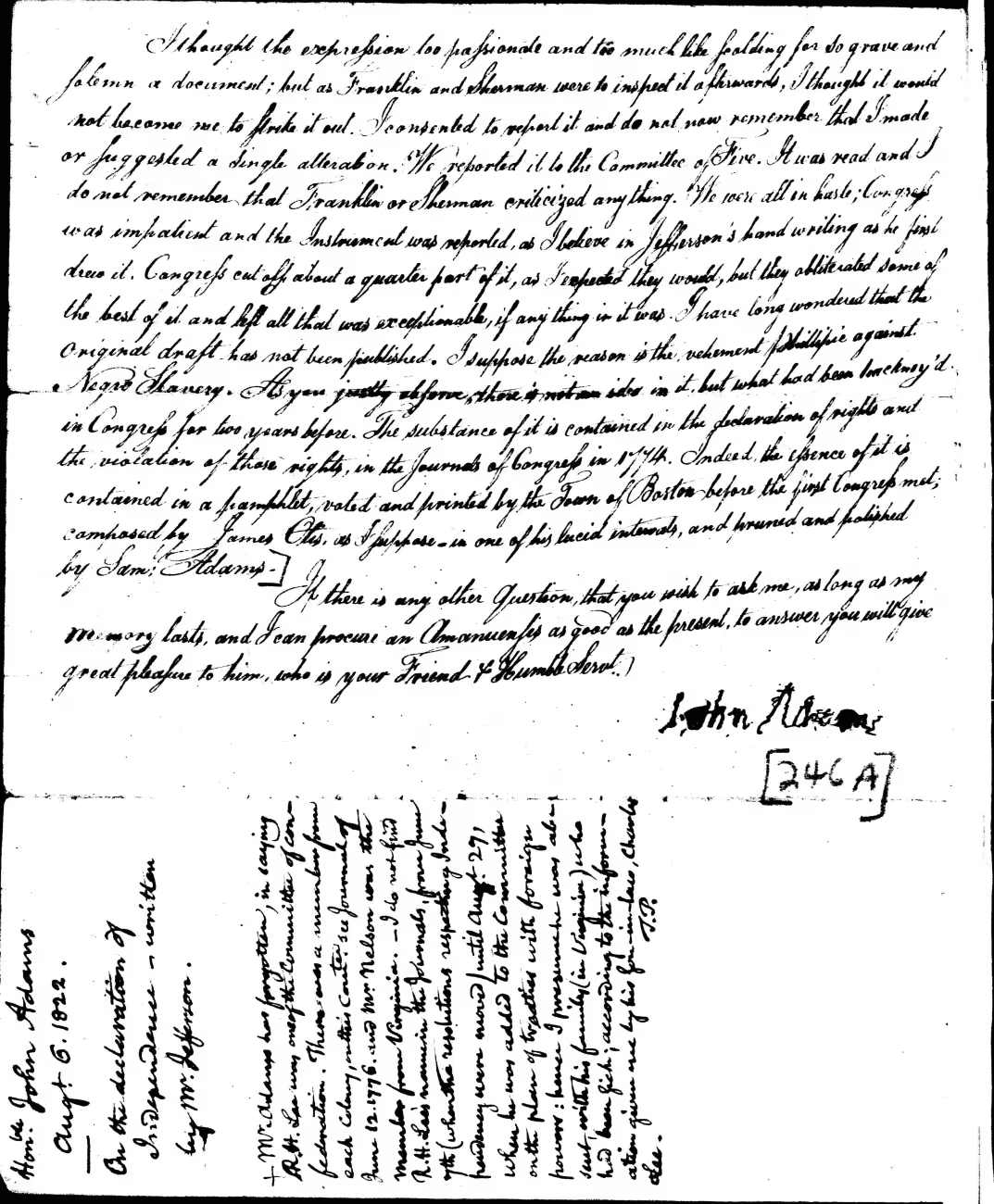
Adams’s recollection shows that even those who supported independence disagreed about how strong the language should be.
Once the draft left Jefferson’s hands, the document entered a space shaped by debate, caution, and political judgment. Some readers admired Jefferson’s strong language. Others thought it went too far. The Declaration would be shaped by negotiation and revision. The Committee and Congress made hard choices about what words would persuade, which might divide, and how the document should speak for all the colonies.