
Sections in this exhibit
-
1
Section 1 A Famous Document Takes ShapeSection 1
In 1776, independence moved from argument to action when the Continental Congress asked a committee of five to draft a declaration. Their work turned a bold idea into a document that announced the United States to the world.
-
2
Section 2 Thomas Jefferson: Drafting the DeclarationSection 2
Thomas Jefferson wrote the first draft of the Declaration in June 1776, drawing on ideas colonists had debated for years. His draft gave the Committee of Five and Congress a starting point.
-
3
Section 3 John Adams: Debating IndependenceSection 3
John Adams helped secure the agreement that made the Declaration possible. Through debate and persuasion in Congress, he worked to unite the colonies behind the decision to declare independence.
-
4
Section 4 Benjamin Franklin: Writing for the WorldSection 4
Benjamin Franklin made minor edits to the Declaration, and he hoped the document would be used to persuade readers beyond the colonies.
-
5
Section 5 Roger Sherman: Law, Balance, and AuthoritySection 5
Roger Sherman helped ensure the Declaration worked as a clear, practical document. His legal judgment and support moved the draft forward.
-
6
Section 6 Robert R. Livingston: Writing Without a VoteSection 6
Robert R. Livingston helped draft the Declaration even though New York’s delegates were not yet allowed to vote for independence. His experience shows how the colonies moved toward unity at different paces.
-
7
Section 7 From Debate to DeclarationSection 7
The Declaration of Independence emerged from debate, uncertainty, and compromise in 1776. The document moved over time from a risky decision to a lasting symbol of the American nation and people.
Introduction
Most know the Declaration of Independence; fewer know how it was made. This exhibit traces the 1776 collaboration that shaped the document.
Most people think of the Declaration of Independence as having been written by one person, all at once. This exhibit shows that the Declaration was messier, louder, and perhaps more human. It was a document built under extreme pressure by drafting, editing, debate, and political timing.
Five people contributed to writing the Declaration, each of whom played a different role. Jefferson wrote a powerful first draft. Adams pushed Congress toward unity. Franklin fine-tuned a worldwide message. Sherman kept it legally sound. And Livingston helped write the Declaration of Independence, even when his home state—New York—told him he couldn’t vote for it.
What emerged was a document forged in collaborative decision-making.
What shaped how the Declaration was written?
Americans often remember the Declaration as Thomas Jefferson’s masterpiece. But it was a group project. It came together through drafts, edits, and debate, as well as bargaining. Independence required Congress to agree before it could speak with a single voice.
Want to know more?
Explore the people, places, and primary sources featured in this exhibit.
Primary Sources
29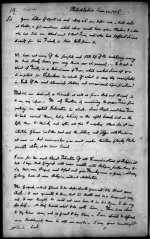
John Adams defends Congress's cautious approach toward proclaiming independence and declares America already divorced from Britain.
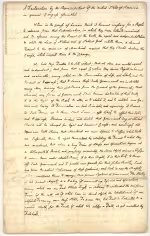
This manuscript preserves a crucial intermediate version of the Declaration and reveals how the original draft evolved into the text adopted by Congress.
New York delegates seek guidance from their Provincial Congress, navigating their colony's unique position as independence nears a final vote.
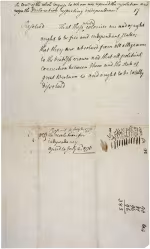
Charles Thomson's notes document the Second Continental Congress's historic vote on Richard Henry Lee's resolution declaring independence from Britain.
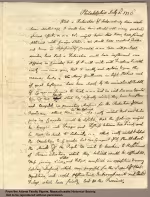
John Adams predicts that July 2 will be celebrated as America's independence day and reflects on the Declaration's timing.
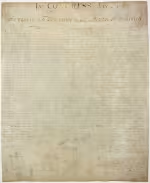
This foundational document declares American independence from Britain and outlines the grievances that led to this break.
John Alsop resigns from Congress, opposing New York's declaration of independence and expressing his preference for reconciliation with Britain.
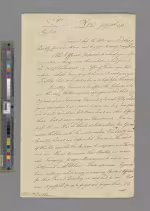
Benjamin Franklin denounces British attacks on Americans and rejects the possibility of reconciliation.
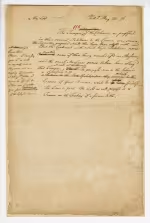
Benjamin Franklin accuses Britain of treating past colonial petitions with contempt and reaffirms American independence.
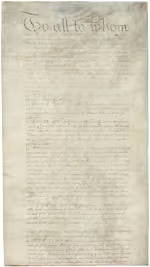
America's first constitution, ratified in 1781, created a confederation of sovereign states with limited central authority.
People
18New York delegate who signed the Continental Association but resigned from Congress rather than sign the Declaration of Independence in 1776.
Principal architect of the Constitution and Bill of Rights, co-author of the Federalist Papers, and fourth U.S. president.
Continental Army officer who served as secretary of state, championed pro-British Federalist policies, and opposed the War of 1812.
Author of satirical works on Philadelphia society, biographies, and an ambitious study on China.
Lawyer and politician who defended captive Africans in the landmark Amistad case before the Supreme Court, becoming a leading antislavery voice.
Engraver and publisher who created an influential 1818 facsimile of the Declaration of Independence and taught penmanship to Jefferson's family.
Author of satirical works on Philadelphia society, biographies, and an ambitious study on China.
Merchant who prepared a manuscript biography of his grandfather Samuel Adams, connecting with surviving founders who lived into the 19th century.
Places
8Explore Related Resources
-
A look at how the Declaration of Independence evolved from a draft into a unified national document through collaboration, revision, and compromise.
-
Film analyzing the Declaration of Independence as a strategic communication campaign to justify revolution and gain international support for America.
-
Explores how the Continental Congress drafted the Declaration of Independence through collaboration among Jefferson, Adams, Franklin, and others.
-
Explores the personal sacrifices of the 56 signers of the Declaration of Independence who risked death for treason under British law in 1776.
-
Explores Jefferson's 'fair copies' of the Declaration of Independence, revealing his original draft and passages Congress removed, including his condemnation of slavery.
-
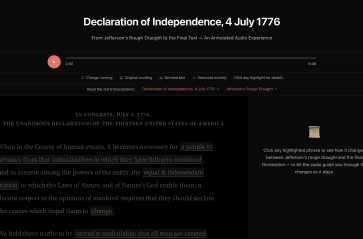
This interactive audio experience shows how Congress collectively revised Jefferson's draft of the Declaration of Independence.