
Sections in this exhibit
-
1
Section 1 The Declaration’s Sound: Small Changes, Big ImpactsSection 1
The founders were very concerned about how the Declaration sounded when read. Many of the early changes they made to the Declaration’s rough draft reflected that focus.
-
2
Section 2 Refining the Rhetoric: Subjects and CitizensSection 2
By changing a single word—switching “subjects” for “citizens”—the founders signaled their interest in the Enlightenment. The Declaration’s drafters also believed a focus on legal “rights” made their case for independence stronger.
-
3
Section 3 Passing Congress: The Declaration and Political CompromiseSection 3
Getting the Continental Congress to agree on the Declaration required compromise. As a result, the delegates removed two sections almost entirely. The first dealt with slavery and the second involved “love” for Britain.
-
4
Section 4 Who Is Declaring Independence?Section 4
Congress changed the Declaration’s title a few weeks after approving it. The name change stressed that the Declaration was the “unanimous” opinion of Congress. Stressing that the thirteen states were truly united behind independence helped counter Loyalist arguments. This change also helped American diplomats gather support abroad.
-
5
Section 5 The Declaration, Finished or Just Started?Section 5
Introduction
The founders carefully considered every word and punctuation mark in the Declaration of Independence. Several times, they fought hard over what to include and what to keep silent about. From draft to final version, the Declaration underwent many changes. If the founders had made different choices, would the United States have taken a different path?
Getting Independence Right
Thomas Jefferson wrote a rough draft (“draught,” as he titled it) of the Declaration of Independence. A Committee of Five and the Continental Congress made several changes before the document became final. Some revisions made the document easier to read. Other edits, like deleting a section on slavery, changed its meaning. The following pages highlight some of the biggest changes to Jefferson’s draft and the impact these revisions might have had.
This exhibit shows how the Declaration of Independence changed from its first draft to its final version. The changes are grouped by theme.
Surface-level Edits
Some of the changes to Jefferson’s draft were minor. The Committee of Five, for instance, exchanged some words for others with the same meaning. On another occasion, they simply changed the first two letters of a word. These changes were meant to impact how the document sounded. This was an important consideration for a piece of writing meant to be read out loud.
What were the States Really Fighting For?
Other edits to the rough draft changed what Jefferson wanted to say. This exhibit looks at Jefferson’s draft section on slavery. He criticized King George III for maintaining the transatlantic slave trade, but did not suggest Americans abolish slavery. This section also examines Jefferson’s call for colonists to bury their fond feelings for the British. Congress was not open to either proposal.
The Declaration as a Tool
Finally, this exhibit takes note of the Declaration’s title. Congress changed how the Declaration began in order to appear more united. The Declaration was, after all, a political tool to help the revolution succeed.
How Important Were these Changes?
The Declaration of Independence remains one of the most famous documents in American history. It persuaded many Americans to support nationhood. If Jefferson’s draft became the final version, would it have had the same impact?
The first draft of the Declaration of Independence had many differences from the final version.
Thomas Jefferson wrote the first draft and the “Committee of Five” made the initial edits.
Some edits simply changed the way the Declaration sounded when read.
Before Congress approved the document, several delegates demanded changes. Delegates deleted entire sections dealing with slavery and “love” for Britain.
The Declaration was a tool, which Congress and the Continental Army used to gain support from the American people.
Want to know more?
Explore the people, places, and primary sources featured in this exhibit.
Primary Sources
16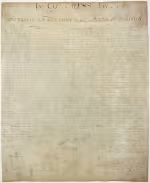
This foundational document declares American independence from Britain and outlines the grievances that led to this break.
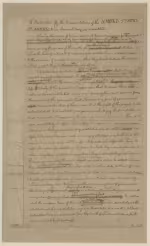
This rough draft of the Declaration of Independence features early revisions by Adams and Franklin and several sections ultimately removed by Congress.
Jefferson recounts Franklin's wit during the Revolution, including anecdotes about the Declaration's drafting and diplomatic encounters in Paris.
Petition to George III to halt the African slave trade, citing inhumanity and threats to colonial security.
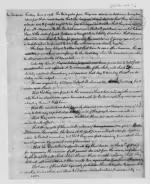
Jefferson's detailed notes documenting Congressional debates over the Declaration of Independence.
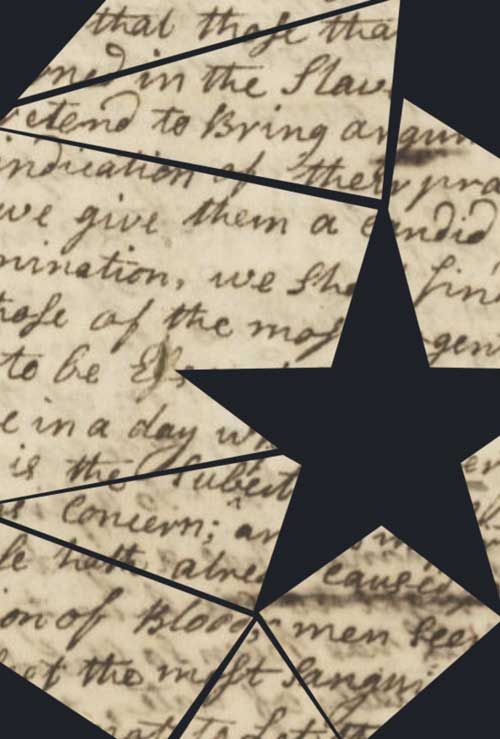
Abigail Adams responds to John Adams's letters announcing the Declaration of Independence, reflecting on his role in its composition.
Cooper discusses Continental currency disputes, diplomatic negotiations with the British, and a public reading of the Declaration of Independence.
This petition, signed by 547 New York Loyalists, declares continued allegiance to George III and opposition to the American Revolution.
Benjamin Franklin and Robert Morris instruct Silas Deane to deliver the Declaration of Independence to France and other European courts.
Committee report to Silas Deane in Paris on French treaty negotiations, military positions, and Declaration of Independence reception.
People
22A prominent early-American politician who drafted the Declaration of Independence and served as the third U.S. president.
Lawyer who defended British soldiers after the Boston Massacre, championed independence in Congress, and served as the second U.S. president.
Helped draft the Declaration of Independence and worked to secure the crucial Franco-American alliance that changed the course of the Revolution.
Co-drafted the Declaration of Independence, worked on the first New York State constitution, and negotiated the Louisiana Purchase as minister to France.
The only signer of all four founding documents and architect of the Connecticut Compromise that established the bicameral structure of Congress.
Philosopher whose works The Social Contract and Émile shaped Enlightenment thought and influenced American and French revolutionary movements.
Writer and political observer whose correspondence with John Adams provides a rich record of the Revolutionary era and early American republic.
Minister at Brattle Street Church who persuaded Bostonians to support the Revolution and promoted the Franco-American alliance in New England.
Organizations
5Led the U.S. government prior to the Articles of Confederation, created the Continental Army, and issued the Declaration of Independence.
Drafted the Declaration of Independence. Its members were: Thomas Jefferson, John Adams, Benjamin Franklin, Roger Sherman, and Robert R. Livingston.
Unified military force led by George Washington that transformed colonial militias into a national army for American independence.
A revolutionary government that coordinated military defense, drafted the state constitution, and led the colony's transition to independence.
Continental Congress committee that gathered intelligence on British plans and established diplomatic ties with European nations, including France.
Places
12Explore Related Resources
-
A look at how the Declaration of Independence evolved from a draft into a unified national document through collaboration, revision, and compromise.
-
Film examining how Continental Congress delegates edited Jefferson's draft of the Declaration of Independence, making 86 changes including removing slavery critique.
-
Film analyzing the Declaration of Independence as a strategic communication campaign to justify revolution and gain international support for America.
-
Explores the shift from the Olive Branch Petition's diplomacy to the Declaration of Independence's defiance during the American Revolutionary War.
-
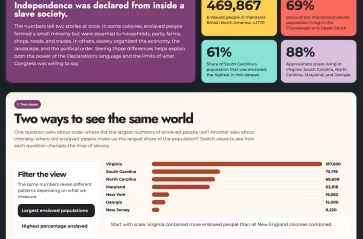
Interactive data story explores how 469,867 enslaved people lived in the thirteen colonies in 1770 and details each Declaration signer's ties to slavery.
-
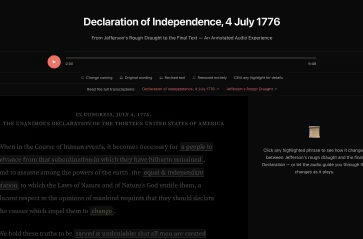
Interactive audio experience reveals how Jefferson's Rough Draught of the Declaration of Independence was collectively revised through political compromise.
Explore More Exhibits
-
The Declaration of Independence forced Americans into a civil war, where printers, Mohawk leaders, and enslaved people chose between liberty and loyalty.
-
Explore how the Declaration of Independence was forged through drafting, debate, and collaboration by Jefferson, Adams, Franklin, Sherman, and Livingston.