
Sections in this exhibit
-
1
Section 1 The Declaration’s Sound: Small Changes, Big ImpactsSection 1
The founders were very concerned about how the Declaration sounded when read. Many of the early changes they made to the Declaration’s rough draft reflected that focus.
-
2
Section 2 Refining the Rhetoric: Subjects and CitizensSection 2
By changing a single word—switching “subjects” for “citizens”—the founders signaled their interest in the Enlightenment. The Declaration’s drafters also believed a focus on legal “rights” made their case for independence stronger.
-
3
Section 3 Passing Congress: The Declaration and Political CompromiseYou are here
Getting the Continental Congress to agree on the Declaration required compromise. As a result, the delegates removed two sections almost entirely. The first dealt with slavery and the second involved “love” for Britain.
-
4
Section 4 Who Is Declaring Independence?Section 4
Congress changed the Declaration’s title a few weeks after approving it. The name change stressed that the Declaration was the “unanimous” opinion of Congress. Stressing that the thirteen states were truly united behind independence helped counter Loyalist arguments. This change also helped American diplomats gather support abroad.
-
5
Section 5 The Declaration, Finished or Just Started?Section 5
Passing Congress: The Declaration and Political Compromise
Getting the Continental Congress to agree on the Declaration required compromise. As a result, the delegates removed two sections almost entirely. The first dealt with slavery and the second involved “love” for Britain.
The Declaration’s Political Limits
In his first draft of the Declaration of Independence, Thomas Jefferson criticized King George III for not doing anything to stop the Atlantic Slave Trade. And while he did not say the United States should end slavery, he did say it was wrong. Congress got rid of this paragraph completely.
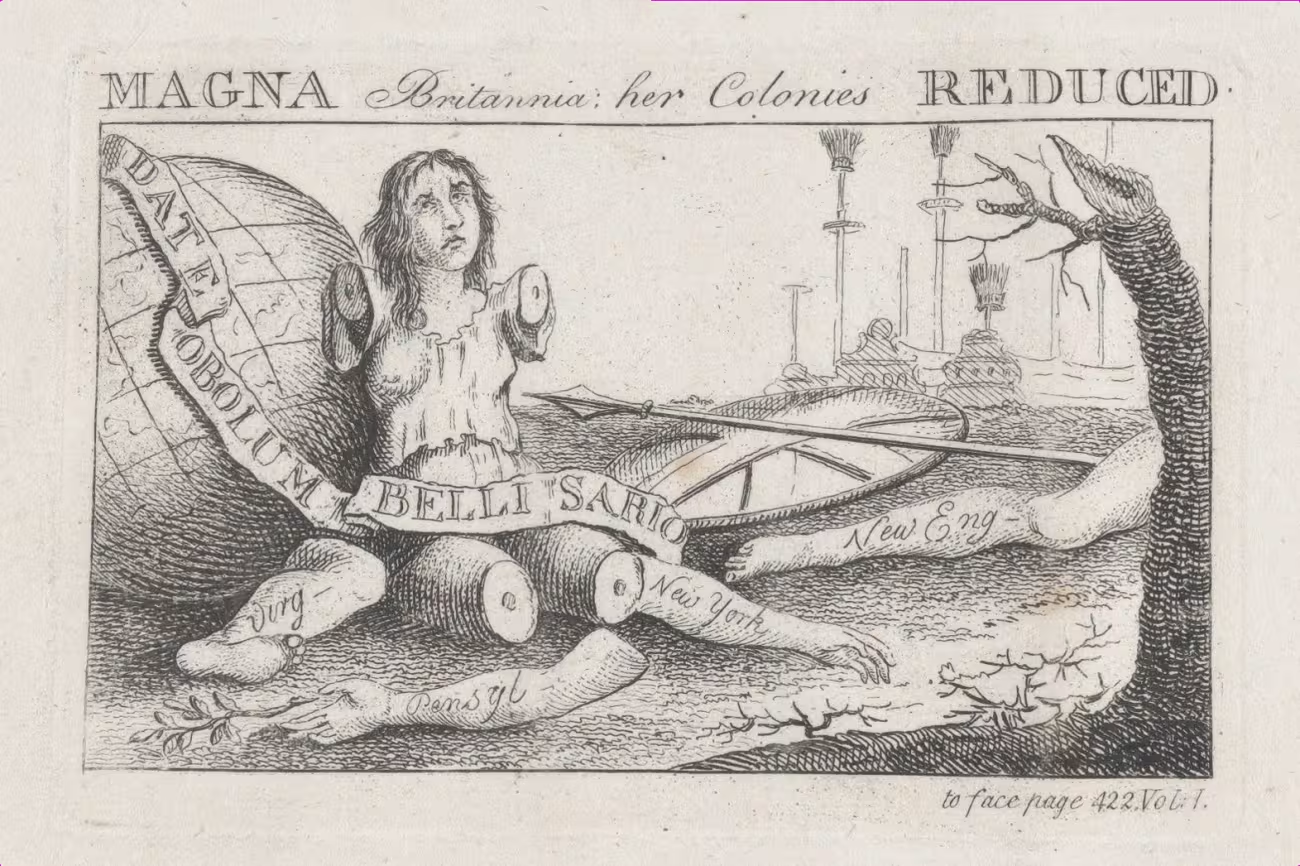
The second section Congress deleted dealt with colonial feelings toward Britain. The original draft of the Declaration included a paragraph describing Americans as having a shared background (“common blood”) with the British. Jefferson demanded that Americans forget this “former love.” The British would be enemies for the time being. Congress disagreed with this position.
Removing these two sections were major revisions. Clearly, there were topics that Congress could not agree on. Some delegates hoped to maintain some kind of relationship with Britain. Others wanted a complete break. Slavery divided the United States as early as the nation’s founding. The changes to the Declaration were political. Independence was not a straightforward process.
What Did the Draft Paragraph Say About Slavery?
Jefferson called the king a hypocrite for his support of the slave trade. Slavery was wrong (“cruel war against human nature itself”), and George III kept the “miserable” industry going. Jefferson pointed out that while the king allowed the trade to continue, he also offered enslaved Africans their freedom to fight for him. Jefferson worried that this offer of military service for freedom would lead to violence (“crimes”) against white colonists.
About six months prior, Virginia’s royal governor, John Murray, the 4th Earl of Dunmore, issued a proclamation that offered freedom to any “indented Servants, Negroes, or others, (appertaining to Rebels,)” who would fight for the British against rebellion. Patriot-led protests in Virginia had become increasingly militant, forcing the governor to flee to a British fleet anchored offshore and to make more desperate calls for support. The proclamation angered American colonists. It also established a precedent for British emancipation schemes, especially in the South, that would last for the war’s duration.
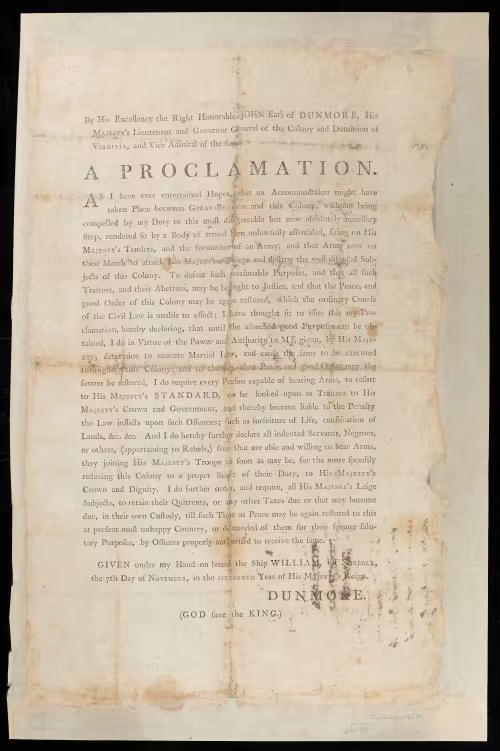
Lord Dunmore's Proclamation, 7 November 1775
Lord Dunmore's Proclamation, 7 November 1775
Virginia's royal governor declares martial law and promises freedom to enslaved people who join British forces.
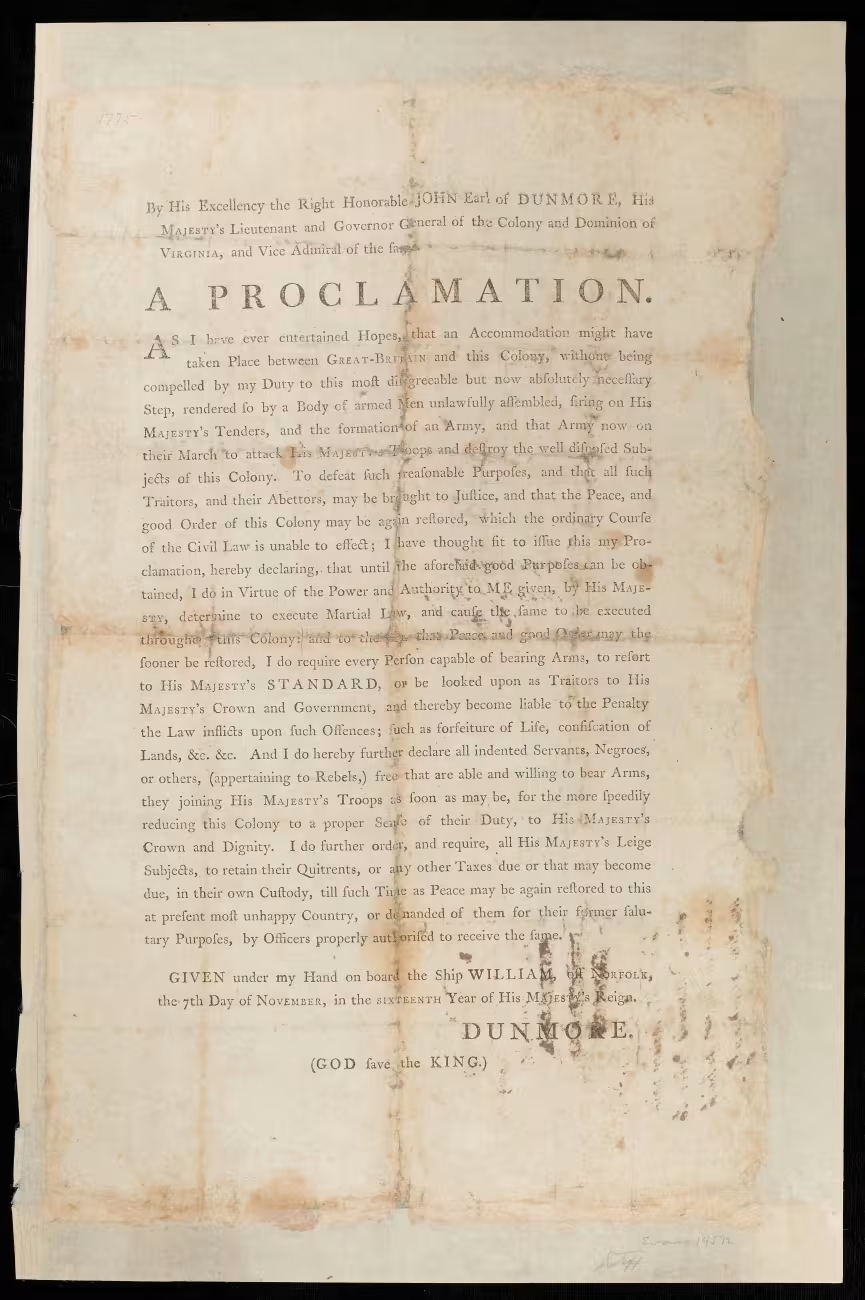
Jefferson’s First Draft
Congress’s Final Version
Congress deleted this paragraph entirely.
What Did the Paragraph Not Say About Slavery?
Jefferson did not directly call for an end to slavery. He himself continued to enslave many people. Jefferson feared George III would encourage enslaved people to rebel by promising them freedom, but he never suggested that Americans consider a similar offer. Jefferson may have privately hoped for an eventual end to slavery in the future, but that was not in the Declaration.
Explore what may have inspired Jefferson to write this section and his wider views on emancipation:
In the spring of 1772, Virginia’s colonial government petitioned King George to end the slave trade. While the representatives described the trade as inhumane, the safety of enslaved Africans was not a priority. Instead, the Virginians wrote that the trade stopped white people from moving to the colony. They also said it threatened their security. These Virginians likely feared rebellions of enslaved peoples. King George and his government did not act on the petition.
This document shows how much changed in four years. This petition to George III was much more pleading. The writers comfortably called themselves “subjects.” They “begged” the king to act like a father with his “paternal assistance.” By 1776, the revolution was in full swing. They were no longer asking George III for permission.
“Most gracious Sovereign We your Majesty’s dutiful and loyal subjects the Burgesses of Virginia… beg leave with all humility, to approach your royal presence… The Importation of slaves into the Colonies from the coast of Africa hath long been considered as a trade of great inhumanity, and, under its present encouragement, we have too much reason to fear will endanger the very existence of your Majesty’s American dominions. We are sensible that some of your Majesty’s subjects in Great Britain may reap Emoluments from this Sort of Traffick, but when we consider that it greatly retards the settlement of the Colonies, with more useful Inhabitants, and, may, in time, have the most destructive influence, we presume to hope that the interest of a few will be disregarded when placed in competition with the security and happiness of such numbers of your Majesty’s dutiful and loyal subjects…”
Virginia House of Burgesses' Petition Against the Importation of Slaves from Africa, 1 April 1772.
Jefferson had, prior to the Declaration, left clues about his thoughts on slavery and emancipation. Writing a draft of resolutions for the first Continental Congress, Jefferson connects his wish to end the Atlantic Slave Trade with a desire to abolish slavery totally. He does not provide any timeline or roadmap for this process and focuses primarily on how George III’s refusal to implement this ban undermined colonial sovereignty.
“The abolition of domestic slavery is the great object of desire in those colonies where it was unhappily introduced in their infant state. But previous to the infranchisement of the slaves we have, it is necessary to exclude all further importations from Africa. Yet our repeated attempts to effect this by prohibitions, and by imposing duties which might amount to a prohibition, have been hitherto defeated by his majesty’s negative: thus preferring the immediate advantages of a few British corsairs to the lasting interests of the American states, and to the rights of human nature deeply wounded by this infamous practice. Nay the single interposition of an interested individual against a law was scarcely ever known to fail of success, tho’ in the opposite scale were placed the interests of a whole country. That this is so shameful an abuse of a power trusted with his majesty for other purposes, as if not reformed would call for some legal restrictions.”
Excerpt, Draft of Instructions to the Virginia Delegates in the Continental Congress, July 1774.
Thomas Jefferson drafted his Notes on the State of Virginia in the early 1780s. In one passage, he once again discusses colonial Virginia’s attempts to end the Atlantic slave trade and connects it to the very gradual end of slavery.
“During the regal government, we had at one time obtained a law, which imposed such a duty on the importation of slaves, as amounted nearly to a prohibition, when one inconsiderate assembly, placed under a peculiarity of circumstance repealed the law. This repeal met a joyful sanction from the then sovereign, and no devices, no expedients, which could ever after be attempted by subsequent assemblies, and they seldom met without attempting them, could succeed in getting the royal assent to a renewal of the duty. In the very first session held under the republican government, the assembly passed a law for the perpetual prohibition of the importation of slaves. This will in some measure stop the increase of this great political and moral evil, while the minds of our citizens may be ripening for a complete emancipation of human nature.”
Excerpt from Notes on the State of Virginia, early 1780s.
Why Was the Paragraph Removed?
Slavery was legal in all thirteen colonies. Most enslaved laborers resided in the South. States like Virginia increasingly relied on unfree labor to power cotton and tobacco plantations. Though even if Northern landowners enslaved fewer people, the North still made money from slavery. Merchants in colonial port cities had large investments in the slave trade. In the early 1770s, New York City was second only to Charleston, South Carolina, for the number of enslaved people living within city limits (nearly fifteen percent of the population). In Kings County, on the western edge of Long Island (modern-day Brooklyn), one in three people were Black. The vast majority were enslaved.
Delegates from every colony would have found this section difficult to accept. As a result, Congress deleted this paragraph entirely. They did not want to open up, examine, or address a controversial issue. The delegates wanted to quickly finish the Declaration and pass it unanimously. Nowhere else in this document did Congress address slavery, or in any way suggest it was wrong.
Only a few generations after independence, divisions over slavery led to a bloody civil war.
Data Story
Slavery in the 13 Colonies, c.1770
In 1776, Congress declared that liberty was a universal right. The colonies that made that claim were deeply shaped by slavery. These infographics focus on four interpretive questions: how slavery looked different by scale and intensity, what enslaved people did, how slavery shaped the world of the Declaration’s signers, and which signers enslaved people.
Jefferson’s Reflections on This Edit to the Declaration
Jefferson, Notes of Proceedings in the Continental Congress.
As Jefferson wrote in his notes during the July meetings of the constitutional convention:
Thomas Jefferson, Notes of Proceedings in the Continental Congress, 7 June–1 August 1776.
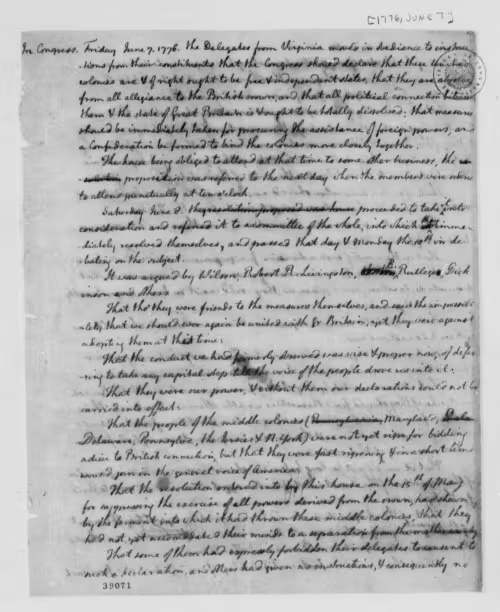
Thomas Jefferson, Notes of Proceedings in the Continental Congress, 7 June–1 August 1776
Thomas Jefferson, Notes of Proceedings in the Continental Congress, 7 June–1 August 1776
Jefferson's detailed notes documenting Congressional debates over the Declaration of Independence.
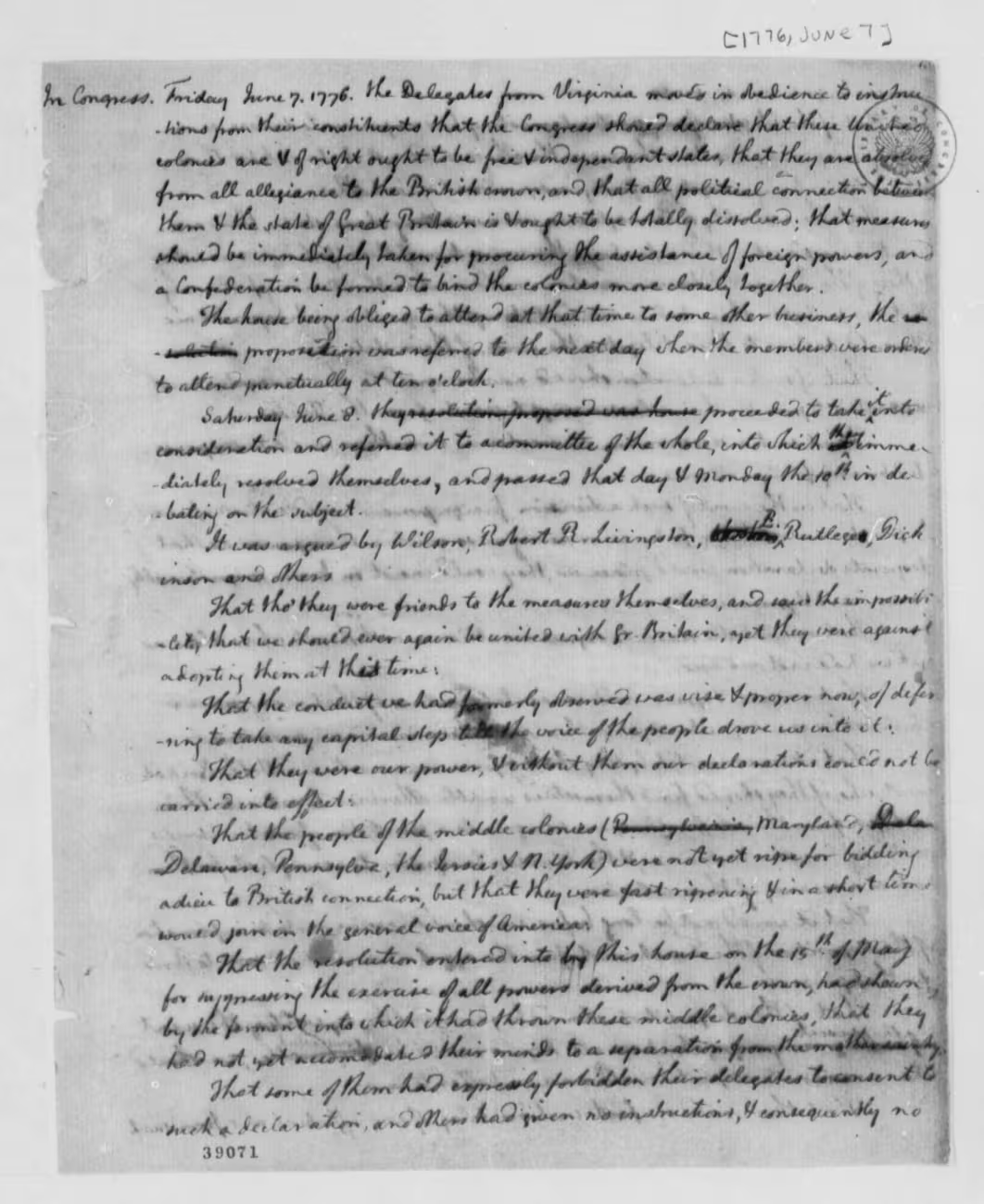
Jefferson believed that the South Carolina and Georgia delegates were mostly responsible for removing this section of the Declaration. Northern merchants, however, approved the change as well.
What did Jefferson say about “love” for Britain?
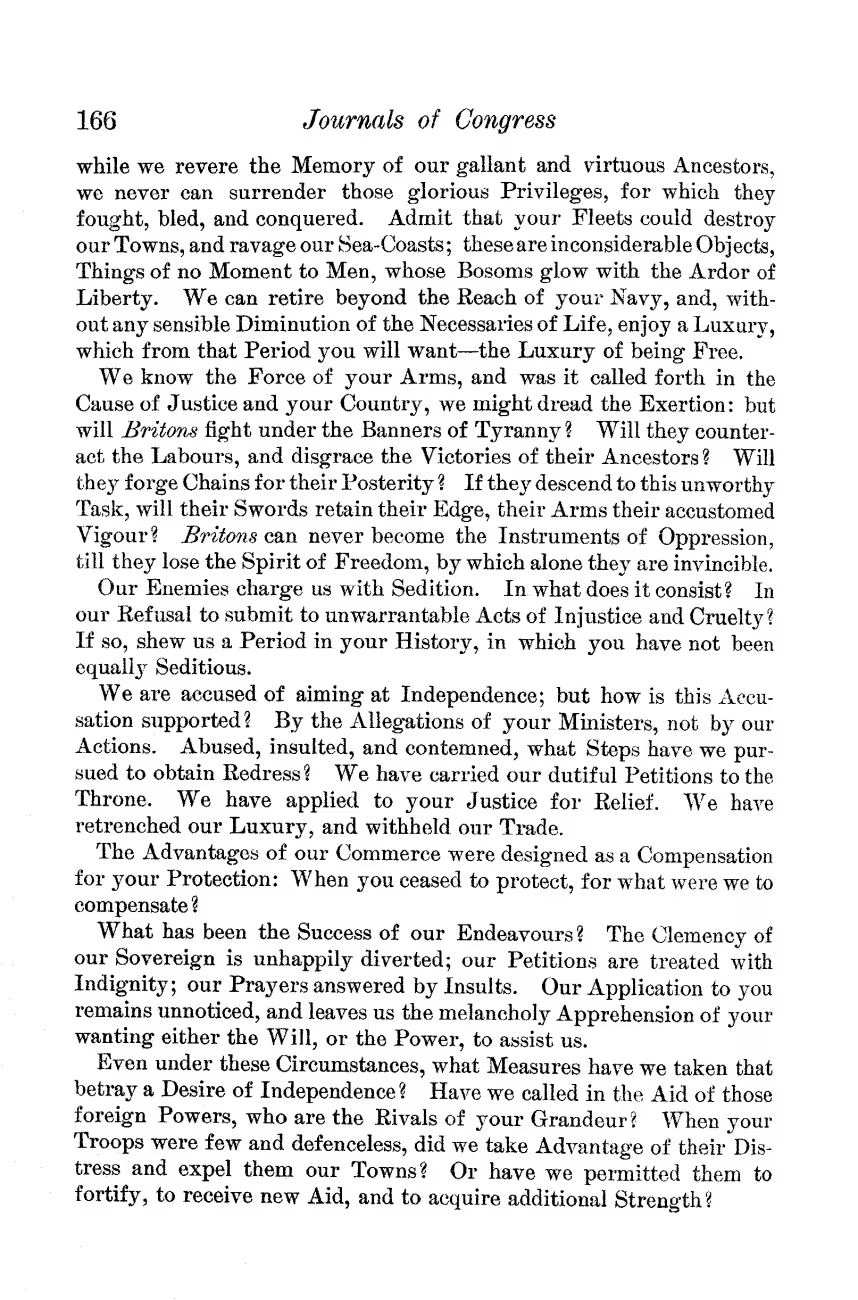
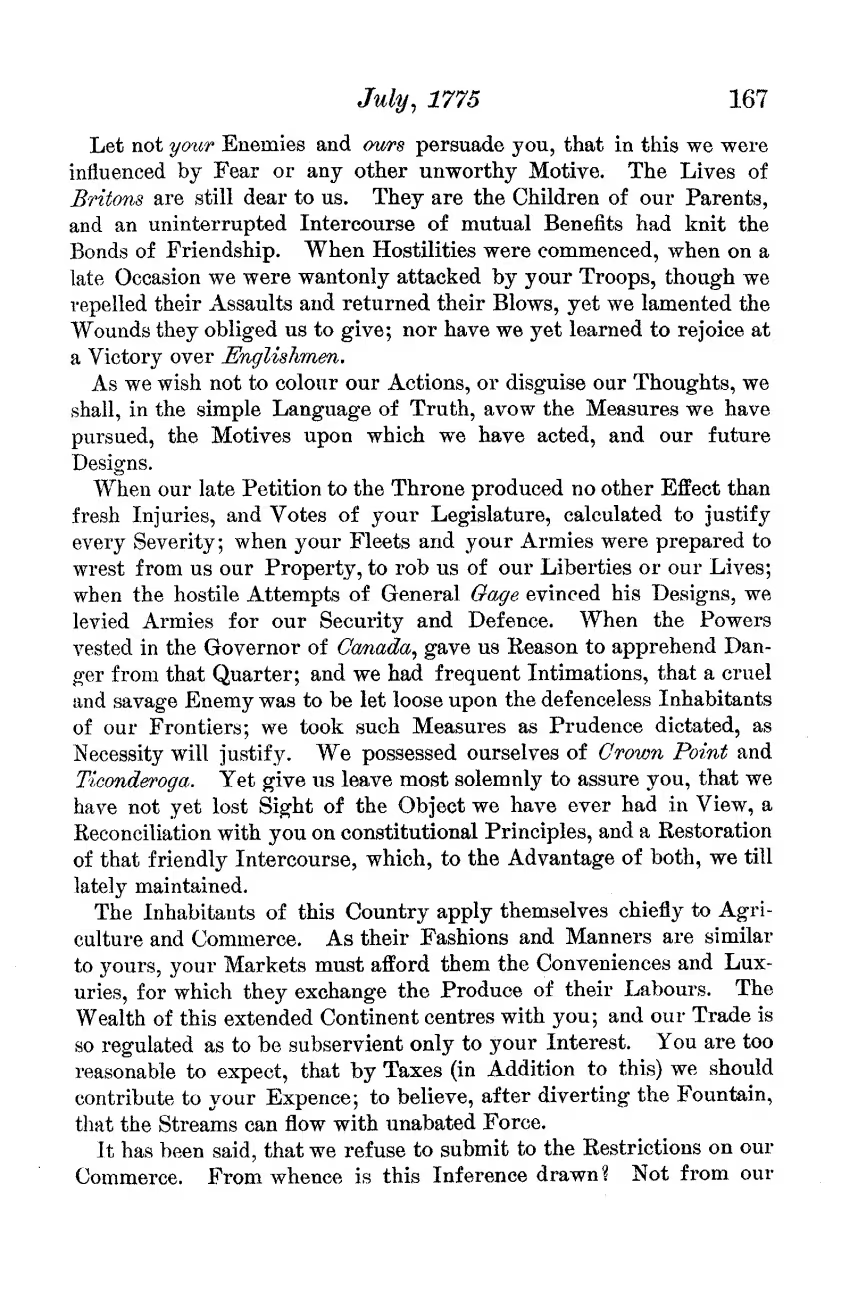
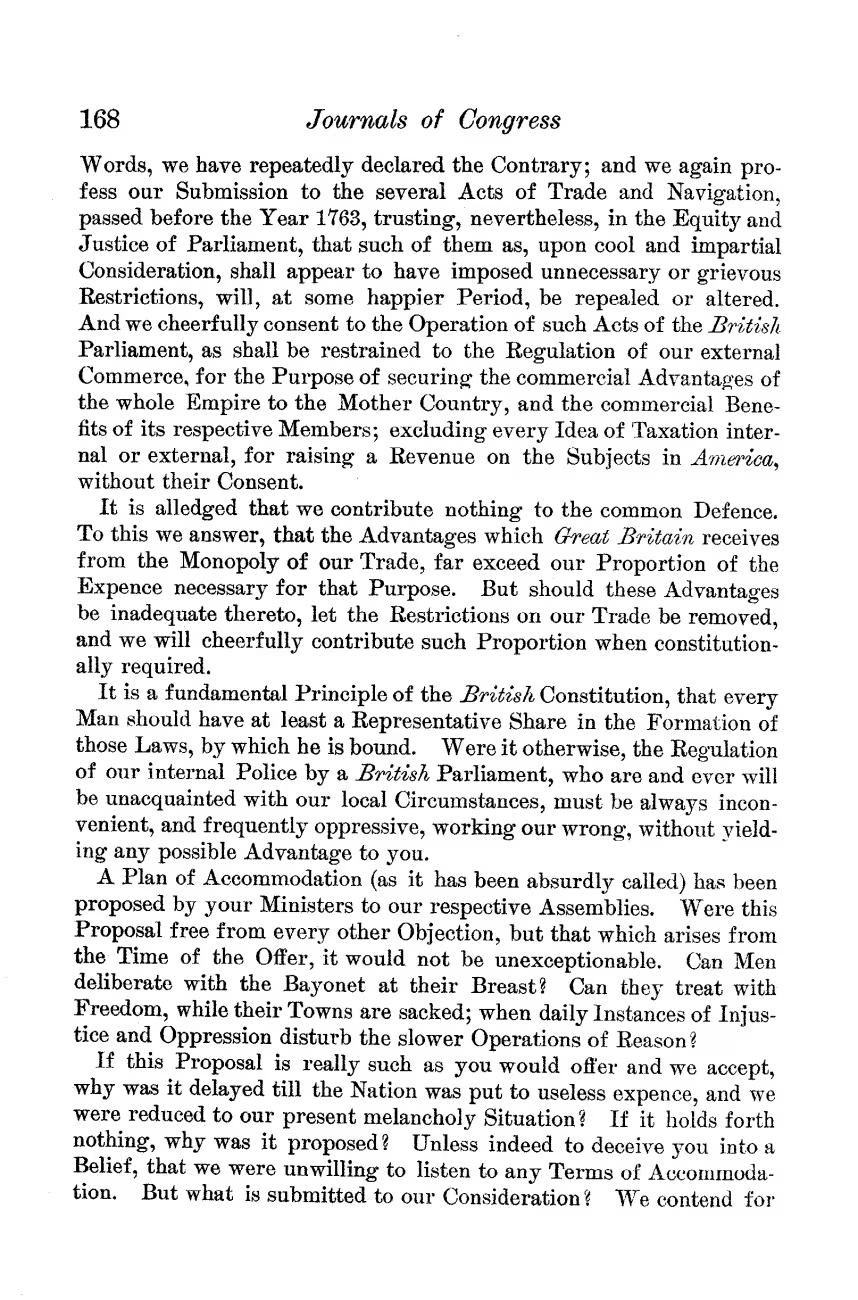
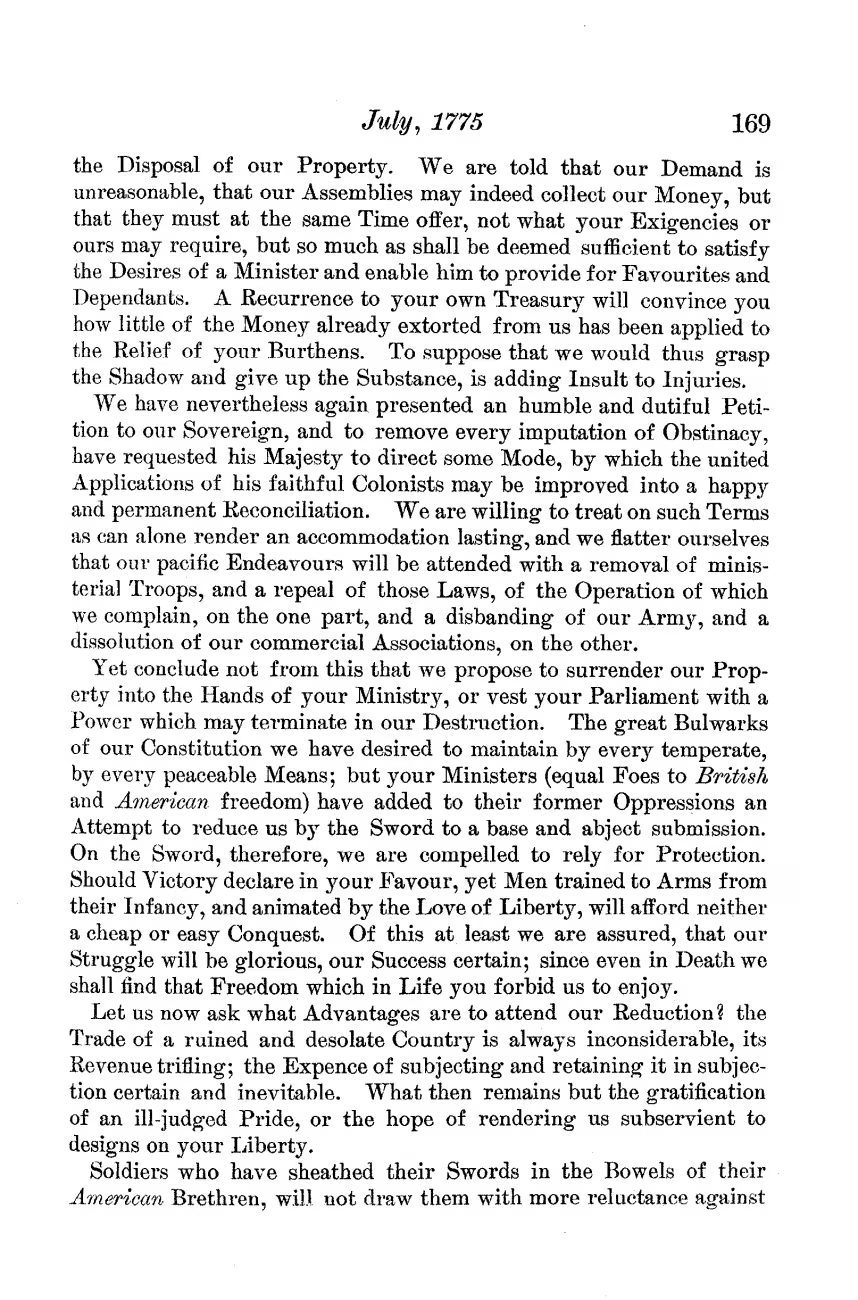
In Jefferson’s original draft of the Declaration of Independence, he described the British Empire as being like a family. The British had torn the family apart by committing crimes against the colonies. As close as they once were, the British were now “unfeeling brethren.”
In July 1776, many Americans still thought of Britain as home. Some had family across the Atlantic, traded with British merchants, read British books, and celebrated British victories and culture. The Declaration recognizes these ties, describing the British as “brethren” linked by “common kindred.” Independence required redefining identities that had developed over generations, in addition to creating a new nation.
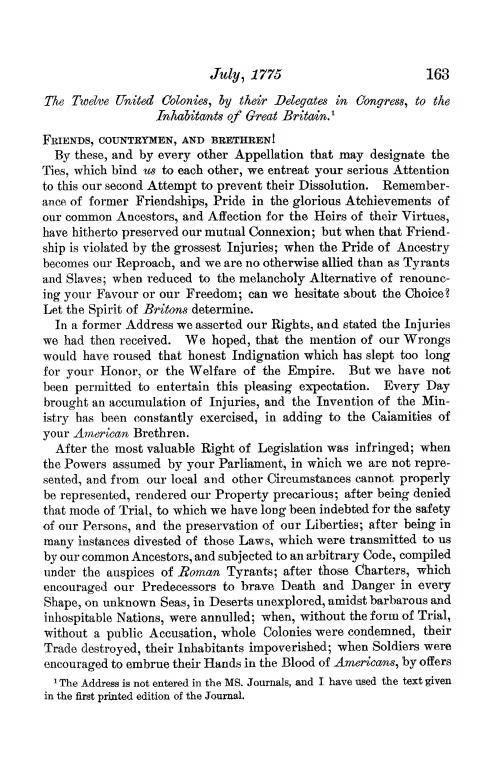
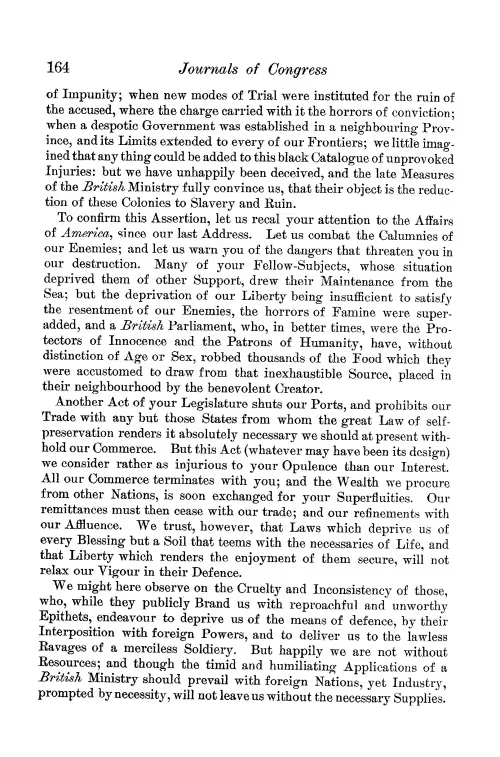
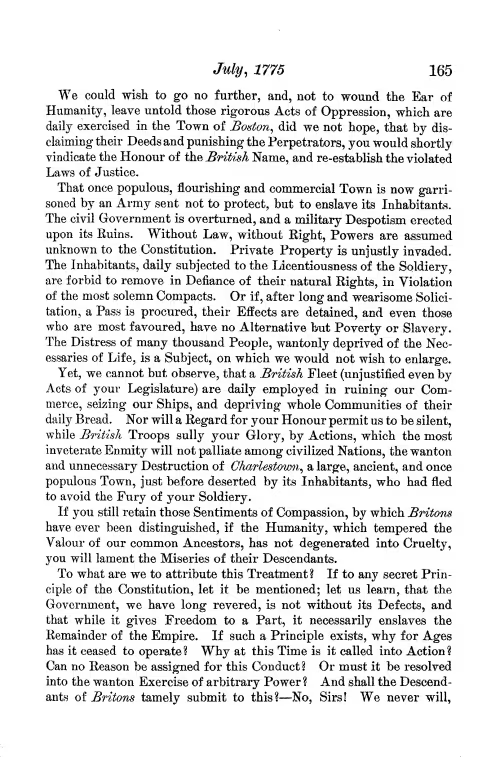
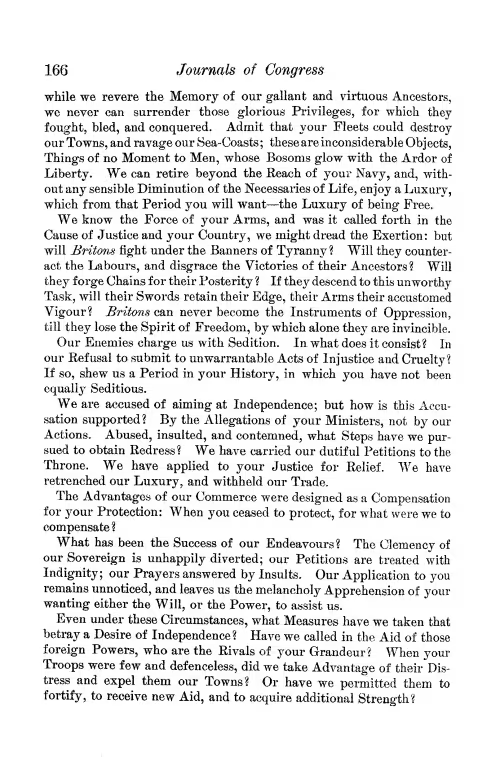
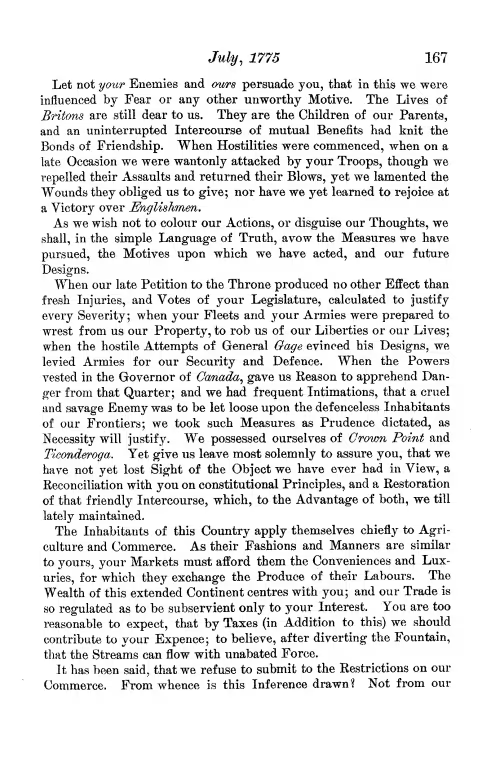
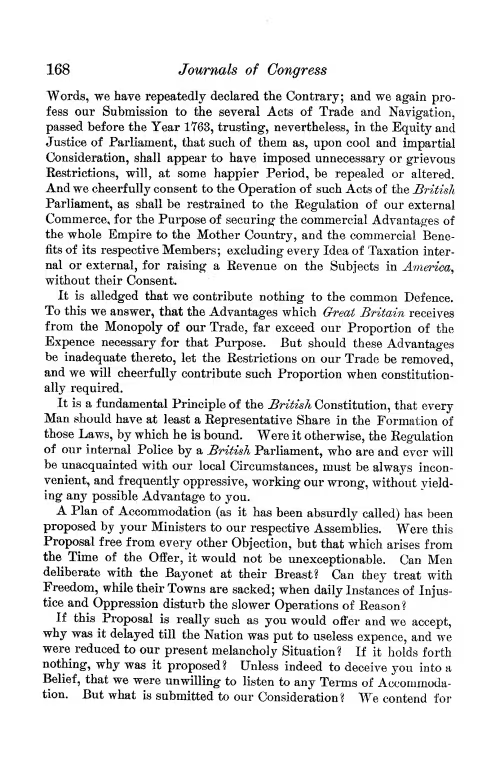
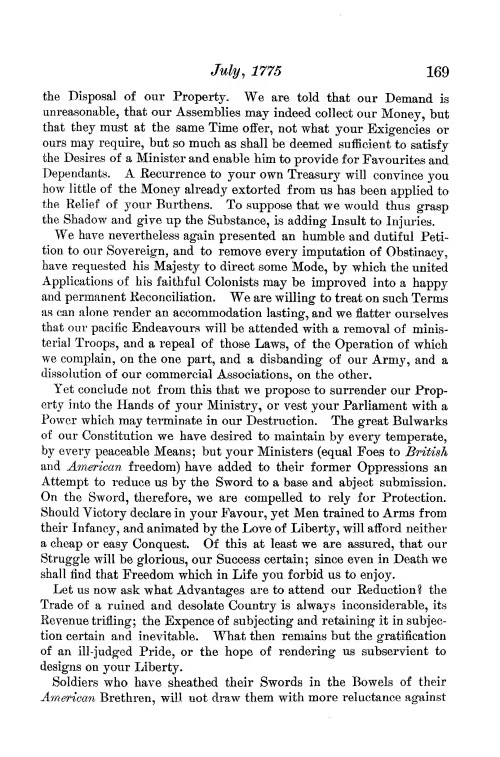
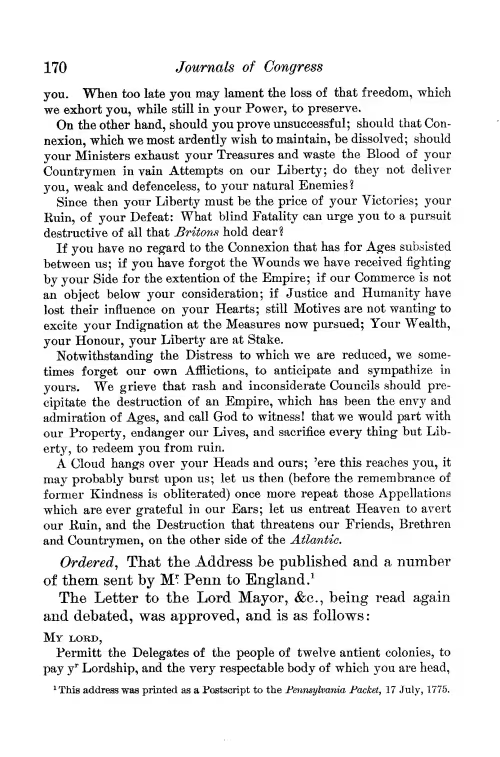
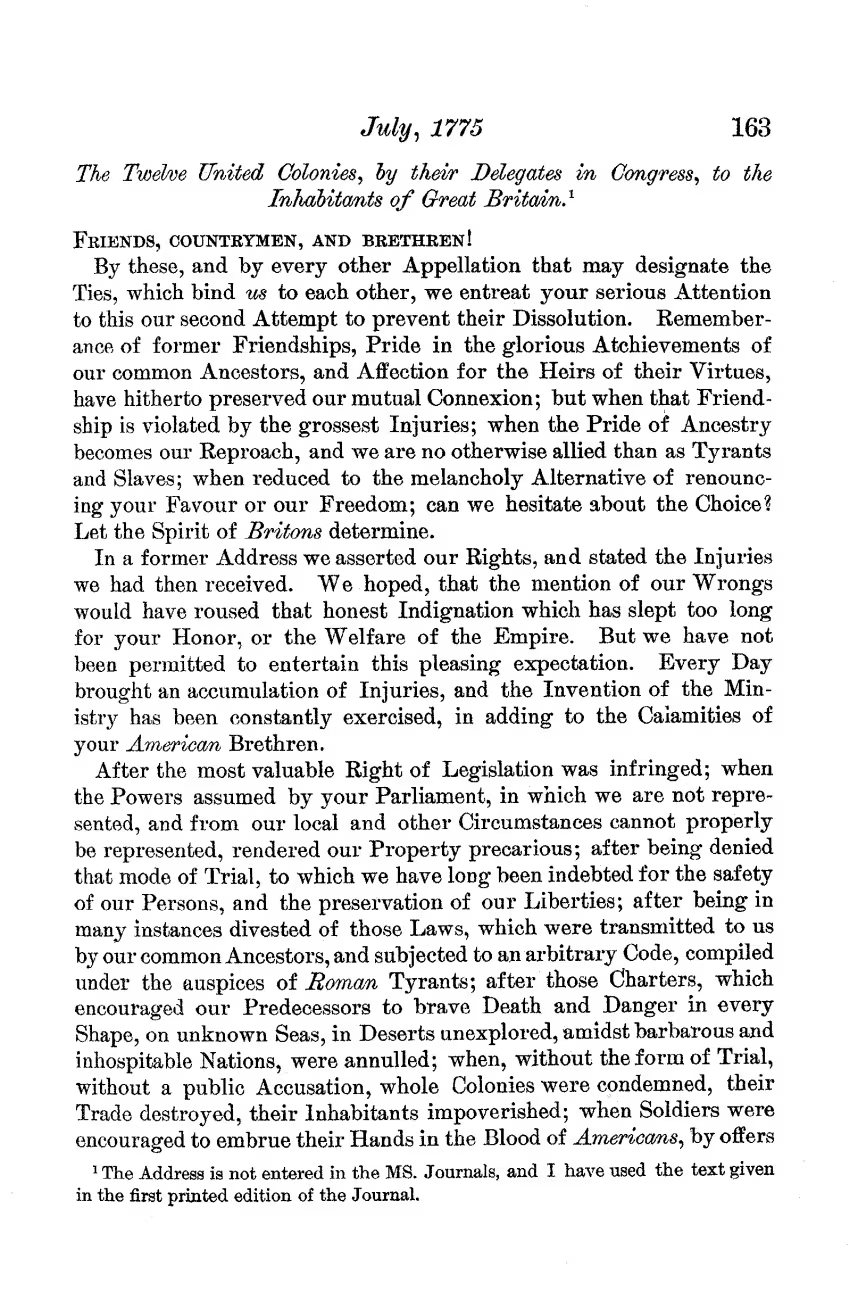
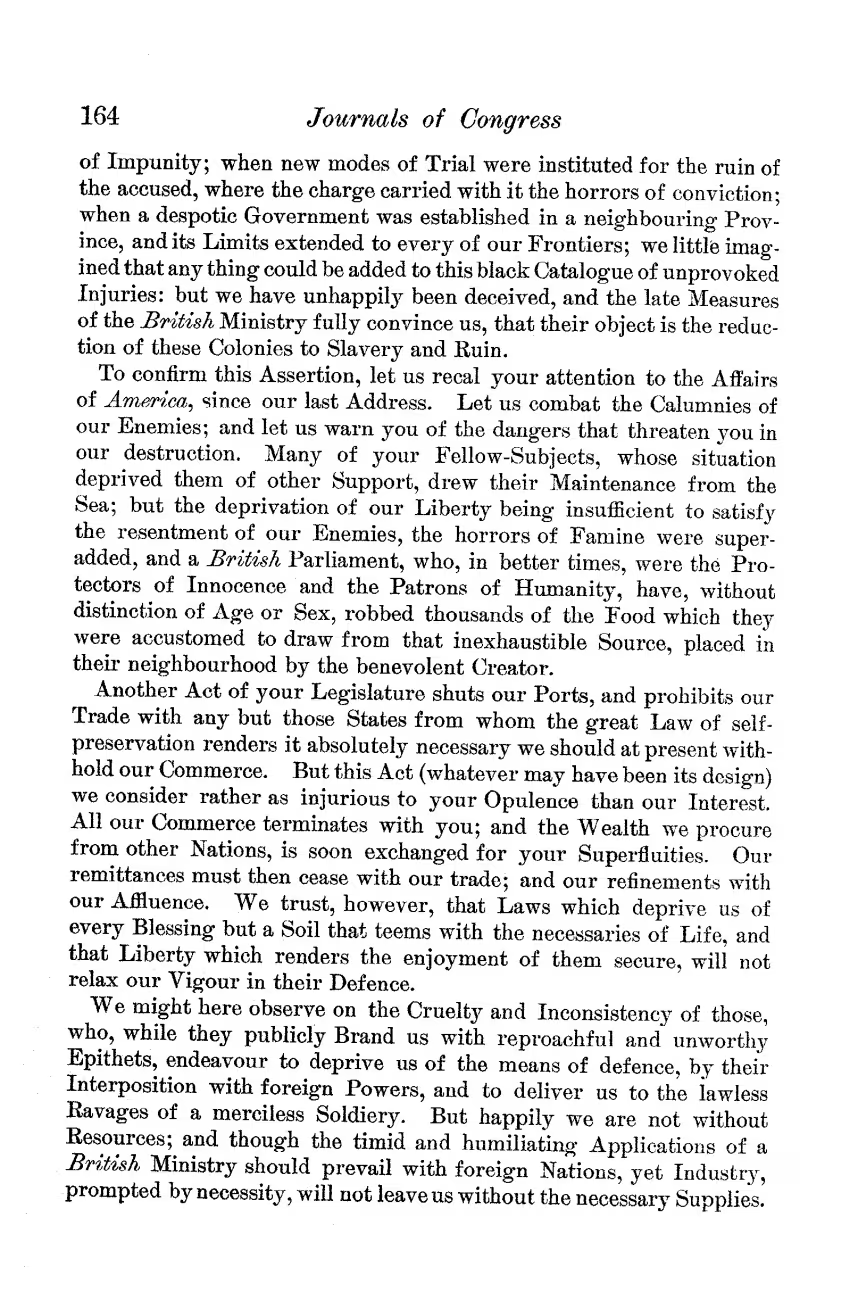
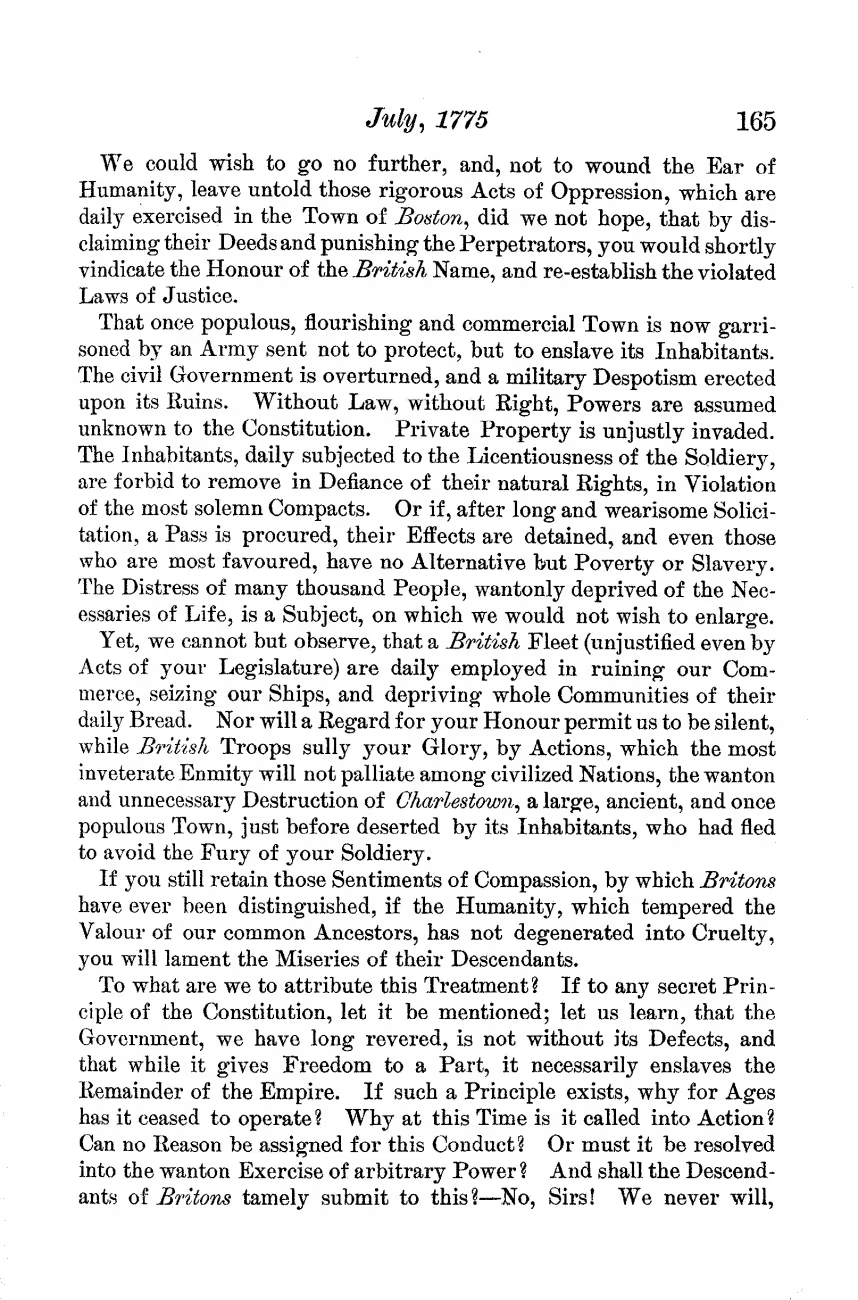
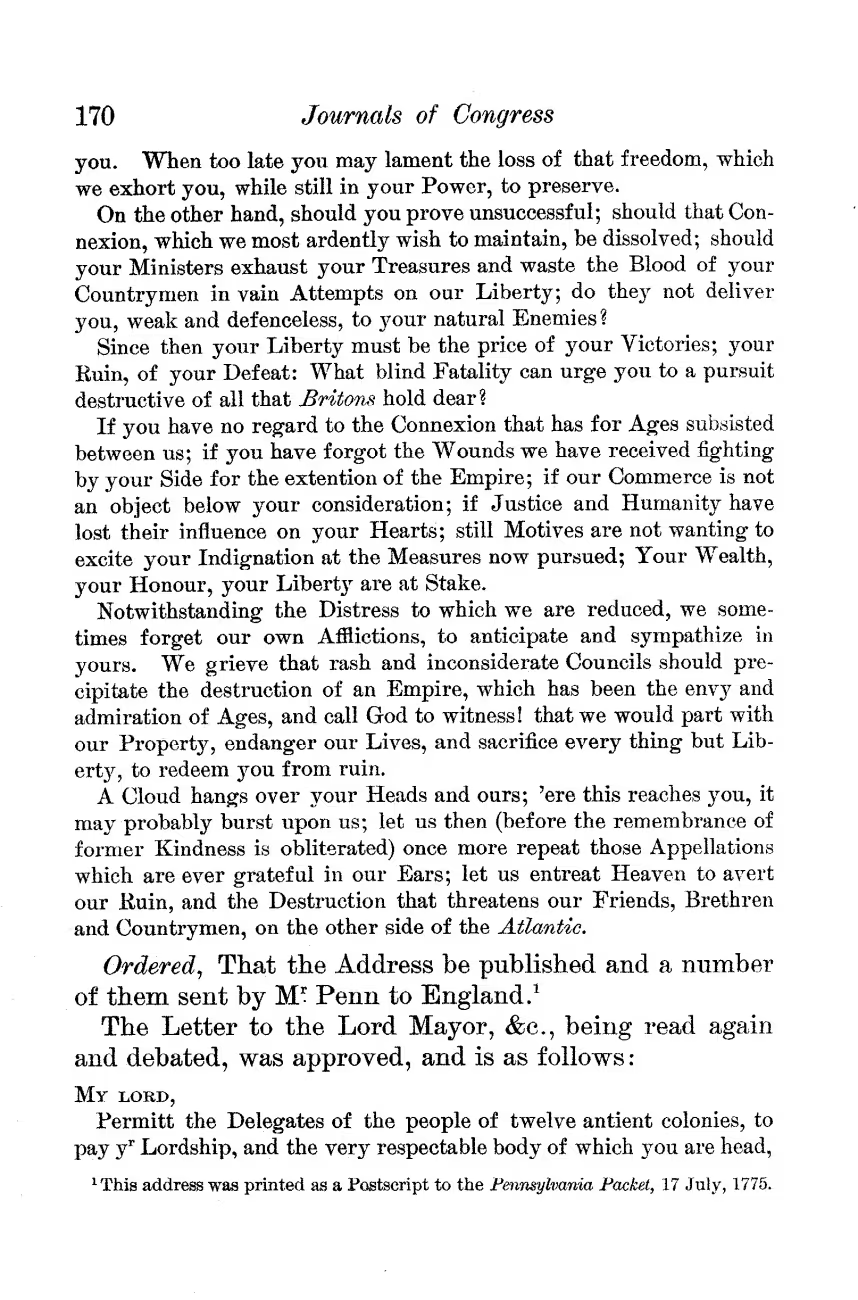
The Twelve United Colonies, by their Delegates in Congress, to the Inhabitants of Great Britain, 8 July 1775
The Twelve United Colonies, by their Delegates in Congress, to the Inhabitants of Great Britain, 8 July 1775
This letter by Robert R. Livingston defends colonial resistance and seeks reconciliation while detailing grievances, including Boston's occupation.
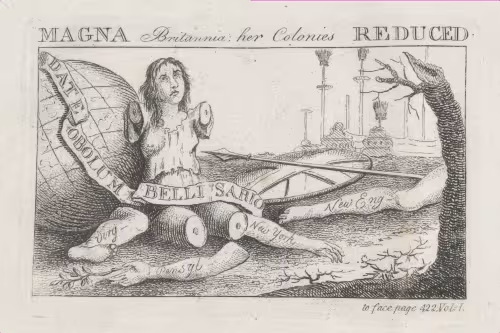
Magna Britannia: Her Colonies Reduced, by Benjamin Franklin (1833 [based on 1766 print])
Magna Britannia: Her Colonies Reduced, by Benjamin Franklin (1833 [based on 1766 print])
This print warns Britain that the Stamp Act could fragment the Empire, depicting the nation as a dismembered woman with colonial limbs scattered about.
Friends or Foes?
He told his fellow Americans to “forget their former love” for the British by declaring independence.
Jefferson’s Original Draft
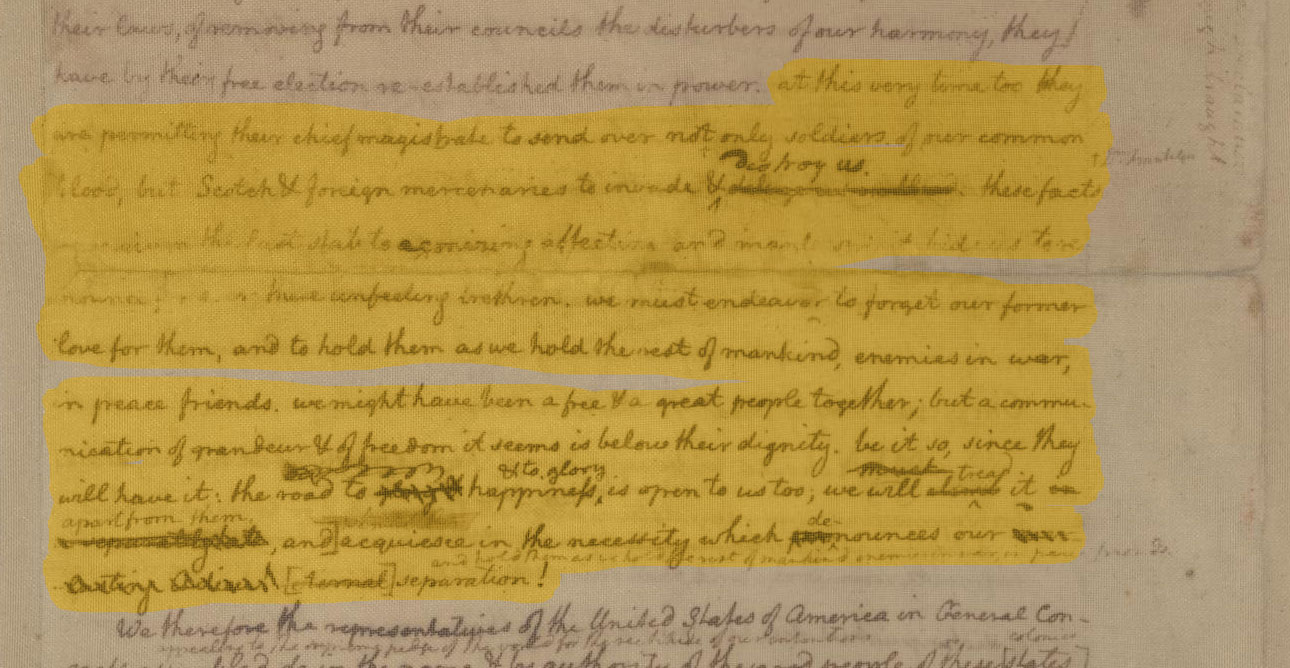
Congress’s Final Version
Congress cut the section from more than one hundred words to less than thirty.
Jefferson wrote in his notes that some delegates believed they still had friends “worth keeping” in Britain. That is why they deleted most of the passage.
The question of how friendly the United States should be to Great Britain remained important after independence. When France and Britain went to war in 1793, Americans were divided over who to support.
Great Britain
Great Britain
Imperial center governing American colonies during the Revolution. A global empire and military power that shaped world events throughout modern history.
France
France
A major European power, aided American independence with military and naval support, built a global empire influential in politics and culture.
When France and Britain went to war, many Americans disagreed over which nation deserved their support. Federalists (generally) favored Britain because of its commercial importance and political stability, while Jeffersonian Republicans sympathized with revolutionary France. The debate helped create America's first political parties and revealed deep disagreements about the nation's future.
Jefferson on “Love” for England
Thomas Jefferson, Notes of Proceedings in the Continental Congress.
Thomas Jefferson, Notes of Proceedings in the Continental Congress, 7 June–1 August 1776.
Thomas Jefferson, Notes of Proceedings in the Continental Congress, 7 June–1 August 1776
Thomas Jefferson, Notes of Proceedings in the Continental Congress, 7 June–1 August 1776
Jefferson's detailed notes documenting Congressional debates over the Declaration of Independence.
In his notes during Congress’s debate over the Declaration, Jefferson writes that believing Americans still had “friends in England worth keeping” was “pusillanimous,” or lacking in courage.
The Continental Congress might have agreed on independence, but they did not agree on everything. Delegates remained divided over critical issues like a future relationship with Britain and slavery. Most Americans in 1776 never knew that the Committee’s draft had these sections. But there were those who did know and were upset.
Reactions to the Cuts
Some Americans outside of Philadelphia managed to see the draft version. Two of them, Abigail Adams and Samuel Cooper, both Massachusetts-based associates of John Adams, had strong reactions to what Congress cut in the final version.
Abigail Adams and the Declaration’s “Manly Sentiments”
No one knows exactly what copy of the Declaration Abigail Adams originally saw, but she clearly saw one prior to reading the final draft.
Collections of the Massachusetts Historical Society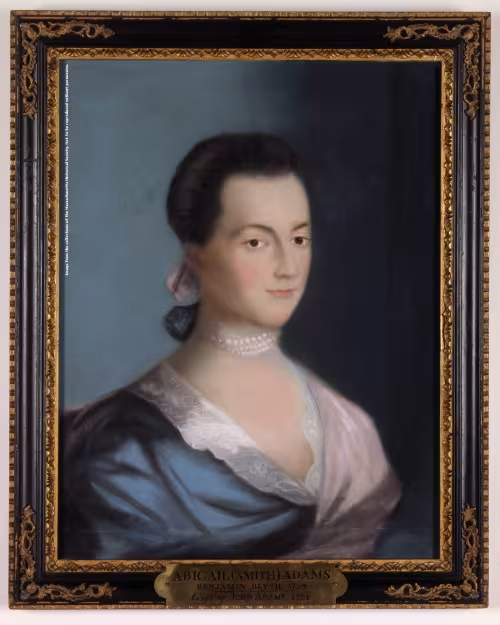
Abigail Adams
Abigail Adams
Writer and political observer whose correspondence with John Adams provides a rich record of the Revolutionary era and early American republic.
Abigail Adams to John Adams, 13–14 July 1776.
Abigail Adams to John Adams, 13–14 July 1776.
Missing its “great Strokes”: Samuel Cooper and the Declaration
Samuel Cooper was a Congregational minister in Boston who knew John Adams and many of the founders.
Collections of the Massachusetts Historical Society. View in the MHS Online Collections.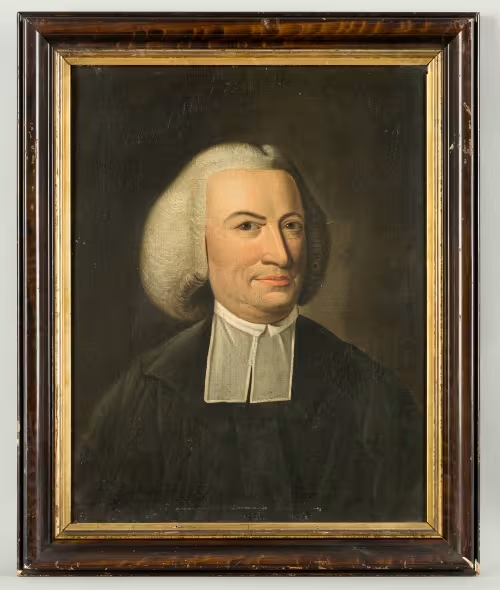
Samuel Cooper
Samuel Cooper
Minister at Brattle Street Church who persuaded Bostonians to support the Revolution and promoted the Franco-American alliance in New England.
Samuel Cooper to John Adams, 14 August 1776.
Samuel Cooper to John Adams, 14 August 1776.
Nearly Ready for the Public
With these large removals, Congress had mostly finished reviewing the Declaration. There was only one big task left: naming the document.