
Sections in this exhibit
-
1
Section 1 The Declaration’s Sound: Small Changes, Big ImpactsSection 1
The founders were very concerned about how the Declaration sounded when read. Many of the early changes they made to the Declaration’s rough draft reflected that focus.
-
2
Section 2 Refining the Rhetoric: Subjects and CitizensSection 2
By changing a single word—switching “subjects” for “citizens”—the founders signaled their interest in the Enlightenment. The Declaration’s drafters also believed a focus on legal “rights” made their case for independence stronger.
-
3
Section 3 Passing Congress: The Declaration and Political CompromiseSection 3
Getting the Continental Congress to agree on the Declaration required compromise. As a result, the delegates removed two sections almost entirely. The first dealt with slavery and the second involved “love” for Britain.
-
4
Section 4 Who Is Declaring Independence?Section 4
Congress changed the Declaration’s title a few weeks after approving it. The name change stressed that the Declaration was the “unanimous” opinion of Congress. Stressing that the thirteen states were truly united behind independence helped counter Loyalist arguments. This change also helped American diplomats gather support abroad.
-
5
Section 5 The Declaration, Finished or Just Started?Section 5
Introduction
The founders carefully considered every word and punctuation mark in the Declaration of Independence. Several times, they fought hard over what to include and what to keep silent about. From draft to final version, the Declaration underwent many changes. If the founders had made different choices, would the United States have taken a different path?
Getting Independence Right
Thomas Jefferson wrote a rough draft (“draught,” as he titled it) of the Declaration of Independence. A Committee of Five and the Continental Congress made several changes before the document became final. Some revisions made the document easier to read. Other edits, like deleting a section on slavery, changed its meaning. The following pages highlight some of the biggest changes to Jefferson’s draft and the impact these revisions might have had.
This exhibit shows how the Declaration of Independence changed from its first draft to its final version. The changes are grouped by theme.
Surface-level Edits
Some of the changes to Jefferson’s draft were minor. The Committee of Five, for instance, exchanged some words for others with the same meaning. On another occasion, they simply changed the first two letters of a word. These changes were meant to impact how the document sounded. This was an important consideration for a piece of writing meant to be read out loud.
What were the States Really Fighting For?
Other edits to the rough draft changed what Jefferson wanted to say. This exhibit looks at Jefferson’s draft section on slavery. He criticized King George III for maintaining the transatlantic slave trade, but did not suggest Americans abolish slavery. This section also examines Jefferson’s call for colonists to bury their fond feelings for the British. Congress was not open to either proposal.
The Declaration as a Tool
Finally, this exhibit takes note of the Declaration’s title. Congress changed how the Declaration began in order to appear more united. The Declaration was, after all, a political tool to help the revolution succeed.
How Important Were these Changes?
The Declaration of Independence remains one of the most famous documents in American history. It persuaded many Americans to support nationhood. If Jefferson’s draft became the final version, would it have had the same impact?
Want to know more?
Explore the people, places, and primary sources featured in this exhibit.
Primary Sources
16
Congress updates Benjamin Franklin and Silas Deane, in Paris, on the war and urges them to secure a French alliance and loans.
John Hancock transmits the Declaration of Independence to George Washington, requesting it be proclaimed to the Army.
Orders instructing brigades to read the Declaration of Independence to troops, marking the first official military announcement of American independence.
Washington orders Ward to proclaim the Declaration of Independence to Massachusetts troops and dispatch regiments to defend New York from British invasion.
Philip Schuyler reports on military preparations in New York, Indian diplomacy, and plans to proclaim the Declaration of Independence to troops.
Marblehead residents resist the Lively frigate's impressment operations after enforcing the Continental Association against Admiral Samuel Graves's purser.
People
22Commander-in-chief of the Continental Army during the Revolutionary War who became the first U.S. president, setting key precedents for federal government.
Major general in the Continental Army's Northern Department and New York politician who later championed Constitution ratification as a Federalist.
Continental Army general who won the pivotal Battle of Saratoga in 1777, challenged George Washington's leadership, and lost the battle at Camden in 1780.
Wealthy merchant who served as president of the Continental Congress during the vote for independence and later as governor of Massachusetts.
British monarch who reigned for six decades, overseeing Britain's loss of American colonies and the defeat of Napoleon, while battling mental illness.
Major general and second in command to George Washington in the Continental Army, who led troops at Bunker Hill and helped direct the siege of Boston.
Signed the Declaration of Independence and served as superintendent of finances for the Continental Army.
Signer of the Declaration of Independence who initially advocated reconciliation with Britain, later championed a stronger federal government.
Places
12Explore Related Resources
-
A look at how the Declaration of Independence evolved from a draft into a unified national document through collaboration, revision, and compromise.
-
Film examining how Continental Congress delegates edited Jefferson's draft of the Declaration of Independence, making 86 changes including removing slavery critique.
-
Film analyzing the Declaration of Independence as a strategic communication campaign to justify revolution and gain international support for America.
-
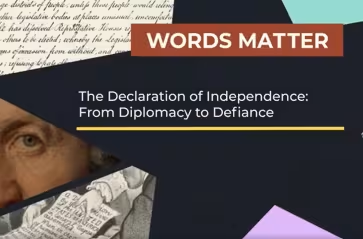
Explores the shift from the Olive Branch Petition's diplomacy to the Declaration of Independence's defiance during the American Revolutionary War.
-
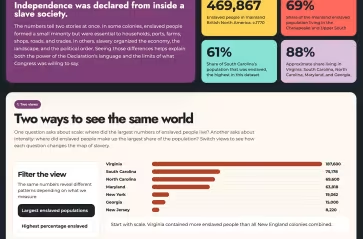
Interactive data story explores how 469,867 enslaved people lived in the thirteen colonies in 1770 and details each Declaration signer's ties to slavery.
-
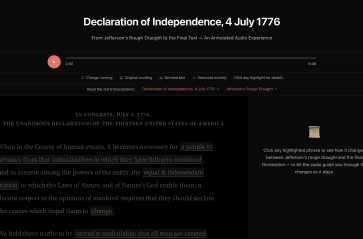
This interactive audio experience shows how Congress collectively revised Jefferson's draft of the Declaration of Independence.