
Declaration of Independence: Annotated Audio
View a larger version of the annotated audio
When Thomas Jefferson sat down to draft what would become the Declaration of Independence, he produced a working document — argued over, crossed out, rewritten, and debated by a committee and then an entire Congress. What emerged on July 4, 1776 was not Jefferson's document alone. It was the product of collective revision, political compromise, and careful rhetorical calculation.
This annotated audio experience makes those revisions visible. The text you see on screen is Jefferson's Rough Draught— his own preferred spelling — the earliest surviving full version of the Declaration in his hand. As the final text is read aloud, the draft wording appears highlighted in gold. At the moment the narrator reaches each revised phrase, the original words strike through and the adopted text fades in, recreating the editing process in real time.
Sixteen changes are annotated, ranging from the philosophical — "sacred & undeniable" becoming "self-evident," a shift from religious authority to Enlightenment reason — to the political. The most significant deletion, a roughly 170-word grievance in which Jefferson accused George III of forcing the slave trade upon the colonies, was struck entirely at the insistence of delegates from Georgia and South Carolina. Jefferson documented his anger at its removal in his personal notes. Its absence from the final Declaration left the document's principles of equality in direct contradiction with the institution of slavery — a contradiction that would define American history for generations.
Click any highlighted phrase to read a full explanation of the change and its historical significance. The experience works at your own pace: let the audio guide you through, or pause and explore the annotations independently.
Want to know more?
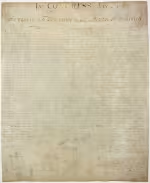
This foundational document declares American independence from Britain and outlines the grievances that led to this break.
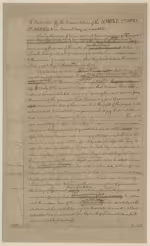
This rough draft of the Declaration of Independence features early revisions by Adams and Franklin and several sections ultimately removed by Congress.
Additional Resources
-
Film examining how Continental Congress delegates edited Jefferson's draft of the Declaration of Independence, making 86 changes including removing slavery critique.
-
Film exploring how Thomas Paine's revolutionary pamphlets shaped public opinion and mobilized support for American independence through persuasive writing.
-

Film explores colonial resistance to British taxation through boycotts, the Boston Tea Party, and women's role in the movement toward independence.
-
Colonial newspapers evolved from commerce-focused publications into revolutionary tools that unified colonists and spread ideas of independence.
-
Examines Penelope Barker's 1774 Edenton Tea Party, where 51 women defied norms by boycotting British goods and advancing revolutionary sentiment.
-
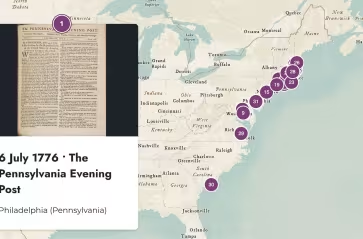
Interactive map tracks how 31 colonial newspapers spread the Declaration of Independence through print in the months following 4 July 1776.
-
Examines how political cartoons by artists like Paul Revere shaped public opinion and mobilized support during the American Revolutionary era.
-
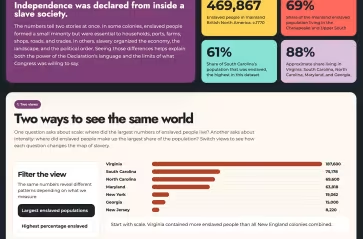
Interactive data story explores how 469,867 enslaved people lived in the thirteen colonies in 1770 and details each Declaration signer's ties to slavery.
Related Exhibits
-
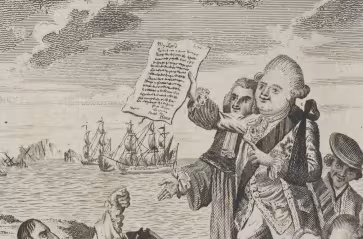
The Declaration of Independence forced Americans into a civil war, where printers, Mohawk leaders, and enslaved people chose between liberty and loyalty.
-
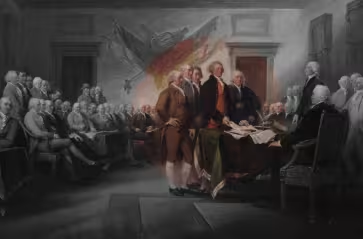
Explore how the Declaration of Independence was forged through drafting, debate, and collaboration by Jefferson, Adams, Franklin, Sherman, and Livingston.
-
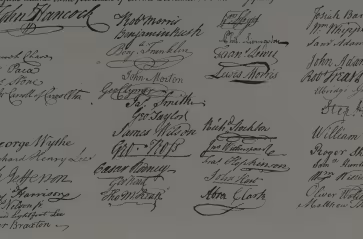
Editing Independence explores documentary editing through Declaration signers, featuring events, exhibits, and key historical figures and places.