
The Declaration of Independence: Picking the Team
Produced by ClickView for forgingUS, a project of the Center for Digital Editing at the University of Virginia. © 2026 The Rector and Visitors of the University of Virginia. All rights reserved.
This film examines how the Continental Congress approached drafting the Declaration of Independence by assembling a committee that reflected the diverse perspectives of the thirteen colonies. Meeting in Philadelphia during the Second Continental Congress, delegates faced deep divisions over independence. Richard Henry Lee introduced a resolution for independence, prompting Congress to formalize the argument in writing. Recognizing that no single author could unify all colonies, they appointed a Committee of Five. Thomas Jefferson drafted the document, while John Adams contributed legal strength and Benjamin Franklin refined its language. Roger Sherman and Robert R. Livingston provided political insight and broader colonial perspective. The draft was submitted on June 28, 1776, and after debate, twelve colonies voted for independence on July 2, with New York abstaining. Congress revised the document between July 2 and July 4, transforming it into a unifying political instrument. Approved on July 4, and later signed on August 2, the Declaration emerged as a product of collaboration, compromise, and coalition-building.
Want to know more?
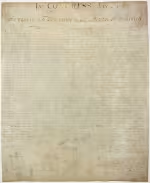
This foundational document declares American independence from Britain and outlines the grievances that led to this break.
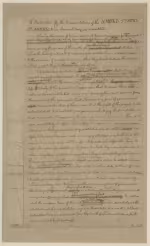
This rough draft of the Declaration of Independence features early revisions by Adams and Franklin and several sections ultimately removed by Congress.
People
The only signer of all four founding documents and architect of the Connecticut Compromise that established the bicameral structure of Congress.
Co-drafted the Declaration of Independence, worked on the first New York State constitution, and negotiated the Louisiana Purchase as minister to France.
Lawyer who defended British soldiers after the Boston Massacre, championed independence in Congress, and served as the second U.S. president.
Helped draft the Declaration of Independence and worked to secure the crucial Franco-American alliance that changed the course of the Revolution.
A prominent early-American politician who drafted the Declaration of Independence and served as the third U.S. president.
Continental Congress delegate who wrote the resolution for independence and later authored Letters from the Federal Farmer, a key antifederalist tract.
Organizations
Led the U.S. government prior to the Articles of Confederation, created the Continental Army, and issued the Declaration of Independence.
Drafted the Declaration of Independence. Its members were: Thomas Jefferson, John Adams, Benjamin Franklin, Roger Sherman, and Robert R. Livingston.