
The Declaration of Independence: The Stakes of Signing
Produced by ClickView for forgingUS, a project of the Center for Digital Editing at the University of Virginia. © 2026 The Rector and Visitors of the University of Virginia. All rights reserved.
This film examines the profound risks taken by the signers of the United States Declaration of Independence in 1776. Under British law, rebellion against King George III was considered high treason and punishable by death. Despite this, 56 members of the Continental Congress signed the document, making a public and irreversible commitment to independence. Their signatures gave legitimacy to the revolutionary cause and helped rally both colonists and foreign allies. However, not all delegates supported independence; figures like John Dickinson refused to sign, hoping for reconciliation with Britain. Those who did sign faced severe consequences, including destruction of property, imprisonment, and personal loss. Francis Lewis suffered greatly when his wife, Elizabeth Lewis, was captured and died after harsh imprisonment. The film highlights how the American Revolution was deeply personal for these individuals, whose courage and sacrifice helped secure independence and left a lasting legacy.
Want to know more?
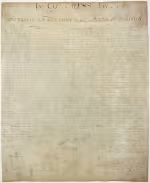
This foundational document declares American independence from Britain and outlines the grievances that led to this break.
People
British monarch who reigned for six decades, overseeing Britain's loss of American colonies and the defeat of Napoleon, while battling mental illness.
Author of Letters from a Farmer in Pennsylvania who opposed parliamentary taxation but refused to sign the Declaration of Independence, later championing the Constitution.
Presbyterian minister who served as President of Princeton University and was the only clergyman to sign the Declaration of Independence as a delegate.
Signer of the Declaration of Independence who represented New York in the Continental Congress and endured personal tragedy during the Revolution.
First governor of New York and prominent Anti-Federalist who opposed the Constitution, later serving as vice president under Jefferson and Madison.
Signed the Declaration of Independence and Articles of Confederation as a New Hampshire delegate. Physician, judge, and governor who helped organize wartime government.
Signer of the Declaration of Independence and Articles of Confederation who represented Rhode Island in the Continental Congress during the Revolution.
Proposed a plan for imperial union at the First Continental Congress, then became a prominent Loyalist writer after fleeing to Britain during the Revolution.
Organizations
Led the U.S. government prior to the Articles of Confederation, created the Continental Army, and issued the Declaration of Independence.
The British Army is the UK's primary land force. It has fought globally across Europe, Americas, Africa, and Asia, sustaining the British Empire.