
The Declaration of Independence: The Stakes of Signing
Produced by ClickView for forgingUS, a project of the Center for Digital Editing at the University of Virginia. © 2026 The Rector and Visitors of the University of Virginia. All rights reserved.
This film examines the profound risks taken by the signers of the United States Declaration of Independence in 1776. Under British law, rebellion against King George III was considered high treason and punishable by death. Despite this, 56 members of the Continental Congress signed the document, making a public and irreversible commitment to independence. Their signatures gave legitimacy to the revolutionary cause and helped rally both colonists and foreign allies. However, not all delegates supported independence; figures like John Dickinson refused to sign, hoping for reconciliation with Britain. Those who did sign faced severe consequences, including destruction of property, imprisonment, and personal loss. Francis Lewis suffered greatly when his wife, Elizabeth Lewis, was captured and died after harsh imprisonment. The film highlights how the American Revolution was deeply personal for these individuals, whose courage and sacrifice helped secure independence and left a lasting legacy.
Want to know more?
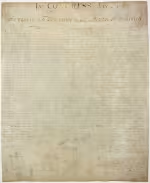
This foundational document declares American independence from Britain and outlines the grievances that led to this break.
People
First New Jersey delegate to sign the Declaration of Independence, he was later captured by British forces and endured harsh imprisonment that ruined his health.
Signer of the Declaration of Independence who served in the Continental Congress and New Jersey Colonial Assembly. He offered his land for a Continental Army camp in mid-1778—12,000 men occupied his fields.
Signer of the Declaration of Independence who risked extensive New York estates for the cause, later serving as a judge and state senator.
Places
Additional Resources
-
Film examines how letters, pamphlets, and print shaped Revolutionary War politics, despite unequal access to literacy across class, race, and gender.
-
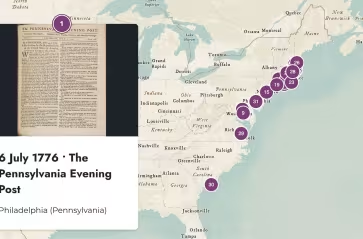
Interactive map tracks how 31 colonial newspapers spread the Declaration of Independence through print in the months following 4 July 1776.
-
Explores Revolutionary War economic impacts through receipts and ledgers showing inflation, shortages, and women's vital role in household resistance.
-
Explores Jefferson's 'fair copies' of the Declaration of Independence, revealing his original draft and passages Congress removed, including his condemnation of slavery.
-
Examines how political cartoons by artists like Paul Revere shaped public opinion and mobilized support during the American Revolutionary era.
-
A look at how the Declaration of Independence evolved from a draft into a unified national document through collaboration, revision, and compromise.
-
Explores how colonial print networks of newspapers, pamphlets, and broadsides fueled the American Revolution by spreading revolutionary ideas.
-

Explores how 'no taxation without representation' unified American colonists and fueled revolution, paralleling 18th-century slogans with modern hashtags.
Related Exhibits
-
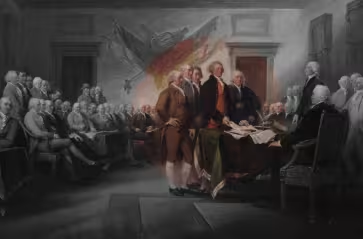
Explore how the Declaration of Independence was forged through drafting, debate, and collaboration by Jefferson, Adams, Franklin, Sherman, and Livingston.