
From Draft to Declaration: The Power of the “Fair Copy”
Produced by ClickView for forgingUS, a project of the Center for Digital Editing at the University of Virginia. © 2026 The Rector and Visitors of the University of Virginia. All rights reserved.
This film examines the drafting process of the Declaration of Independence and the significance of Thomas Jefferson’s “fair copies.” After being appointed by the Continental Congress on June 11, 1776, Jefferson produced an initial four-page draft outlining the case for independence. While the Committee of Five made some edits, Congress made far more extensive revisions to unify the colonies, removing about a quarter of the original text, including a passage condemning the slave trade. Frustrated by these changes, Jefferson created clean copies of his original draft and shared them with trusted allies such as Richard Henry Lee and George Wythe. These copies served multiple purposes: preserving his original ideas, asserting intellectual ownership, and influencing political opinion among key figures. The “fair copies” provide insight into the evolution of the document, showing how debate, compromise, and revision shaped the final Declaration. They act as a “director’s cut,” revealing omitted passages and offering a deeper understanding of the creation of one of America’s most important founding texts.
Want to know more?
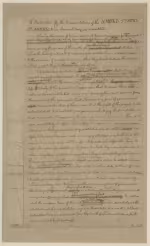
This rough draft of the Declaration of Independence features early revisions by Adams and Franklin and several sections ultimately removed by Congress.
People
America's first law professor mentored Thomas Jefferson, John Marshall, and Henry Clay, and signed the Declaration of Independence as a leading Virginia jurist.
A prominent early-American politician who drafted the Declaration of Independence and served as the third U.S. president.
Continental Congress delegate who wrote the resolution for independence and later authored Letters from the Federal Farmer, a key antifederalist tract.