
The Revolution: It's All in the Wording
Produced by ClickView for forgingUS, a project of the Center for Digital Editing at the University of Virginia. © 2026 The Rector and Visitors of the University of Virginia. All rights reserved.
In 1776, Thomas Paine, a self-educated thinker who arrived in Philadelphia from England, published Common Sense—a groundbreaking political pamphlet that reshaped public opinion. At a time when independence from Britain was still uncertain, Paine used clear, direct language instead of elite, complex writing to reach everyday colonists. He challenged the legitimacy of government and monarchy, arguing that government is a “necessary evil” meant only to protect rights, and that hereditary rule is unjust and unsupported morally or biblically. Paine dismissed reconciliation with Britain, portraying it as a tyrannical force, and reframed the American struggle as a universal fight for human freedom. His persuasive and accessible style made independence feel urgent and achievable. Widely circulated, the pamphlet galvanized colonial sentiment and played a pivotal role in advancing the cause of the American Revolution.
Want to know more?
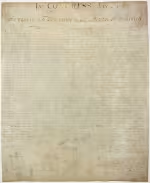
This foundational document declares American independence from Britain and outlines the grievances that led to this break.
People
Author of Common Sense, the 1776 pamphlet urging American independence, and Rights of Man, defending the French Revolution and critiquing religion.