
The Revolution: The Power of the Pen
Produced by ClickView for forgingUS, a project of the Center for Digital Editing at the University of Virginia. © 2026 The Rector and Visitors of the University of Virginia. All rights reserved.
This film explores the critical role of written communication in the 18th century during the American Revolutionary War. In a world without digital tools, ideas spread through letters, pamphlets, and printed materials, though access to literacy was limited by class, race, gender, and geography. Educated, property-owning white men often dominated political discourse, using writing to influence debate and decision-making. George Washington relied heavily on written correspondence to command the Continental Army and coordinate with the Continental Congress. Meanwhile, Benjamin Franklin communicated across the Atlantic as a diplomat in France, despite long delays. Other voices also emerged: Mercy Otis Warren used letters to influence political thought, while Phillis Wheatley and Jupiter Hammon challenged ideas about race and liberty through their writings. Some Indigenous leaders adopted literacy to advocate for sovereignty. The printing press further amplified ideas by enabling widespread distribution of pamphlets, poems, and political commentary. In this era, the written word became a powerful force that connected communities, shaped public opinion, and advanced revolutionary ideals.
Want to know more?
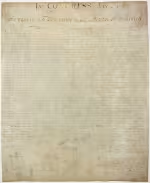
This foundational document declares American independence from Britain and outlines the grievances that led to this break.
People
Commander-in-chief of the Continental Army during the Revolutionary War who became the first U.S. president, setting key precedents for federal government.
Author of History of the Rise, Progress and Termination of the American Revolution who wrote plays criticizing colonial authorities and opposed the U.S. Constitution.
Helped draft the Declaration of Independence and worked to secure the crucial Franco-American alliance that changed the course of the Revolution.